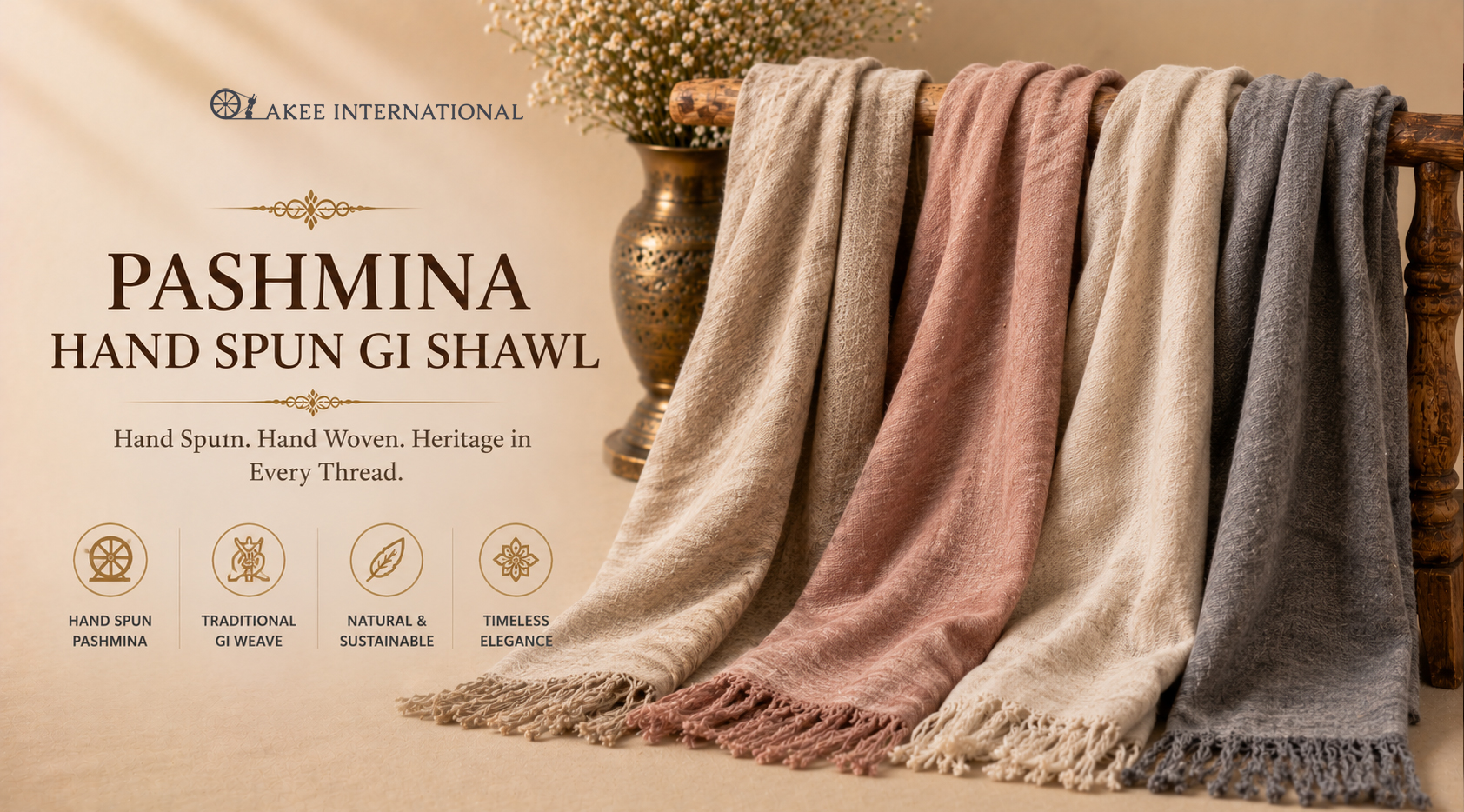
Pashmina Hand Spun Gi Shawl
A Pashmina shawl is more than a winter accessory. It represents centuries of textile heritage, skilled craftsmanship, delicate fibre preparation, and the timeless elegance of Himalayan luxury. Among the many forms of Pashmina available today, a Hand Spun GI Pashmina Shawl represents a particularly traditional approach to creating a fine and refined textile.
At Akee International, the Pashmina Hand Spun GI Shawl collection celebrates the relationship between fine Pashmina fibre and traditional craftsmanship. Hand spinning is an important part of the heritage of Pashmina production, transforming carefully prepared fibres into yarn that can subsequently be woven into an elegant shawl.
The result is a shawl appreciated for its softness, lightweight character, warmth, natural drape, and artisanal appeal.
For customers looking for an authentic-looking luxury Pashmina experience, a hand-spun shawl offers something different from mass-produced winter accessories. Its appeal comes not only from the finished appearance but also from the craftsmanship behind the textile.
What Is a Hand Spun Pashmina Shawl?
- A Hand Spun Pashmina Shawl is made using Pashmina fibre that has been spun into yarn manually using traditional spinning methods.
- Spinning is a fundamental stage in textile production. Before a fibre can be woven, it needs to be transformed into yarn.
- In traditional Pashmina craftsmanship, this process requires skill and control because the fibre is extremely fine.
- The quality and consistency of the yarn can influence the final appearance, texture, drape, and feel of the finished shawl.
- Hand spinning also gives the textile an artisanal character. Small variations in yarn and texture can be part of the individuality of a traditionally crafted textile.
What Does GI Mean in Pashmina?
- GI stands for Geographical Indication.
- A Geographical Indication identifies products associated with a particular geographical region where a specific quality, reputation, or characteristic is connected with that origin.
- In the context of traditional Indian textiles, GI recognition helps distinguish products associated with particular regional traditions from generic products using similar names.
- For buyers searching for a GI Pashmina shawl, it is important to understand what the relevant GI designation covers and to review the product's certification and documentation rather than relying on the term alone.
- This is especially important because the word "Pashmina" is widely used in the international fashion market.
Why Choose a Hand Spun GI Pashmina Shawl?
A hand-spun Pashmina shawl combines several qualities that make it attractive to luxury textile buyers.
Traditional Craftsmanship
Hand spinning reflects an established textile-making tradition in which fibre is transformed into yarn through skilled manual work.
Fine and Soft Feel
Fine Pashmina fibre is known for its soft handle and luxurious feel.
Lightweight Warmth
Pashmina is valued for providing warmth without the heavy feel associated with many thick winter fabrics.
Elegant Drape
Fine Pashmina can fall naturally around the shoulders, making it suitable for both traditional and contemporary styling.
Artisanal Character
Hand-spun textiles can carry subtle variations that distinguish them from highly uniform mass-produced fabrics.
Heritage Value
A traditional Pashmina shawl connects contemporary fashion with a long history of Himalayan textile craftsmanship.
The Hand Spinning Process
- The creation of a hand-spun Pashmina shawl involves several stages.
- The fibre must first be prepared appropriately before spinning.
- The prepared fibre is then carefully drawn and twisted to create yarn.
- This requires control over the thickness and tension of the yarn.
- Once the yarn is prepared, it can be used for weaving.
- The weaving stage transforms the yarn into a finished textile, after which the shawl may undergo finishing, washing, dyeing, or other processes depending on the design.
- The complete journey from fibre to finished shawl demonstrates why traditional Pashmina products are valued as craft textiles rather than simply as winter garments.
Hand Spun vs Machine Spun Pashmina
- One of the most important differences between traditional and industrial textile production is the method used to create yarn.
- Hand-spun Pashmina is produced through manual spinning techniques and carries a strong artisanal association.
- Machine-spun Pashmina uses mechanised processes designed for consistency and larger-scale production.
- Machine production can provide uniformity and efficiency, while hand spinning is appreciated for its traditional craftsmanship and handmade character.
- Customers specifically seeking a heritage textile should therefore pay attention to the stated spinning and weaving methods when choosing a Pashmina shawl.
Hand Spun vs Hand Woven Pashmina
- Hand spinning and hand weaving describe two different stages of textile production.
- Hand spinning refers to the process of turning fibre into yarn.
- Hand weaving refers to the process of turning yarn into fabric using a manually operated loom.
- A traditional shawl may therefore involve both hand-spun yarn and hand weaving.
- Customers interested specifically in woven craftsmanship can explore Akee International's Pashmina Hand Woven Scarfs collection.
- The hand-spun GI shawl, however, places particular emphasis on the traditional preparation of the yarn itself.
Hand Spun Pashmina vs Embroidered Pashmina
- Embroidery and hand spinning represent completely different aspects of Pashmina craftsmanship.
- Hand spinning concerns the preparation of yarn.
- Embroidery concerns decorative needlework added to the textile.
- A plain hand-spun shawl can therefore showcase the beauty of the Pashmina fibre and weave without requiring elaborate surface decoration.
- Customers who prefer decorative craftsmanship can explore Pashmina Hand Embroidered Shawls.
- For more exclusive embroidered designs, explore Exclusive Hand Embroidered Pashmina Shawls.
Hand Spun Pashmina vs Kani Pashmina
- Kani is primarily associated with a traditional weaving technique used to create intricate patterns.
- A hand-spun Pashmina shawl can be comparatively understated, allowing the quality and texture of the textile to remain the main focus.
- Kani products, on the other hand, are known for their detailed woven patterns and complex visual compositions.
- Customers looking for traditional patterned Pashmina can explore Pashmina Kani Stoles.
- For wool-based Kani designs, Akee International also offers Kani Wool Stoles.
Hand Spun Pashmina vs Jamawar
Jamawar is known for elaborate patterned weaving and rich decorative compositions. A hand-spun Pashmina shawl can offer a more understated luxury experience, particularly when the textile is presented without heavy decorative work.
Customers who appreciate intricate traditional patterns can explore Jamawar Pashmina Shawls. This allows shoppers to choose between the refined simplicity of a hand-spun Pashmina and the ornate visual character of Jamawar.
What Makes Pashmina So Soft?
- The softness of Pashmina comes largely from the fineness of its fibres.
- Fine fibres can create a smoother sensation against the skin compared with many coarser wool fibres.
- This is one of the reasons Pashmina has become associated with luxury scarves and shawls.
- However, softness alone should not be treated as proof of authenticity.
- When purchasing a Pashmina product, customers should consider the stated fibre composition, product specifications, craftsmanship, origin information, and seller reputation.
Why Is Hand Spinning Important?
- Hand spinning is important because it represents an essential part of traditional Pashmina textile craftsmanship.
- The spinner must work carefully with delicate fibres and control the yarn as it is formed.
- This requires experience and patience.
- Traditional hand spinning also helps preserve knowledge that has been passed from one generation of textile artisans to another.
- For customers who value handmade textiles, the spinning process adds another layer of meaning to the finished shawl.
Lightweight Warmth of Pashmina
One of the most appreciated characteristics of Pashmina is the relationship between weight and warmth.
A fine Pashmina shawl can provide a comfortable layer without feeling excessively heavy.
This makes it useful beyond extremely cold weather.
It can be worn during:
- Cool winter mornings
- Evening events
- Weddings
- Travel
- Air-conditioned interiors
- Autumn weather
- Spring evenings
- Hill-station holidays
Its lightweight character also makes it relatively convenient to carry while travelling.
Hand Spun Pashmina Shawl for Women
A hand-spun Pashmina shawl can complement both traditional and contemporary women's clothing.
It can be styled with:
- Sarees
- Salwar suits
- Kurtas
- Dresses
- Gowns
- Blazers
- Coats
- Evening wear
- Winter outfits
For a classic appearance, drape the shawl over both shoulders. For formal occasions, allow the fabric to fall naturally so that its texture and drape remain visible. For winter travel, wrap it around the shoulders or neck for additional warmth.
Hand Spun Pashmina Shawls for Men
Pashmina is not exclusively a women's textile.
Men can wear understated Pashmina shawls with:
- Formal suits
- Blazers
- Overcoats
- Kurtas
- Sherwanis
- Sweaters
- Winter jackets
Neutral colours, deep shades, and classic solid designs can create a sophisticated men's winter look.
Customers looking specifically for men's Pashmina styles can explore Akee International's Mens Pashmina Shawls collection.
Hand Spun Pashmina for Weddings
- A Pashmina shawl can be an elegant addition to winter wedding attire.
- For women, it can be draped over a saree, lehenga, gown, or formal suit.
- For men, it can be paired with a sherwani, kurta, formal coat, or traditional ensemble.
- A hand-spun Pashmina is particularly suitable when the wearer wants understated luxury rather than an extremely ornate accessory.
- For customers who prefer decorative wedding Pashmina, embroidered styles may be more suitable.
- Explore Pashmina Hand Embroidered Stoles for an elegant smaller accessory.
Hand Spun Pashmina for Luxury Gifting
A Pashmina shawl can make a meaningful luxury gift because it combines practical use with cultural and artisanal value.
It can be suitable for:
- Weddings
- Anniversaries
- Birthdays
- Festivals
- Family celebrations
- Corporate gifting
- International gifting
- Special milestones
A hand-spun Pashmina can be particularly appealing to someone who appreciates traditional craftsmanship and natural luxury.
Hand Spun Pashmina for Travel
The lightweight nature of fine Pashmina makes it an excellent travel companion.
A shawl can be used as:
- A shoulder wrap
- A neck scarf
- A light blanket
- A travel layer
- An evening accessory
It can be especially useful during flights, where temperatures inside aircraft cabins can feel cool.
A Pashmina shawl can also be folded and carried in luggage without taking the space required by a heavy winter coat.
How to Style a Hand Spun Pashmina Shawl
Classic Shoulder Drape
Place the shawl over both shoulders and let the ends fall naturally.
This is one of the simplest ways to highlight the elegance of the textile.
One-Shoulder Drape
Drape the shawl across the body and place one end over a shoulder.
This works well with formal and traditional clothing.
Neck Wrap
Fold the shawl and wrap it around the neck for a more contemporary appearance.
Saree Layer
Wear the shawl over a saree during winter weddings and evening occasions.
Coat Layer
Place the Pashmina over a formal coat or blazer for additional warmth and texture.
How to Choose a Hand Spun GI Pashmina Shawl
When purchasing a hand-spun Pashmina shawl, consider several factors.
Fibre Information
Check the stated fibre composition and product specifications.
Spinning Method
If hand spinning is important to you, confirm that the product is specifically described as hand spun.
GI Information
If a product is marketed as GI-related, review the relevant certification or documentation.
Weaving
Consider whether the shawl is hand woven or produced using another weaving method.
Design
Decide whether you prefer a plain, embroidered, printed, or patterned shawl.
Size
Select the size according to whether you intend to wear it as a shoulder wrap, scarf, or full shawl.
Colour
Choose colours that complement your existing wardrobe.
How to Identify Quality in a Pashmina Shawl
- Quality should be evaluated using several characteristics rather than a single test.
- Look at the fibre information, construction, weave, finishing, edges, drape, and overall craftsmanship.
- A well-made Pashmina shawl should have clean finishing and a balanced appearance.
- Handcrafted products may show subtle variations, and these should not automatically be treated as defects.
- When buying online, high-quality product photographs and detailed specifications can help you evaluate the piece before purchasing.
- It is also advisable to buy from an established seller that provides clear product information.
Hand Spun Pashmina and Traditional Craftsmanship
- Pashmina production represents a chain of specialised textile skills.
- Fibre preparation, spinning, weaving, dyeing, embroidery, washing, finishing, and inspection can each require different forms of knowledge.
- Hand spinning is one of the important links within this process.
- Preserving these traditional techniques helps maintain the cultural identity of Pashmina as a heritage textile.
- This is one reason handmade Pashmina products are valued by collectors, textile enthusiasts, luxury shoppers, and customers looking for meaningful gifts.
Akee International's Pashmina Collections
Akee International offers a broad range of Pashmina products representing different textile techniques and design traditions. The current product catalogue includes handwoven, hand-embroidered, digitally printed, Kani, tie-dye, Jamawar, and hand-spun Pashmina options.
Hand Spun GI Pashmina as a Heritage Textile
- A hand-spun Pashmina shawl carries a story that begins long before the finished product reaches the customer.
- The fibre must be prepared.
- The fibre is transformed into yarn.
- The yarn becomes textile through weaving.
- The finished textile may then be dyed, washed, embroidered, finished, and carefully inspected.
- Every stage contributes to the final character of the shawl.
- This makes a hand-spun Pashmina more than a simple winter accessory. It is an example of textile craftsmanship in which material, technique, skill, and tradition come together.
Pashmina Care and Maintenance
- Proper care is essential for preserving the softness, shape, colour, and appearance of a fine Pashmina shawl.
- Always follow the care instructions supplied with the specific product.
- Avoid harsh detergents and aggressive rubbing.
- Do not twist the shawl forcefully after washing.
- Avoid prolonged exposure to direct sunlight.
- If professional cleaning is recommended, follow that recommendation.
- For storage, fold the shawl rather than hanging it for long periods.
- Keep it in a clean, dry, breathable storage environment.
- Protect the textile from moisture, dust, and fabric pests.
- Careful handling can help a quality Pashmina shawl remain beautiful for many years.
Hand Spun Pashmina Shawl for Retailers and Wholesale Buyers
Hand-spun Pashmina can be an attractive category for retailers looking to offer traditional luxury textiles.
It can complement collections focused on:
- Luxury winterwear
- Heritage textiles
- Kashmiri craftsmanship
- Handmade accessories
- Premium gifting
- Ethnic fashion
- Luxury scarves and shawls
Wholesale buyers can also combine hand-spun Pashmina with embroidered, Kani, Jamawar, and printed collections to create a more diverse product assortment.
Akee International serves both individual customers and wholesale buyers across its broader Pashmina and textile collection.
Why Choose Akee International?
Akee International is based in Jaipur and offers a wide selection of Pashmina shawls, scarves, and stoles representing traditional and contemporary craftsmanship. Its product catalogue includes handwoven, embroidered, printed, Kani, tie-dye, Jamawar, and hand-spun Pashmina collections. The brand's wider Pashmina collection focuses on combining traditional craftsmanship with contemporary luxury, including hand spinning and hand weaving as part of its textile-making heritage. For customers interested in purchasing Pashmina online, Akee International also provides educational information about selecting and evaluating Pashmina products.
Experience the Craftsmanship of Hand Spun Pashmina
A Hand Spun GI Pashmina Shawl represents the meeting point of fine natural fibre, traditional spinning, textile craftsmanship, and timeless luxury. Its appeal lies in more than softness and warmth. The hand-spinning process connects the finished shawl with a traditional craft heritage that has been preserved through generations of skilled textile makers. Whether selected for winter wear, wedding styling, luxury gifting, travel, or a premium textile collection, a hand-spun Pashmina shawl offers an elegant combination of comfort, craftsmanship, and heritage. Explore the Pashmina Hand Spun GI Shawl collection at Akee International and discover the understated beauty of traditionally crafted Pashmina.
Faq's
Find the answers to all of our most frequently asked questions
A Hand Spun GI Pashmina Shawl is a Pashmina shawl made using traditionally hand-spun yarn and associated with GI-recognised Pashmina heritage.
Hand spun means that the Pashmina fibre is manually transformed into yarn using traditional spinning techniques rather than relying entirely on industrial spinning.
GI means Geographical Indication. It identifies products associated with a particular geographical region and recognised characteristics or reputation connected with that origin.
Hand-spun Pashmina is particularly valued for its traditional craftsmanship and handmade character. The best choice depends on the buyer's preference for craftsmanship, consistency, price, and product specifications.
Yes. Fine Pashmina is valued for its ability to provide lightweight warmth and insulation.
Yes. Pashmina shawls can be worn by men and women. Neutral and deeper colours work particularly well for men's formal and traditional clothing.
Yes. It can be worn over sarees, dresses, suits, sherwanis, kurtas, and other formal clothing during winter weddings and evening events.
Yes. A hand-spun Pashmina shawl can be an elegant gift for weddings, anniversaries, festivals, birthdays, corporate occasions, and special milestones.
Hand spinning refers to making yarn from fibre, while hand weaving refers to turning yarn into fabric using a manually operated loom. Both are separate stages of textile craftsmanship.
Follow the product-specific care instructions, avoid harsh detergents and excessive friction, keep it away from prolonged direct sunlight, and store it folded in a clean, dry place.
Yes. Its lightweight character makes Pashmina convenient for flights, train journeys, winter travel, cool evenings, and air-conditioned environments.
Akee International offers a dedicated Pashmina Hand Spun GI Shawl collection as part of its wider range of Pashmina, wool, embroidered, Kani, printed, and handwoven products.


 4.9 based on 269 reviews