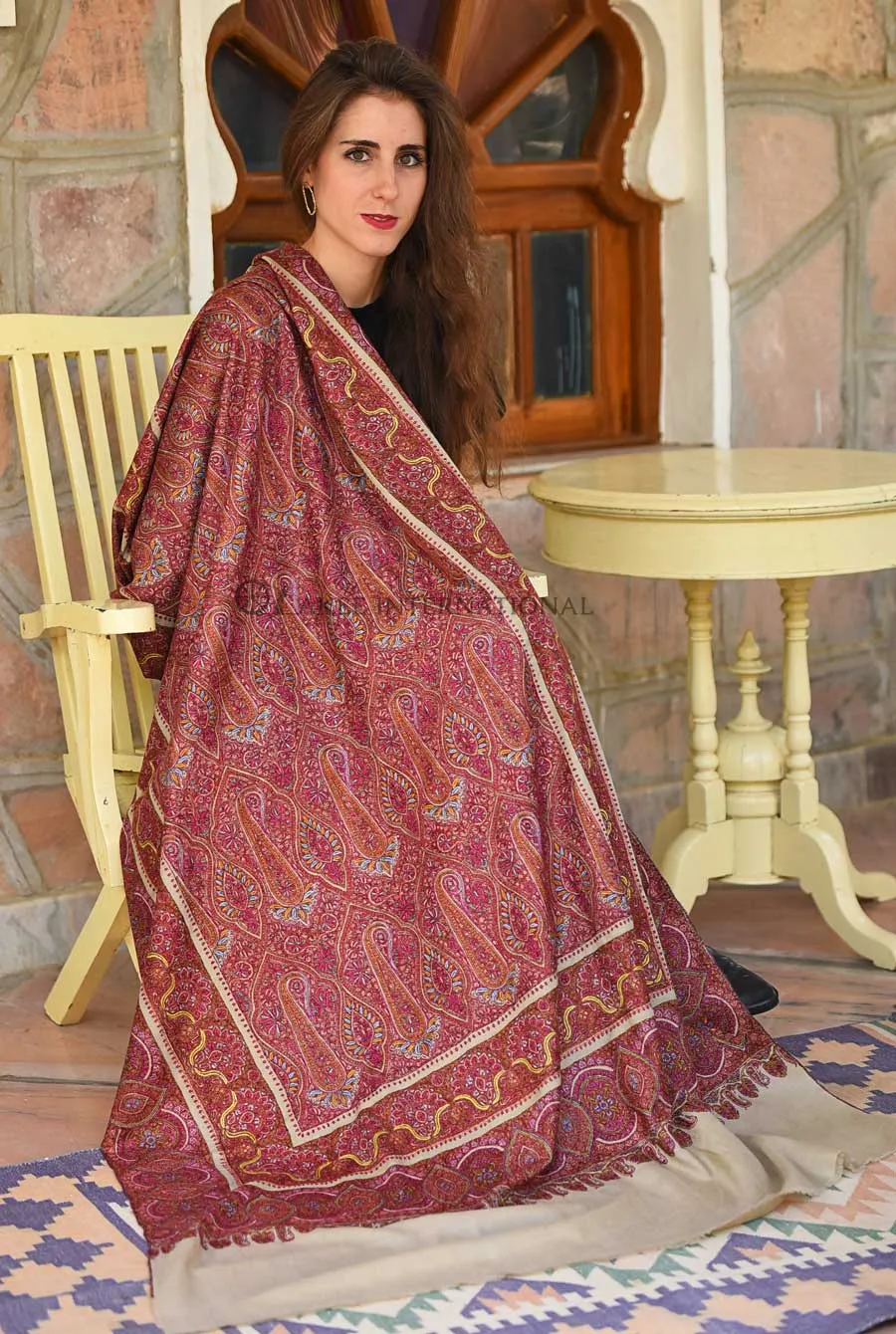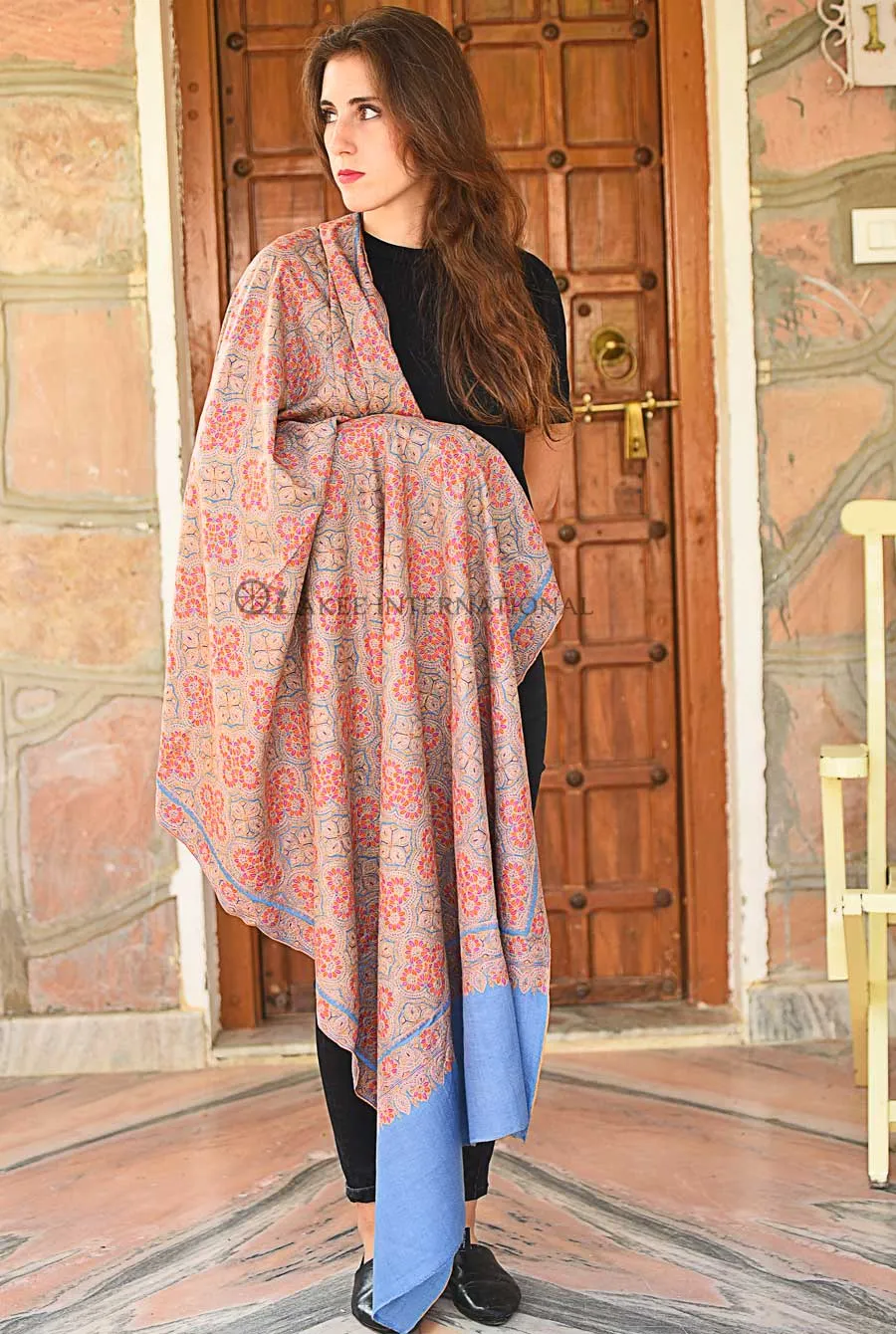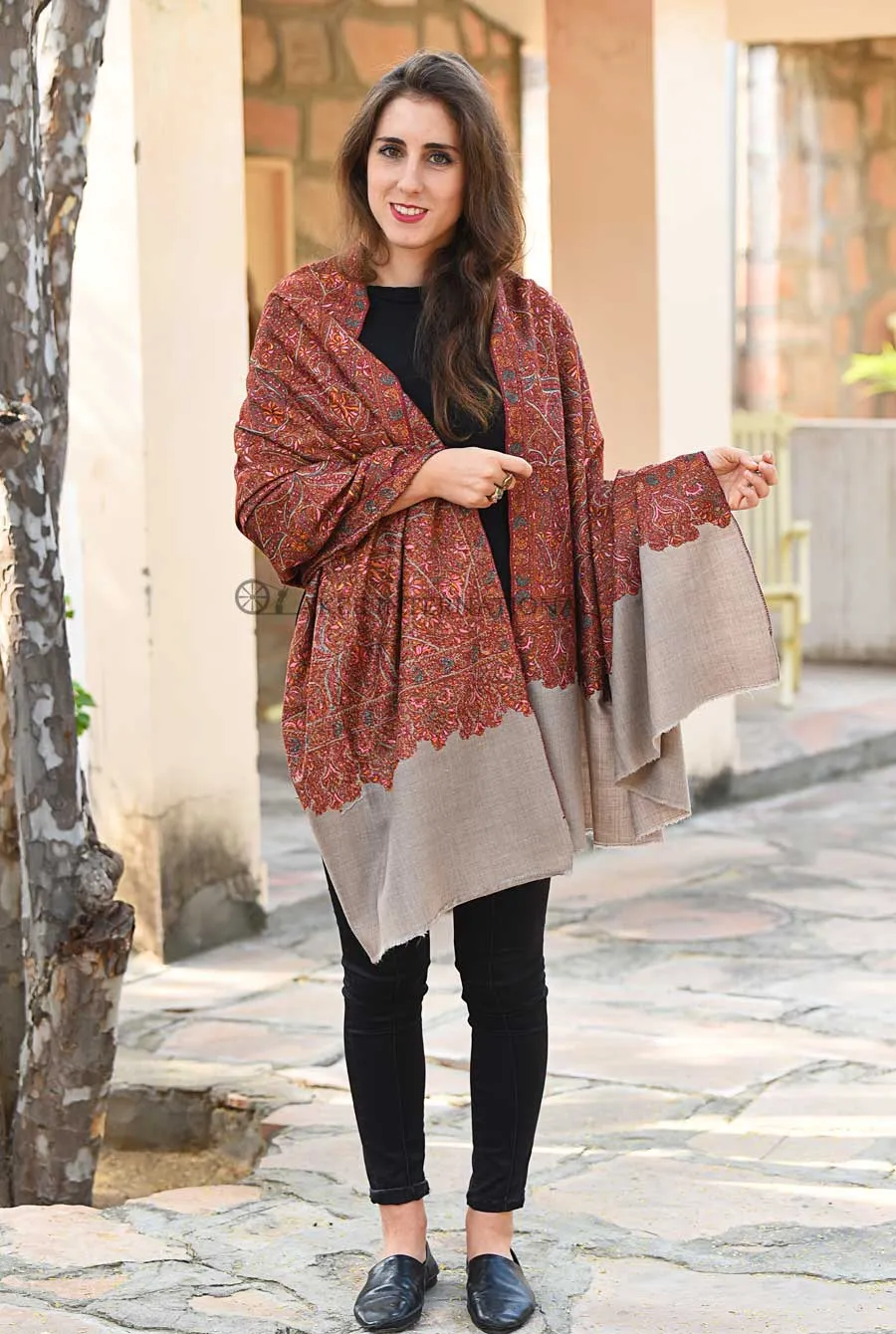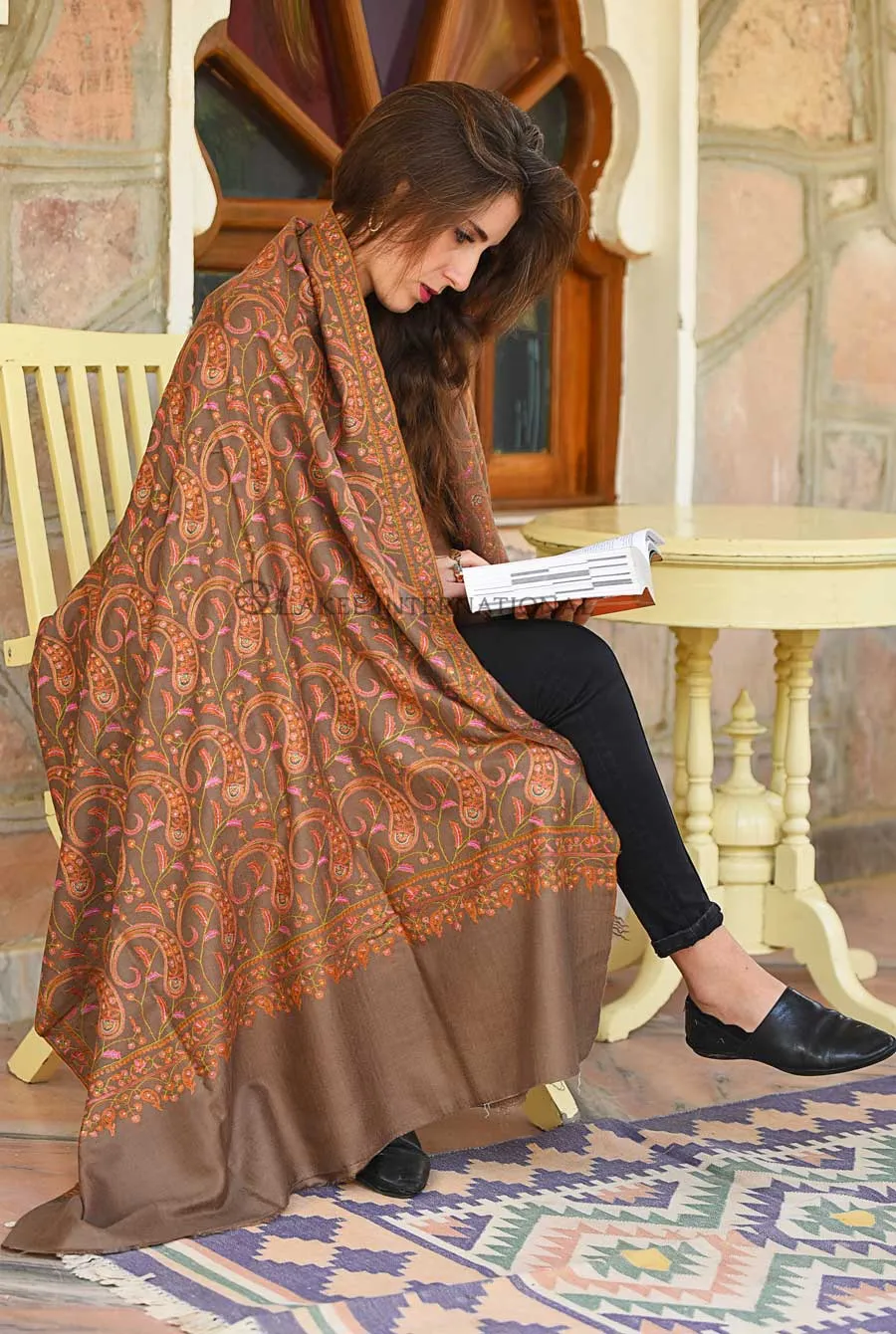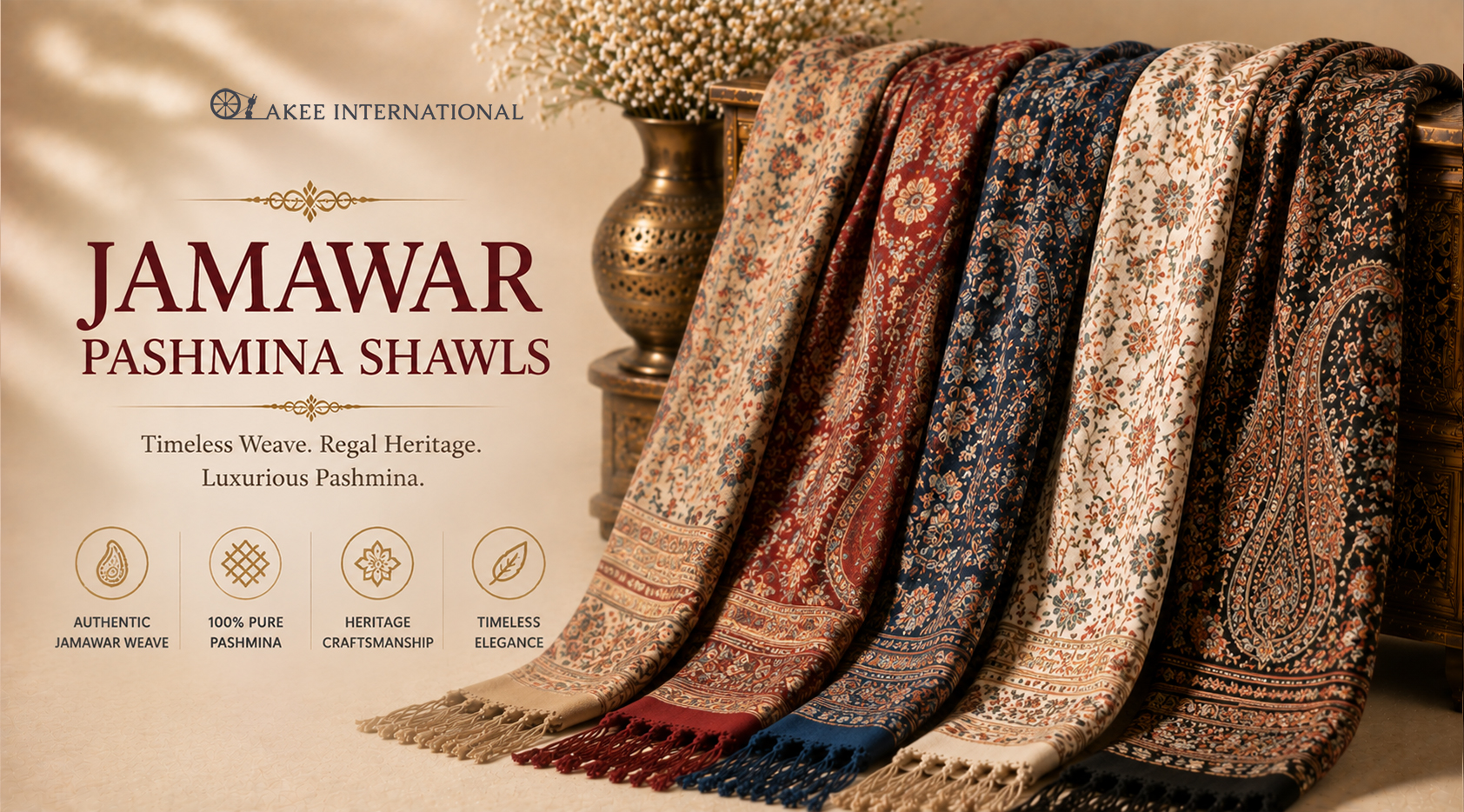
Few textiles capture the richness of Kashmiri craftsmanship quite like a Jamawar Pashmina Shawl. Known for elaborate patterns, detailed motifs, luxurious texture, and an unmistakable heritage character, Jamawar represents a genuinely sophisticated tradition of textile artistry — one that has been admired by fashion enthusiasts, royalty, and luxury buyers for centuries.
A Jamawar Pashmina Shawl brings together the fine character of Pashmina with intricate pattern-making. Unlike a simple printed design, traditional Jamawar patterns are built into the textile through weaving itself, giving the fabric a genuine depth and visual richness that a surface print can't replicate. Skilled Kashmiri artisans can spend weeks, sometimes months, weaving floral, paisley, and Mughal-inspired motifs into a single shawl.
At Akee International, our Jamawar Pashmina Shawls collection is built for customers who genuinely appreciate traditional Kashmiri artistry, luxurious Pashmina, detailed patterns, and timeless fashion — suited to weddings, festive celebrations, formal occasions, luxury gifting, winter styling, and collectors of heritage-inspired textiles.
A Jamawar Pashmina Shawl is a richly patterned shawl connected to Kashmir's traditional textile heritage, made with fine Pashmina or Pashmina-based construction. Its defining feature is elaborate patterning — floral compositions, paisley forms, ornamental motifs, botanical elements, and heritage-inspired arrangements are all part of the visual vocabulary. Crucially, the pattern is integrated into the textile through weaving rather than applied as a surface print, which is exactly what gives traditional Jamawar its characteristic depth and richly constructed appearance. Our collection highlights floral, paisley, Mughal-inspired, and contemporary interpretations of this design tradition.
Jamawar is deeply tied to Kashmir's rich weaving traditions. For generations, Kashmiri textile artisans have developed genuinely detailed techniques for producing patterned fabrics — complexity that demands patience, planning, precision, and considerable weaving expertise. The heritage of Jamawar isn't limited to the finished pattern; it represents real knowledge of textile construction, colour arrangement, and motif development passed down through generations of craftsmen. That's a big part of why Jamawar continues to appeal to people looking for textiles with genuine cultural and artistic significance.
Intricate woven patterns – built into the textile rather than printed on the surface.
Rich visual character – multiple motifs and colours create a genuinely detailed appearance.
Pashmina luxury – when made with fine Pashmina, elaborate patterning combines with softness and lightweight comfort.
Kashmiri craft heritage – reflecting a long-established tradition of textile artistry.
Genuine statement appeal – the intricate design makes a Jamawar shawl a major fashion accessory rather than a simple winter layer.
Heirloom potential – traditional craftsmanship and timeless patterns give Jamawar lasting appeal beyond seasonal trends.
One of the most important distinctions for buyers is the difference between woven Jamawar and printed Pashmina. Printed Pashmina applies artwork or colour through a printing technique, while traditional Jamawar is built through intricate pattern construction during weaving — a difference that genuinely affects the visual depth of the finished piece.
For contemporary printed artwork instead, explore our Digital Pashmina Scarfs, or for printed wool designs, our Wool Designer Printed Scarfs.
Jamawar and embroidered Pashmina can both feature intricate floral and ornamental designs, but the technique differs — in Jamawar, the pattern is created through the weaving structure itself; in embroidered Pashmina, decorative motifs are added to the surface using needle and thread. Two genuinely distinct forms of craftsmanship.
For detailed needlework instead, explore our Pashmina Hand Embroidered Shawls, or for an especially elaborate embroidered collection, our Exclusive Hand Embroidered Pashmina Shawls.
Jamawar and Kani are both strongly tied to traditional Kashmiri weaving, but they use genuinely different approaches. Kani weaving is traditionally associated with small wooden sticks or bobbins used to build complex patterned textiles, while Jamawar is recognised for richly patterned woven fabric where elaborate motifs and colour arrangements create an ornamental appearance.
Explore our Pashmina Kani Stoles for the Kani tradition, or Kani Wool Stoles for wool-based Kani designs.
A hand-woven Pashmina is relatively understated, letting the quality of the fibre and weave remain the primary visual focus, while Jamawar is generally more decorative, with intricate woven patterns forming a major part of the design. Choose hand-woven Pashmina for understated elegance, or Jamawar for rich patterns and heritage-inspired visual complexity.
Explore our Pashmina Hand Woven Scarfs for the simpler woven option.
Jamawar designs draw on decorative motifs inspired by nature, architecture, and traditional Kashmiri and Mughal aesthetics — paisley motifs, among the most recognisable in South Asian textile traditions; floral patterns, creating rich and elegant compositions; leaf and vine designs, filling the textile with continuous decorative movement; Mughal-inspired ornamentation, adding a genuinely royal character; and repeating borders, framing the central design with visual structure. These elements combine in countless arrangements, giving individual Jamawar pieces their own distinctive appearance.
Pashmina is known for exceptionally fine natural fibre and a soft, lightweight character, which makes it particularly suited to luxury shawls — a fine Pashmina textile provides warmth without the bulk of heavier winter fabrics, and its natural drape lets a richly patterned Jamawar design fall gracefully around the shoulders.
To learn more about the fibre itself, see our What Is Pashmina guide.
Jamawar Pashmina shawls are especially versatile for women's traditional and formal wardrobes — style them with sarees, lehengas, salwar suits, Anarkalis, formal dresses, evening gowns, winter coats, blazers, or traditional Kashmiri clothing. For a heavily embroidered outfit, a Jamawar shawl with balanced colours adds a sophisticated layer without competing for attention; for a simpler outfit, a richly patterned shawl can become the primary statement piece.
Jamawar isn't limited to women's fashion. Men can wear a traditional Jamawar shawl with sherwanis, kurta-pajamas, bandhgalas, formal coats, blazers, traditional wedding clothing, or winter suits — deeper tones and restrained patterns create a genuinely elegant, sophisticated look.
For men's luxury Pashmina specifically, explore our Mens Pashmina Shawls.
A Jamawar Pashmina shawl for weddings adds heritage, colour, and sophistication to winter wedding attire — draped over a saree, lehenga, gown, or embroidered suit for women, or complementing a sherwani, kurta, or formal coat for men. Jamawar suits wedding settings particularly well because its rich patterns naturally complement festive clothing.
For those who prefer more delicate accessories, consider our Pashmina Hand Embroidered Stole, or for a larger embroidered piece, our Pashmina Hand Embroidered Shawls.
Festivals are another genuinely natural setting for Jamawar — its intricate patterns complement traditional clothing while adding a layer during cooler months. Pair it with kurta sets, sarees, Anarkali suits, sherwanis, or festive dresses, choosing a colour palette that complements the main outfit rather than competing with it.
For formal dinners, cultural events, receptions, and evening occasions, a Jamawar shawl provides a genuinely sophisticated finishing layer — a richly patterned shawl works particularly well against a relatively simple outfit, creating contrast between clean silhouettes and detailed textile design.
A Jamawar Pashmina shawl makes a meaningful gift because it combines practical use with real heritage craftsmanship — suited to weddings, anniversaries, birthdays, festivals, retirement celebrations, corporate occasions, family milestones, and international gifting. The recipient can use it as a winter accessory while also keeping it as a special textile piece; choose a design based on their preferred colours and clothing style.
Collectors of traditional textiles often value Jamawar for its combination of technique, pattern, cultural history, and craftsmanship — a detailed Jamawar shawl can function as more than clothing, becoming a genuine textile representation of Kashmiri heritage. When selecting a piece for a collection, consider fibre composition, weaving technique, pattern complexity, colour arrangement, finishing, dimensions, craftsmanship, and provenance.
Traditional Jamawar patterning requires careful planning — the artisan coordinates colours and motifs while constructing the textile, so rather than a finished design being placed on top of the cloth, the pattern becomes part of the textile's structure itself. This can be a genuinely time-intensive process, particularly for complex designs with many colours and small motifs, which is exactly why the weaver's expertise matters so much.
Because the design is integrated into the textile structure, woven Jamawar carries a different visual and tactile quality from a printed scarf — the interaction between yarns and colours creates real depth, and when light falls across the textile, the woven structure reveals subtle variations that a flat printed surface simply doesn't show. This is exactly why Jamawar appeals so strongly to people who value textile construction, not just decoration.
Consider the pattern. Floral, paisley, ornamental, traditional, or contemporary-inspired — pick what genuinely suits you.
Consider the colour palette. Select shades that complement the clothing you plan to wear with it.
Think about the occasion. More elaborate designs for weddings and formal events; subtler patterns for everyday winter styling.
Consider the size. A larger shawl offers a fuller shoulder drape; a smaller piece works more like a stole.
Check the product details. Always review material, dimensions, colour, and care instructions on the individual product page.
One of the easiest ways to let a Jamawar shawl shine is pairing it with a relatively simple outfit — a plain black, cream, beige, navy, grey, or brown ensemble provides a neutral background that lets the Jamawar pattern become the main visual element. If your clothing already carries extensive embroidery or bold patterns, choose a Jamawar design with a more balanced composition instead.
Jamawar naturally complements traditional Indian clothing — silk sarees, brocade sarees, lehengas, Anarkalis, chikankari suits, embroidered kurtas, sherwanis, and bandhgalas all pair beautifully, creating a genuinely cohesive festive look built on heritage-inspired clothing and traditional Pashmina craftsmanship together.
A Jamawar shawl also plays a genuinely practical role during winter travel — flights, train journeys, evening dinners, winter sightseeing, hill-station holidays, and outdoor cultural events all benefit from its combination of warmth and elegant appearance, making it a functional layer that still looks refined.
Luxury fashion increasingly values craftsmanship, heritage techniques, natural materials, and pieces with a genuine story behind them — Jamawar fits naturally into this movement. Its value isn't based on appearance alone; it reflects artisan skill, traditional weaving, cultural heritage, detailed pattern development, natural fibre, and genuinely time-intensive craftsmanship.
Look beyond the word "Jamawar" in a product title and consider: material (the stated fibre composition), construction (whether the pattern is woven, printed, or embroidered), craftsmanship (the detailing and finishing), product information (clear specifications from the seller), seller reputation (established product knowledge and transparency), and care information (appropriate guidance from a reputable listing). This matters because "Jamawar" is used broadly across the fashion market for products that can differ considerably in construction.
Machine-printed shawls reproduce detailed patterns efficiently, but traditional woven Jamawar is different because the pattern is genuinely integrated into the textile — an important distinction for customers who specifically value traditional weaving.
For contemporary printed design instead, explore our Digital Pashmina Scarfs, or for artistic dye effects, our Pashmina Tye Dye Scarfs.
Foil printing creates metallic or reflective effects on the textile surface, while Jamawar relies purely on woven pattern construction — two genuinely different aesthetic directions. For modern metallic accents, explore our Foil Printed Scarfs; for heritage-inspired woven luxury, Jamawar Pashmina is the choice.
Block printing uses carved blocks to apply designs to the textile, while Jamawar weaving builds patterns directly into the textile structure. Both carry strong ties to traditional textile aesthetics, but their production and final appearance differ genuinely.
For printed wool craftsmanship instead, explore our Himalayan Wool Block Printed Scarfs.
Jamawar makes an attractive category for retailers offering heritage-inspired luxury textiles — complementing collections built around luxury Pashmina, Kashmiri shawls, wedding accessories, traditional Indian fashion, premium winterwear, and luxury gifting. Retailers can present Jamawar as a premium tier alongside simpler Pashmina scarves, embroidered shawls, Kani stoles, and contemporary printed products, giving wholesale buyers products across multiple price points and customer preferences.
If you're new to Pashmina, understanding the fibre and its craftsmanship genuinely helps when evaluating different shawls. Our What Is Pashmina resource covers the basic characteristics and heritage of Pashmina, useful reading before comparing Jamawar, handwoven, embroidered, Kani, and printed products.
Based in Jaipur, Akee International offers a broad collection of premium Pashmina shawls, scarves, and stoles across traditional and contemporary techniques — Jamawar, hand-spun, handwoven, embroidered, Kani, tie-dye, digital-print, and wool-based collections all within one catalogue. Our Jamawar collection specifically focuses on traditional Kashmiri craftsmanship, elaborate woven patterns, and heritage-inspired styling, working directly with Kashmiri textile traditions to make these pieces accessible to luxury shoppers. Learn more on our About Us page.
A Jamawar Pashmina Shawl is a genuine celebration of textile craftsmanship, intricate pattern-making, fine Pashmina, and Kashmiri heritage — combining warmth and softness with detailed woven artistry. Whether worn at a wedding, styled with traditional clothing, presented as a luxury gift, or preserved as a heritage textile, Jamawar offers an enduring alternative to ordinary winter accessories.
Explore the full collection here: Jamawar Pashmina Shawls.
For product enquiries, custom orders, or wholesale/export requests, reach out to us directly:
📍 Address: Nai Mata Mandir Road, Thathar Road, Delhi By Pass, Amer, Jaipur 302028, Rajasthan, India 📞 Phone / WhatsApp: +91-9772777770 (Monday–Saturday, 9am–5pm IST) 📧 Email: akee.international@gmail.com 🌐 Website: www.akeeinternational.com
For more ways to reach us, visit our Contact Us page.
A Jamawar Pashmina Shawl is a richly patterned Pashmina shawl associated with traditional Kashmiri textile craftsmanship and elaborate woven designs.
Jamawar is distinguished primarily by its elaborate patterned construction. Regular Pashmina can also be plain, handwoven, printed, dyed, or embroidered depending on the product.
Traditional Jamawar patterns are woven into the textile rather than simply printed onto its surface.
Yes. Their rich patterns and heritage-inspired appearance make them particularly suitable for weddings, receptions, festive celebrations, and formal occasions.
Yes. Men can style Jamawar shawls with sherwanis, kurtas, bandhgalas, suits, blazers, and formal winter clothing.
Yes. A luxury Jamawar Pashmina shawl can be an elegant gift for weddings, anniversaries, birthdays, festivals, corporate occasions, and special milestones.
Common motifs include floral patterns, paisley forms, botanical elements, ornamental compositions, borders, and heritage-inspired designs.
Both are associated with Kashmiri weaving traditions, but they use different approaches to pattern construction. Kani is known for its distinctive traditional weaving technique, while Jamawar is recognised for richly patterned woven textiles.
Jamawar patterns are integrated into the textile through weaving, while embroidered Pashmina has decorative motifs added using needle and thread.
Yes. A Jamawar shawl can be draped over a saree to create an elegant winter or festive look.
Store it folded in a clean, dry place and protect it from moisture, dust, prolonged sunlight, and fabric pests. Follow the product-specific care instructions.
Akee International offers a dedicated Jamawar Pashmina Shawls collection featuring traditional-inspired woven patterns and luxury Pashmina styling.
"Read what our clients say about their experience with Akee International's luxurious Pashmina shawls and impeccable service."

Nai Mata Mandir Road, Thathar Road, Delhi By Pass, Amer, Jaipur 302028, Rajasthan India
Get directions Call Now Whatsapp 4.9 based on 269 reviews
Rating: 4.6/5 | 85 Reviews

Rating: 4.9/5 | 269 Reviews

TrustScore: 4.9 | 100 Reviews