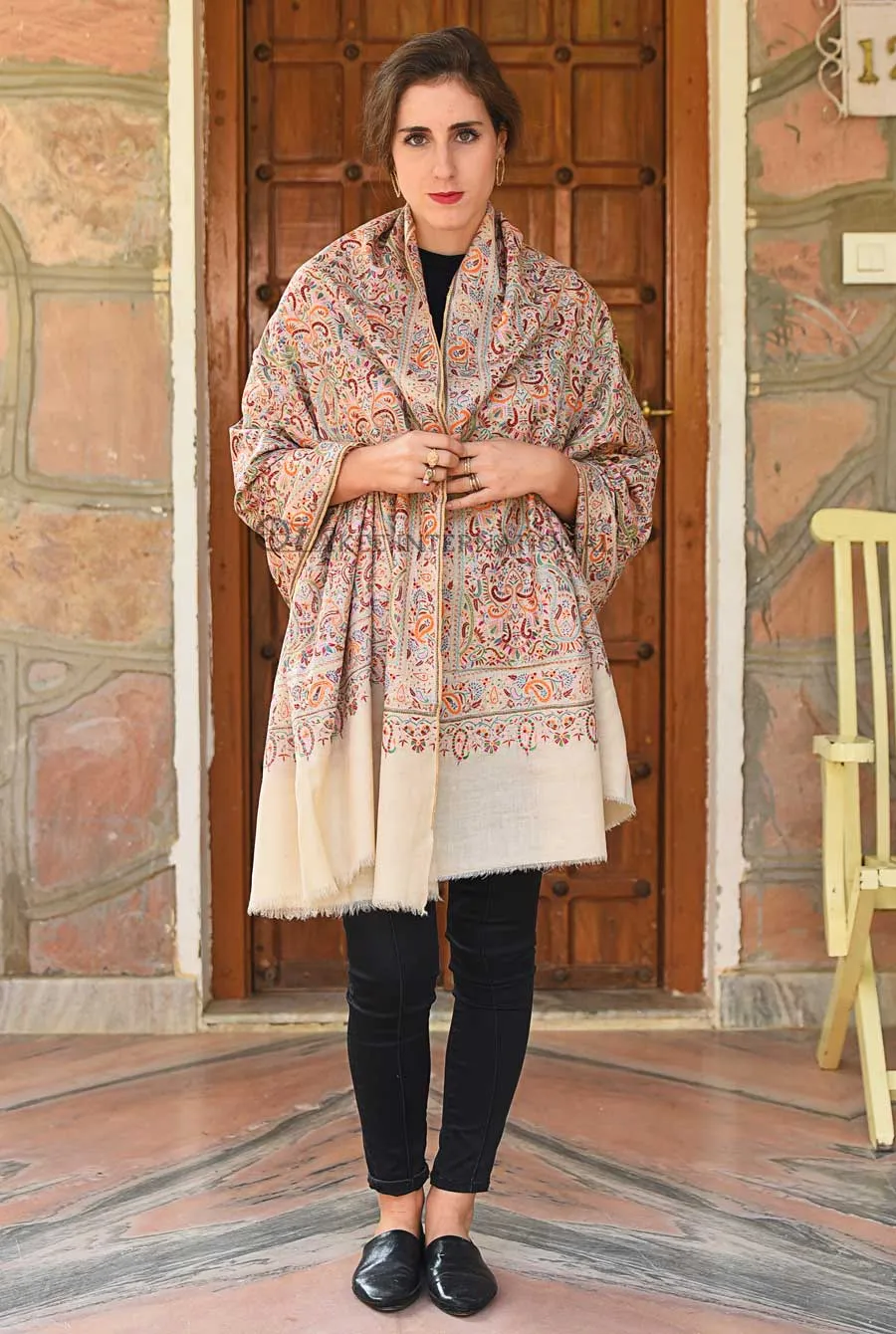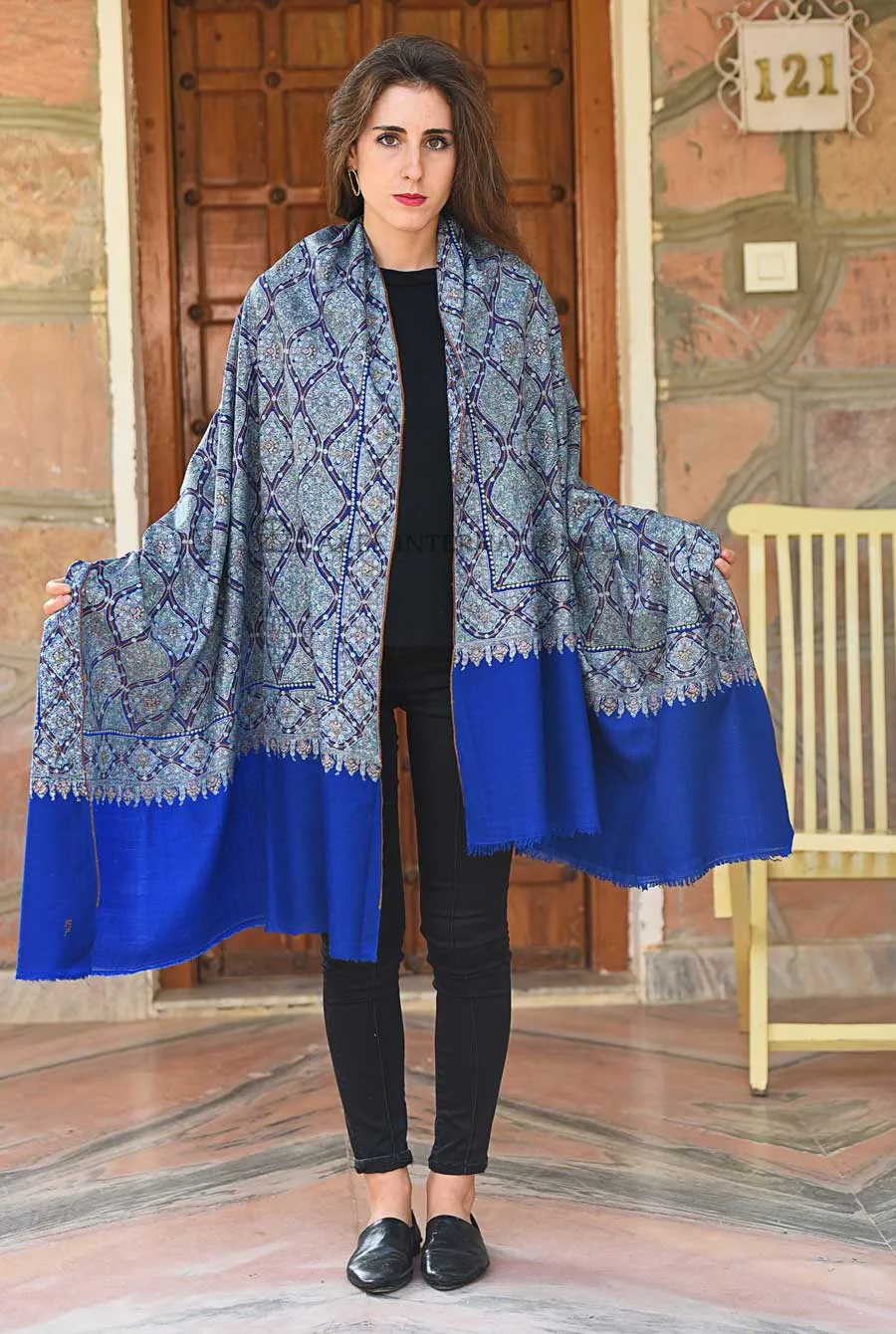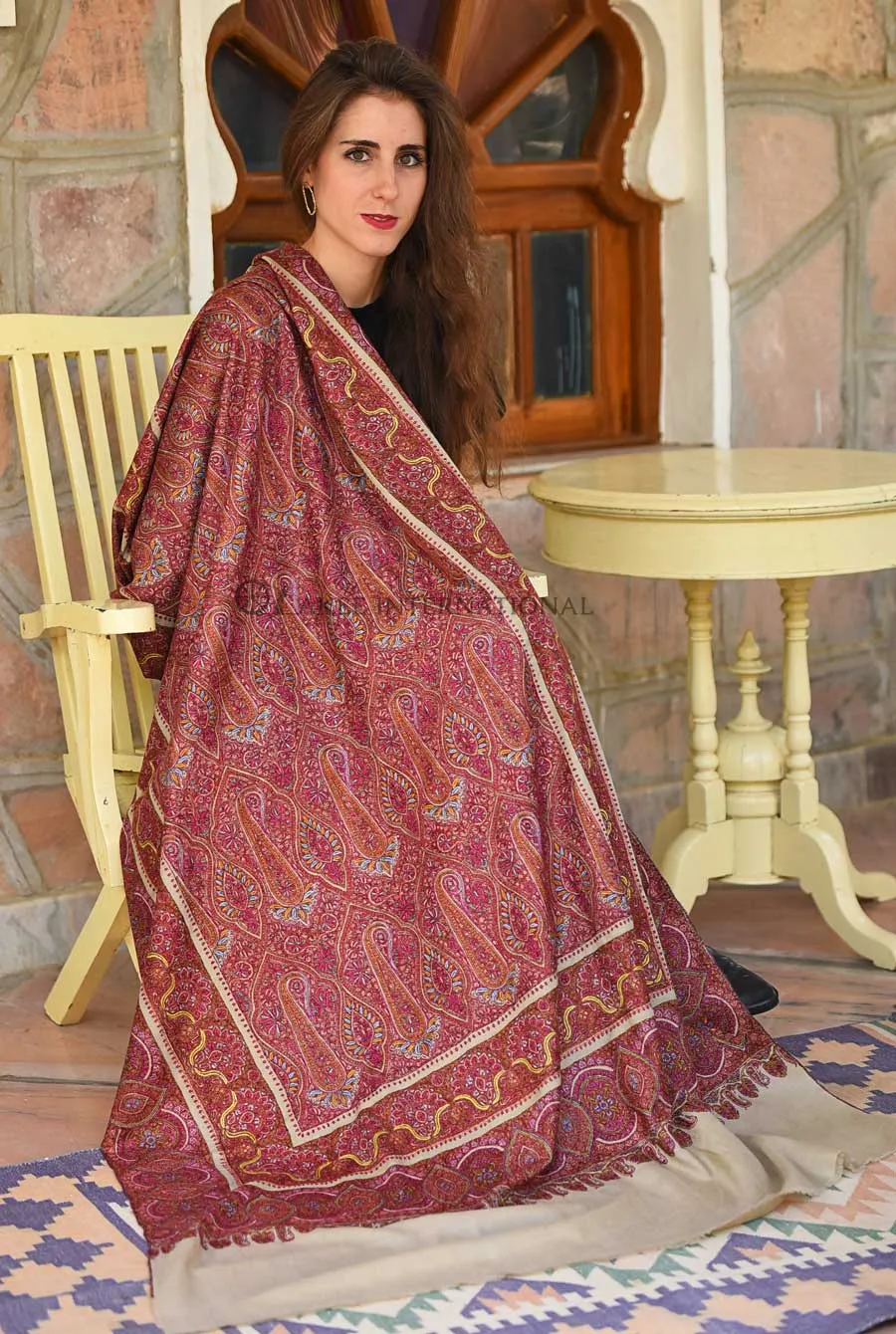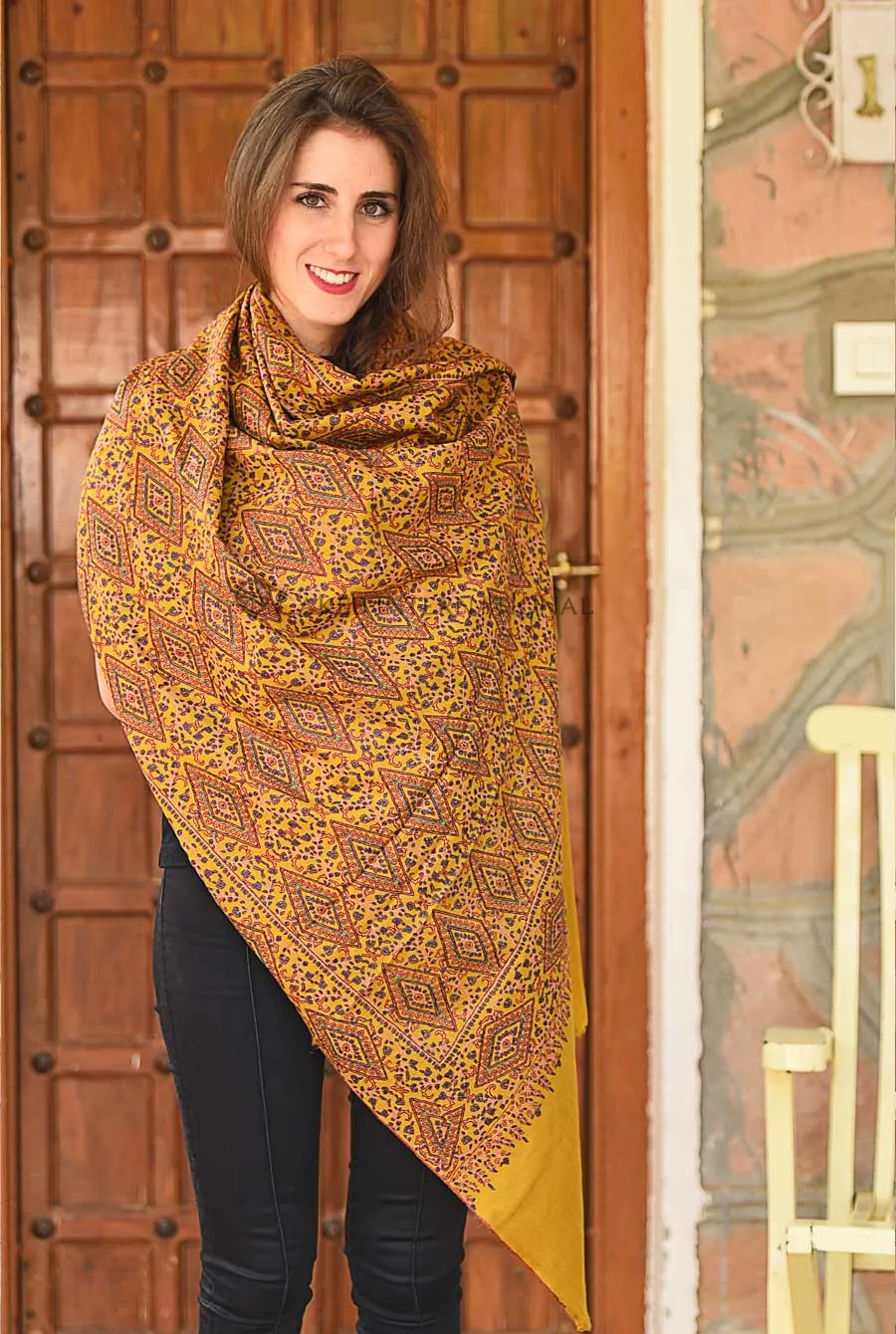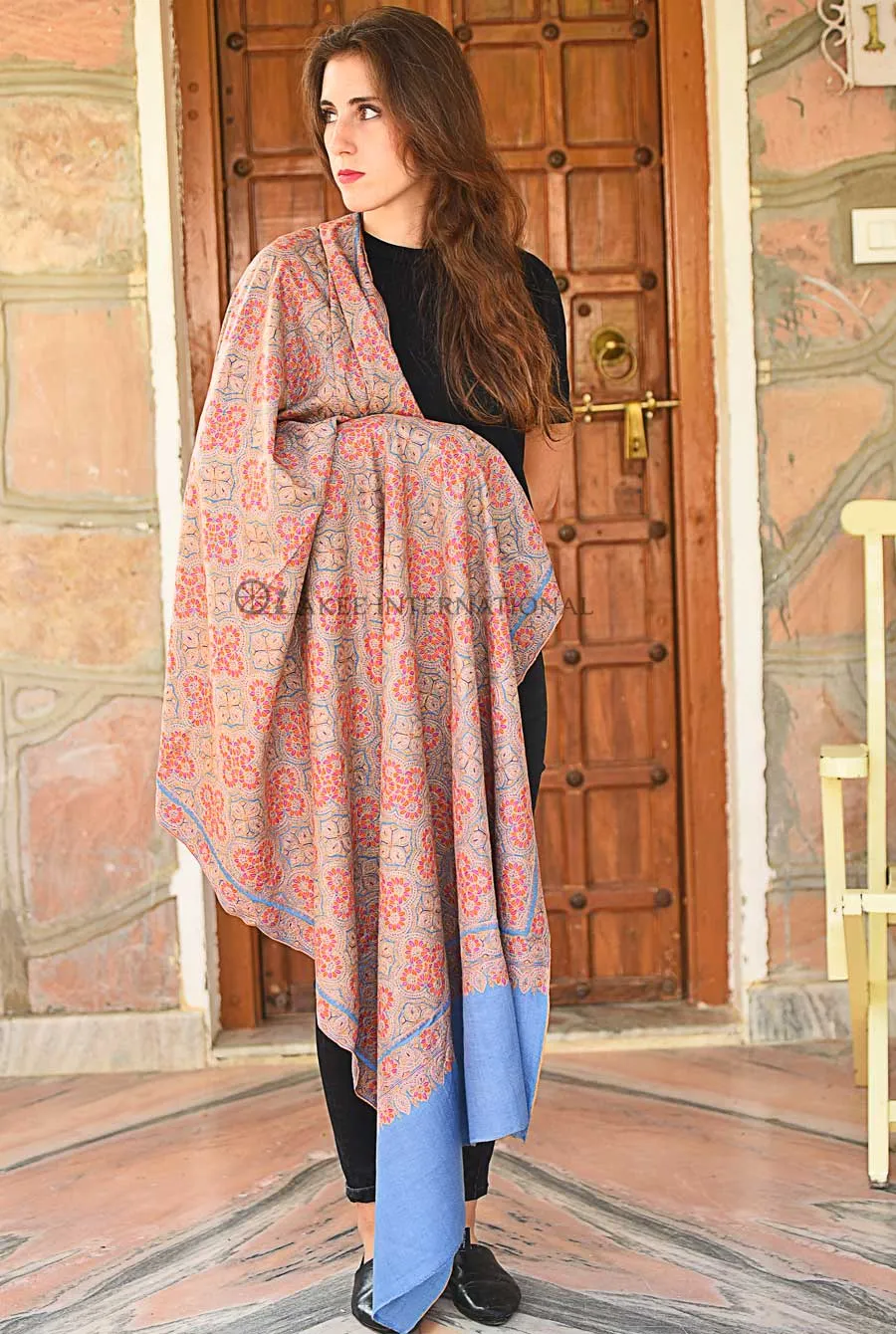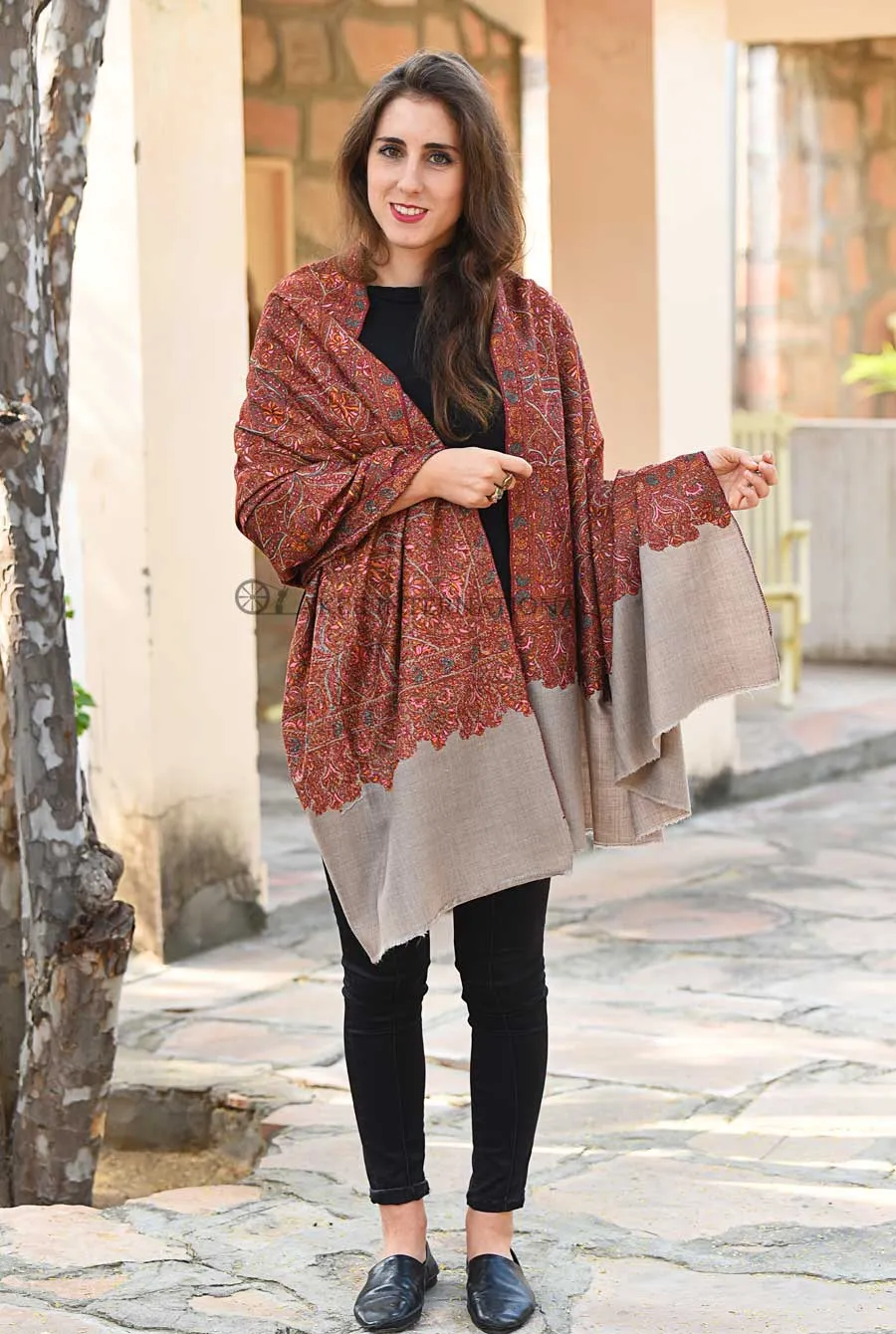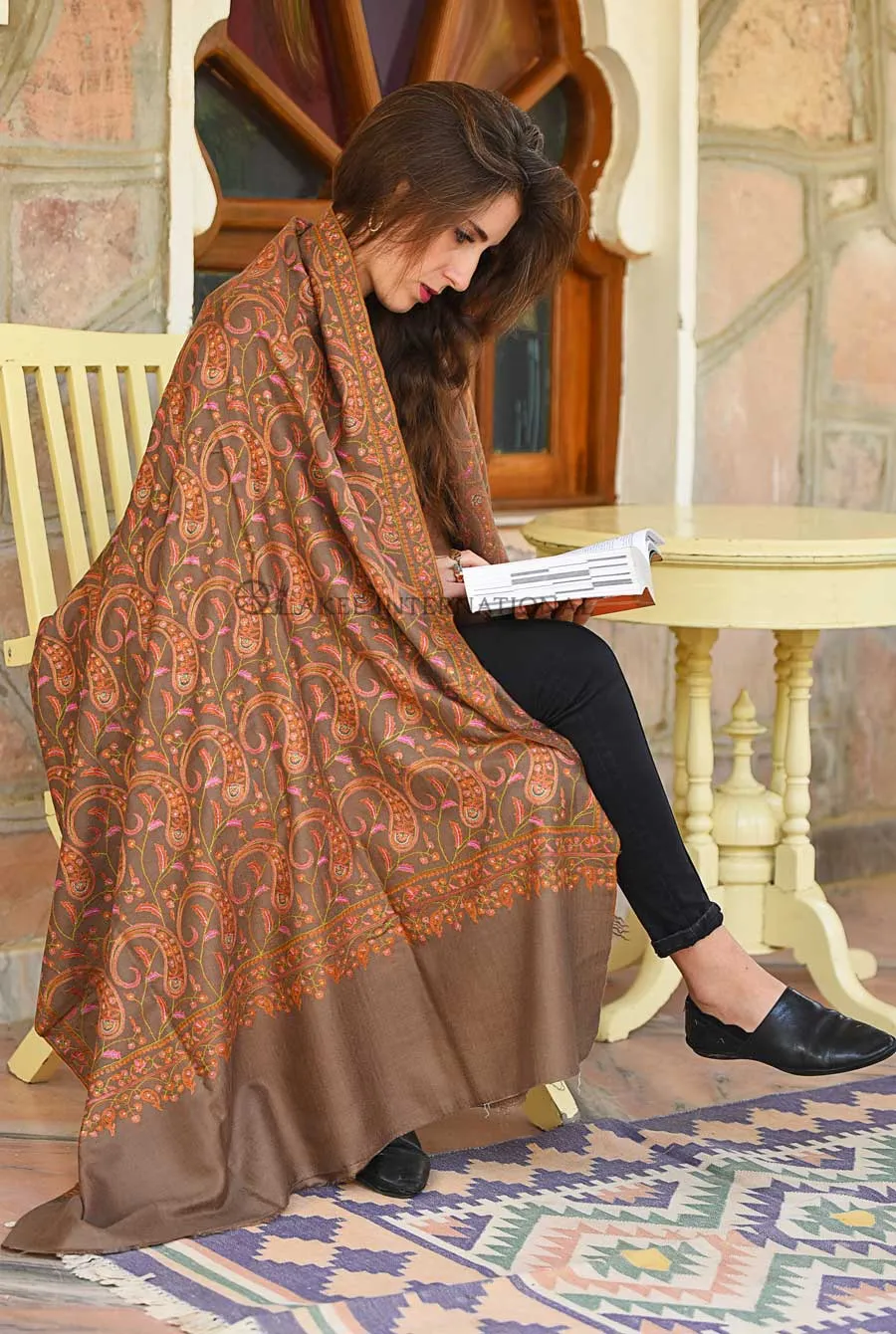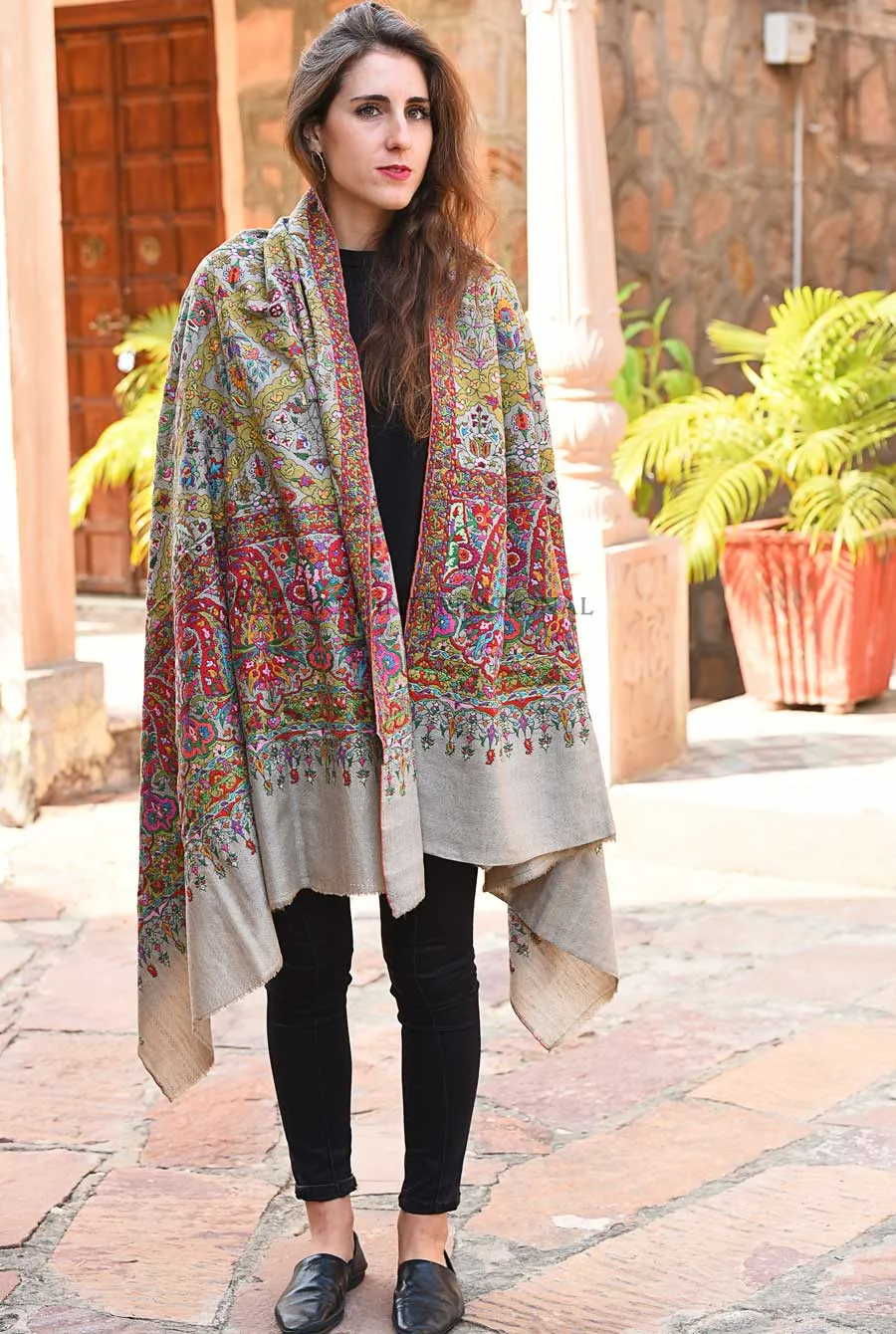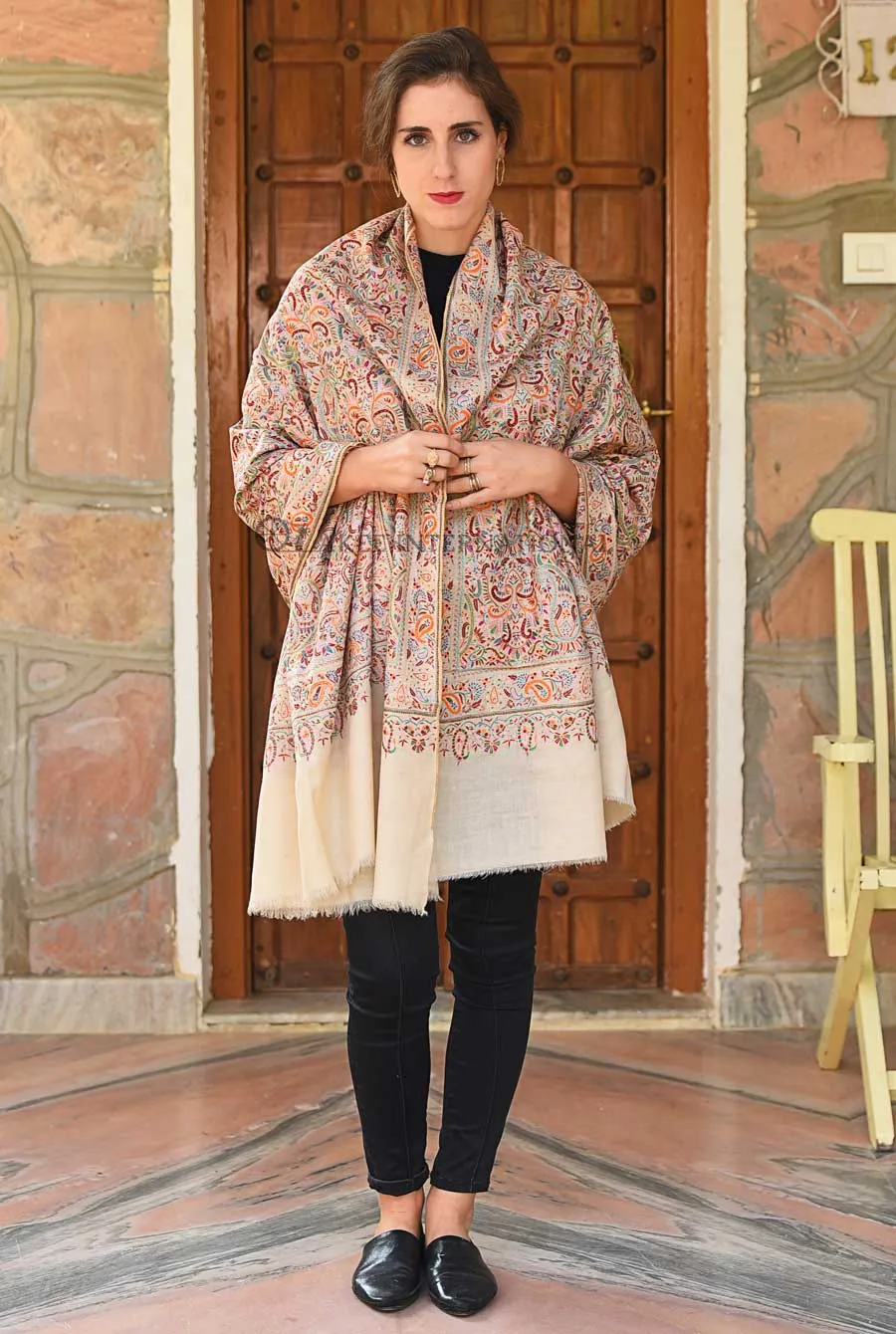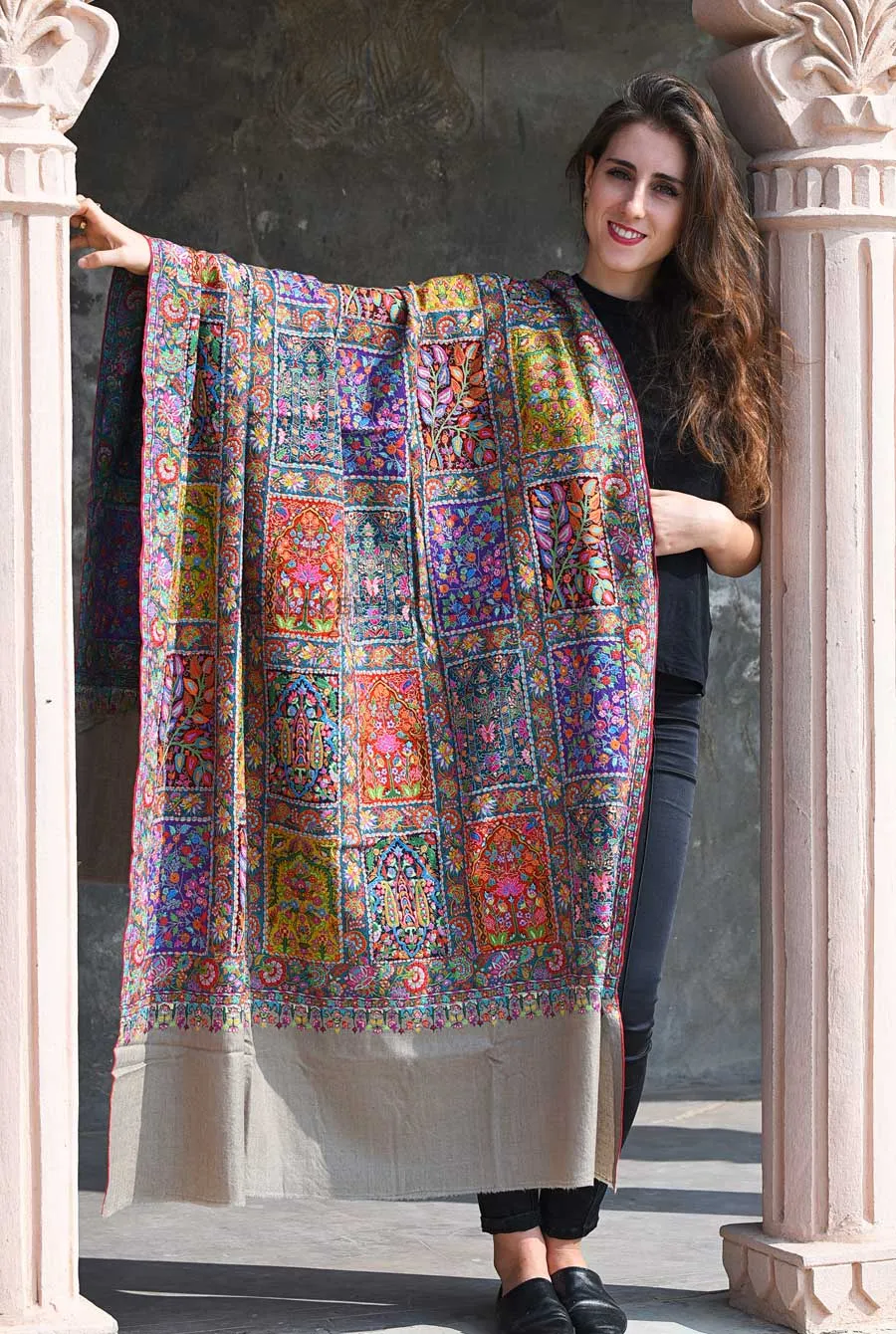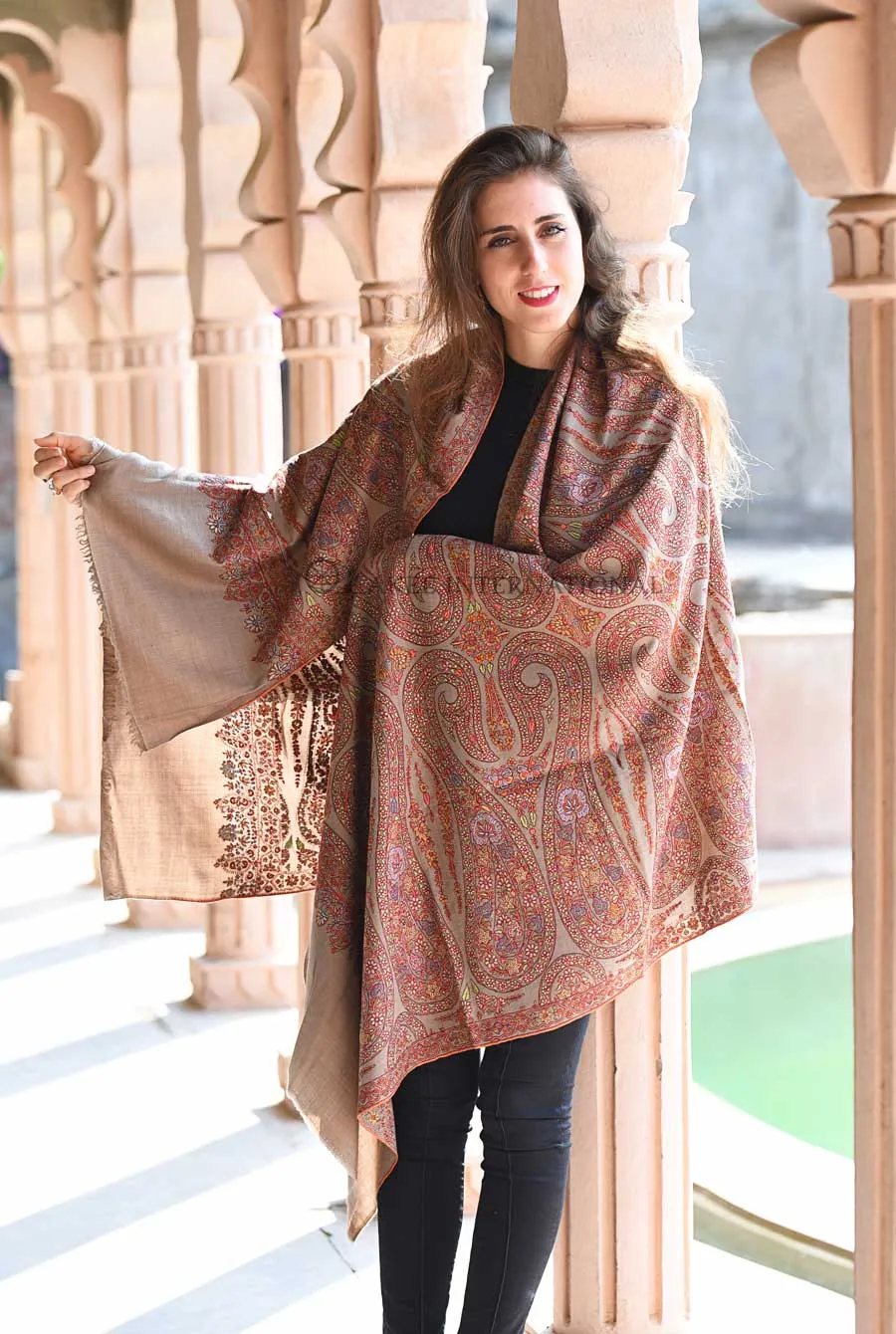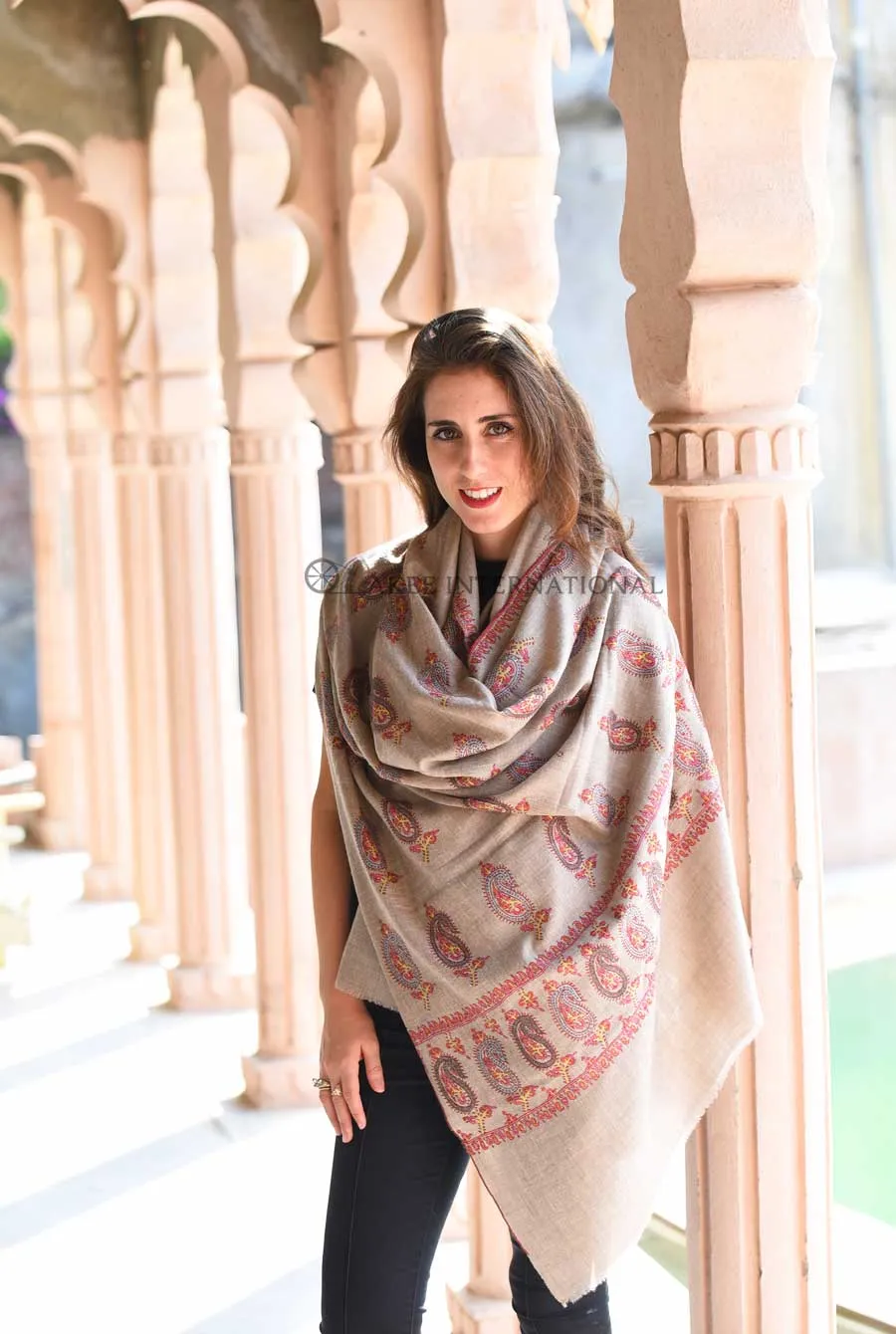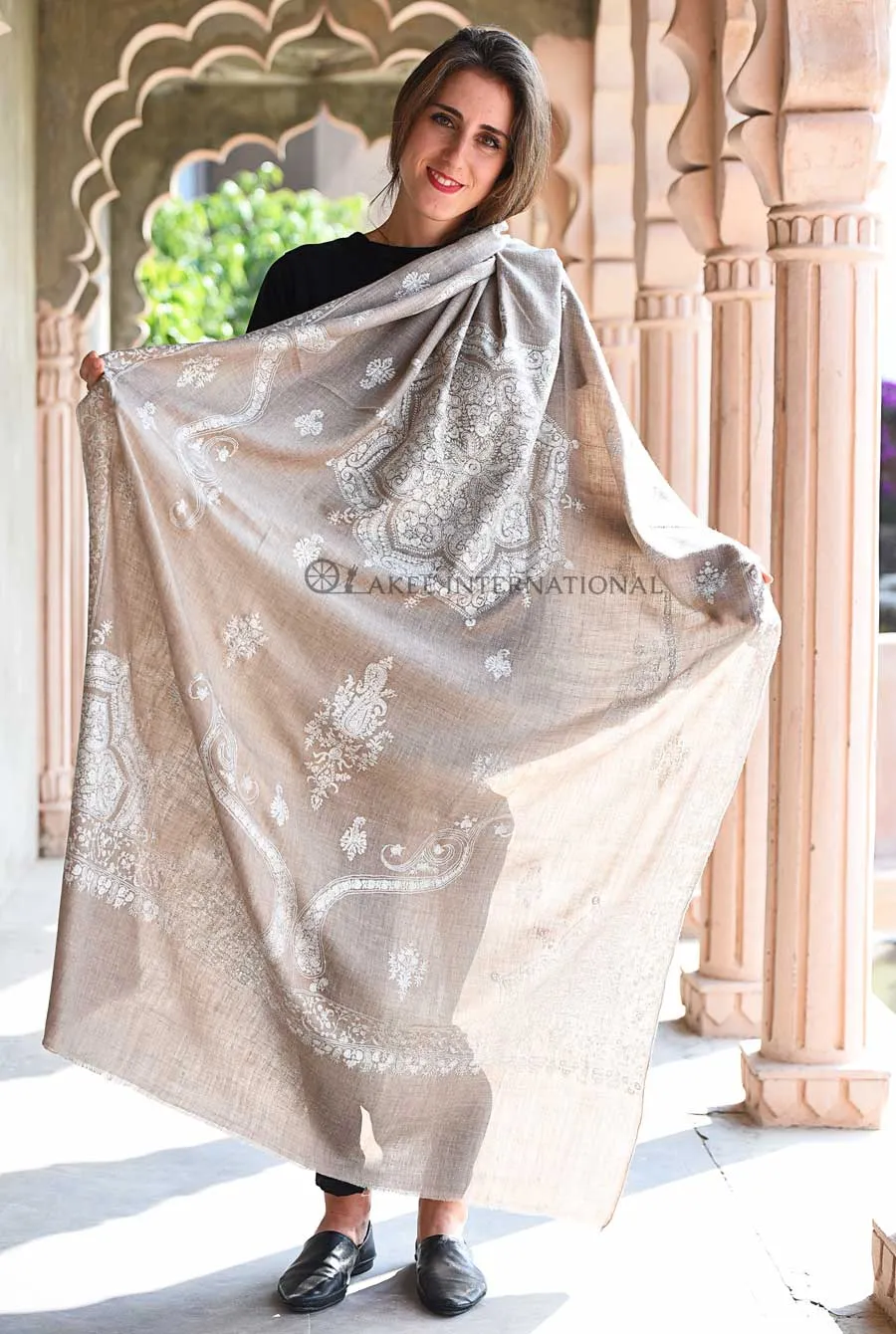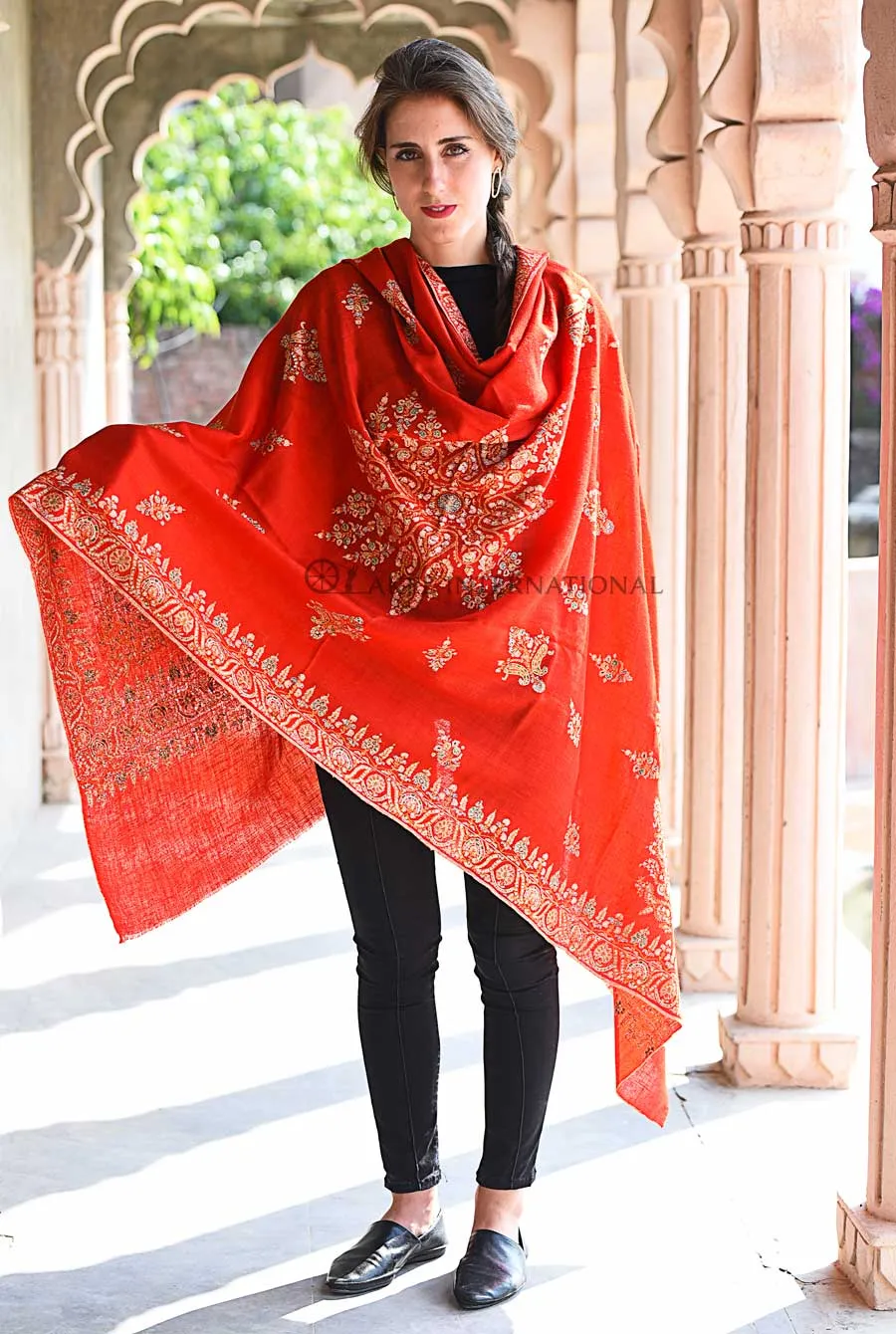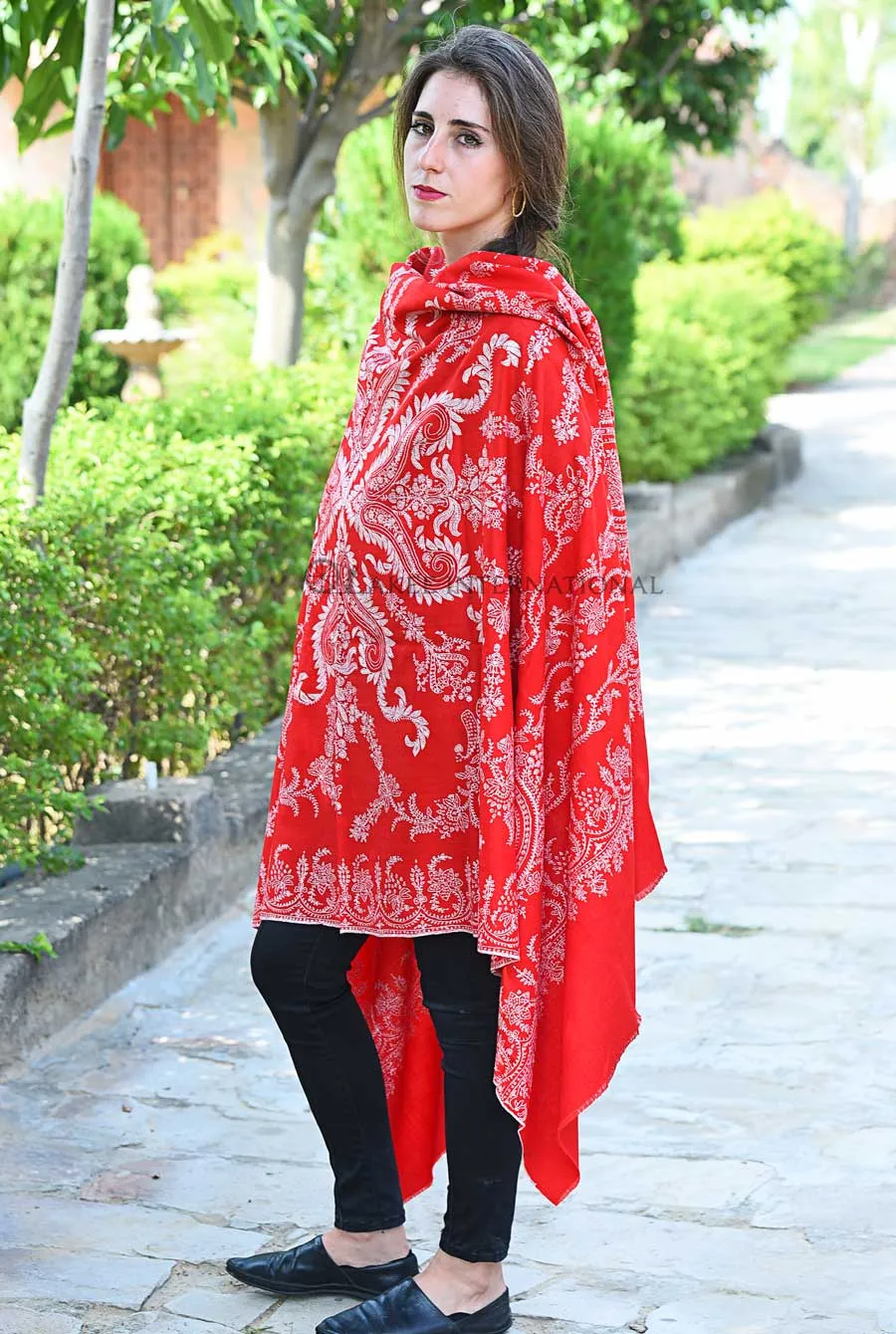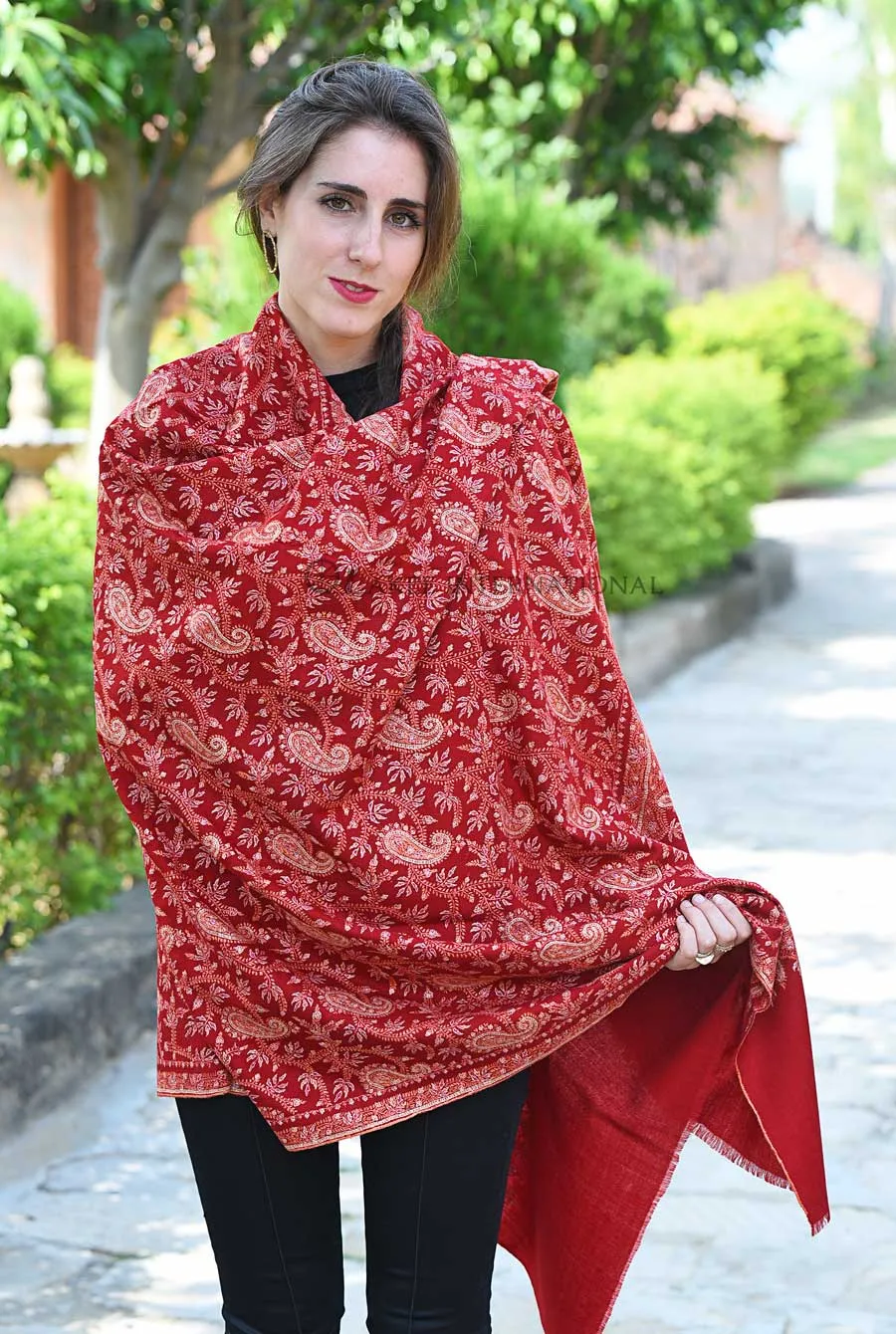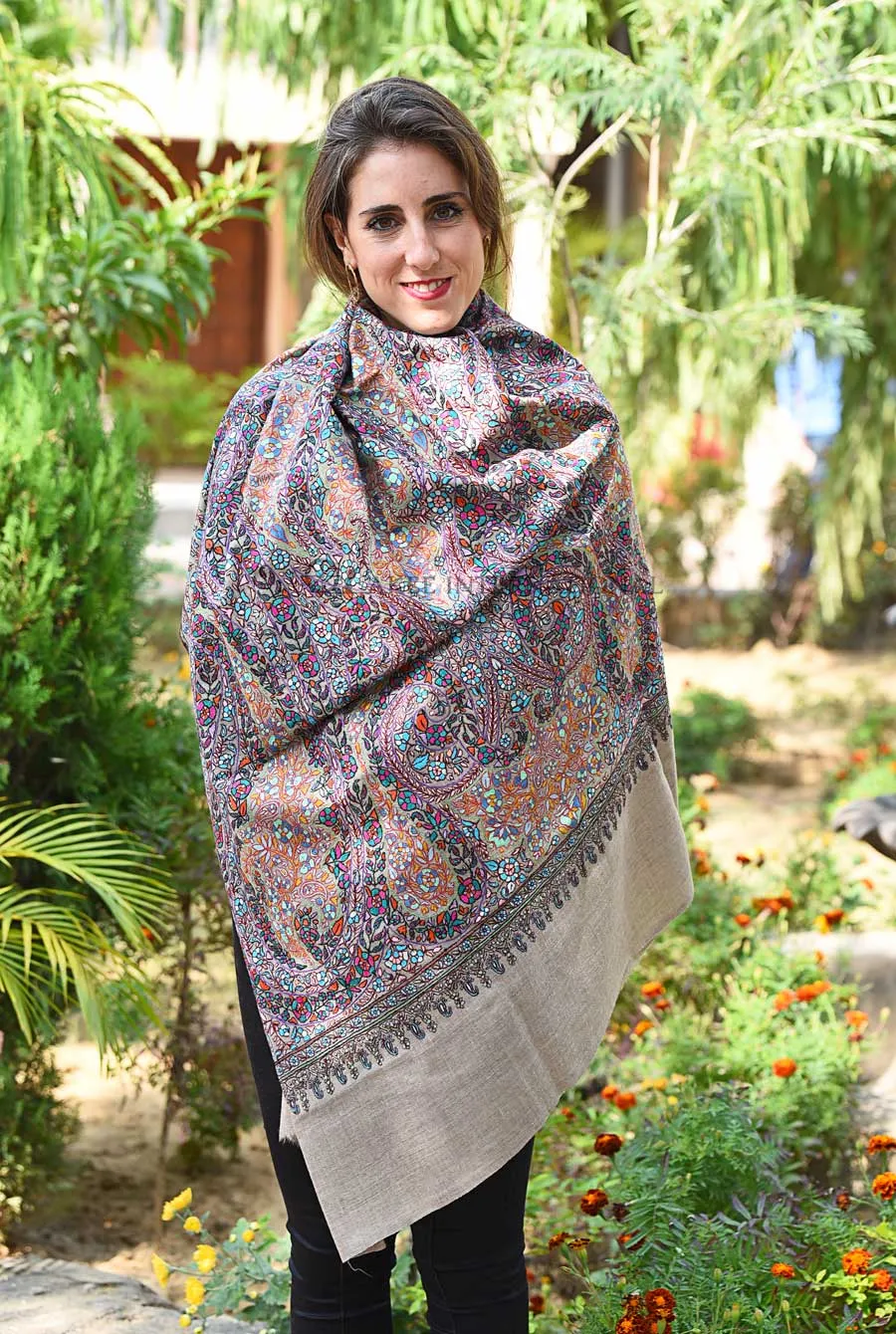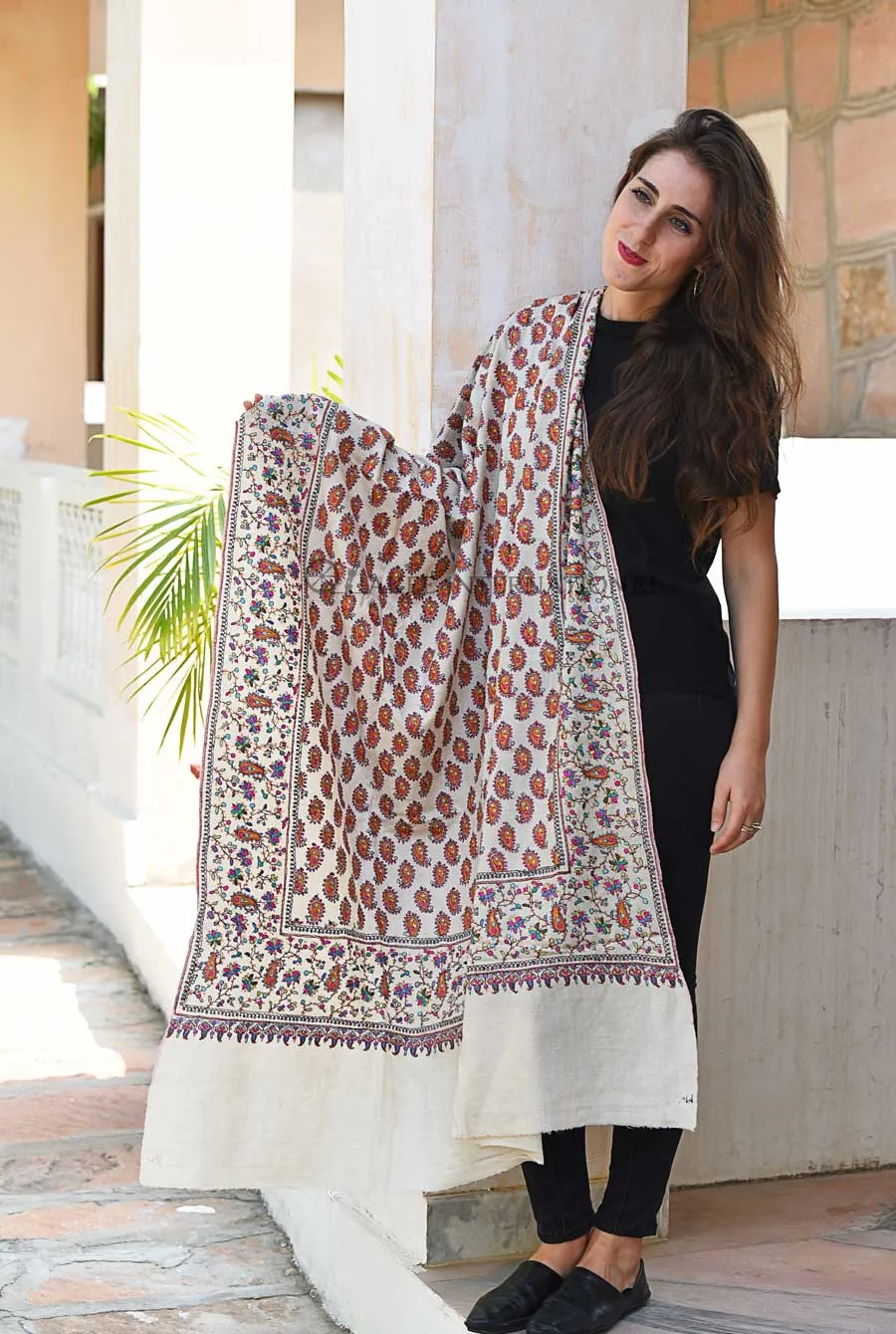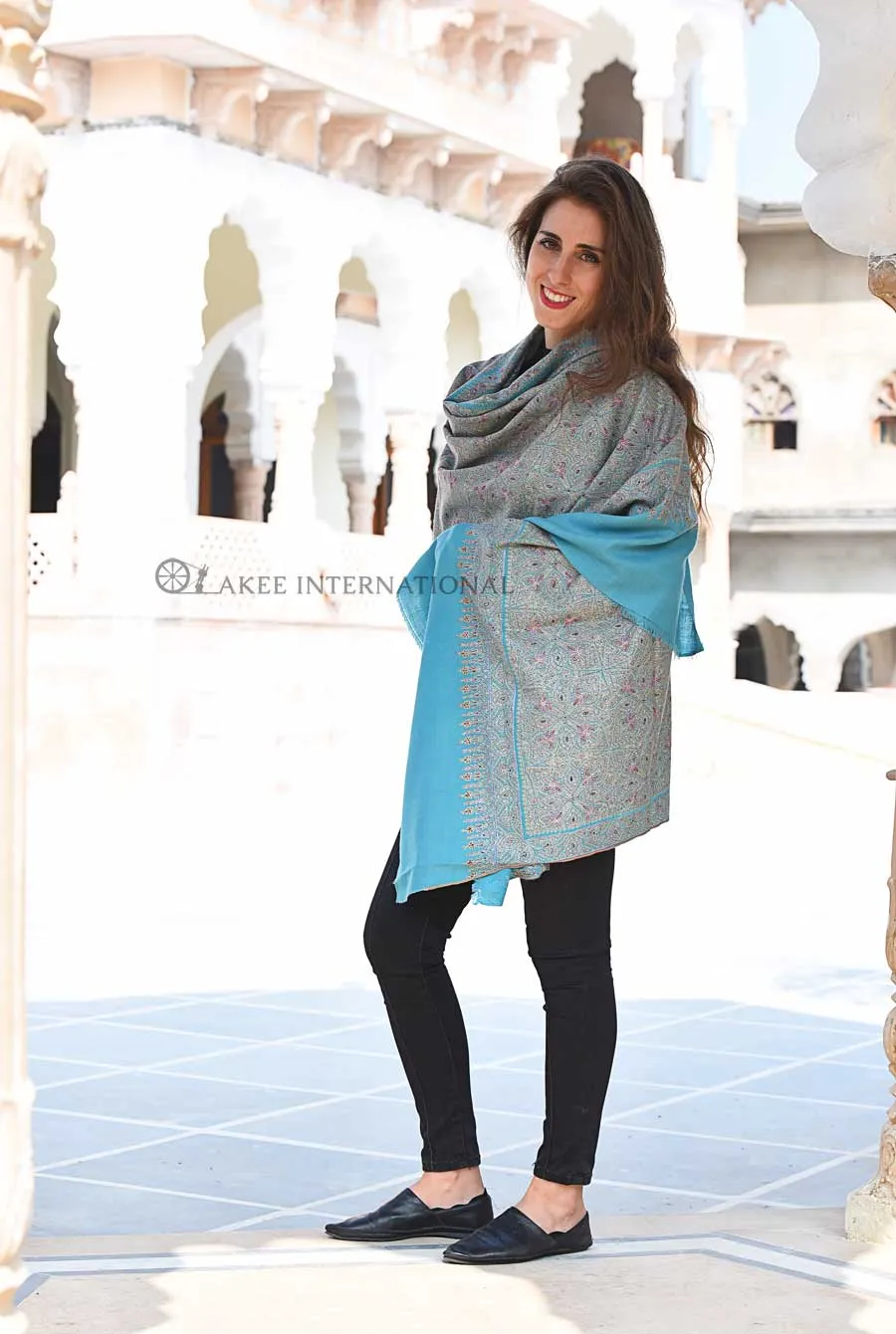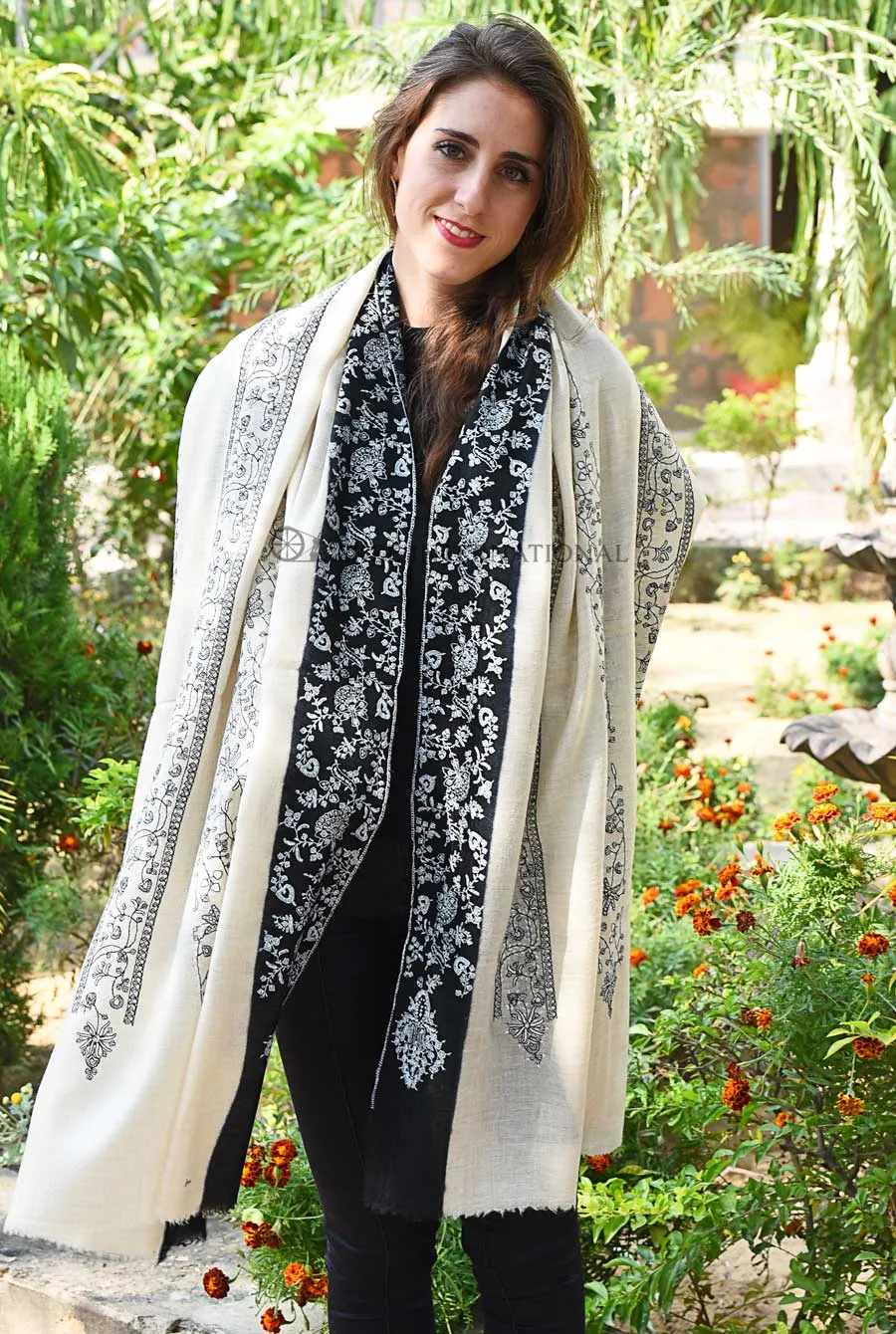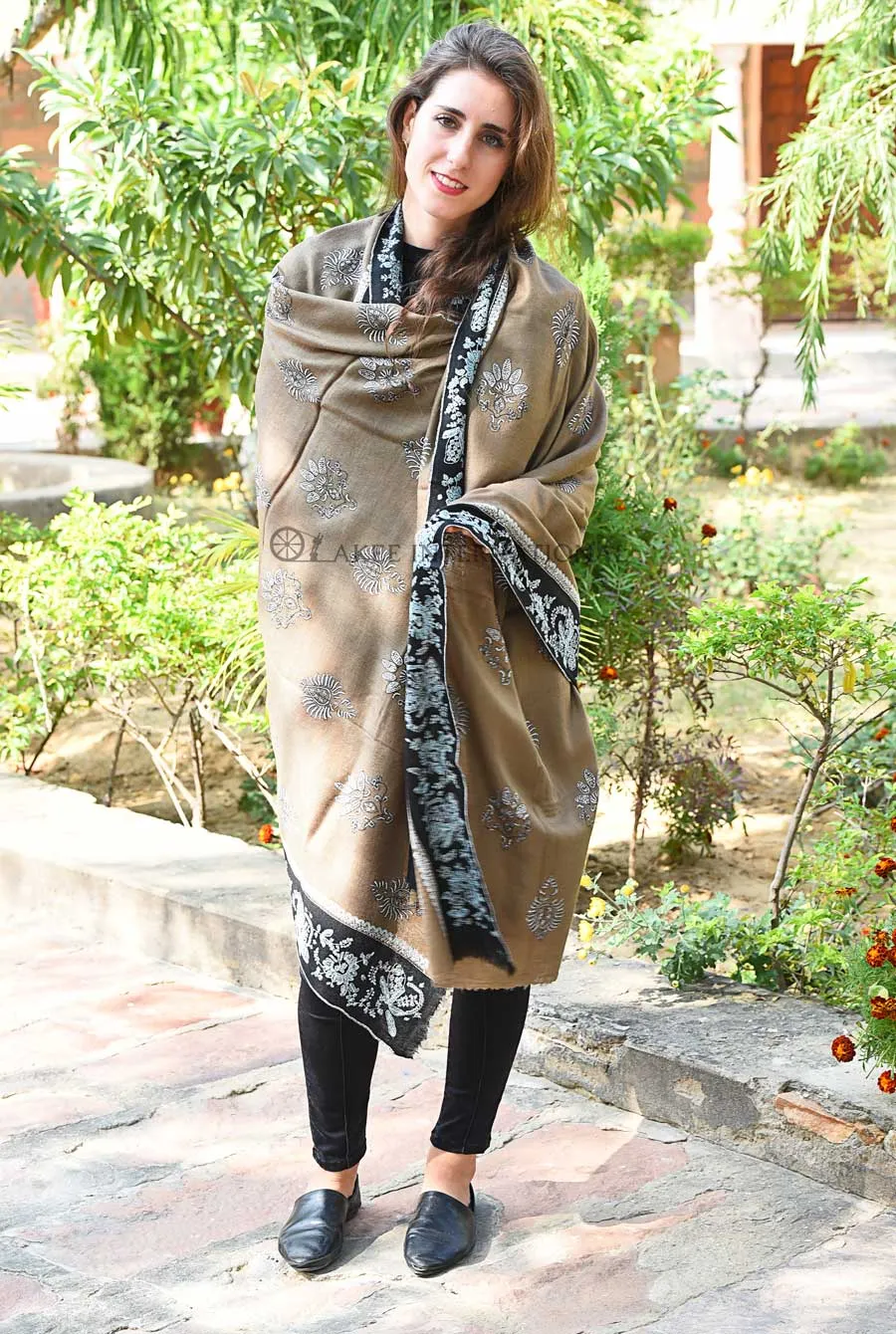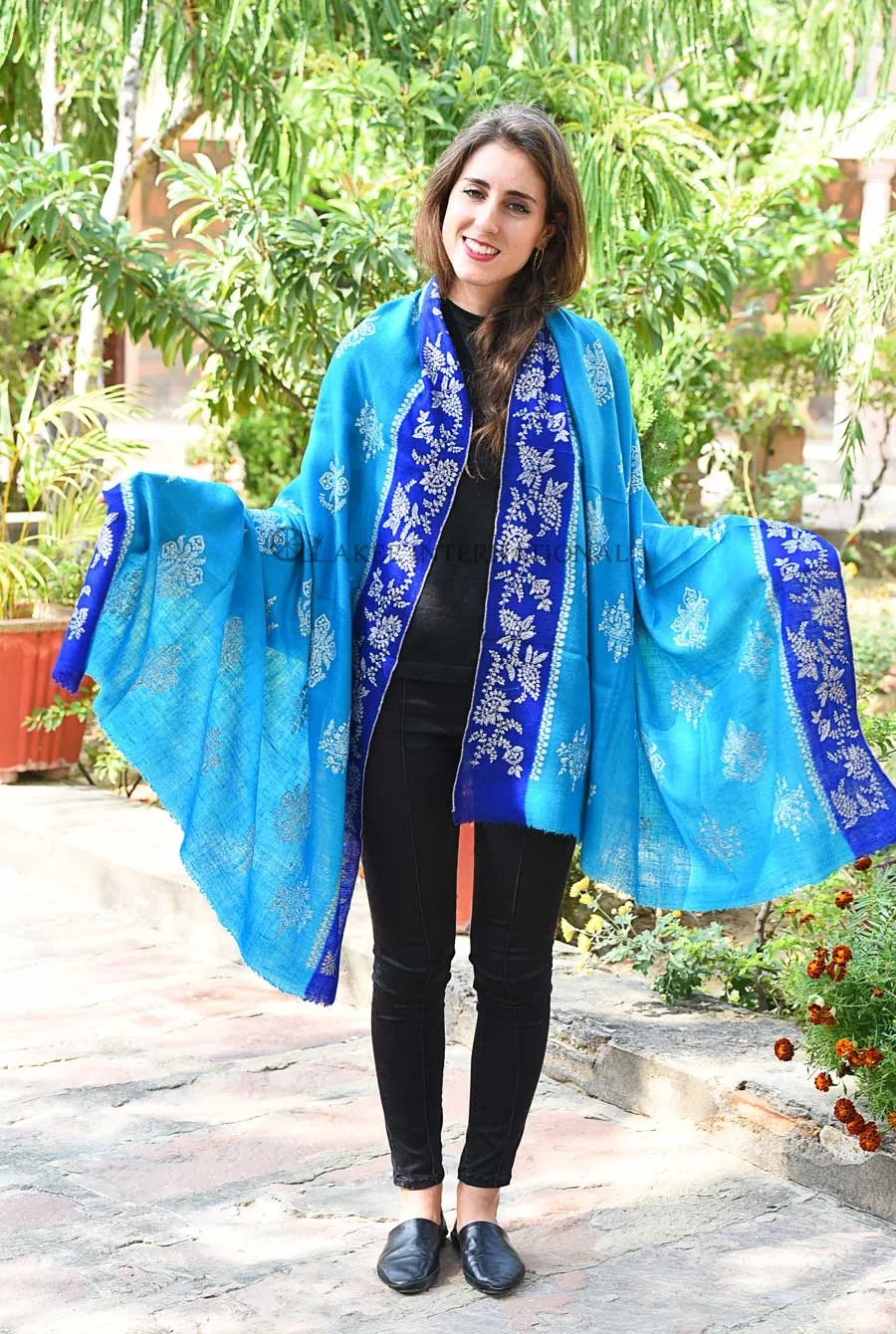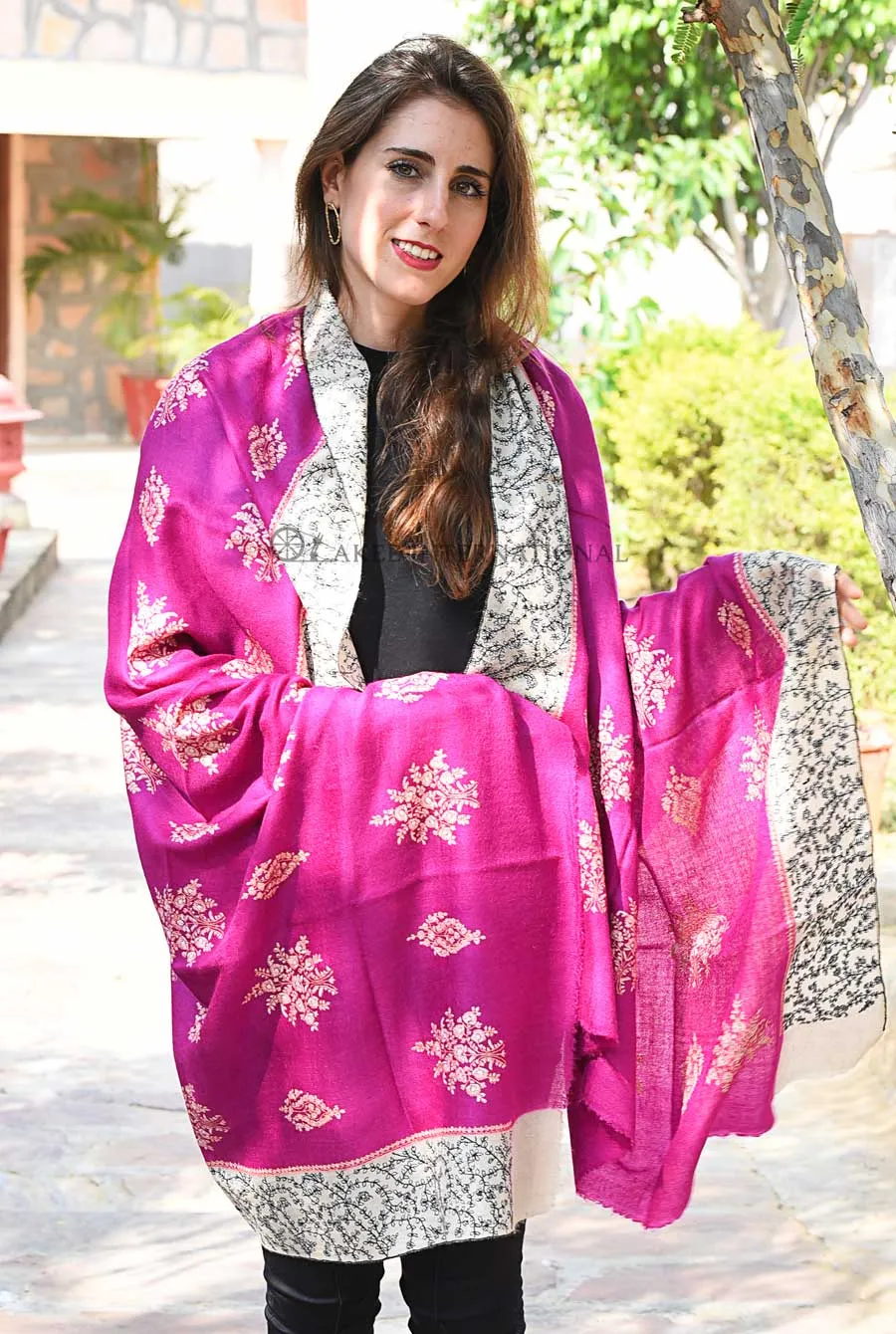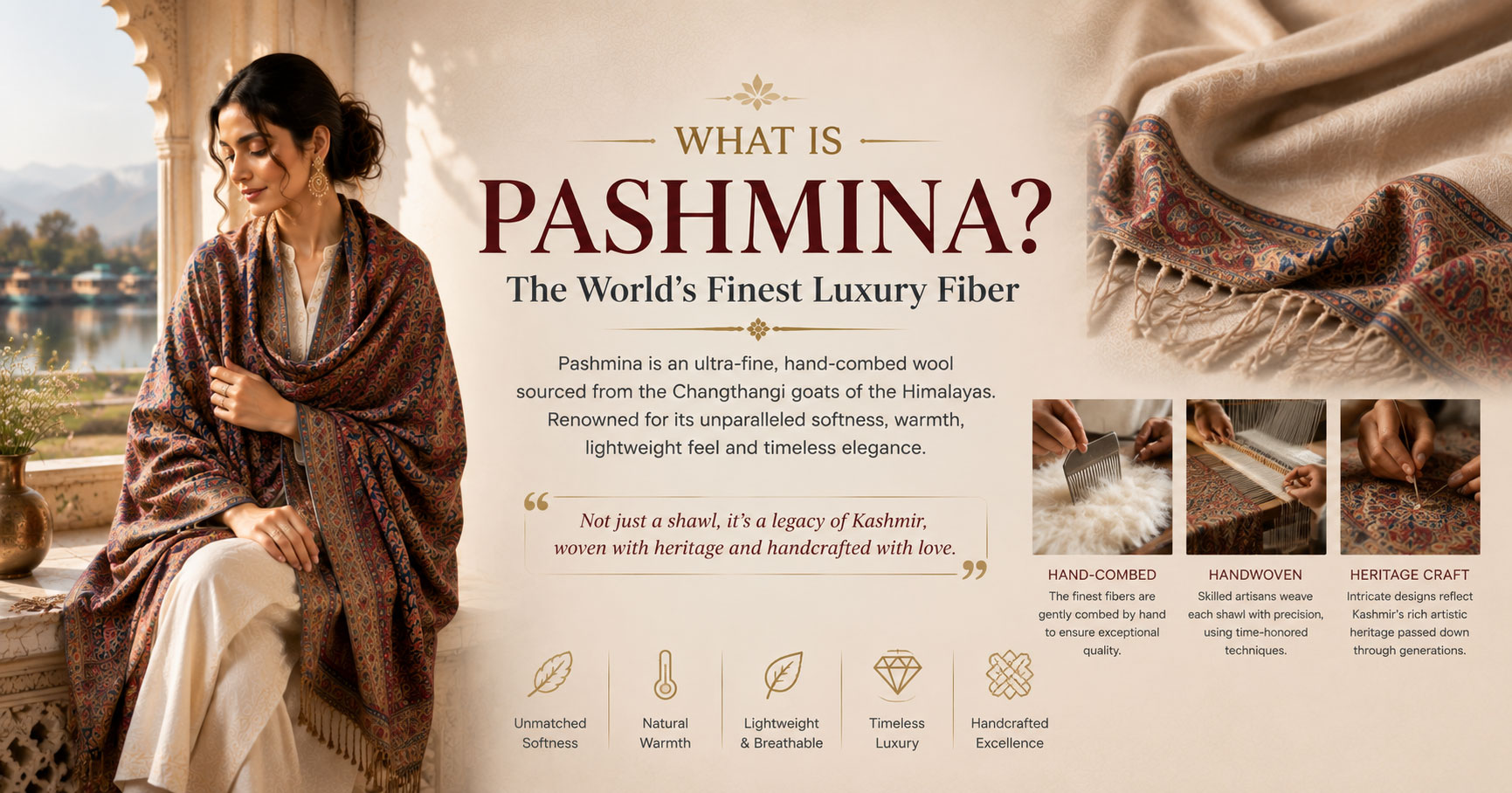
Few fabrics carry as much mystery, history and pure sensory pleasure as Pashmina. Whisper-light on the skin yet remarkably warm, this fibre has travelled from the frozen highlands of the Himalayas to the wardrobes of emperors, and today, to homes across the world. But what actually is Pashmina, where does it come from, and why does a genuine piece cost so much more than an ordinary shawl? This guide walks through the fibre, the craft and the culture behind every pashmina shawl that leaves a Kashmiri loom.
Pashmina takes its name from the Persian word "pashm," meaning wool. Over centuries, that single word came to represent an entire category of ultra-fine wool harvested from mountain goats living at extreme altitudes. When European traders first encountered these shawls, they anglicised the region's name — Kashmir — into "cashmere," which is why the two terms are so often used side by side today. Understanding this small linguistic history matters, because it explains a lot of the confusion buyers face when comparing pashmina and cashmere products in the market.
The story of Pashmina does not begin in a workshop — it begins on a high-altitude plateau. The Changthangi goat lives across the Changthang region of Ladakh, at elevations touching 14,000 to 15,000 feet, where winter temperatures regularly fall below minus 20 degrees Celsius. To survive such brutal cold, the goat grows an inner coat of extraordinarily fine down beneath its rough outer hair. This undercoat, shed naturally each spring, is what nomadic Changpa herders comb out by hand.
It is worth pausing on this point: no goat is harmed in the process. The fibre is combed the same way one might brush a pet, collected patiently over the shedding season. A single goat yields only around 80 to 170 grams of usable fibre a year, which is one of the biggest reasons genuine Pashmina remains a limited, precious material rather than a mass-market commodity.
Once the raw pashm reaches the workshops, it goes through a sequence of demanding manual stages before it can even be called yarn:
Cleaning and sorting — The raw fleece contains dust, grease and coarse guard hairs mixed in with the fine down. Artisans painstakingly separate the usable fibre by hand, discarding anything that would compromise the softness.
Hand dehairing — This is arguably the most tedious stage of the entire journey. Skilled workers, usually women who have inherited the craft from their mothers and grandmothers, spend hours removing every last coarse hair, often managing only a small quantity of clean fibre in a full day's work.
Hand spinning — The cleaned fibre is spun on a traditional wooden wheel called a charkha. This step demands a light touch, since pashm fibres are only a fraction of the thickness of human hair and can break under any rough handling.
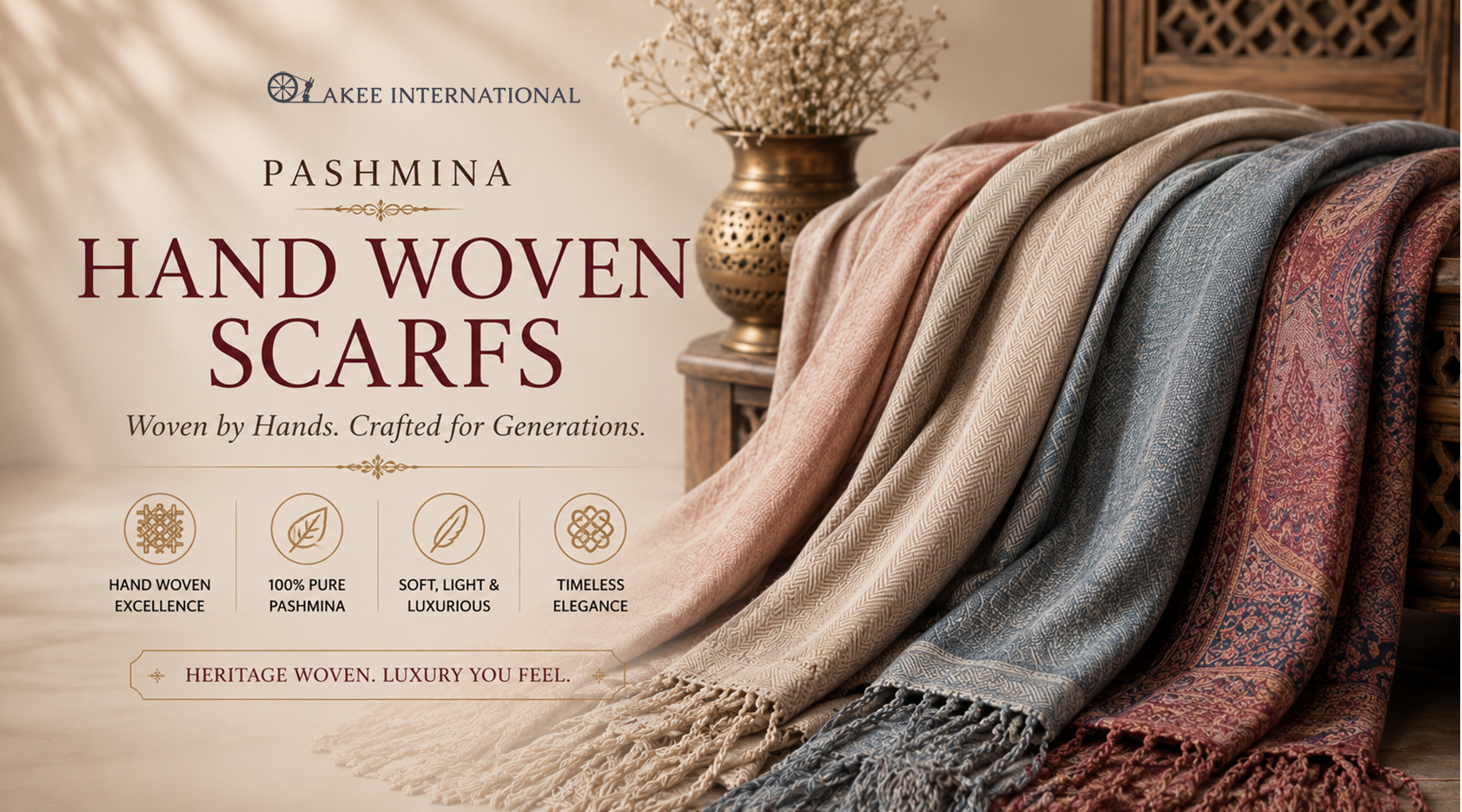
Weaving — The spun yarn is finally set up on a handloom and woven, thread by thread, into fabric. A simple plain-weave shawl can take several days to complete, while intricately patterned pieces may take months.
Every one of Akee International's handmade pashmina shawls passes through this exact chain of hands before it is ready for finishing and embroidery. Our page on the Kashmiri shawl weaving tradition and our page on Kashmiri artisan-made Pashmina introduce the specific people behind these stages in more depth.
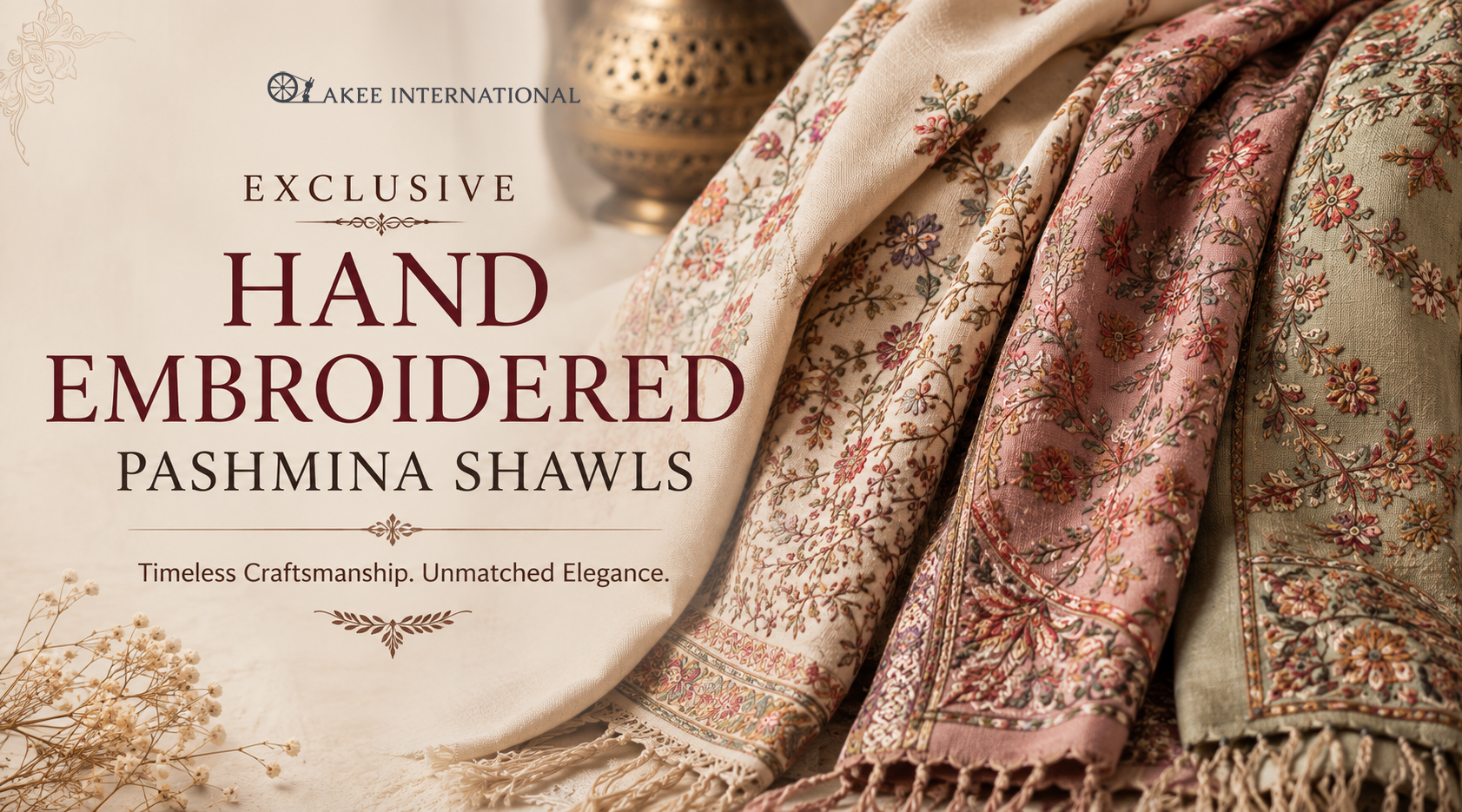
A plain woven shawl is beautiful in its simplicity, but it is embroidery that transforms Pashmina into wearable art. Kashmir has nurtured several distinct embroidery styles over generations, each with its own character:
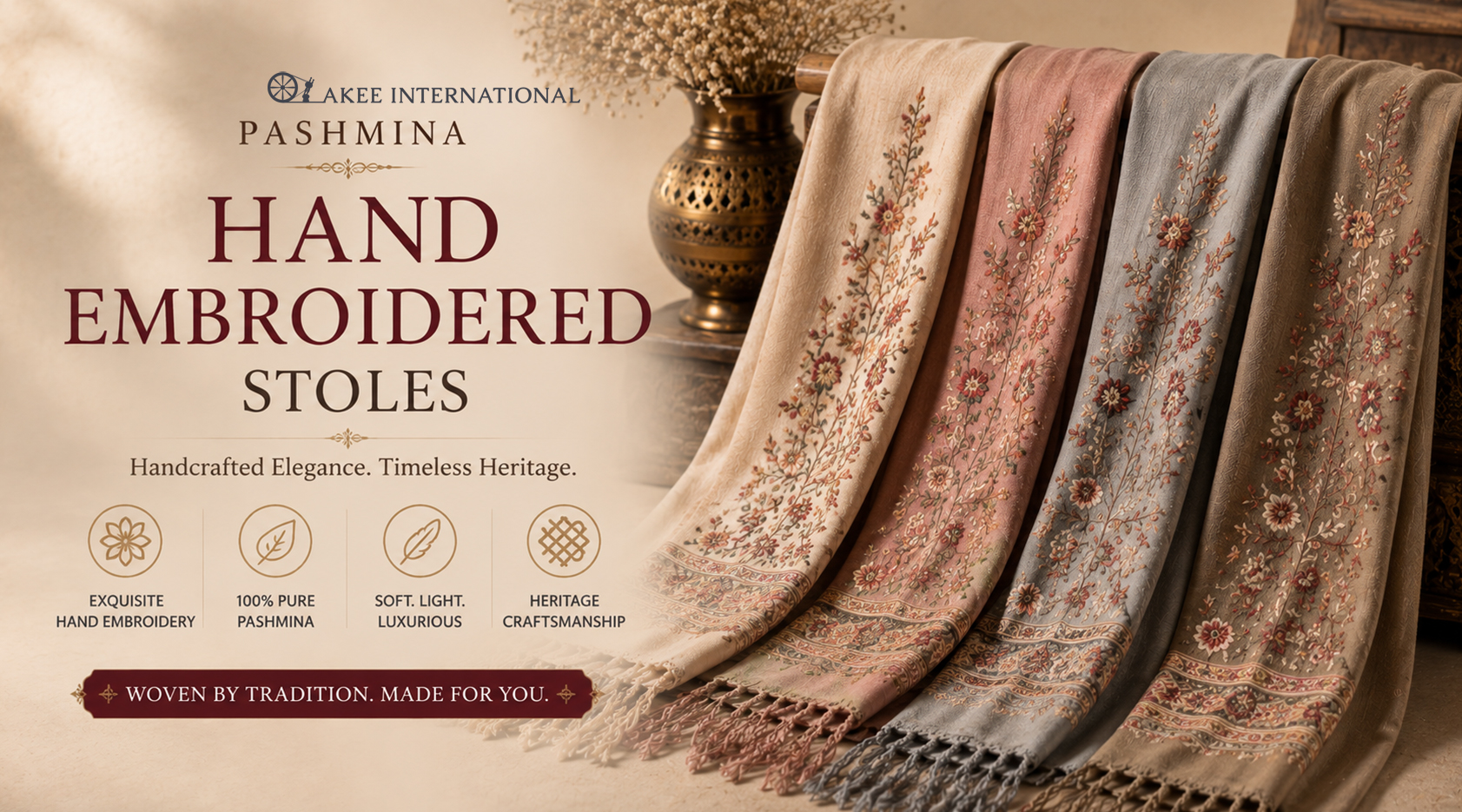
Sozni embroidery uses fine needles and silk or "staple" thread to stitch delicate, detailed motifs directly onto the shawl's surface. It is slow, meditative work — a single elaborately embroidered piece can occupy a master craftsman for months. Explore this tradition through our Sozni embroidery pashmina shawls and our Kashmiri Sozni Work Shawl collection.
Tilla embroidery brings metallic gold or silver thread into the design, typically along borders and paisley motifs, giving the shawl a regal, jewel-like shimmer that was historically reserved for royal courts.
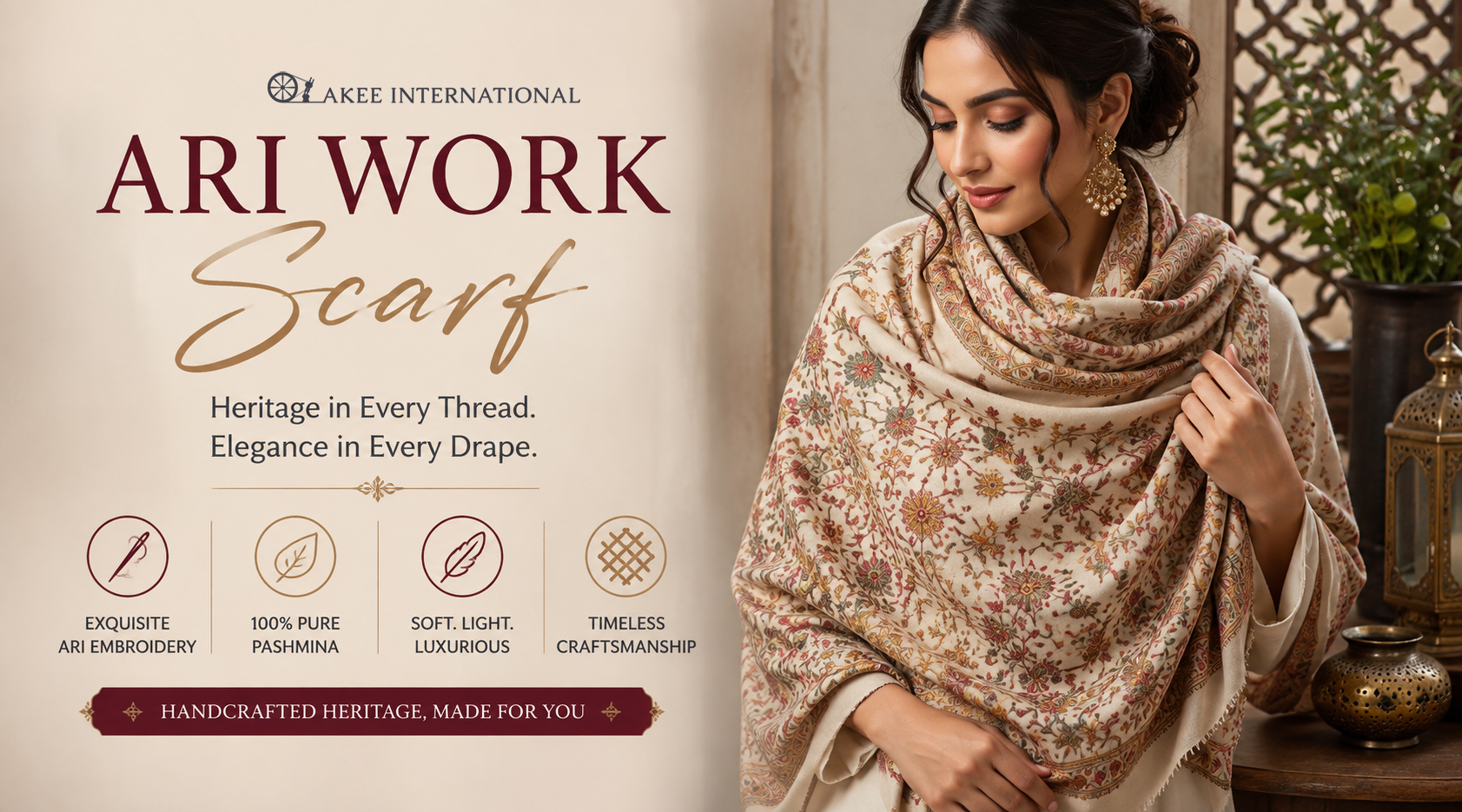
Ari work, done with a hooked needle rather than a straight one, allows embroiderers to create dense, chain-stitch patterns quickly while still achieving remarkable intricacy. Browse our Ari work pashmina collection to see this technique up close.
Beyond these, traditional motifs recur across generations of Kashmiri design: the buta and buti (single and clustered floral forms), the paisley (known locally as badam or ambi), and shikargah patterns depicting hunting scenes filled with animals and foliage. Each motif carries its own history, and recognising them is often the first step toward appreciating a shawl's true craftsmanship.
Two techniques stand above the rest in terms of sheer labour and prestige.
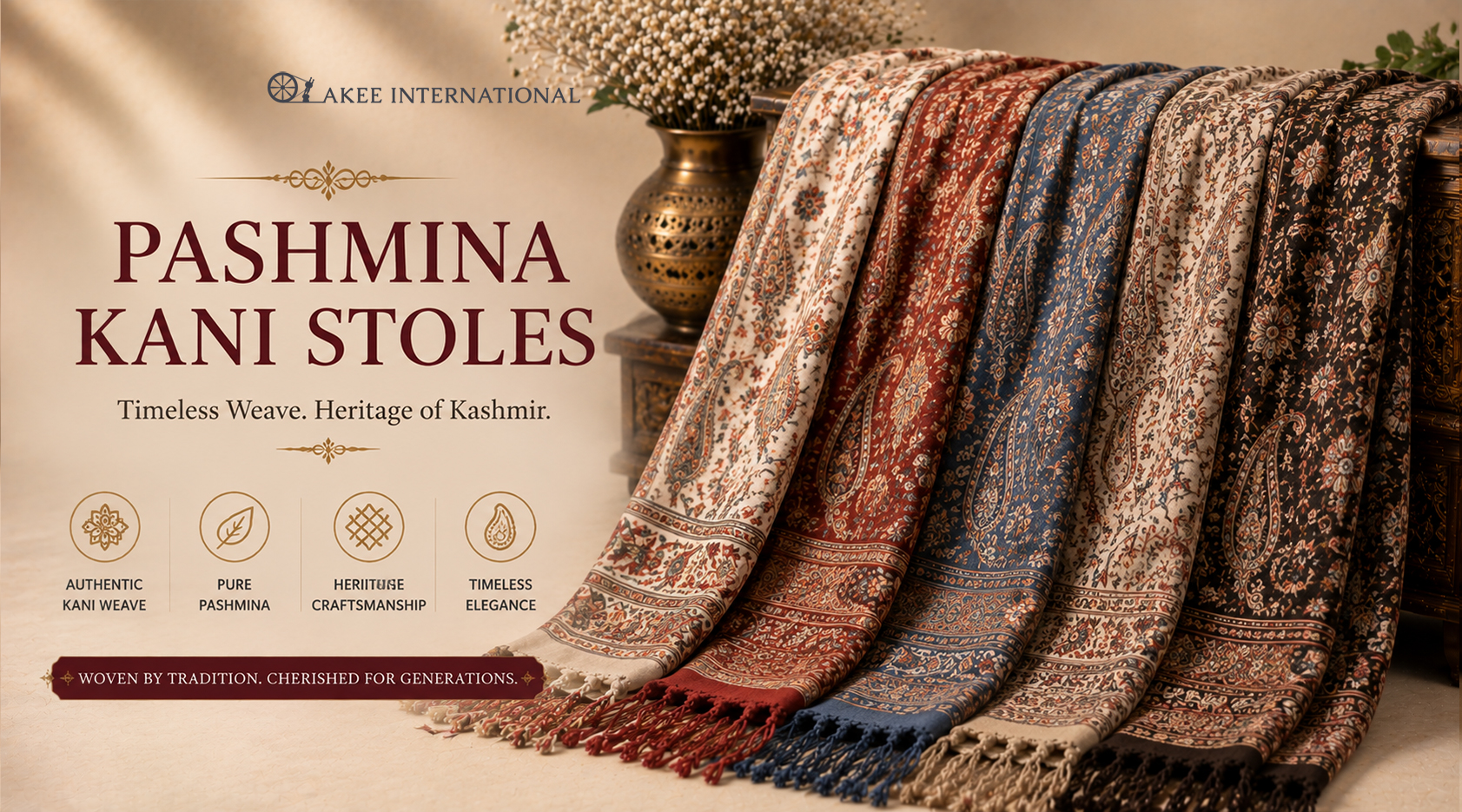
Kani weaving does not use embroidery at all — the pattern is built directly into the fabric during weaving, using small wooden spools called "kanis" instead of a shuttle. Each colour requires a separate spool, and a single weft line might involve dozens of them. This is why a detailed Kani piece can take six to nine months to complete on the loom. Our Kani pashmina stoles and Kani Shawl Online collections showcase this centuries-old weaving discipline.
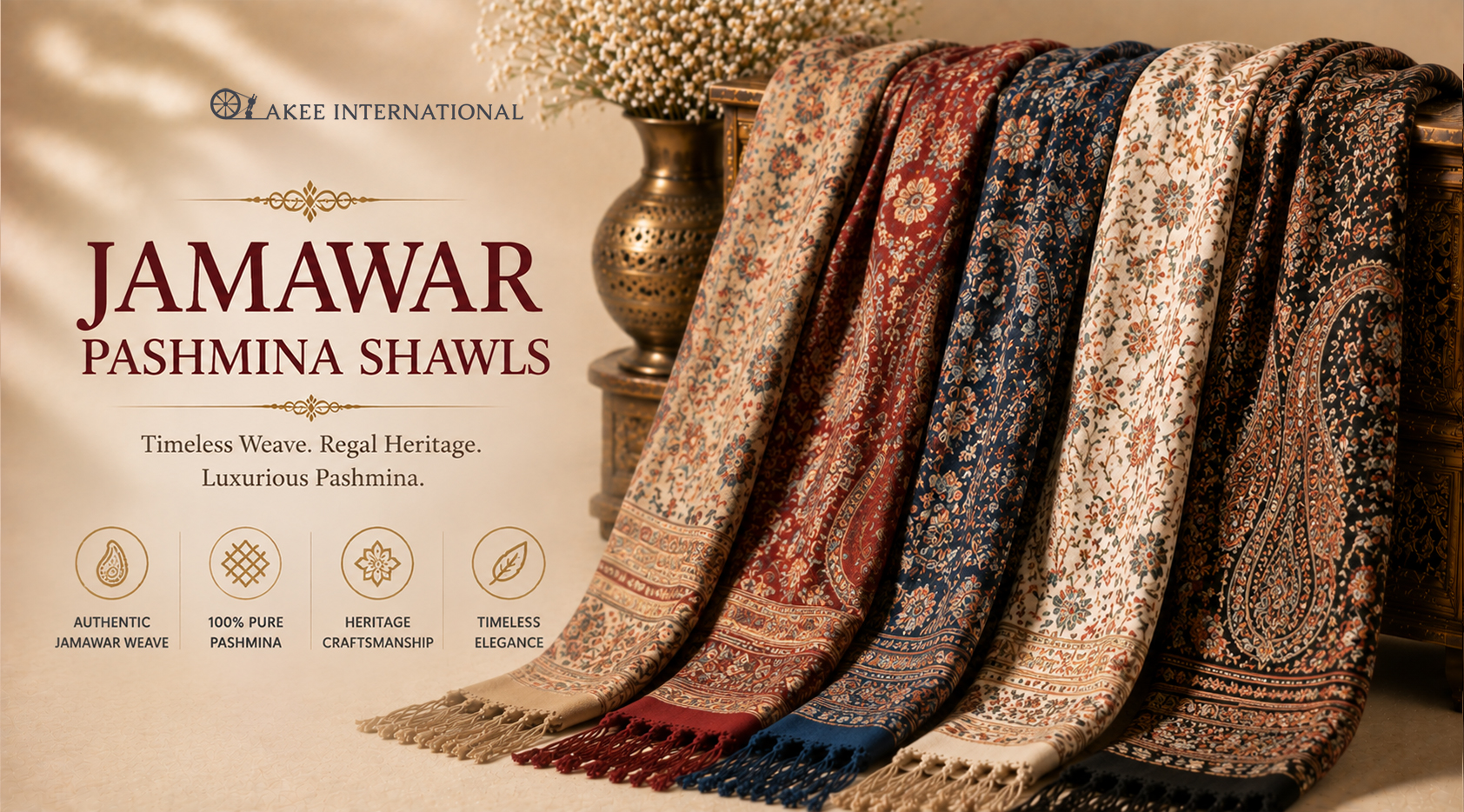
Jamawar refers to an all-over patterned weave historically used for royal robes and shawls, characterised by dense, repeating motifs across the entire body of the fabric rather than isolated borders. The Jamawar pashmina shawls in our collection, along with our Kashmiri Jamawar Shawl Online page, continue this heritage with contemporary colour palettes.
Shoppers frequently mix up three related but distinct materials. Pashmina and cashmere both come from goats and are, technically, variations of the same fibre family — Pashmina simply refers to the finest, Himalayan-origin cashmere, traditionally under 15-16 microns in diameter, hand-processed using Kashmiri techniques. Shahtoosh, on the other hand, came from the endangered Tibetan antelope and has been banned internationally for decades; any shawl marketed today under that name should be treated with suspicion. For a full breakdown, read our detailed comparison on Pashmina vs Cashmere.
Pashmina's journey through history reads almost like a map of empire itself. Mughal emperors prized Kashmiri shawls so highly that they were woven directly into court protocol — a Jamawar shawl gifted by the emperor was considered among the highest honours a noble could receive. When Kashmir's shawls reached Europe via colonial trade routes in the 18th and 19th centuries, they became an object of obsession among aristocratic women, so sought after that demand outstripped what Kashmiri workshops could supply. This gap gave rise to European imitations, most famously in the Scottish town of Paisley, which mass-produced machine-woven copies of the Kashmiri buta motif so successfully that the pattern itself came to be known by the town's name in English rather than its Kashmiri origin.
This history is part of why authenticity matters so much today — Pashmina has always existed alongside imitations trying to capture its appeal without its substance, and that tension has simply moved from 19th-century Scottish mills to today's synthetic blends sold online. Our page on Authentic Kashmir Pashmina Shawl and our comparison on Real Kashmiri Pashmina vs Fake continue this same conversation in a modern context.
People new to the category are often surprised at Pashmina price points until they understand the economics behind it. Consider the layers of cost involved: the limited annual yield per goat, months of hand-dehairing and hand-spinning, the weaving time itself, and finally, in embroidered pieces, weeks or months of needlework by a trained artisan. There is no machine shortcut for any of these stages without compromising the fibre's signature softness and drape. Our Pashmina shawl price guide breaks down exactly what drives the cost of a genuine piece, from raw material to finished embroidery, and our specific page on embroidered Pashmina shawl pricing covers how embroidery technique specifically affects the final cost.
Many regions also benefit from GI (Geographical Indication) certification, a government-backed guarantee that a shawl was genuinely woven in Kashmir using traditional methods. Learn more about what this certification actually means in our explainer on the GI tag for Kashmir Pashmina, and see certified stock directly on our GI-certified Kashmir Pashmina page.
With so many synthetic blends marketed loosely as "pashmina," knowing what to look for protects your investment:
The ring test: A genuine, fine Pashmina stole can often be pulled through a finger ring due to its extreme lightness — though this alone isn't proof of authenticity.
Feel and weight: Real Pashmina feels warm rather than cool to the touch (unlike silk or synthetic blends) and carries almost no weight despite its warmth.
Burn test caution: Genuine wool fibre singes and smells like burnt hair rather than melting into plastic beads, though this test should only be done on a loose thread, if at all.
Weave irregularities: Handwoven pieces often show tiny natural inconsistencies — a sign of human craftsmanship, not a flaw.
For a complete checklist, see our detailed walkthrough on how to identify an original Pashmina shawl, and if you'd like to verify a specific piece against formal documentation, our page on Kashmir Pashmina Shawl Verification and our Kashmir Pashmina Certificate of Authenticity cover this in more depth.
While the shawl remains Pashmina's most iconic form, the same fine fibre is worked into a genuinely wide range of products once you look beyond the classic rectangle. Knitted sweaters and cardigans use the fibre's natural elasticity to create warm, soft knitwear entirely distinct from a woven shawl in both feel and construction — our guide on authentic cashmere Pashmina sweaters covers this category specifically. Narrower formats like mufflers serve a more everyday, practical winter role, while ponchos and capes reinterpret the same fibre into more contemporary silhouettes for buyers who want the warmth without the traditional drape of a full shawl.
Because the fibre and craftsmanship stay consistent across our range, the real decision for most buyers is which style and use case fits their needs. For weddings, our Jaipur Wedding Pashmina Shawls and Bridal Pashmina Shawl Online collections apply everything covered in this guide to that specific occasion. For everyday gifting, our anniversary gift and corporate gifting pages narrow things down further, and for buyers comparing budgets, our affordable and luxury price tiers sit at opposite ends of the same authentic fibre standard.
Because so much of what makes Pashmina genuine happens far from where most buyers actually shop, sourcing transparency has become one of the most important things a buyer can look for in a seller. Knowing which specific artisan network processed a given piece, rather than relying on a vague "Kashmir-sourced" claim, gives buyers real confidence rather than blind trust. Our pages on the top Pashmina weavers in Srinagar and the Kashmir artisan network we work with explain this sourcing chain in more detail for buyers who want to look past the marketing and understand exactly where a shawl comes from.
Because the fibre is so fine, everyday care matters more than with regular wool. Always dry clean rather than machine wash, store folded in breathable cotton rather than plastic, and keep pieces away from direct sunlight for long periods to preserve colour. Our complete Pashmina shawl care guide and step-by-step washing instructions, along with our page on how to store a Pashmina shawl, cover everything from stain handling to long-term storage.
Pashmina's story is inseparable from Kashmir's own history — Mughal courts prized it, European royalty adopted it, and today it remains one of India's most celebrated textile exports. At Akee International, based in Jaipur, we work directly with skilled artisans to bring this heritage to modern wardrobes, offering everything from timeless women's pashmina shawls to refined men's pashmina shawls, along with wholesale options for businesses through our wholesale pashmina programme, and export support for buyers ordering from the USA, UK, or Europe.
Whether you are drawn to the understated elegance of a plain weave or the storytelling detail of a hand-embroidered masterpiece, understanding what goes into every thread makes the choice far more meaningful. Explore our full luxury pashmina shawl collection or get in touch with our team to find the piece that's right for you.
Pashmina is an exceptionally fine natural fibre traditionally obtained from the soft undercoat of Himalayan goats, particularly the Changthangi goat. It is valued for softness, warmth, lightness, and its connection to traditional Kashmiri craftsmanship.
Pashmina is traditionally associated with a very fine grade of Himalayan cashmere fibre. Cashmere is a broader term covering fine fibres obtained from cashmere goats from various regions.
The finest traditional Pashmina fibre is associated with high-altitude Himalayan regions, particularly the Changthang area of Ladakh. The fibre has historically been transformed into luxury textiles through Kashmiri craftsmanship.
A genuine Pashmina shawl is made using fine Pashmina fibre. Depending on the design, it may be handwoven, embroidered, or decorated using traditional techniques.
The softness comes primarily from the extremely fine nature of the fibre. Its delicate structure gives Pashmina its characteristic smooth and luxurious feel.
Yes. Despite being lightweight, Pashmina is naturally insulating and can provide excellent warmth, making it particularly suitable for shawls, scarves, and winter accessories.
The limited availability of fine fibre, careful preparation, skilled hand-spinning, weaving, embroidery, and finishing all contribute to the cost of authentic Pashmina.
Kani Pashmina refers to Pashmina textiles featuring the traditional Kani weaving technique, known for detailed patterns and intricate woven designs.
Jamawar Pashmina combines fine Pashmina with the elaborate Jamawar textile tradition, recognised for detailed patterns and richly decorative woven compositions.
Look at fibre information, texture, weight, weaving quality, craftsmanship, finishing, seller reputation, and pricing. No single traditional home test can reliably establish authenticity in every case.
Pashmina is lightweight and breathable, so it can be worn during cool evenings, transitional seasons, and winter. The suitability depends on the weave, weight, climate, and styling.
Akee International offers a range of handmade Pashmina shawls, scarves, and stoles, including hand-embroidered, handwoven, Kani, and Jamawar styles for customers and wholesale buyers.
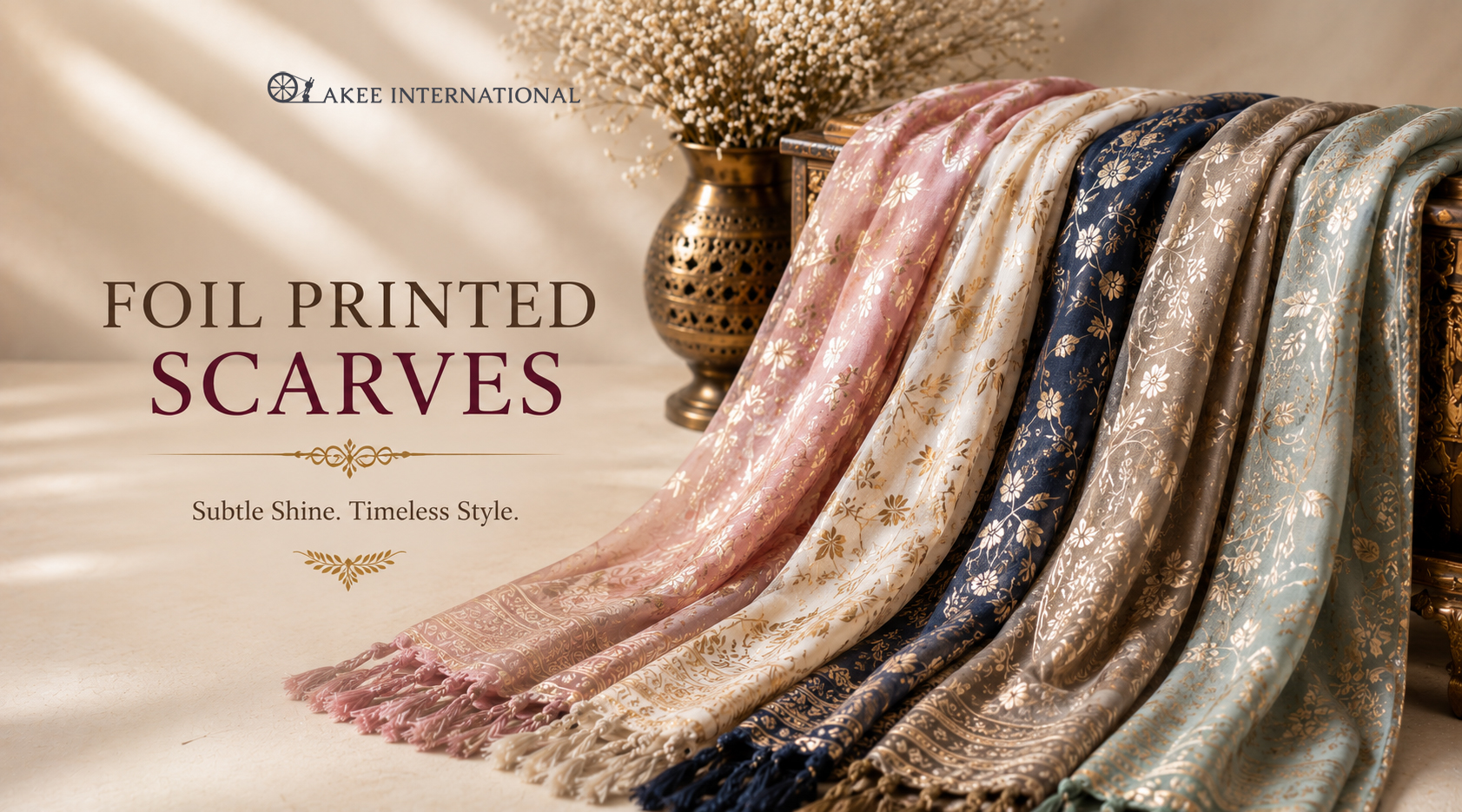
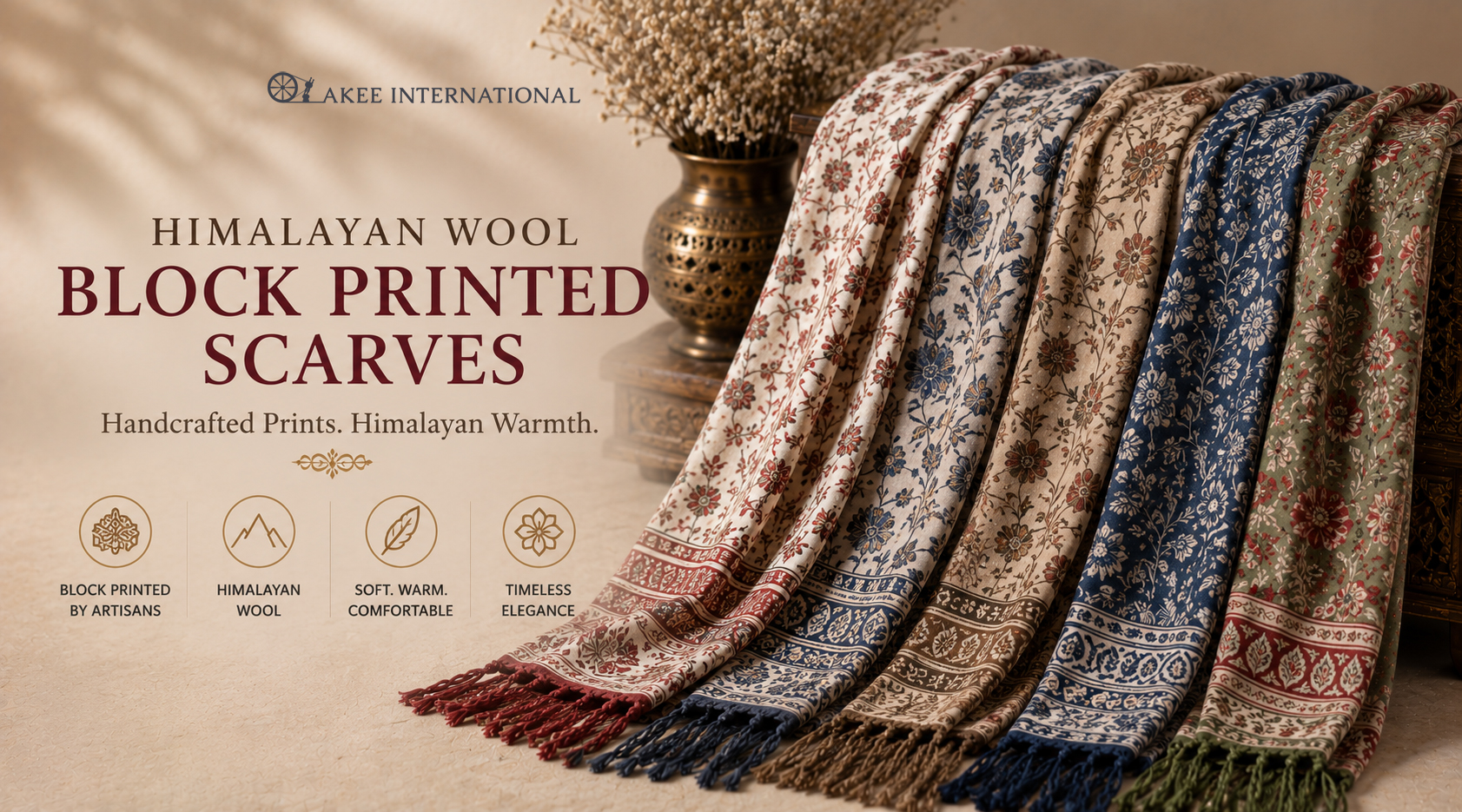
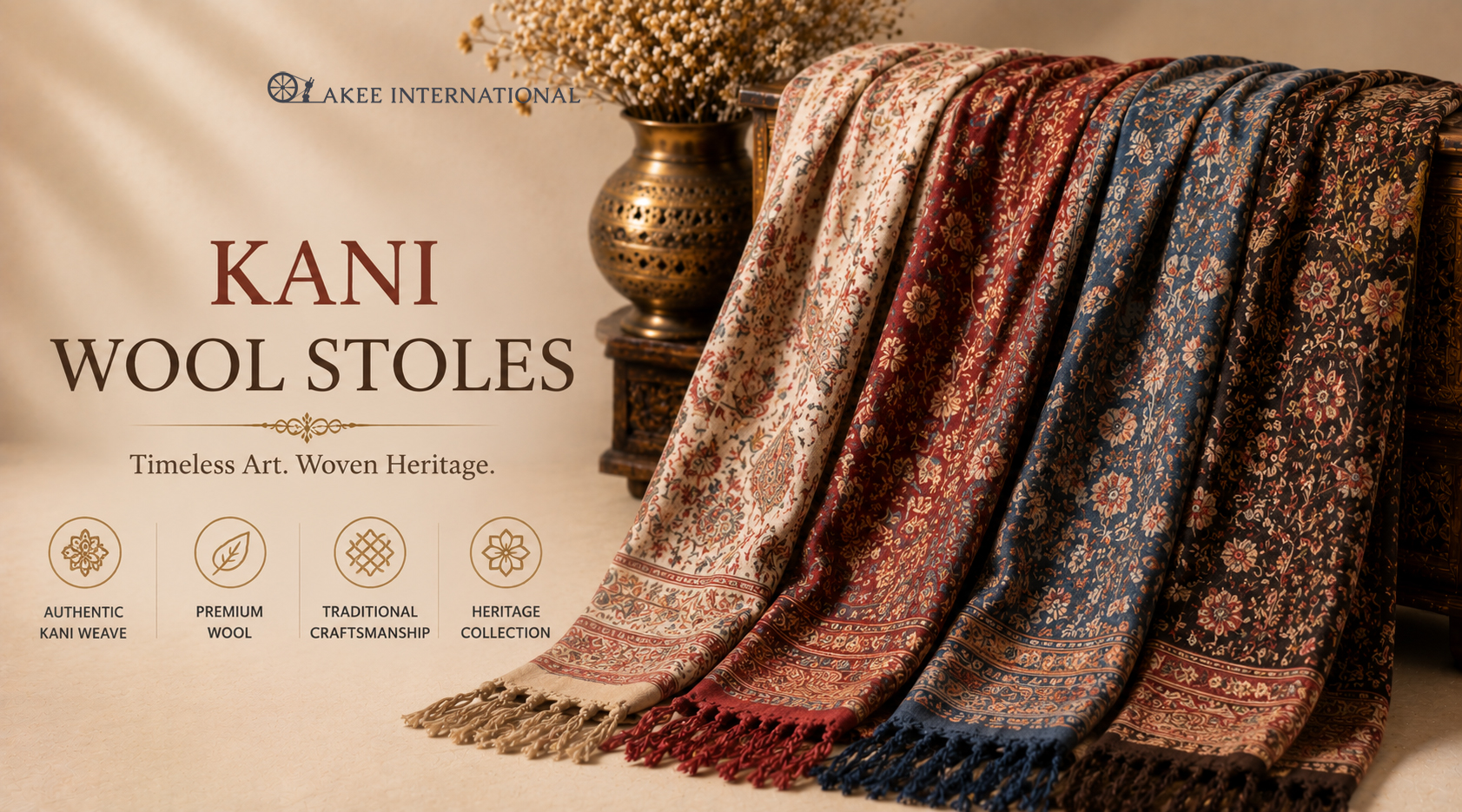
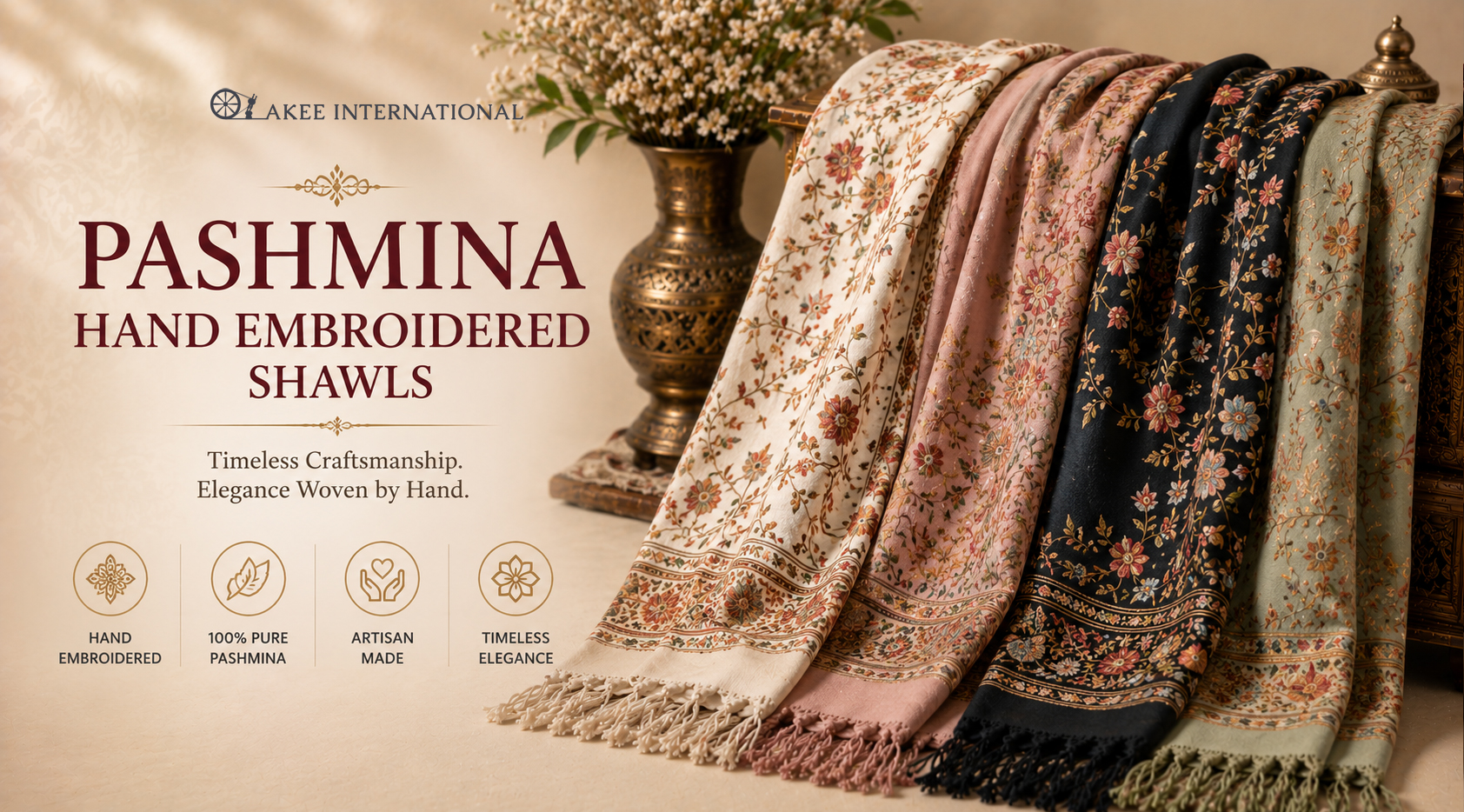
"Read what our clients say about their experience with Akee International's luxurious Pashmina shawls and impeccable service."

Nai Mata Mandir Road, Thathar Road, Delhi By Pass, Amer, Jaipur 302028, Rajasthan India
Get directions Call Now Whatsapp 4.9 based on 269 reviews
Rating: 4.6/5 | 85 Reviews

Rating: 4.9/5 | 269 Reviews

TrustScore: 4.9 | 100 Reviews