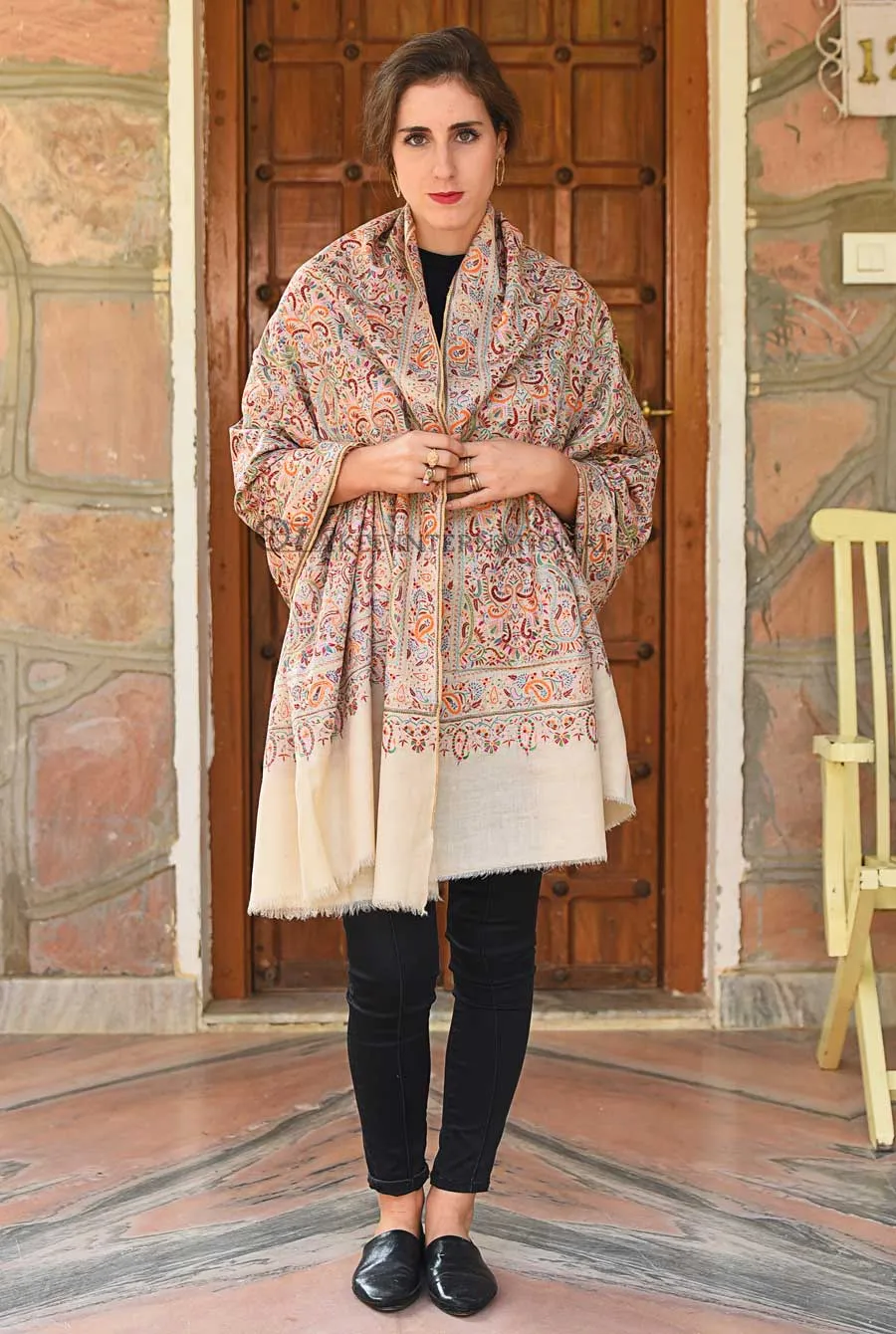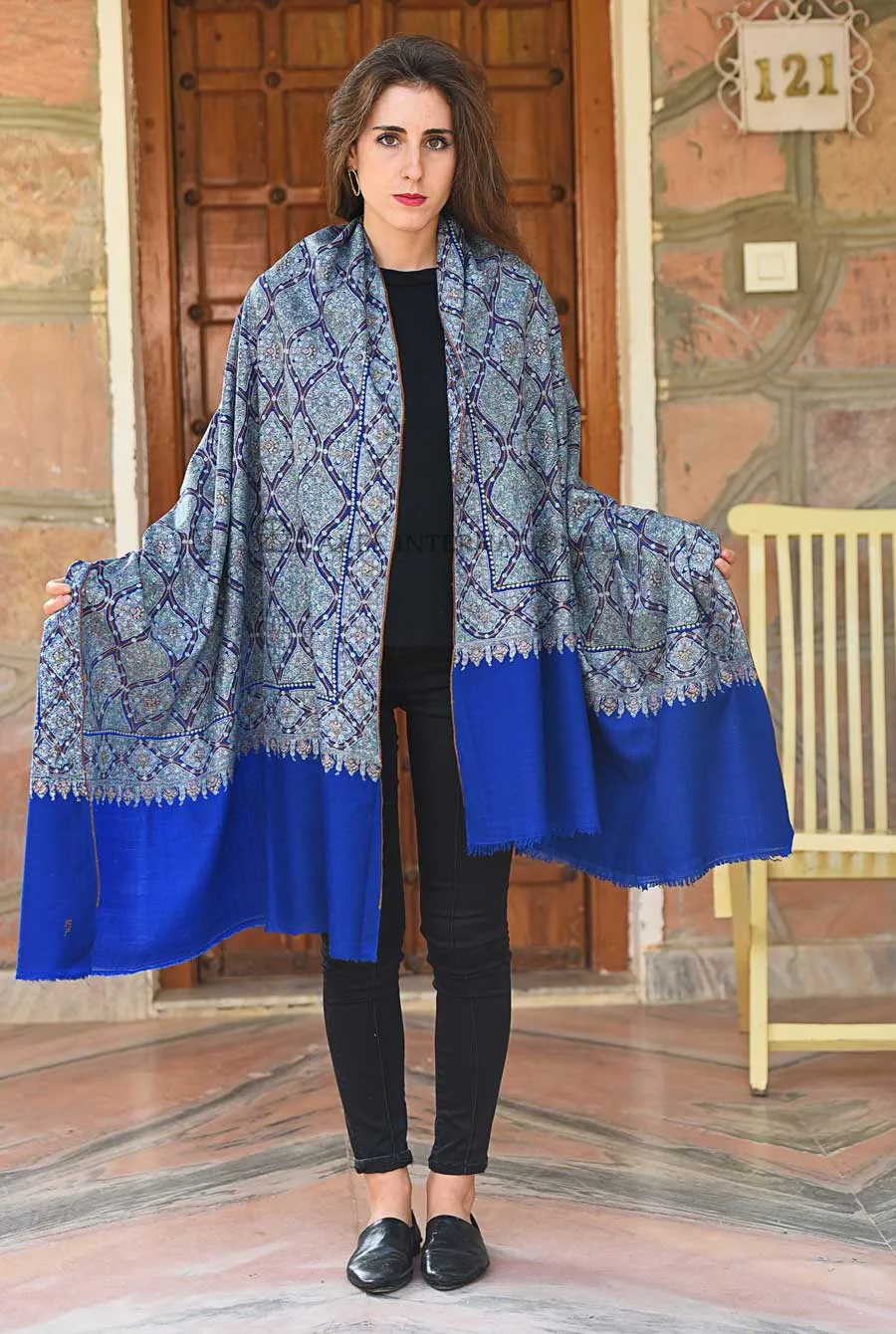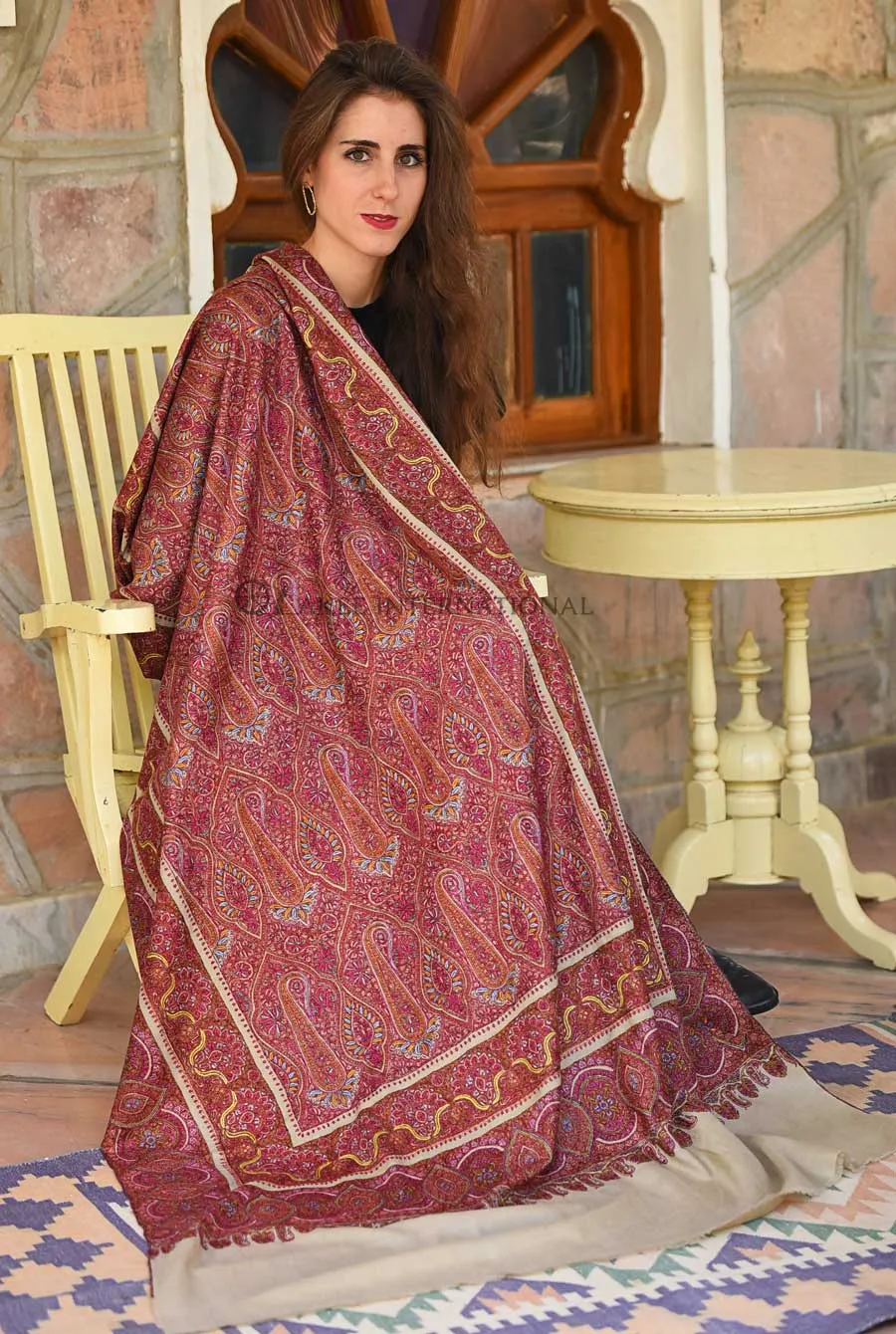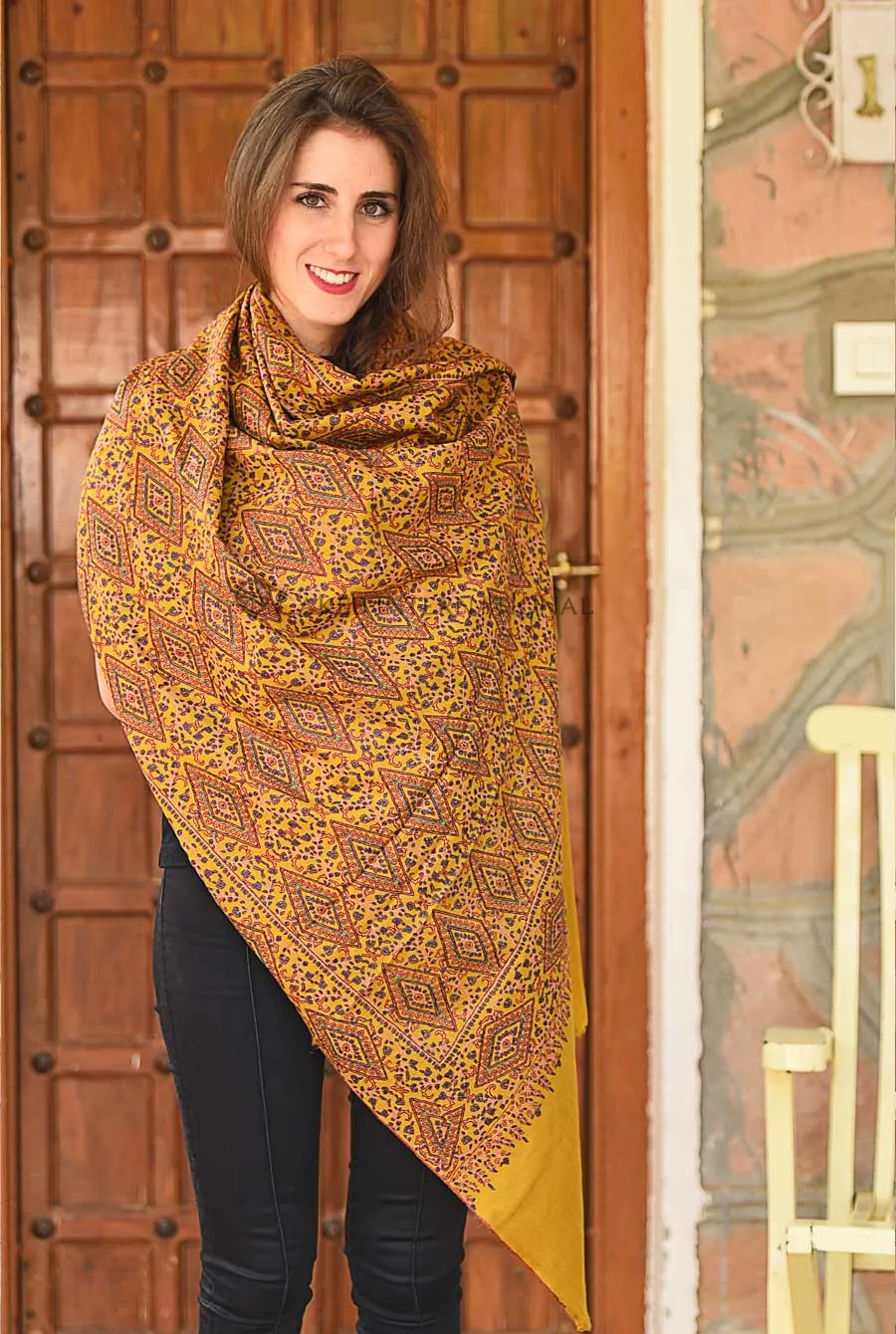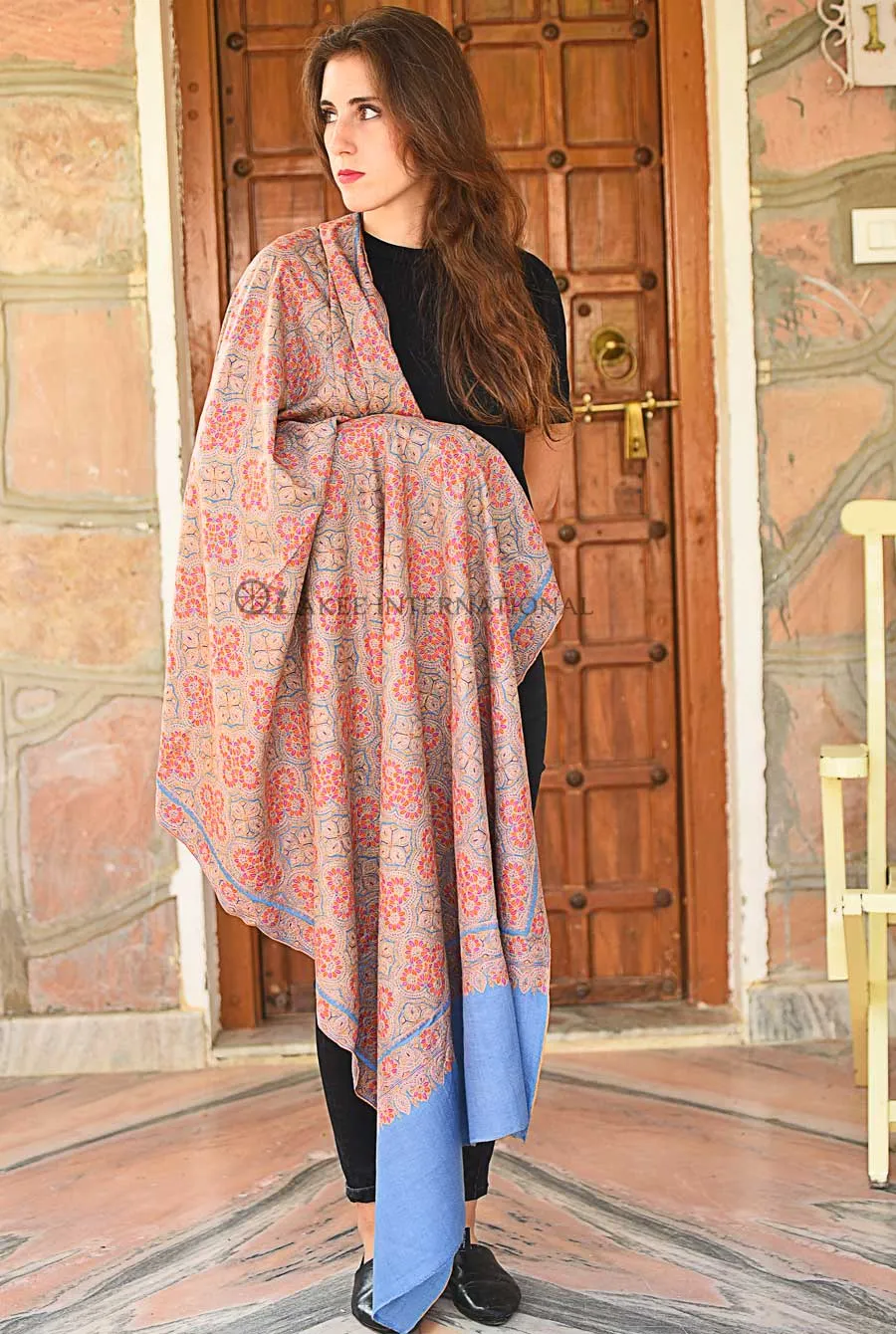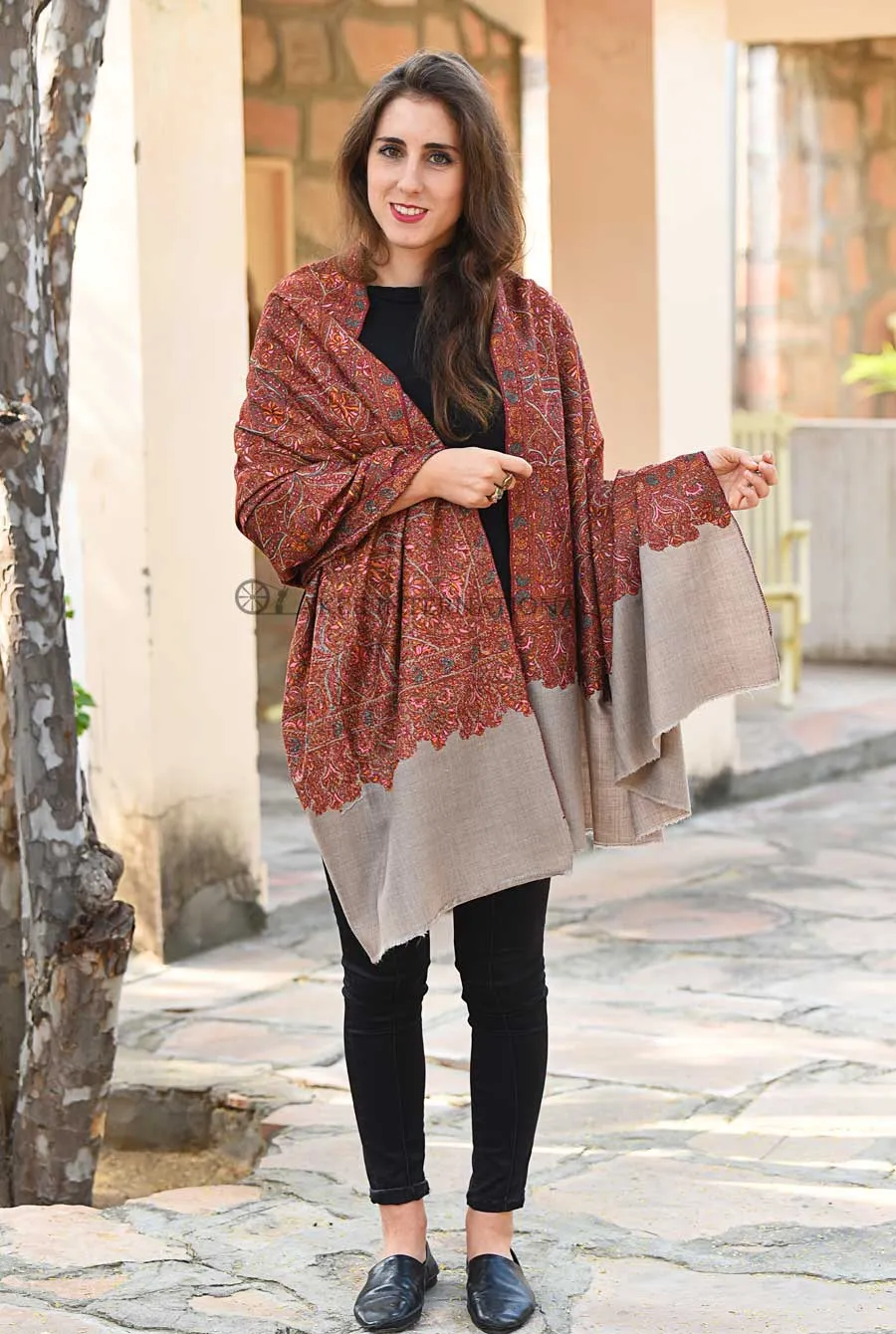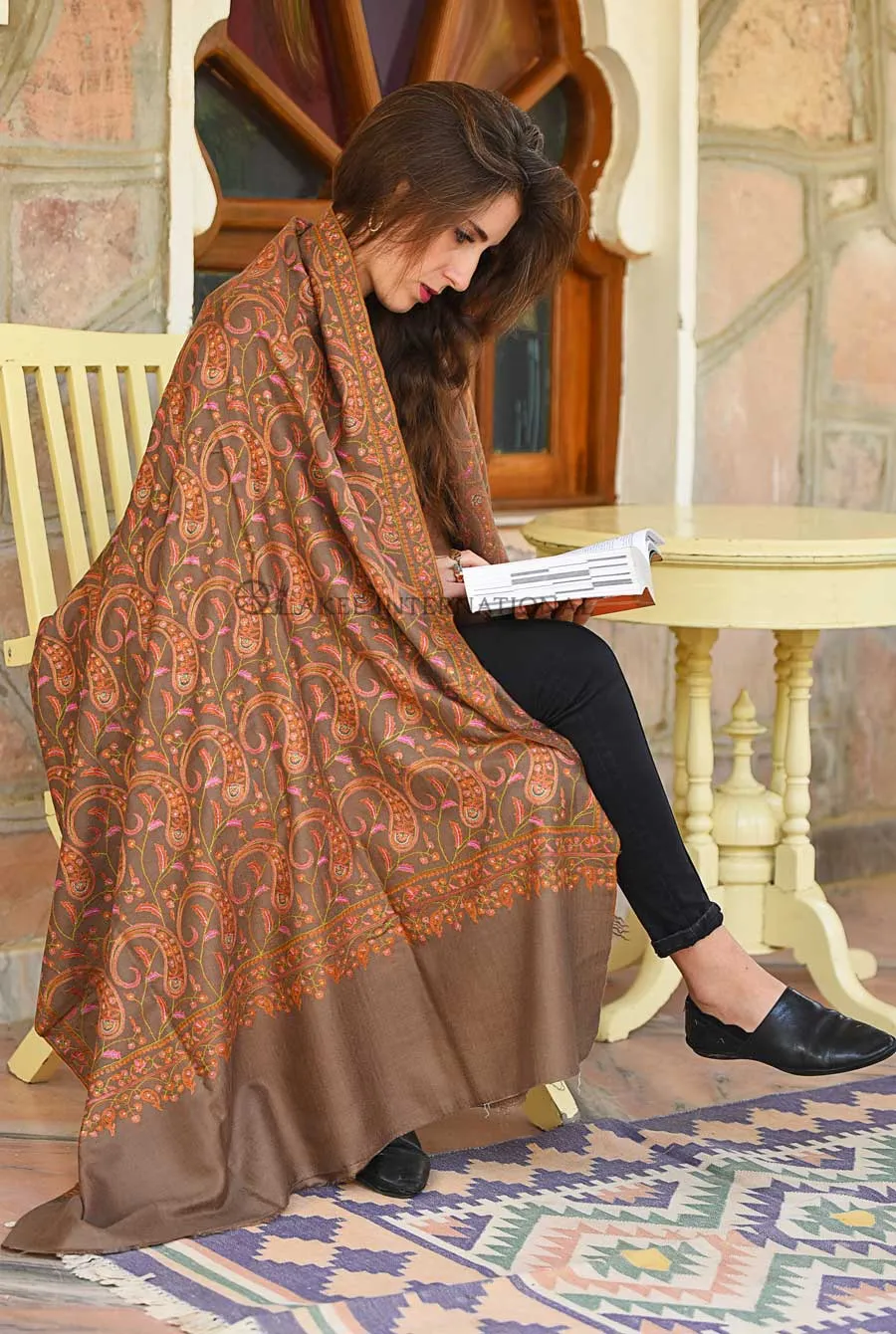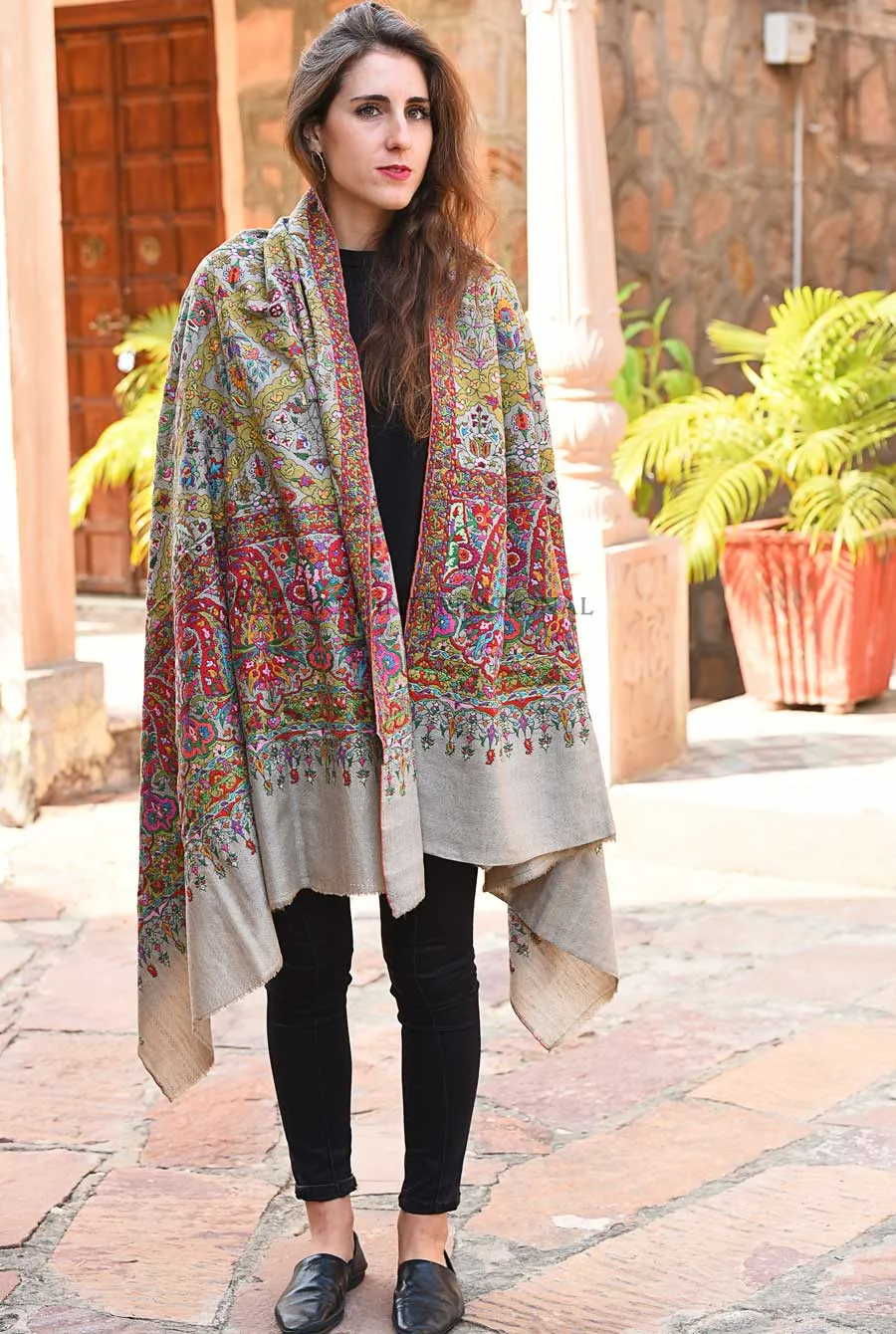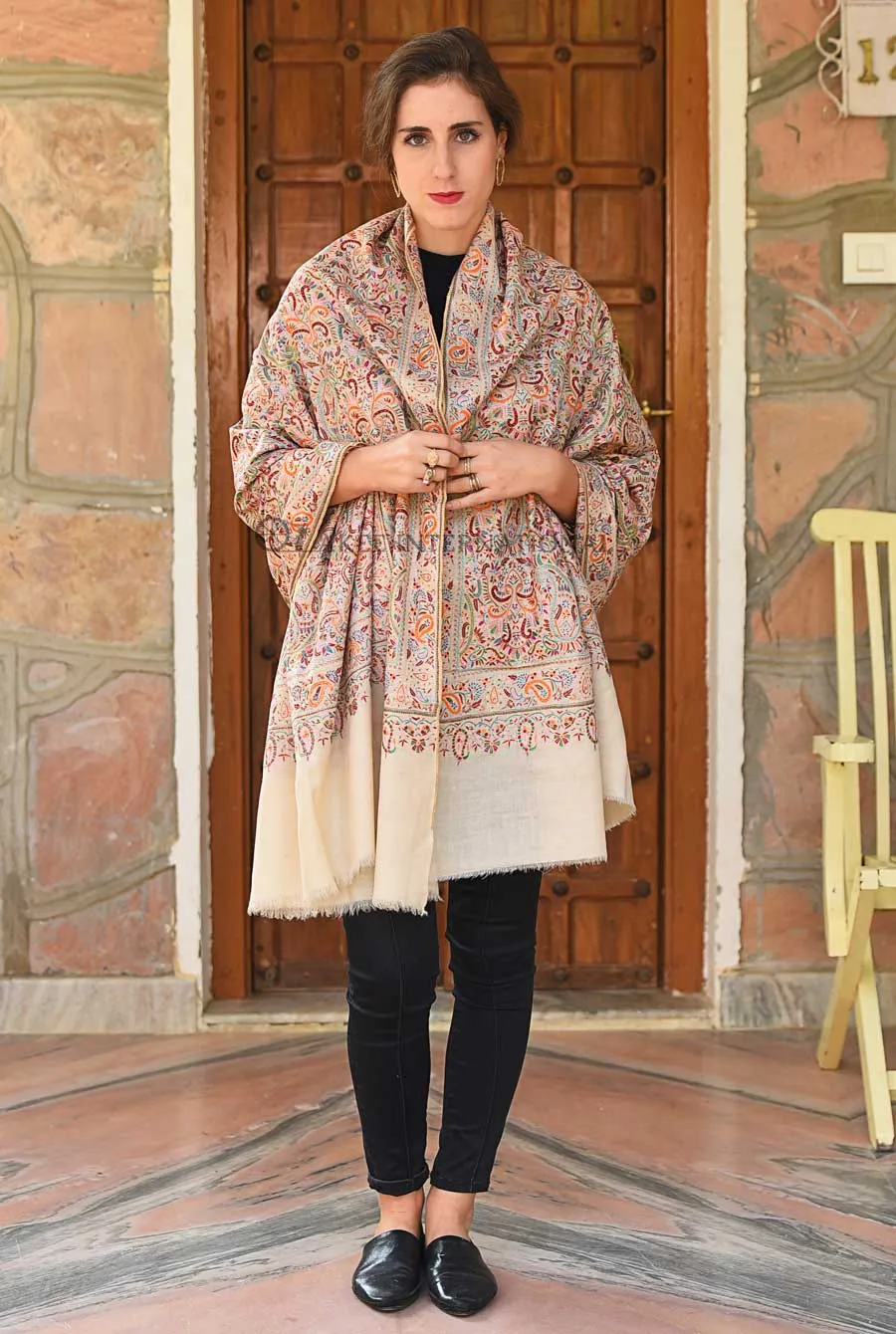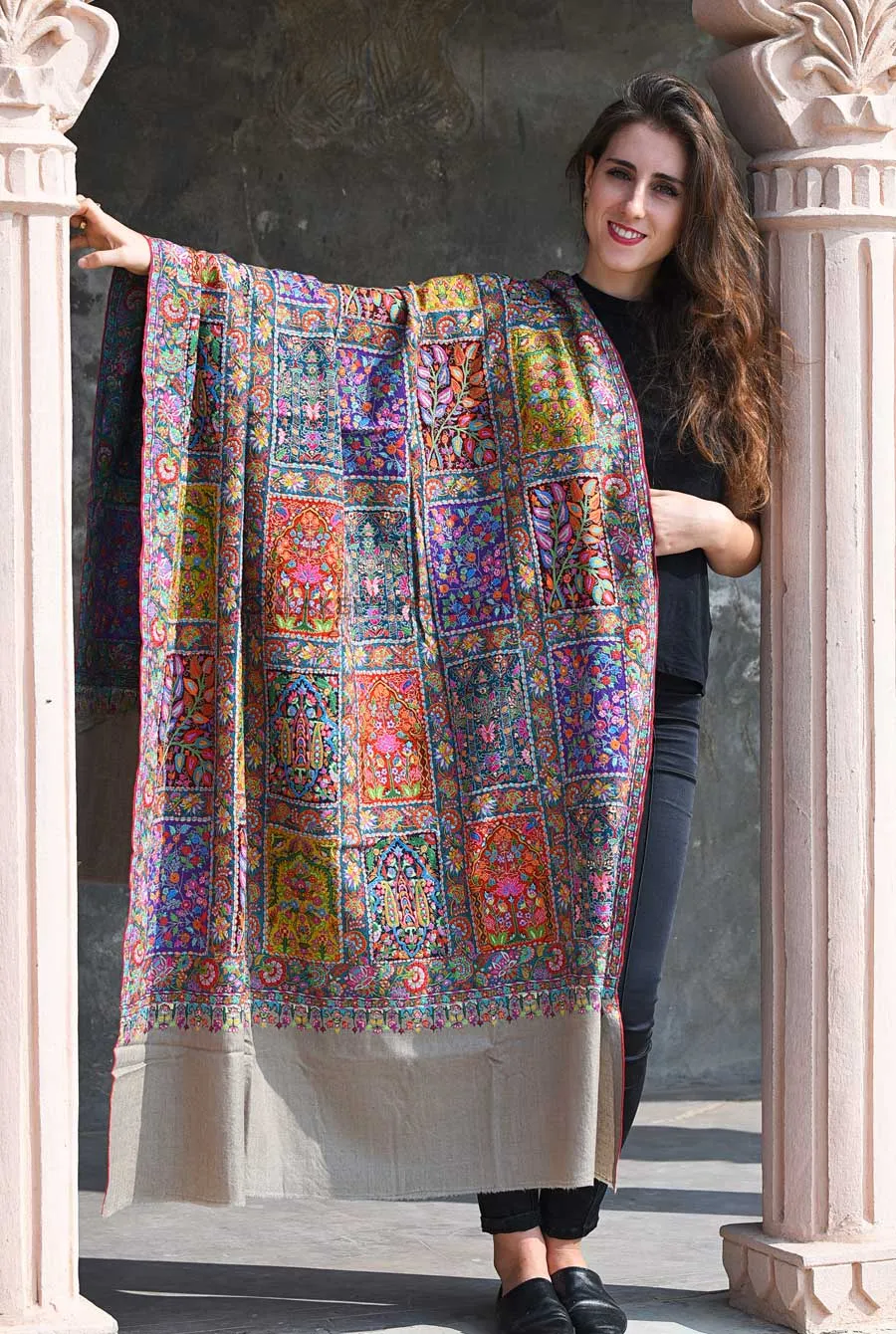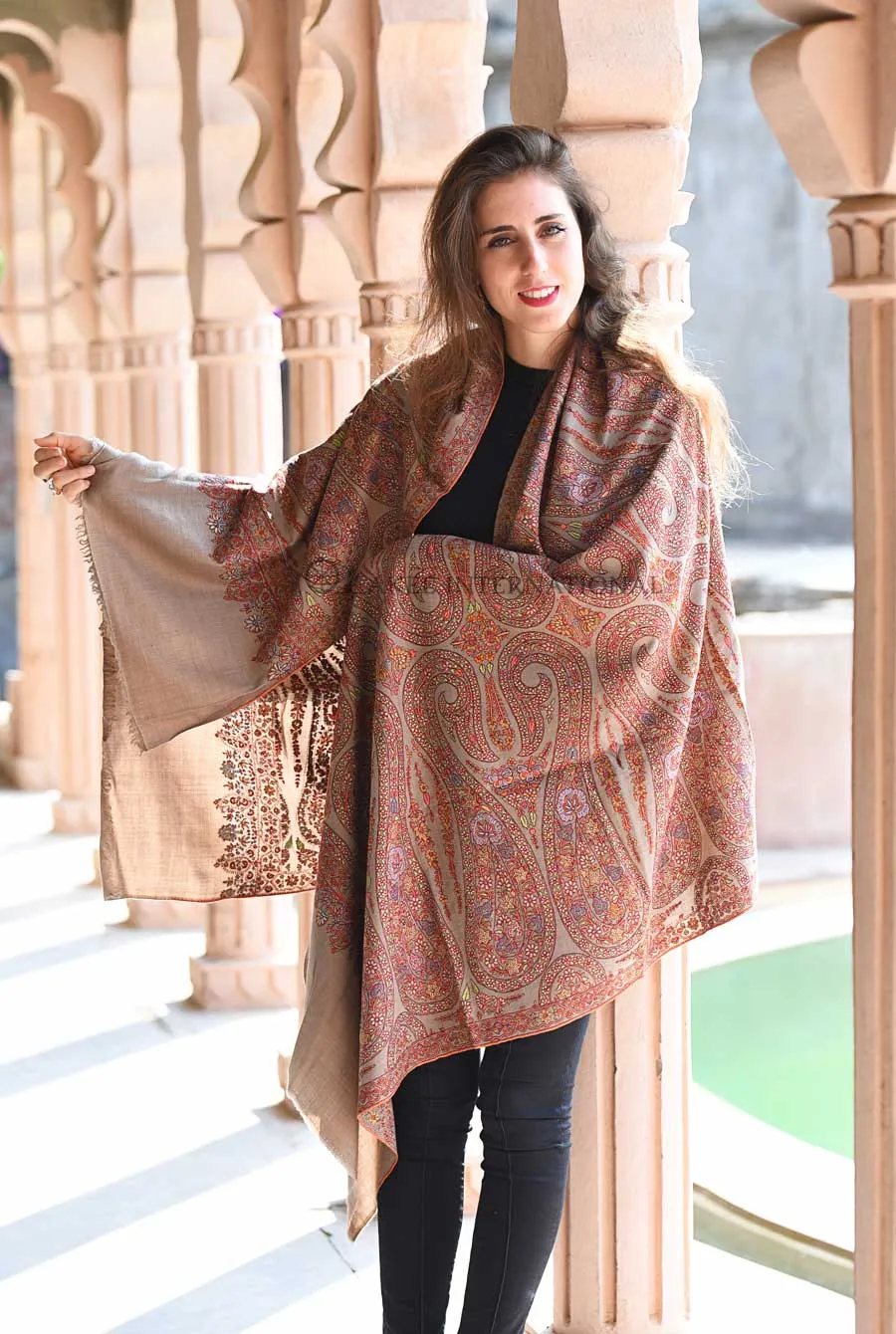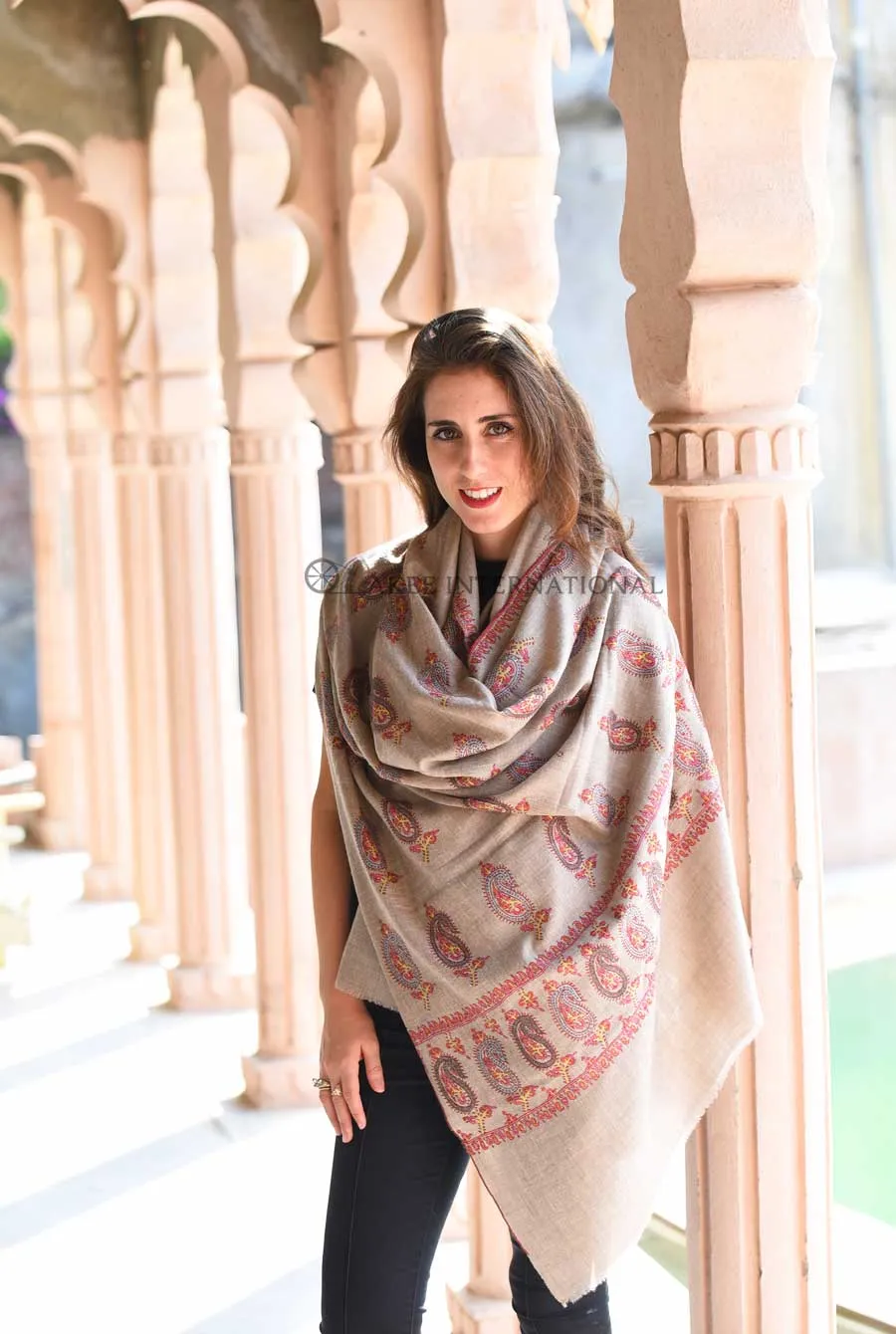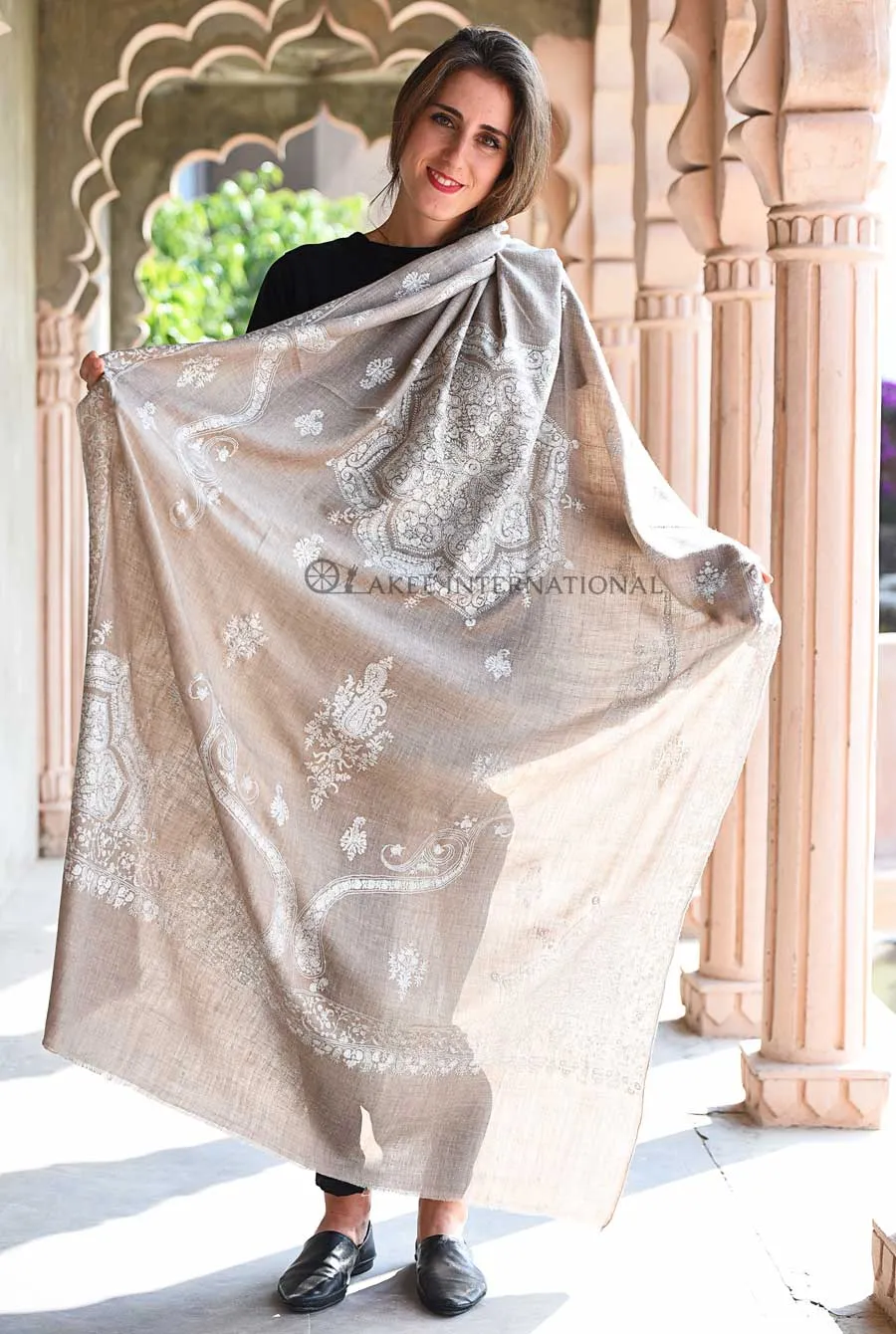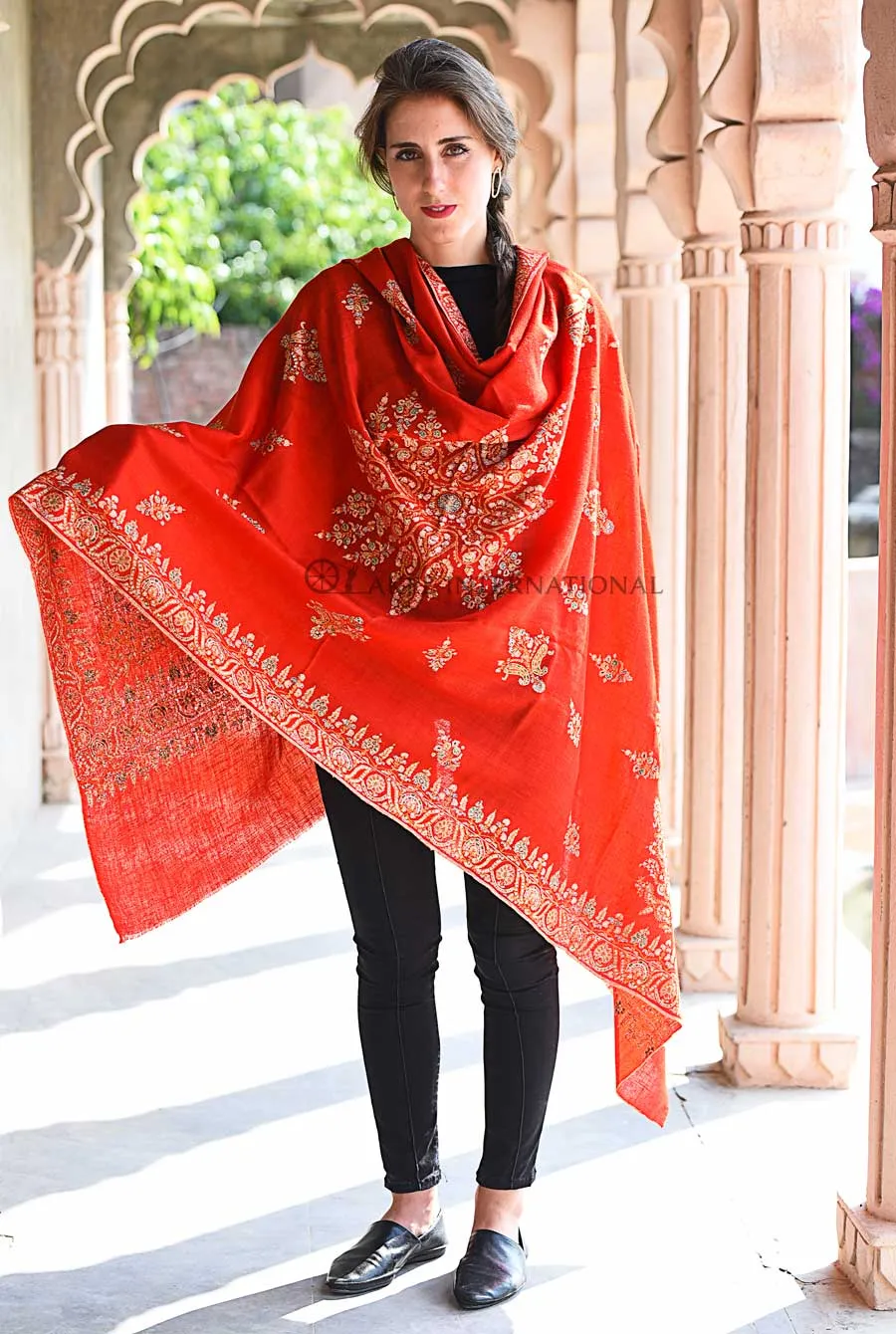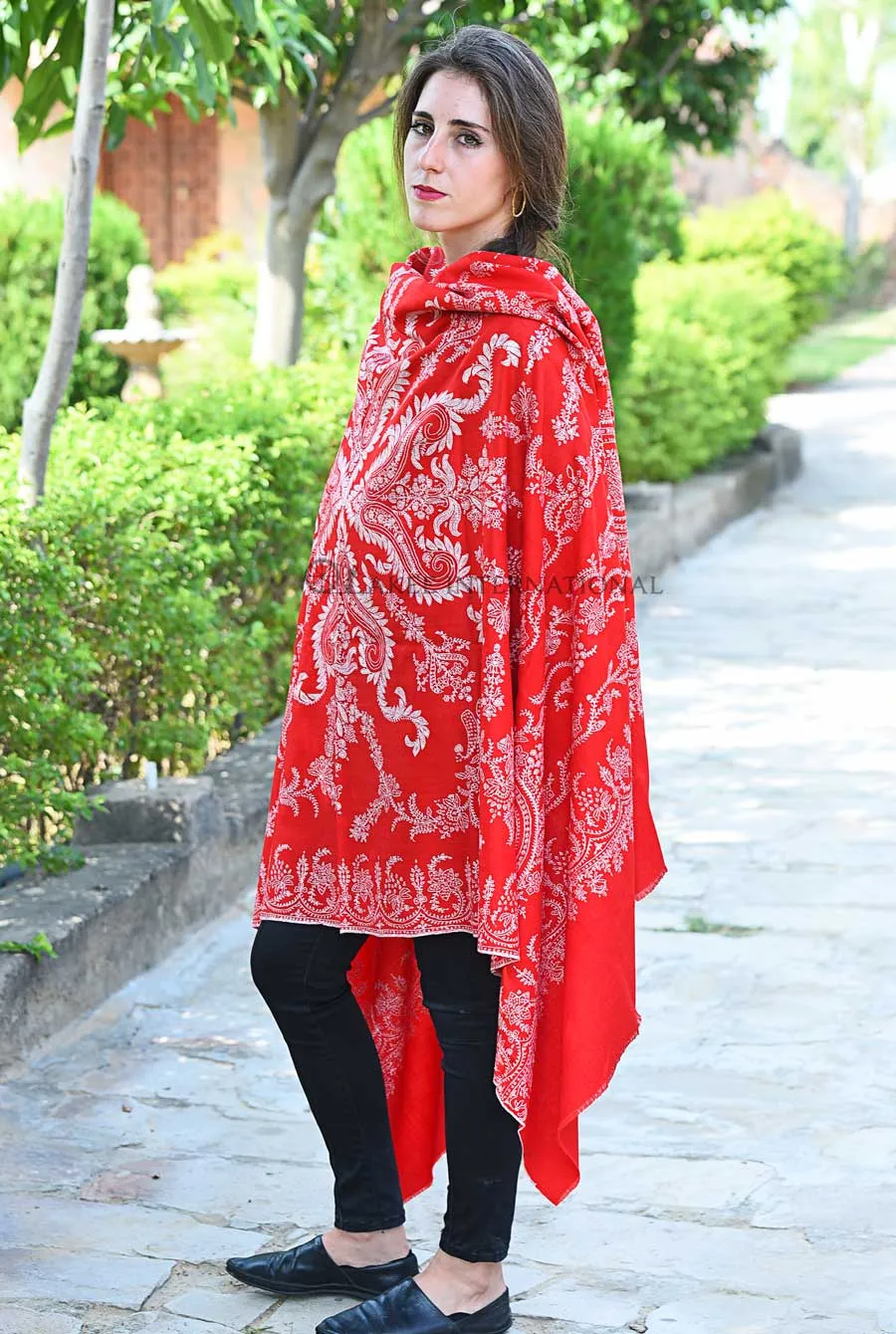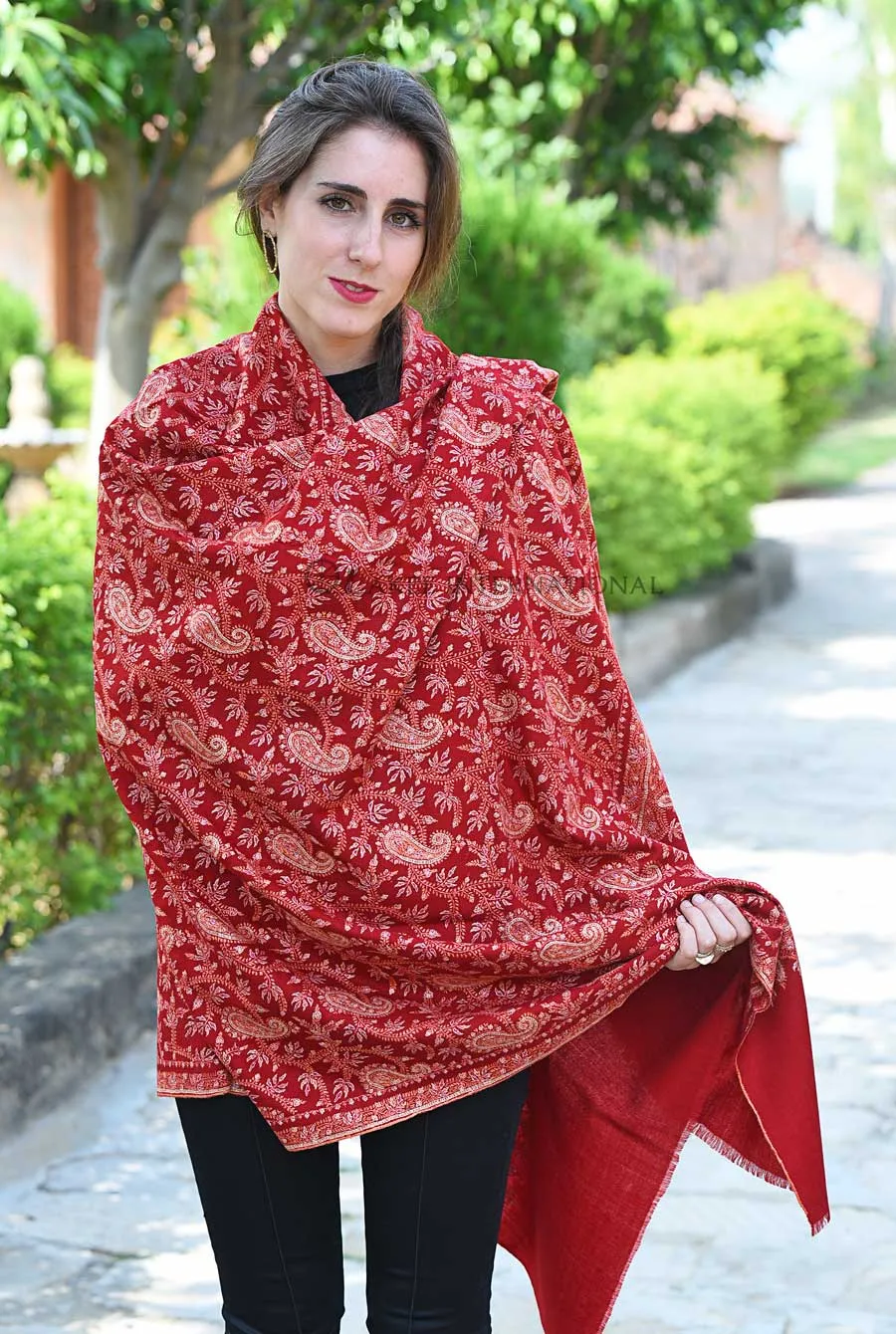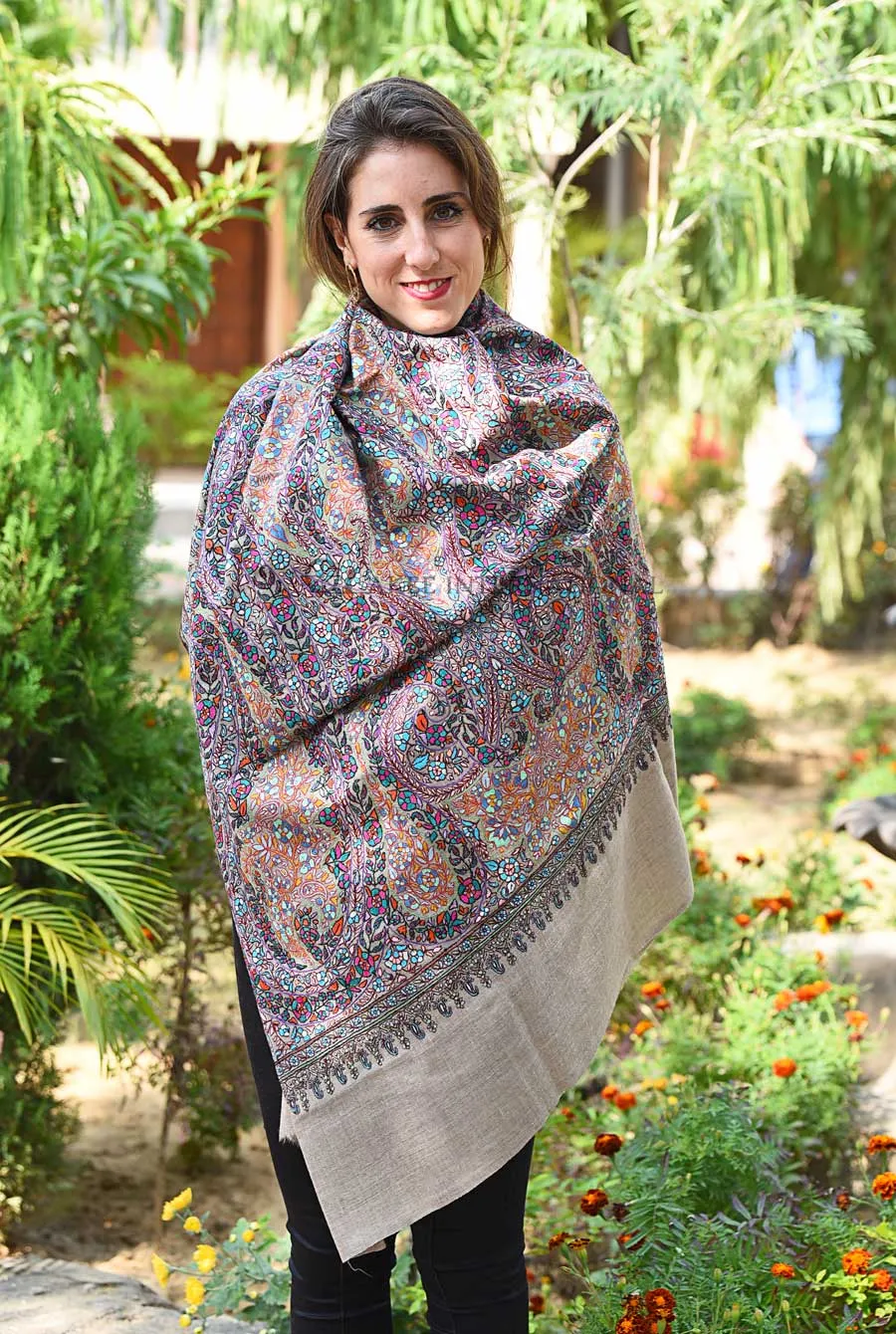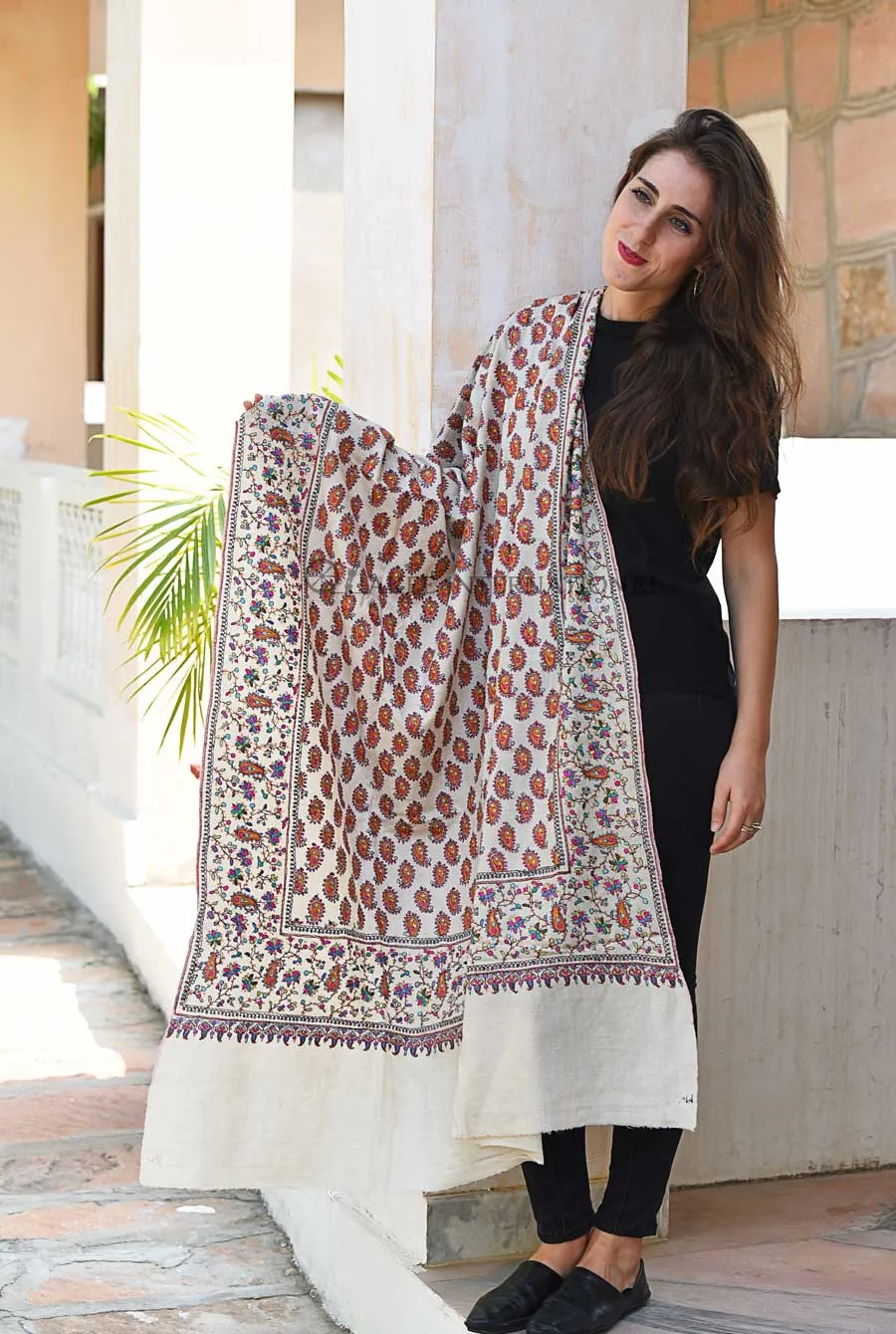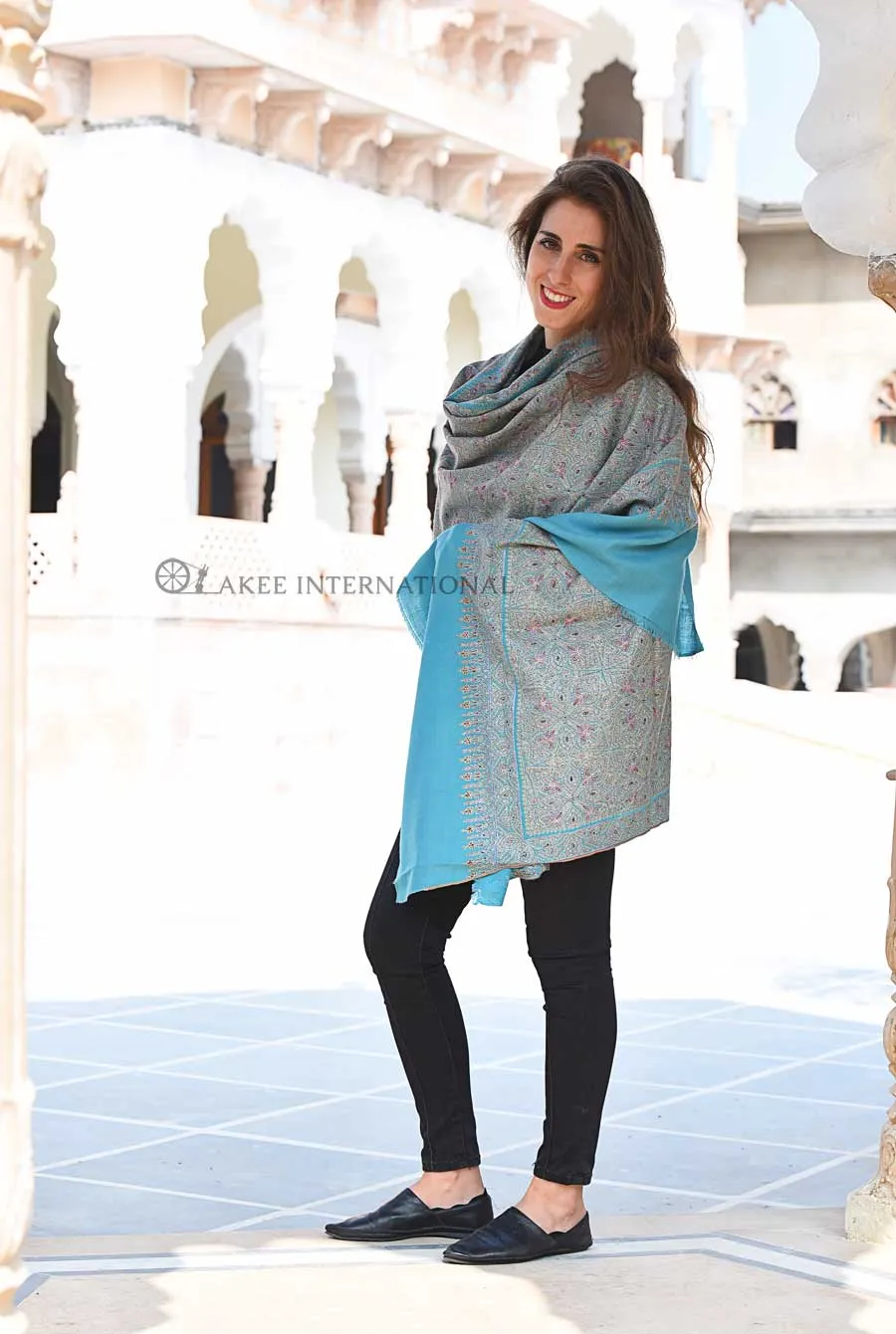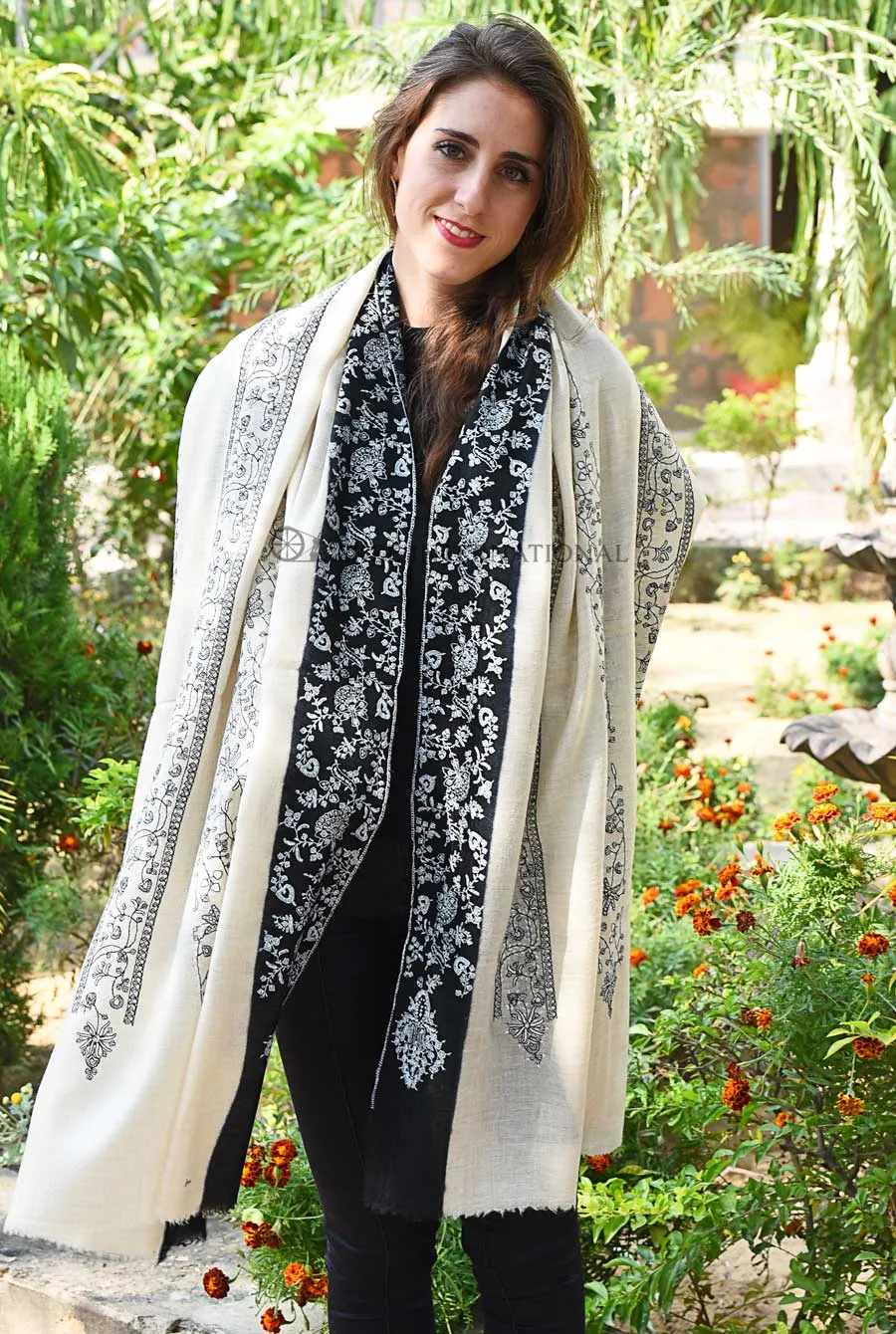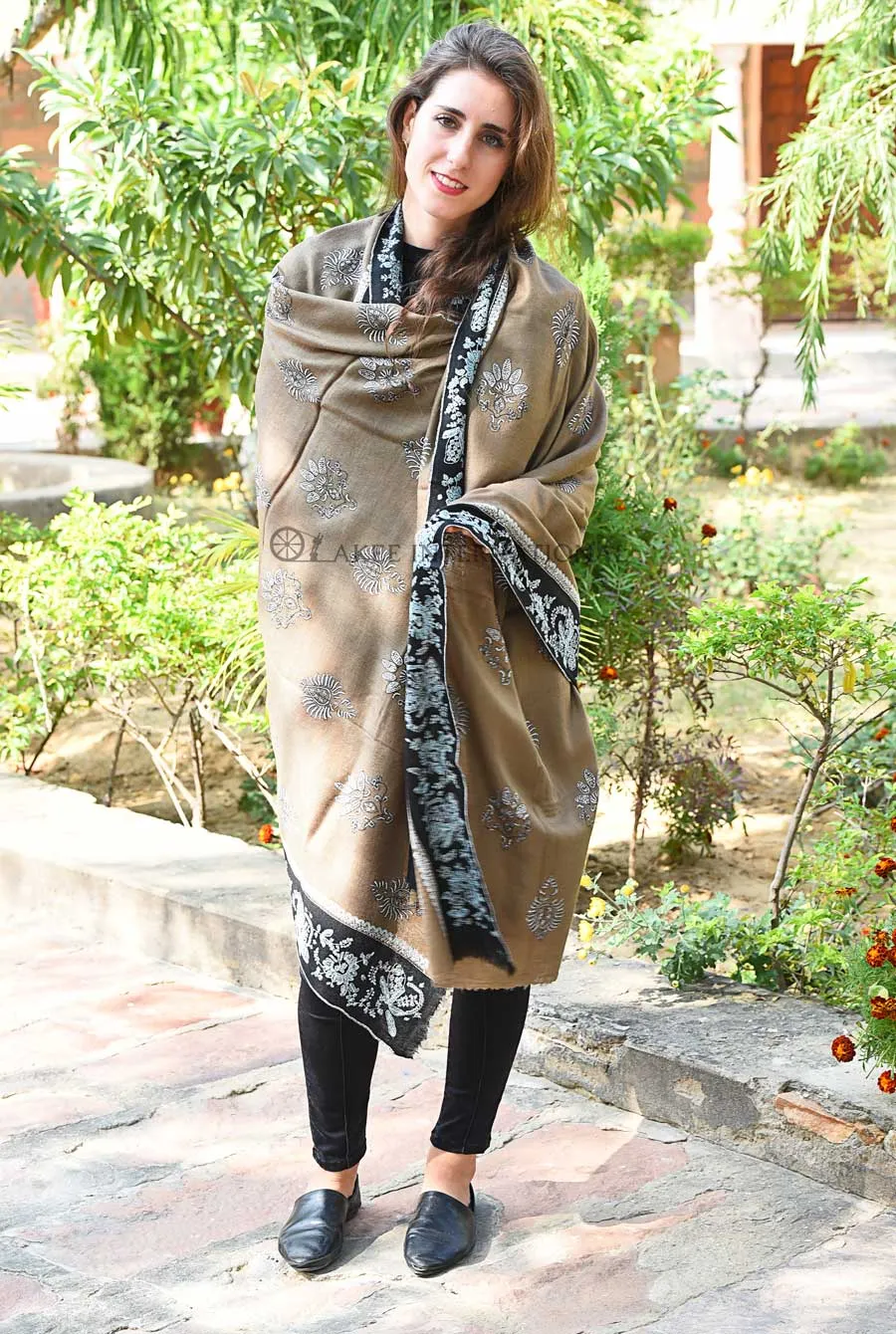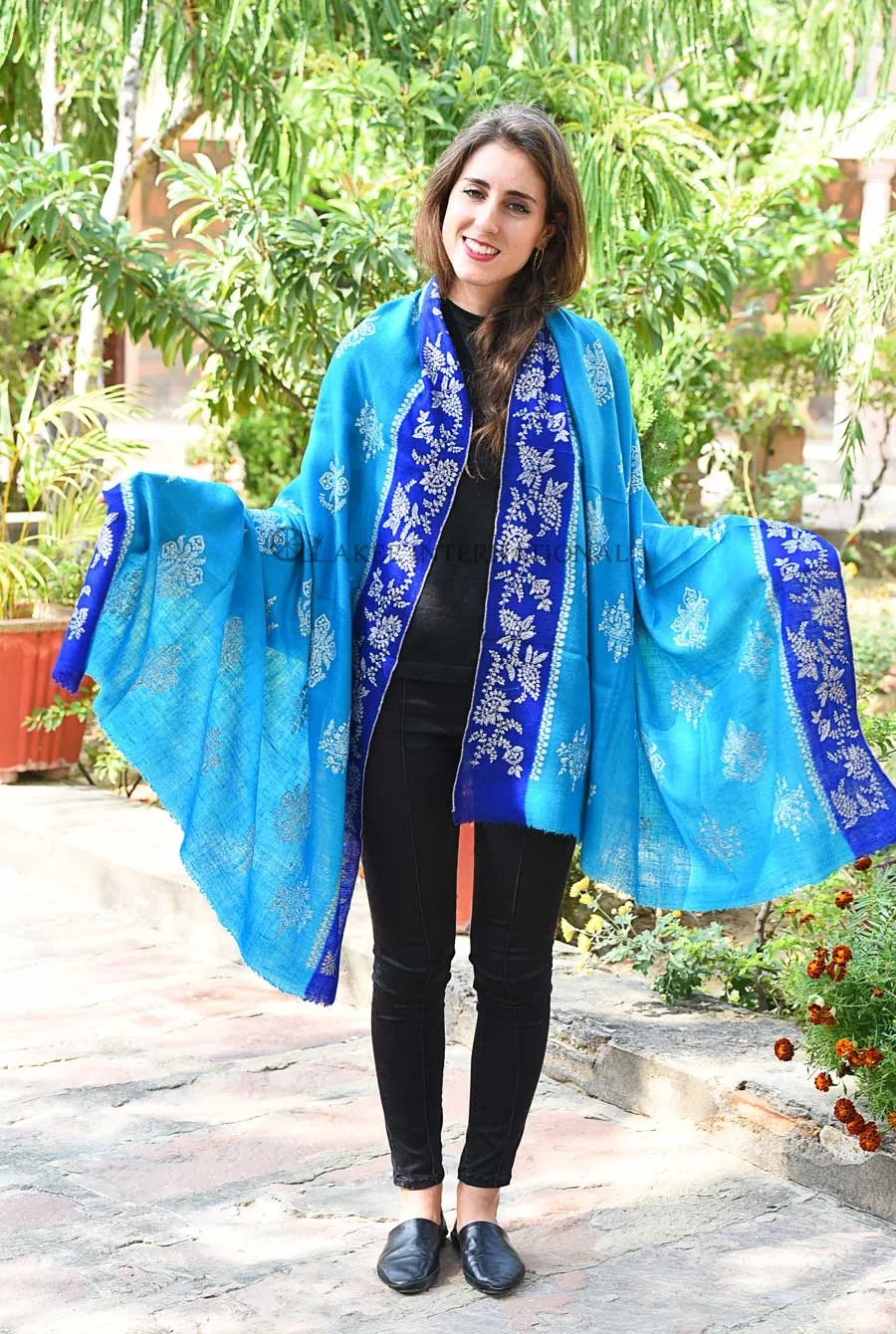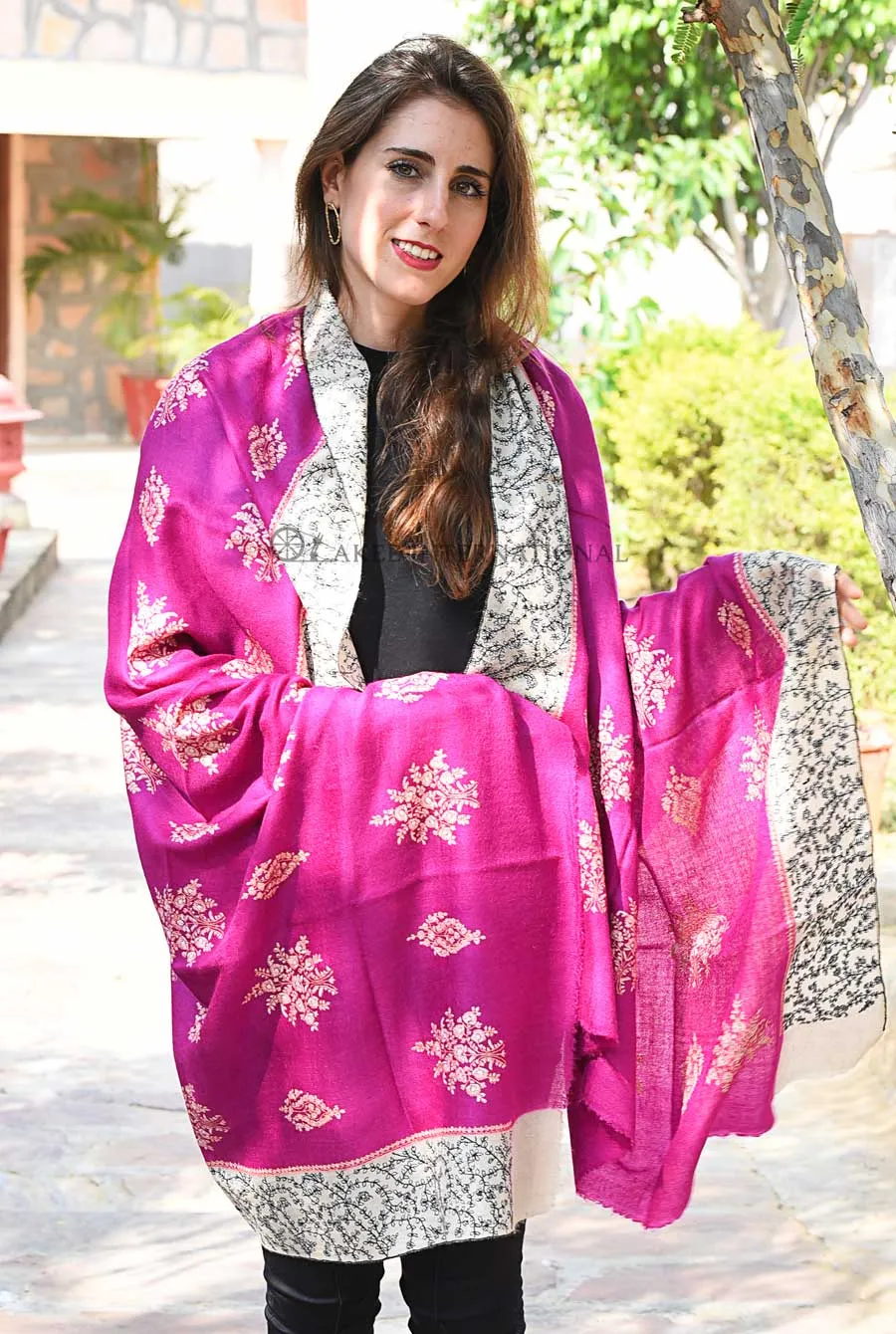
Our handcrafted Pashmina shawls, meticulously handwoven on traditional wooden looms, embody timeless artistry and heritage. We bring authentic Kashmiri Pashmina to the world in a wide array of styles — from vibrant solid hues to intricately hand-embroidered designs — each piece made by artisans who have spent years, sometimes decades, perfecting a craft passed down within their own families.
Admired across generations, from British and French aristocrats to modern-day celebrities, pure Pashmina shawls have long captivated hearts with their elegance and quiet luxury. What has changed very little across that span of time is the fiber itself and the patience required to turn it into a finished shawl; what has changed is who gets to wear it, and how easily they can find the genuine article.
Genuine Pashmina wool comes from the undercoat of the Changthangi goat, a breed adapted to survive the extreme cold of the Changthang plateau in Ladakh, at altitudes exceeding 14,000 feet. The fiber is gathered through gentle combing each spring, when the goats naturally shed their winter undercoat, rather than through shearing, which would damage the delicate strands. This undercoat is exceptionally fine — typically 12 to 16 microns in diameter, finer than a human hair — and it's this fineness that gives Pashmina its signature softness and disproportionate warmth for how little it weighs. You can read the full story of this fiber on our What is Pashmina page, and the legal protection built around it on our What Does GI Tag Kashmir Pashmina Mean explainer.
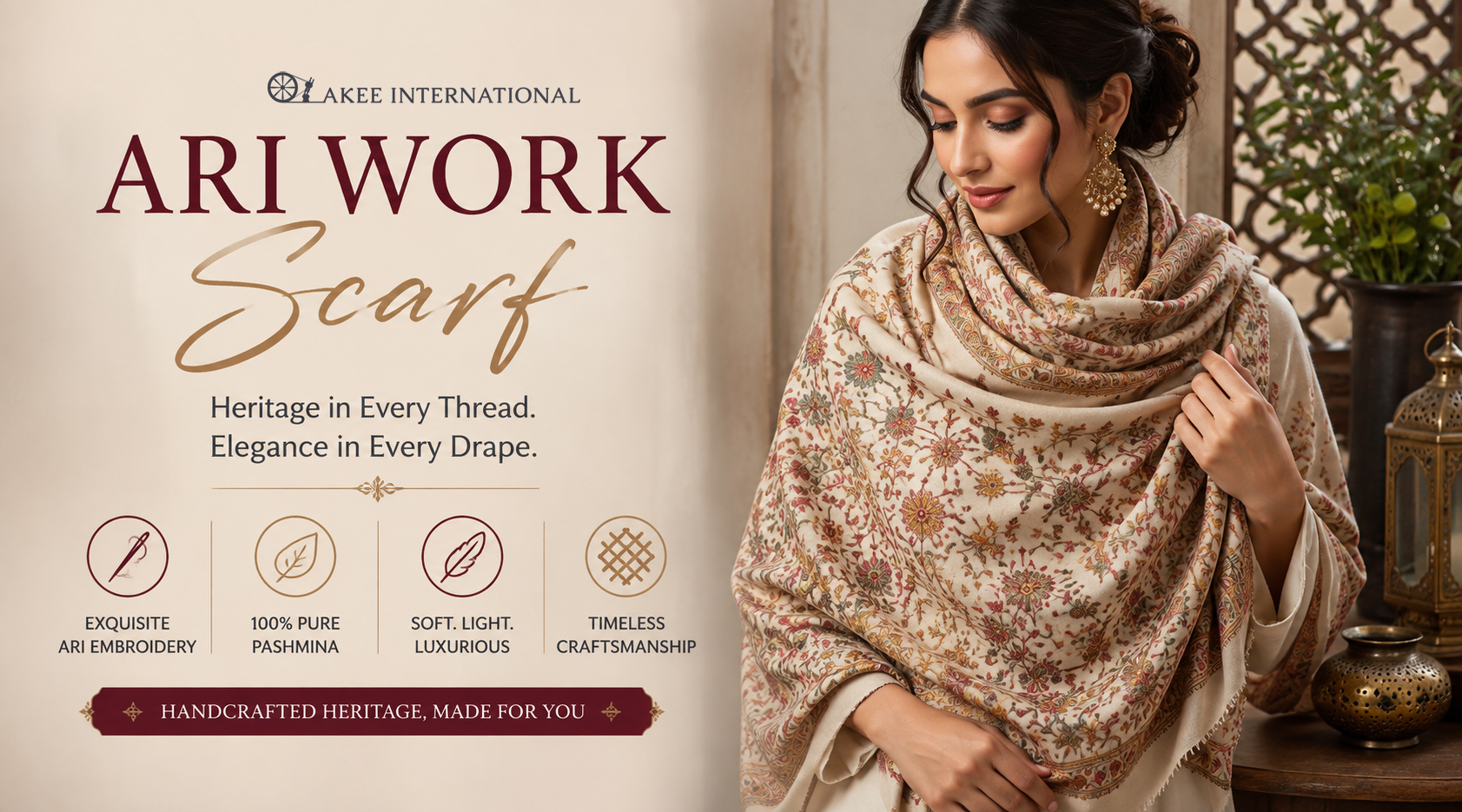
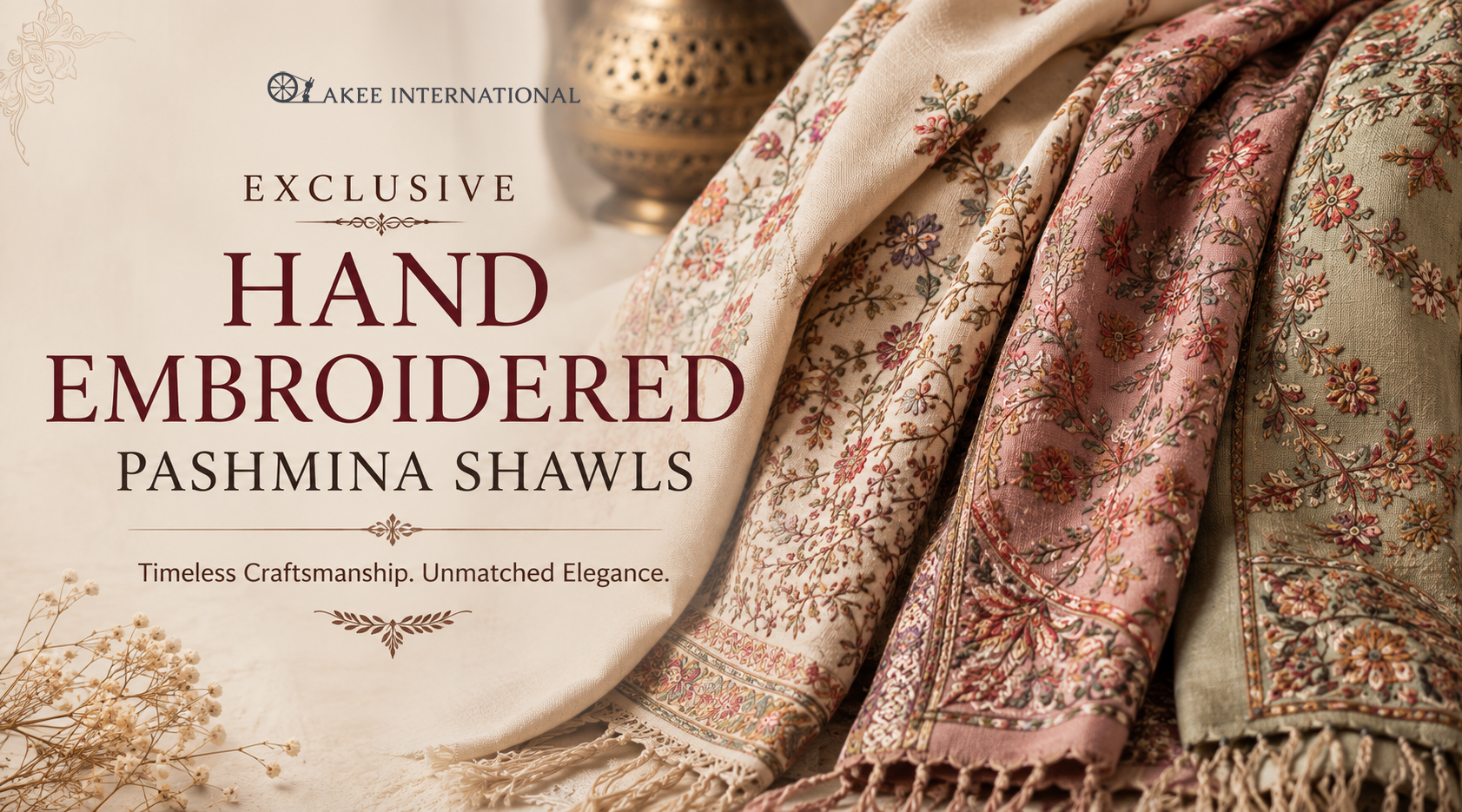
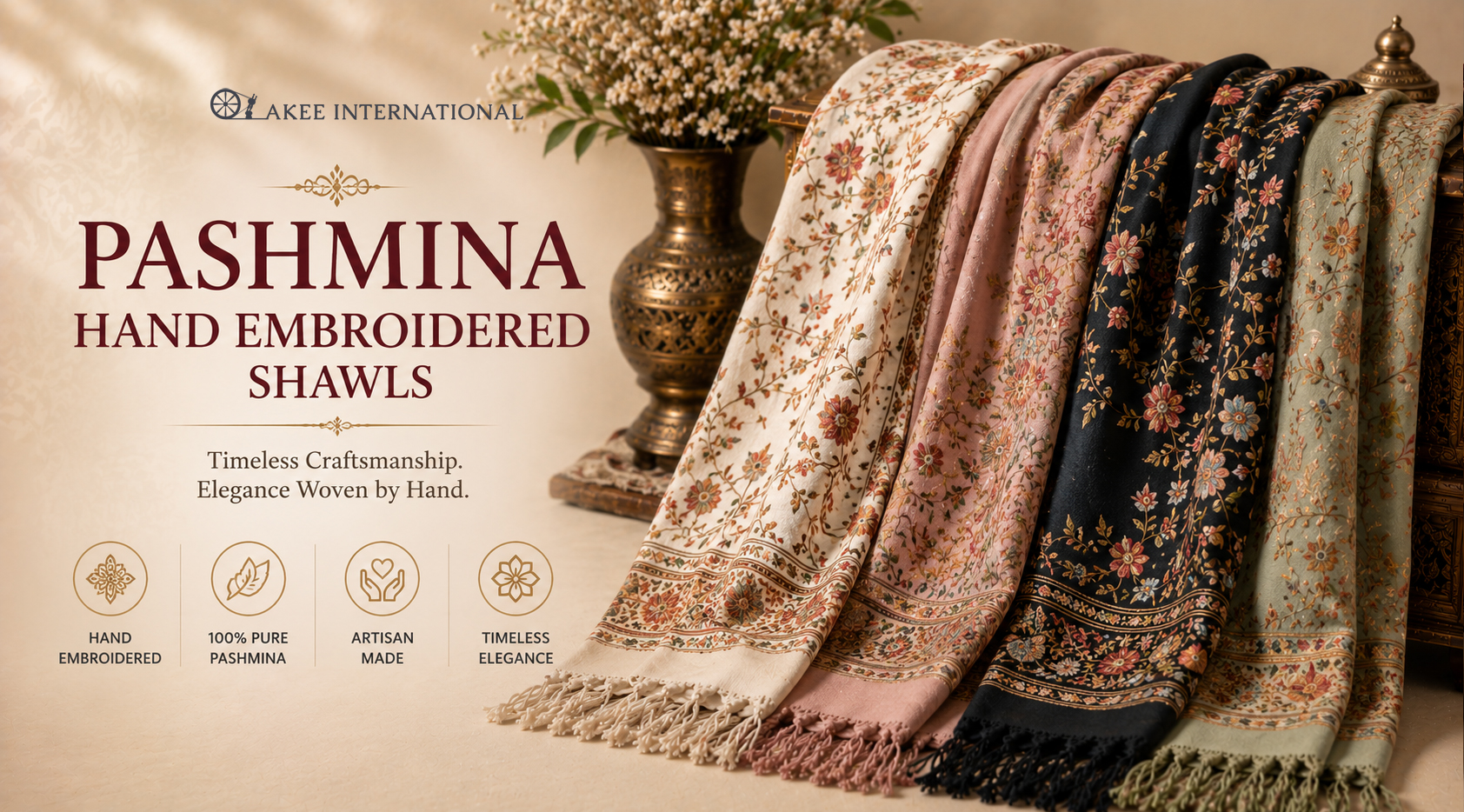
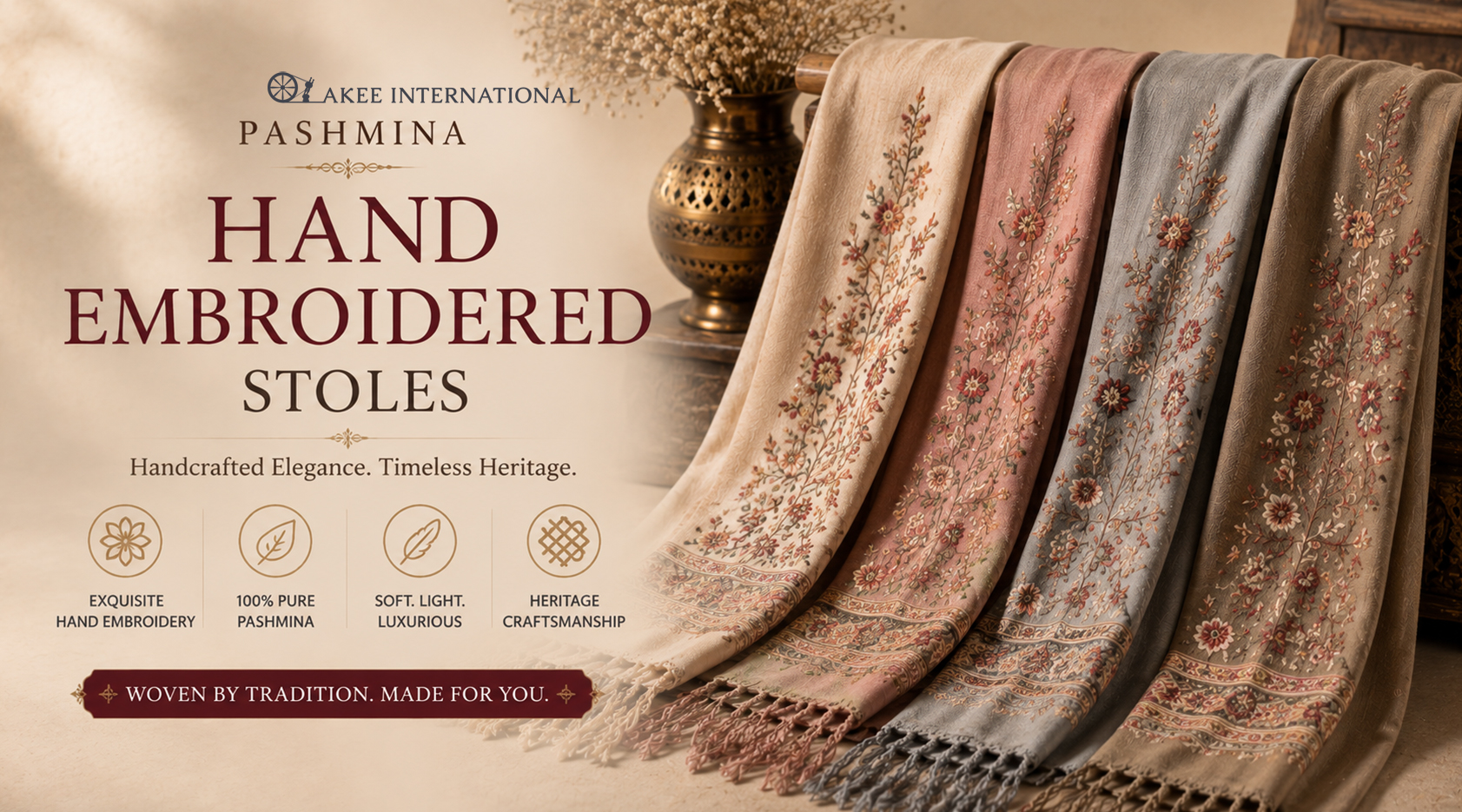
Every genuine Pashmina shawl passes through the same broad sequence of steps, even though the final design might look entirely different from one piece to the next. The raw fiber is cleaned and sorted by hand, then hand-spun into fine yarn on a traditional charkha. From there, skilled weavers work the yarn on wooden looms, a process that can take anywhere from a few days for a simple solid weave to several months for an elaborately patterned or embroidered piece. Where embroidery is involved — fine Sozni needlework, expressive Aari chain-stitch, or dense Zardozi metallic threadwork — a separate team of artisans adds this by hand after the base weave is complete. Our page on the Kashmiri shawl weaving tradition walks through this entire journey in far more depth, and our Kashmiri Sozni Work Shawl collection shows one of these embroidery styles up close. Our page on the Kashmiri artisan-made Pashmina shawl process introduces the individual craftspeople behind these stages in more detail.
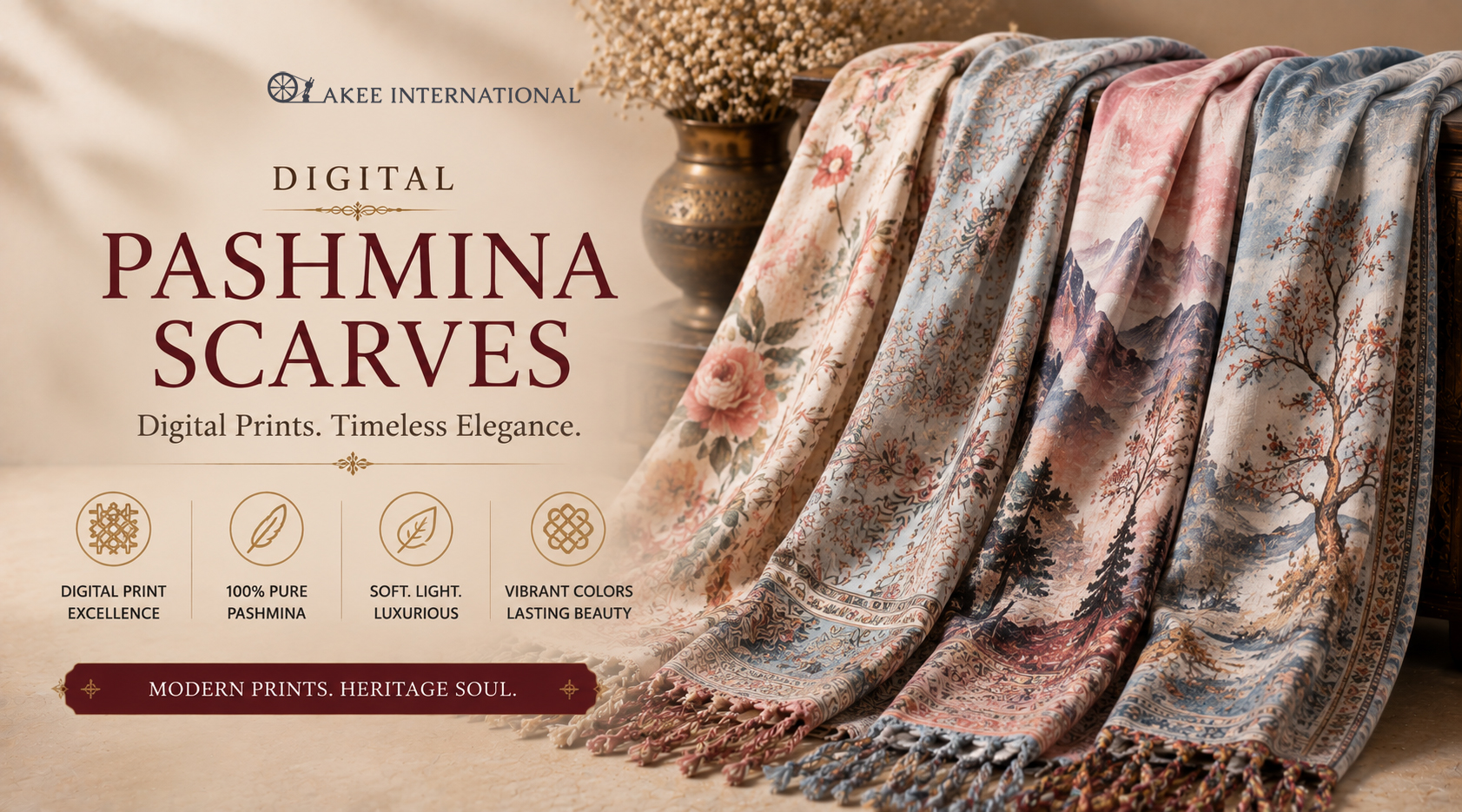
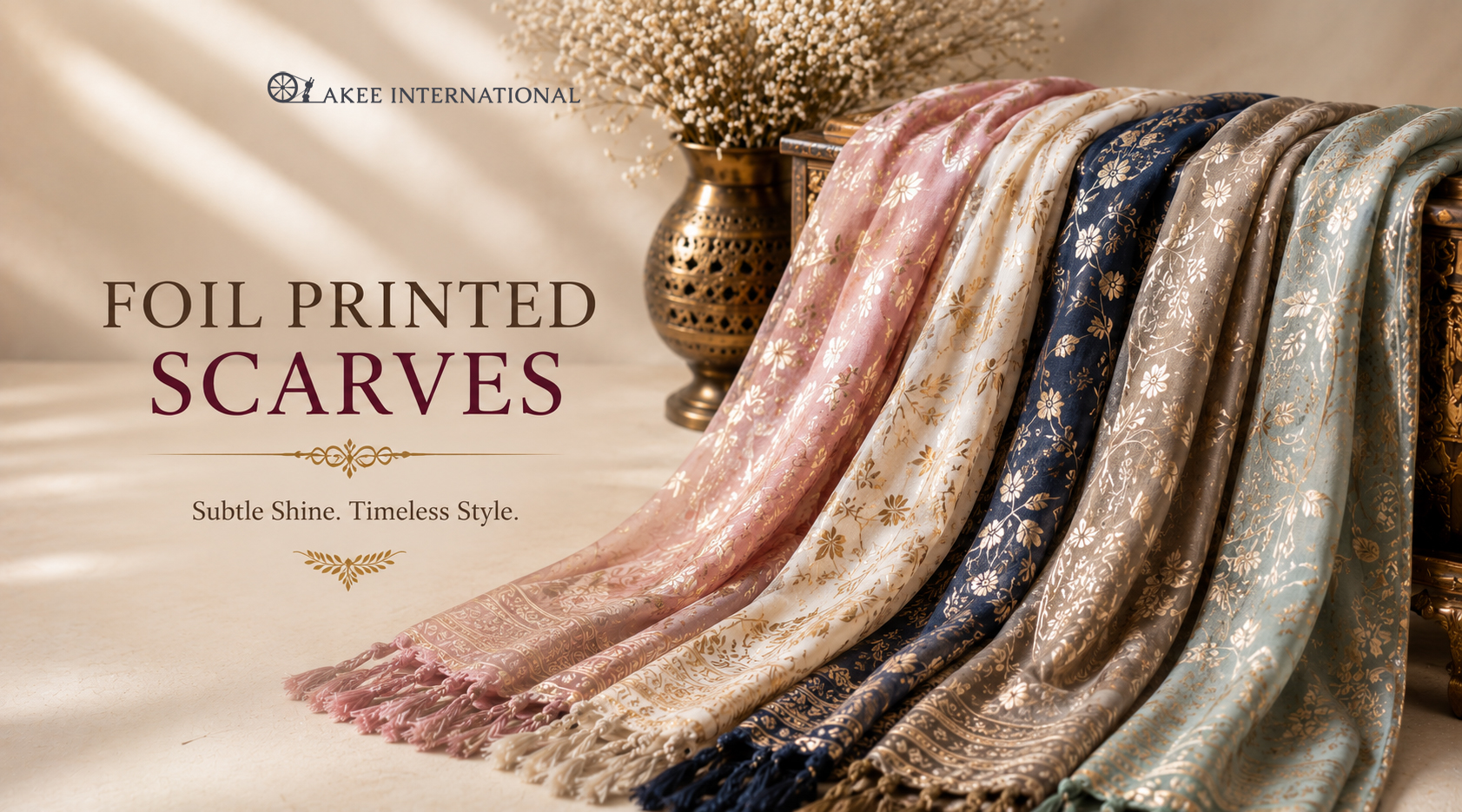
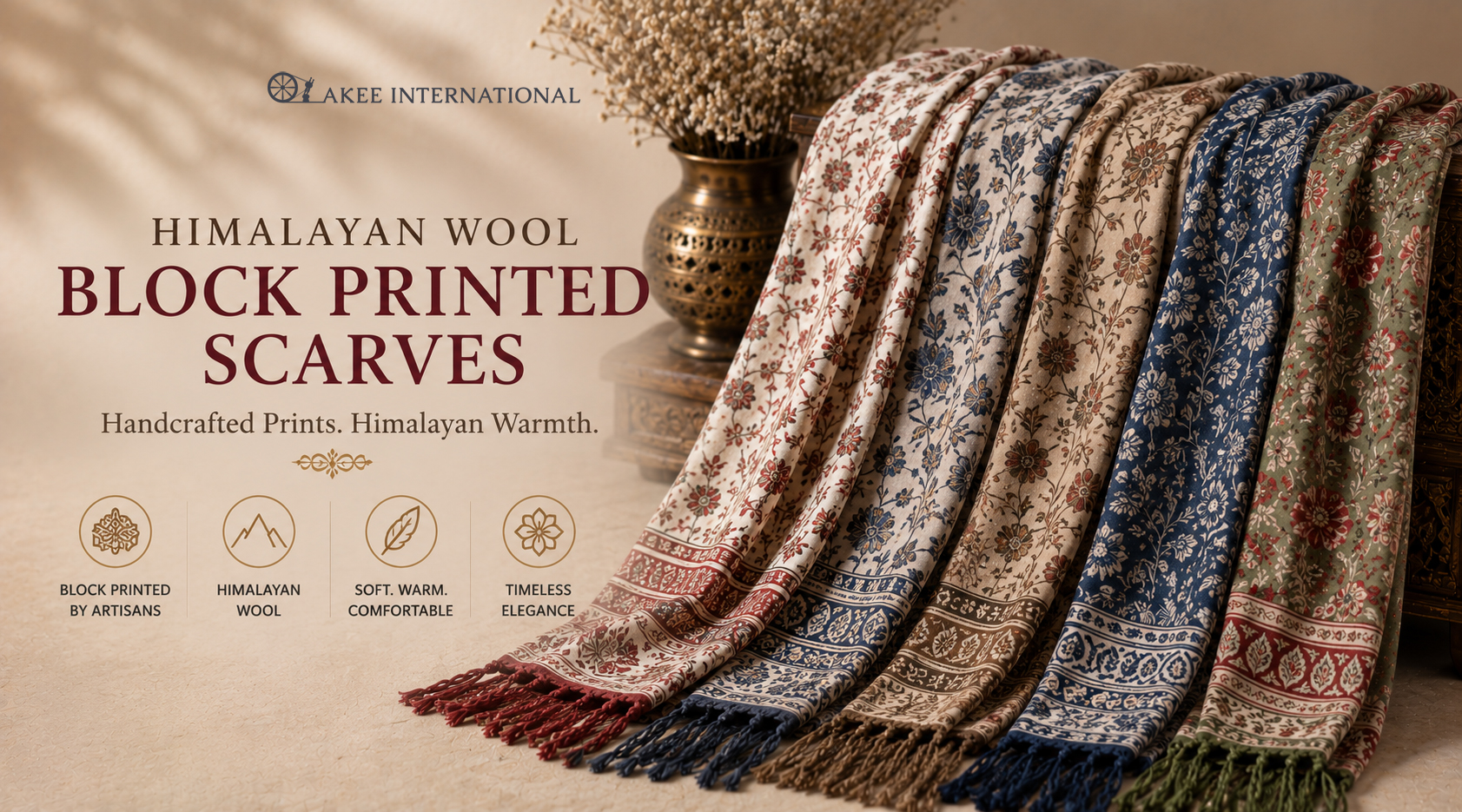
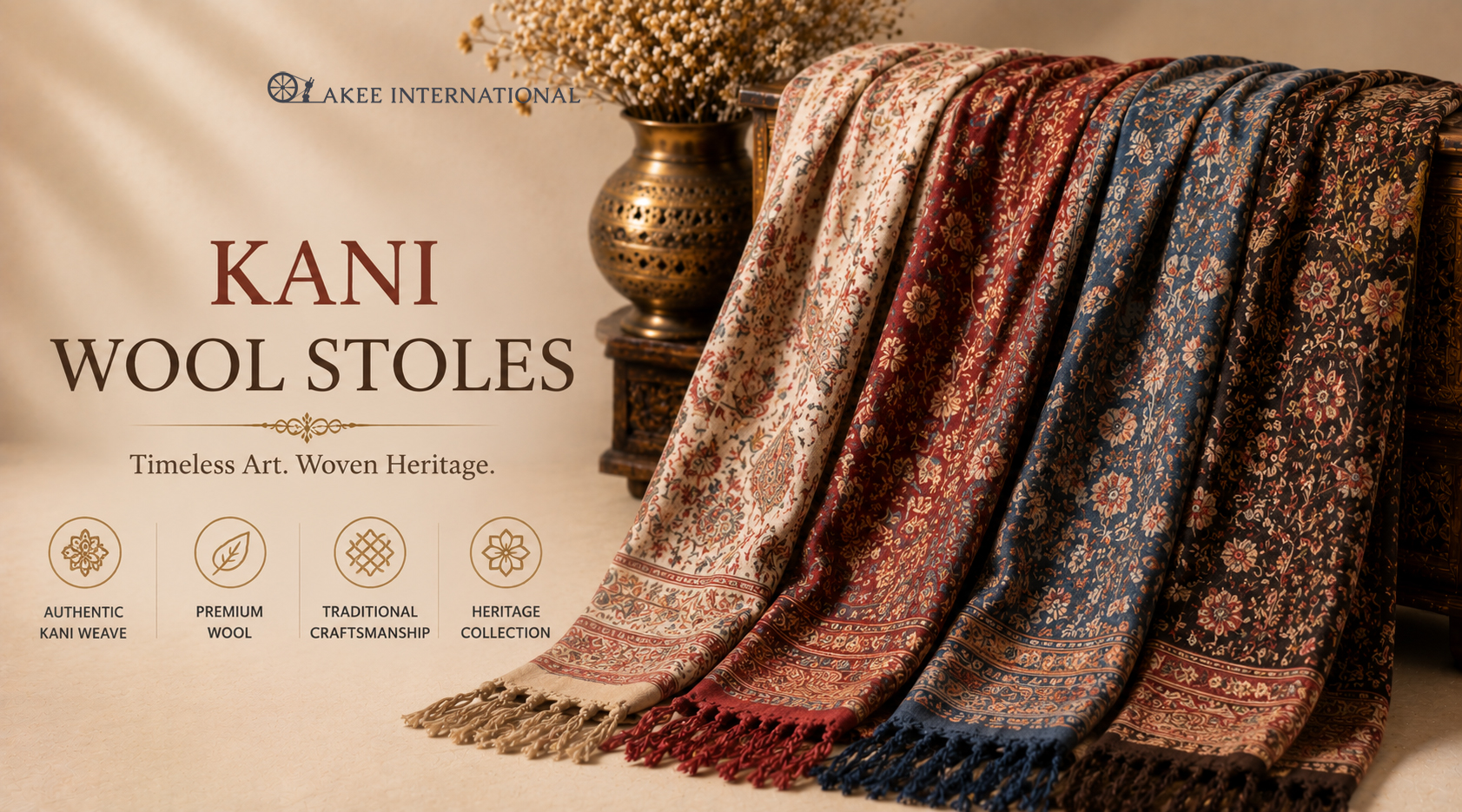
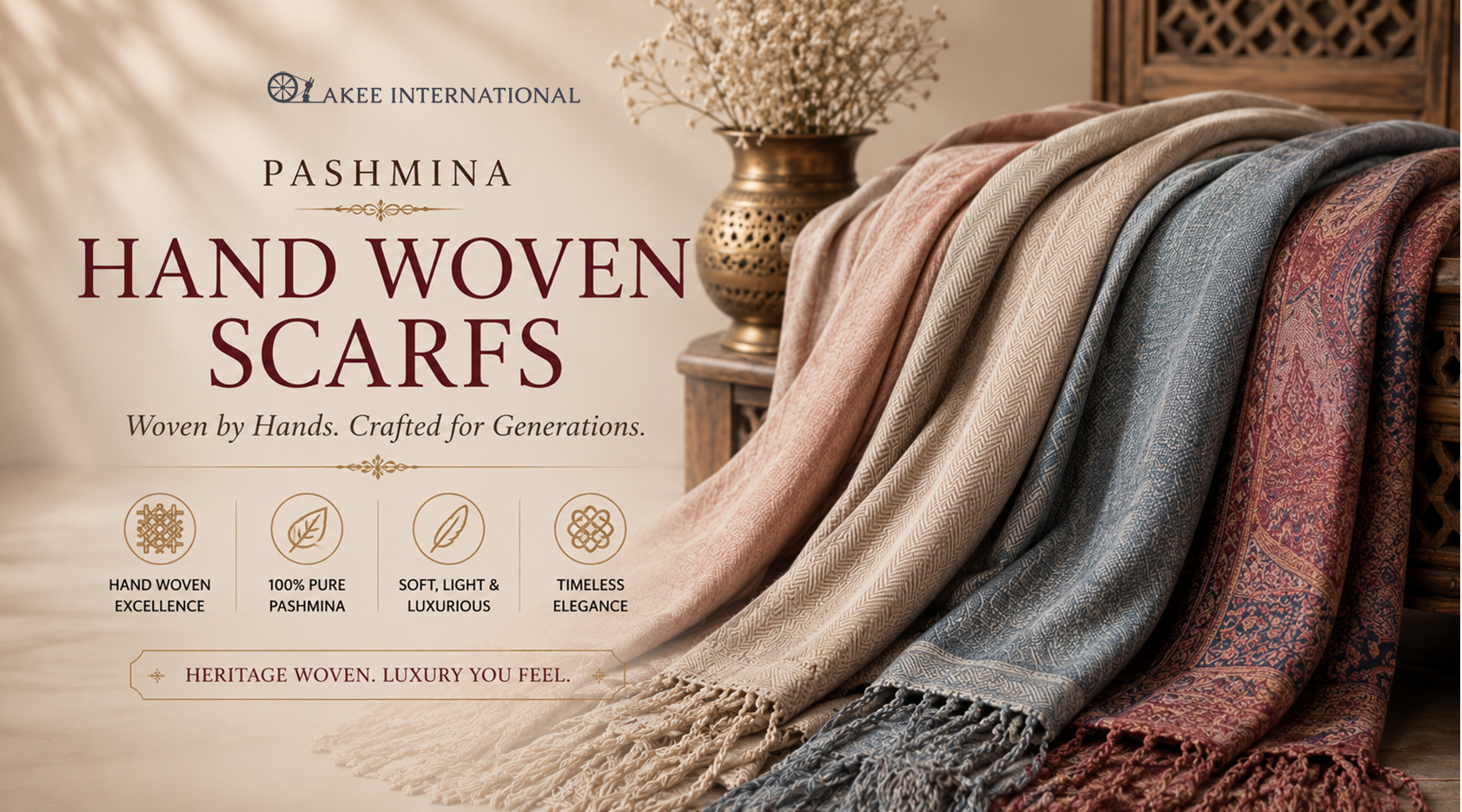
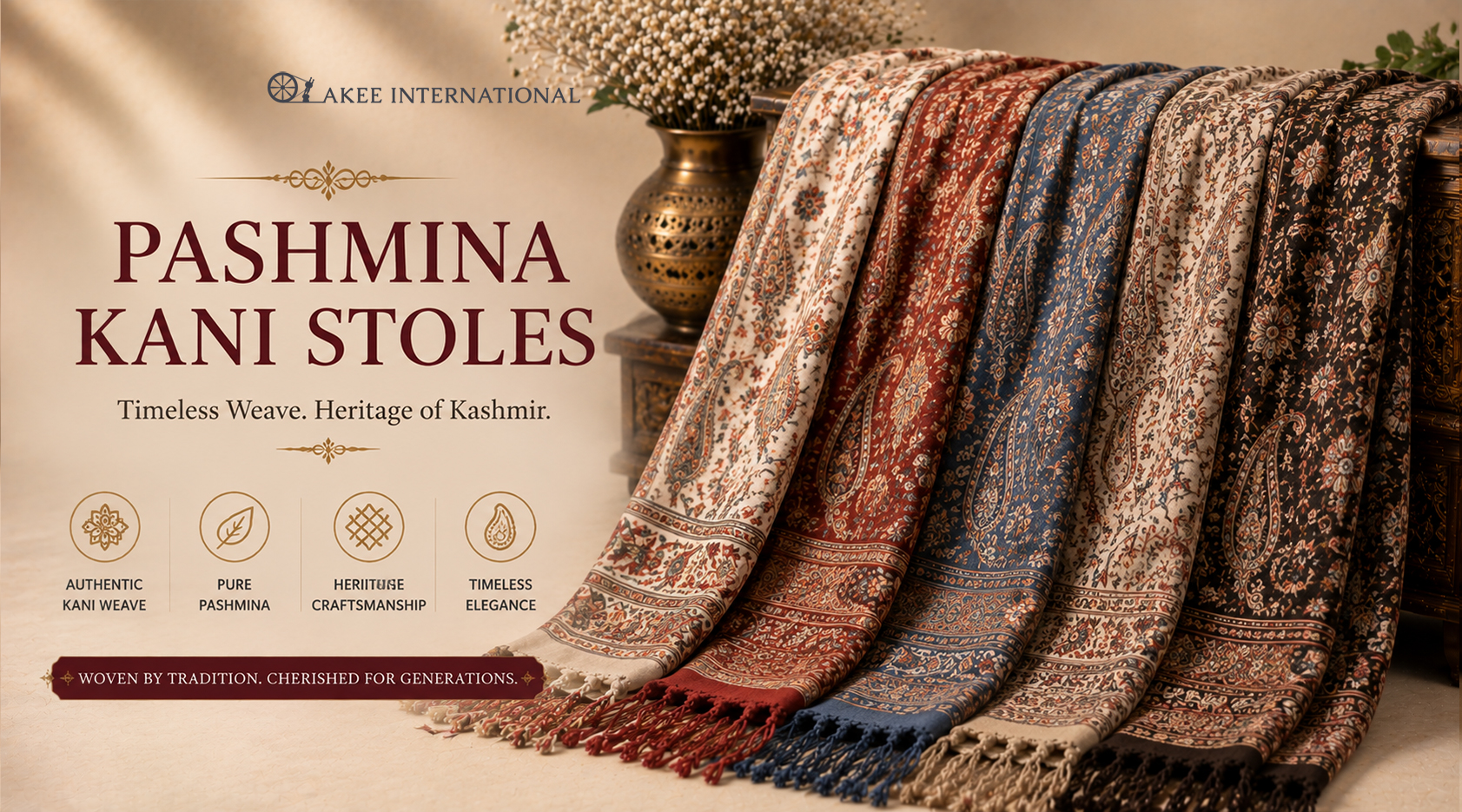
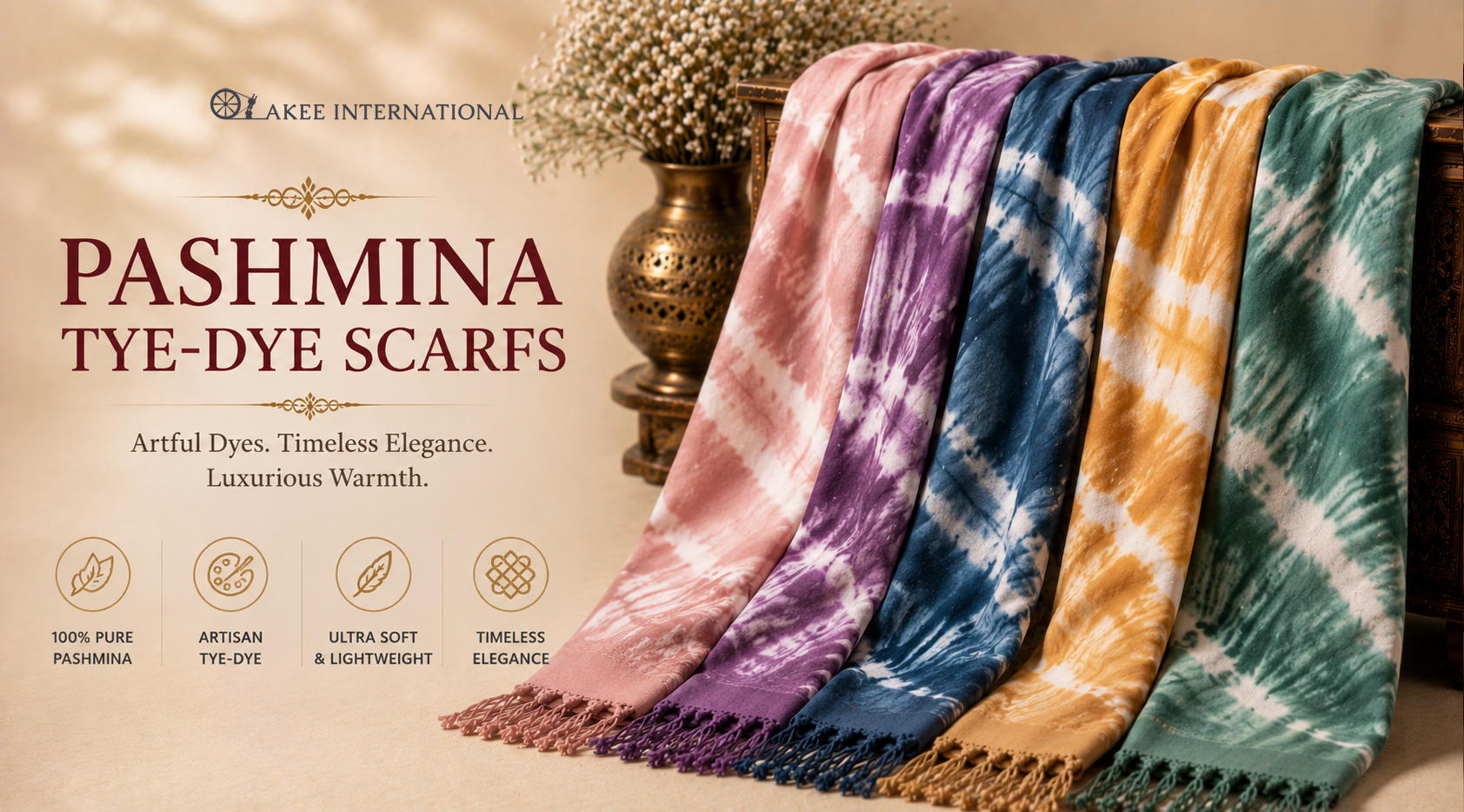
Because Pashmina has been worked into so many different traditions over the centuries, no single style defines it. Our collection spans several distinct approaches, each suited to a different mood:
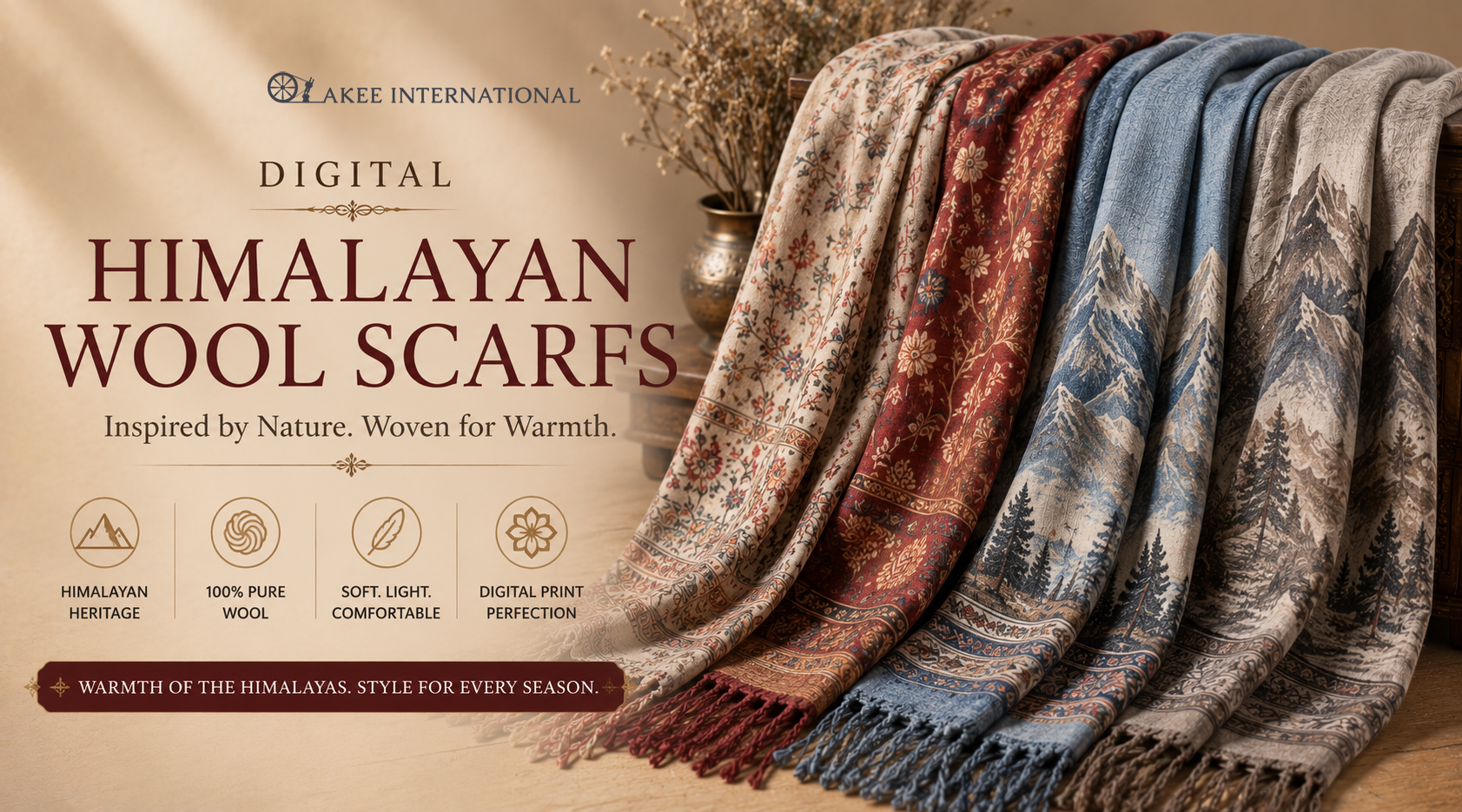
If you're shopping specifically by gender-oriented cut and styling, our Pure Pashmina Stole for Women and Handwoven Pashmina Scarf for Men pages narrow each of these styles down further by intended wearer, and our broader Kashmiri Wool Scarf Online and Himalayan Wool Scarf Online collections cover lighter, everyday wool pieces alongside pure Pashmina for buyers who want variety at different price points.
Each of our handmade pieces is cruelty-free, ethically sourced, and sustainably produced, honoring both craftsmanship and conscious living rather than treating either as a marketing afterthought. Because genuine Pashmina fiber is combed rather than shorn, no harm comes to the goat during collection, and this gentle harvesting is timed to the animal's own natural shedding cycle rather than forced on any other schedule. On the human side of the supply chain, we work directly with artisan networks in Kashmir and Ladakh, aiming to ensure that weavers, spinners, and embroiderers are paid fairly for genuinely skilled, time-intensive work rather than treated as an anonymous cost line. You can review the documentation behind our sourcing claims on the Kashmir Pashmina Certificate of Authenticity page, and our broader sustainability page covers this commitment in more detail.
Because Pashmina's reputation has made it a target for counterfeiting, it's worth knowing a few practical checks before you buy, whether from us or anywhere else. Genuine Pashmina feels light, warm, and smooth rather than cool or slightly plasticky to the touch; it absorbs a small drop of water slowly rather than beading it on the surface; and a stray thread, burned carefully away from the shawl itself, smells like burnt hair and leaves soft, crumbly ash rather than a hardened melted bead. Price is also a meaningful signal — the labor and scarcity behind genuine Pashmina make it inherently expensive, so an unusually cheap "100% Pashmina" listing is almost always a blend or synthetic substitute. Our in-depth guide on 7 tests to identify genuine Pashmina walks through all of these checks with more detail, and our Pashmina Shawl Price Guide gives a realistic sense of fair pricing across different weaves and designs. If you'd like to verify a piece against formal documentation, our page on Kashmir Pashmina Shawl Verification and our comparison on Real Kashmiri Pashmina vs Fake are worth reading alongside this section.
Part of what makes Pashmina interesting historically is how consistently it has crossed cultural and geographic boundaries without losing its identity. Nineteenth-century European aristocracy prized imported Kashmir shawls so highly that entire domestic industries grew up trying to imitate the pattern, most famously in the Scottish town of Paisley, which eventually lent its name to the motif itself. In more recent decades, the same fiber has found its way onto red carpets and into fashion editorials worldwide, worn for exactly the reasons it always was: it looks effortless, it photographs beautifully, and it feels noticeably different from anything synthetic the moment someone touches it. That continuity, stretching from royal courts to modern wardrobes without ever really going out of fashion, is unusual for any textile and is a large part of why Pashmina commands the loyalty it does among people who've owned a genuine piece.
Buyers reach us through a few different routes, and each has its own advantages. Our Buy Pashmina Shawls Online page covers what to expect when ordering remotely, with detailed photography and descriptions standing in for the physical handling you'd get in person. If you're visiting or based in Rajasthan, our Pashmina Shawl Shop in Jaipur and Buy Pashmina Shawl Online in Jaipur pages, along with our page on visiting our store near Amer Fort, cover the in-person side of things. For buyers who want to understand our production side directly — as a cashmere shawl manufacturer in Jaipur and a working Pashmina shawl factory in Jaipur — those pages explain how our own manufacturing operation fits into the wider Kashmir-to-Jaipur supply chain, and our page on being a Kashmir Pashmina exporter covers how this extends to international shipments.
Because the two words are frequently used as though they mean the same thing, it's worth a brief clarification before you shop further. Pashmina is, technically, a specific and especially fine grade of cashmere — sourced from the Changthangi goat of the Kashmir and Ladakh region and traditionally processed using techniques unique to that area. Broader "cashmere" can come from a wider range of goat breeds across several countries and varies considerably in fineness. Every genuine Pashmina shawl is, in that sense, a cashmere shawl, but not every cashmere shawl meets the standard required to be called Pashmina. If you'd like the full comparison laid out point by point, our guide on Pashmina vs Cashmere: What's the Difference covers it in detail, and our page on Pure Kashmiri Cashmere Shawl shows what this fibre grade looks like in a finished product.
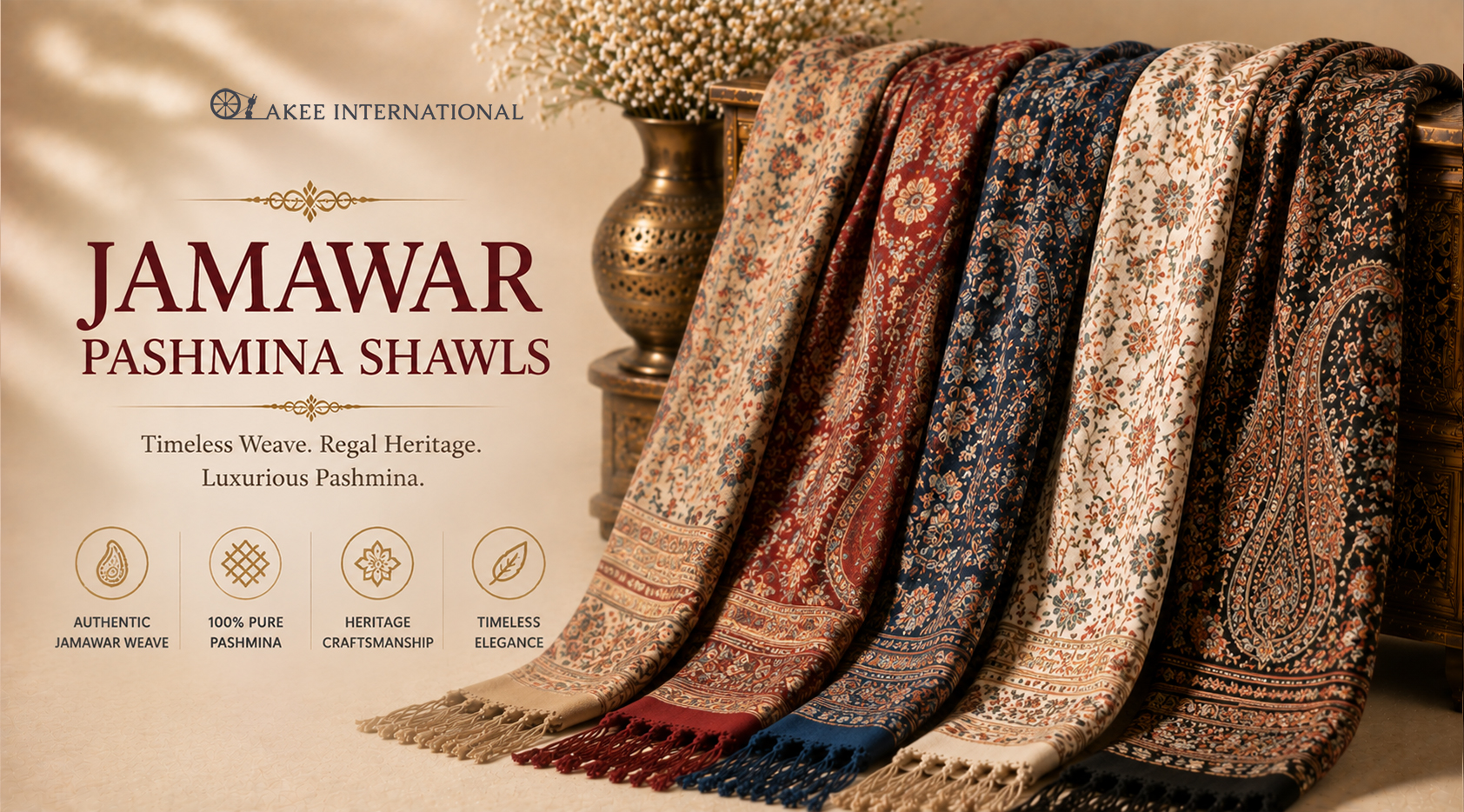
The color and pattern of a Pashmina shawl often carry more meaning than they first appear to. Deep jewel tones — ruby, emerald, sapphire — and rich reds and maroons have historically been associated with celebration and bridal wear, while muted neutrals like ivory, camel, and charcoal lean toward everyday versatility and formal restraint. Motifs follow a similar logic: the paisley, or buta, traces back through centuries of Kashmiri design and later became so associated with the craft that European imitators borrowed it wholesale; dense, all-over Jamawar patterning historically signaled court patronage and considerable expense, since covering an entire shawl in pattern demanded far more weaving time than a bordered design. Recognising these cues isn't just decorative trivia — it's often the fastest way to judge whether a piece fits the occasion you're actually buying it for, before you even get to questions of fiber quality. Our page on Best Pashmina Shawl Colors for Wedding applies this same logic specifically to bridal and wedding-season shopping.
Beyond colour and motif, it's worth knowing that our collection is organised around specific life events, not just general browsing. For weddings, our Pashmina Shawl for Bride, Wedding Trousseau Pashmina Shawl, and Bridal Pashmina Shawl Online collections cover the bride's side of the occasion specifically, while our wedding gift range serves guests and family. For spiritual or ceremonial gifting, our Pashmina Shawl for Guru Gifting page addresses a specific, meaningful use case within Indian tradition. For performers and public speakers, our Pashmina Shawl for Stage Events collection covers pieces chosen for how they photograph and move under lights. And for the youngest members of a family, our Baby Soft Pashmina Shawl and Pashmina Shawl for Baby & Kids Gift collections apply the same fibre standard to smaller, gentler pieces suited to children.
For larger gifting needs — return gifts at a wedding, corporate events, or festival distribution — our Return Gift Pashmina Shawls Wholesale and corporate gifting in bulk pages cover sourcing at volume without compromising on authenticity.
Because so much of what makes a Pashmina shawl genuine traces back to where and how it was made, we try to be as transparent as possible about this sourcing chain rather than leaving it as a vague marketing claim. Our pages on the Original Kashmir Pashmina Shawl, our identity as a Kashmir Pashmina Manufacturer, and our broader Kashmir Pashmina Wool Shawl collection all speak to this same sourcing chain from slightly different angles. If you're comparing us against other sellers claiming Kashmir origin, our page on how to buy a Kashmir shawl from Jaipur explains why Jaipur has become a trusted intermediary point in this supply chain, and our Genuine Kashmiri Handmade Shawl and Kashmiri Hand Embroidered Shawl collections showcase this sourcing applied to specific product types. For buyers sourcing at business scale, our page on being a Kashmiri Pashmina Wholesale Supplier covers how this same chain supports bulk orders.
A genuine Pashmina shawl, properly cared for, can last decades and often becomes a family heirloom rather than a seasonal purchase. Dry cleaning is generally the safest option, though a gentle hand wash in cold water with mild detergent also works for less heavily embroidered pieces. Keep it away from direct sunlight while drying, store it folded in a breathable cotton bag rather than sealed plastic, and use natural deterrents like cedar or lavender to guard against moths. Our full Pashmina Shawl Care Guide, along with dedicated pages on how to wash and how to store a Pashmina shawl, cover this in complete step-by-step detail.
You're welcome to browse our full Pashmina shawl collection online or visit us in person at Nai Mata Mandir Road, Thathar Road, Delhi By Pass, Amer, Jaipur 302028, Rajasthan, India. For questions about a specific piece, authenticity, or bulk orders, reach us directly by phone or WhatsApp at +91-9772777770, or write to us at akee.international@gmail.com — our team is happy to help you find the right shawl.
"Read what our clients say about their experience with Akee International's luxurious Pashmina shawls and impeccable service."

Nai Mata Mandir Road, Thathar Road, Delhi By Pass, Amer, Jaipur 302028, Rajasthan India
Get directions Call Now Whatsapp 4.9 based on 269 reviews
Rating: 4.6/5 | 85 Reviews

Rating: 4.9/5 | 269 Reviews

TrustScore: 4.9 | 100 Reviews