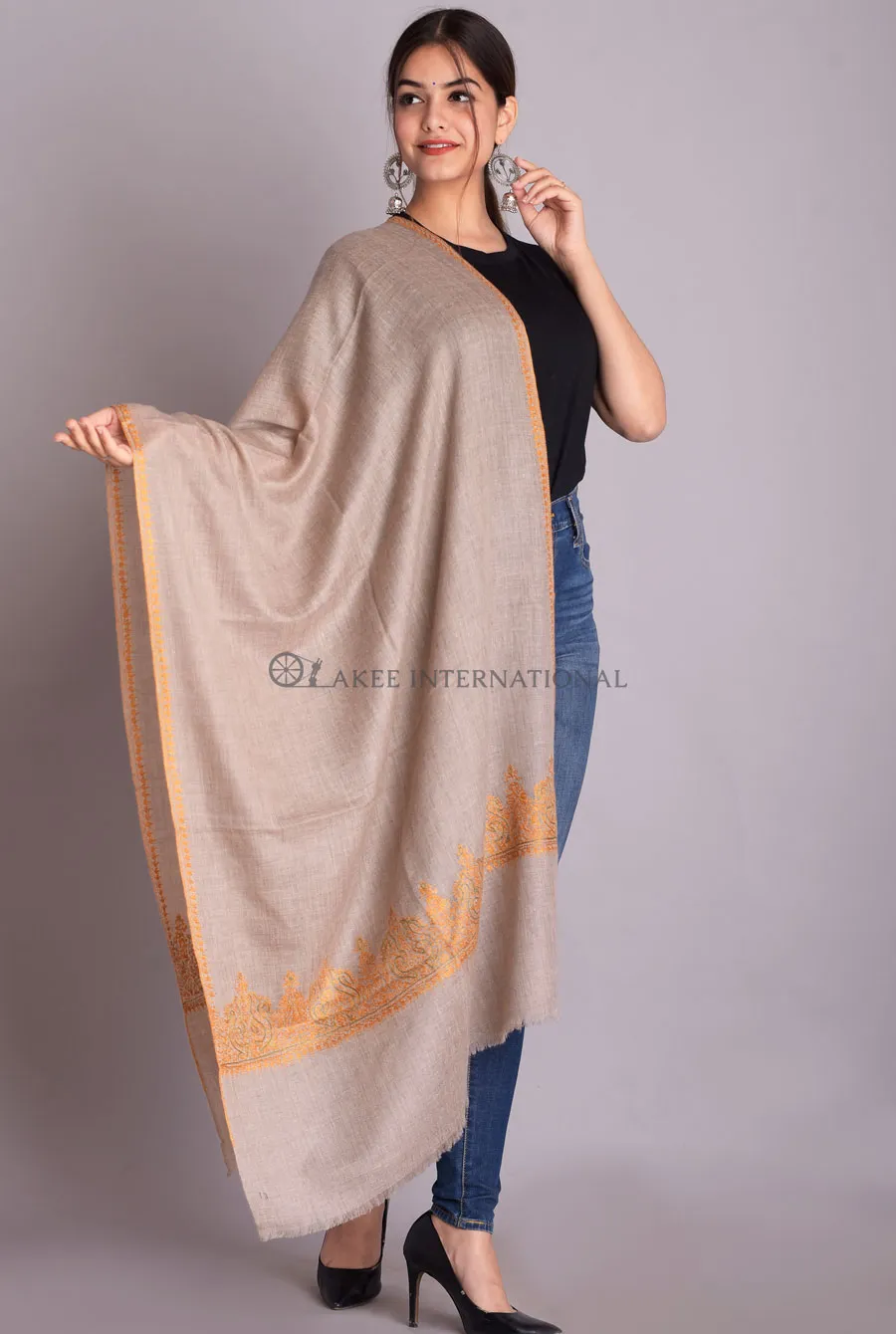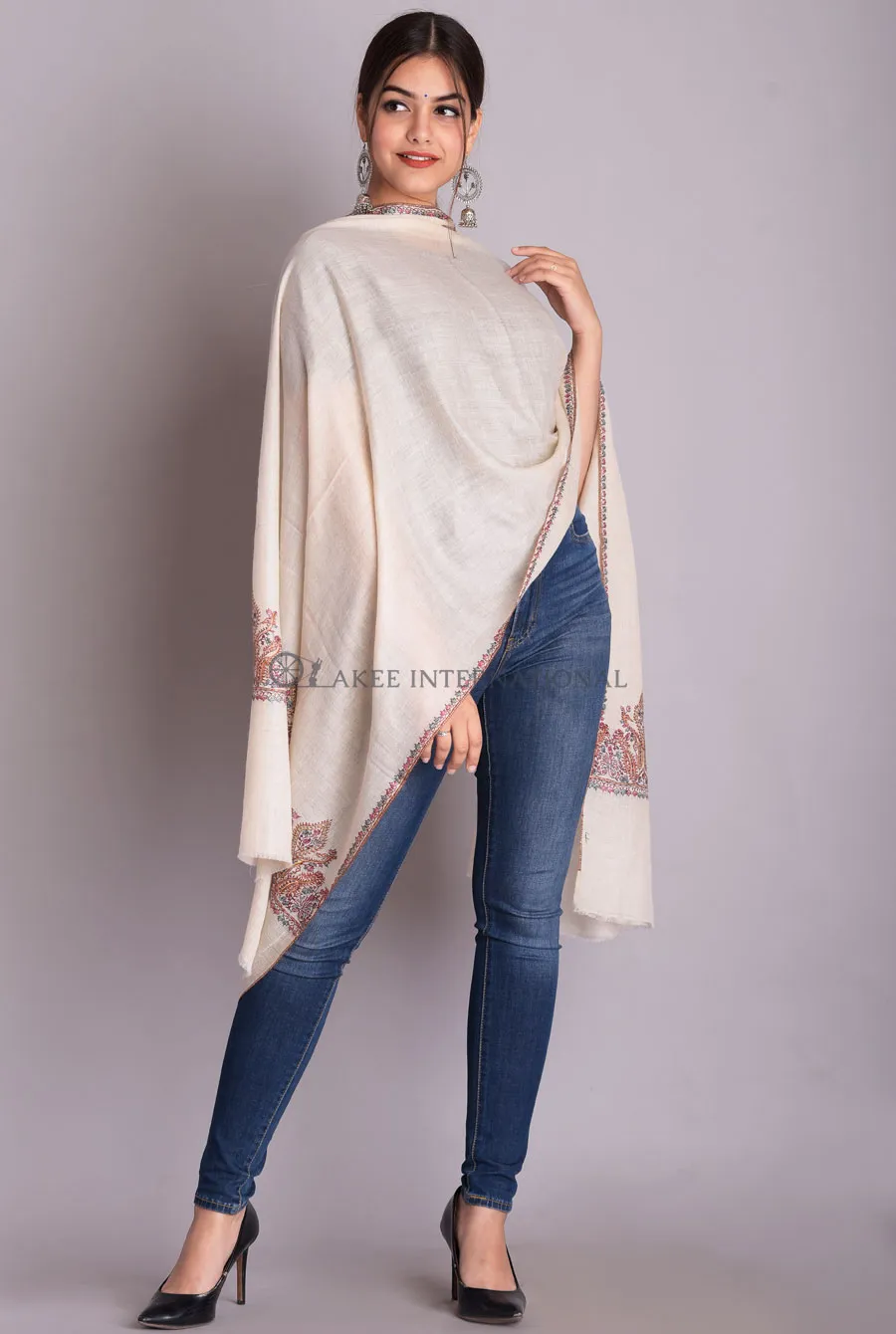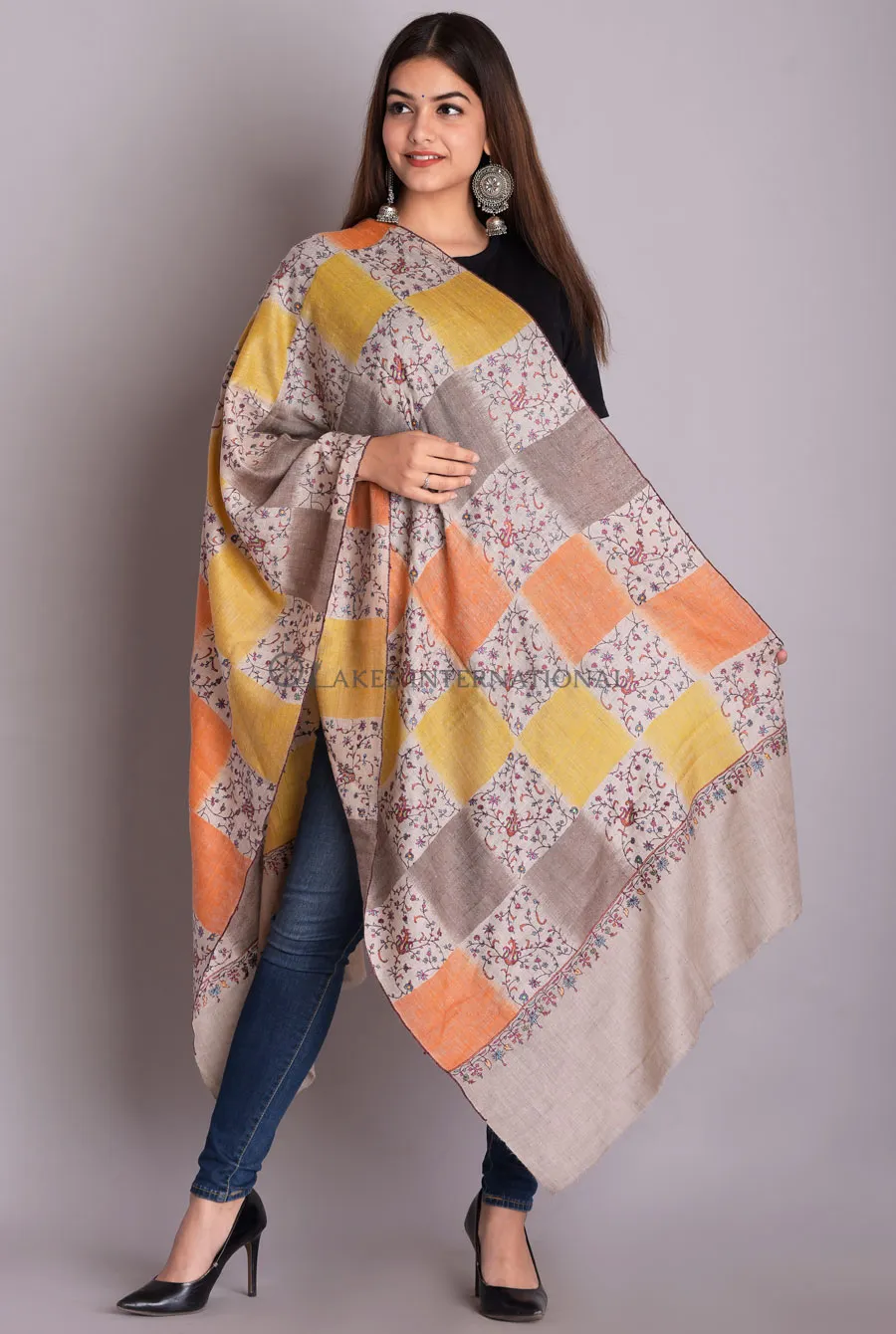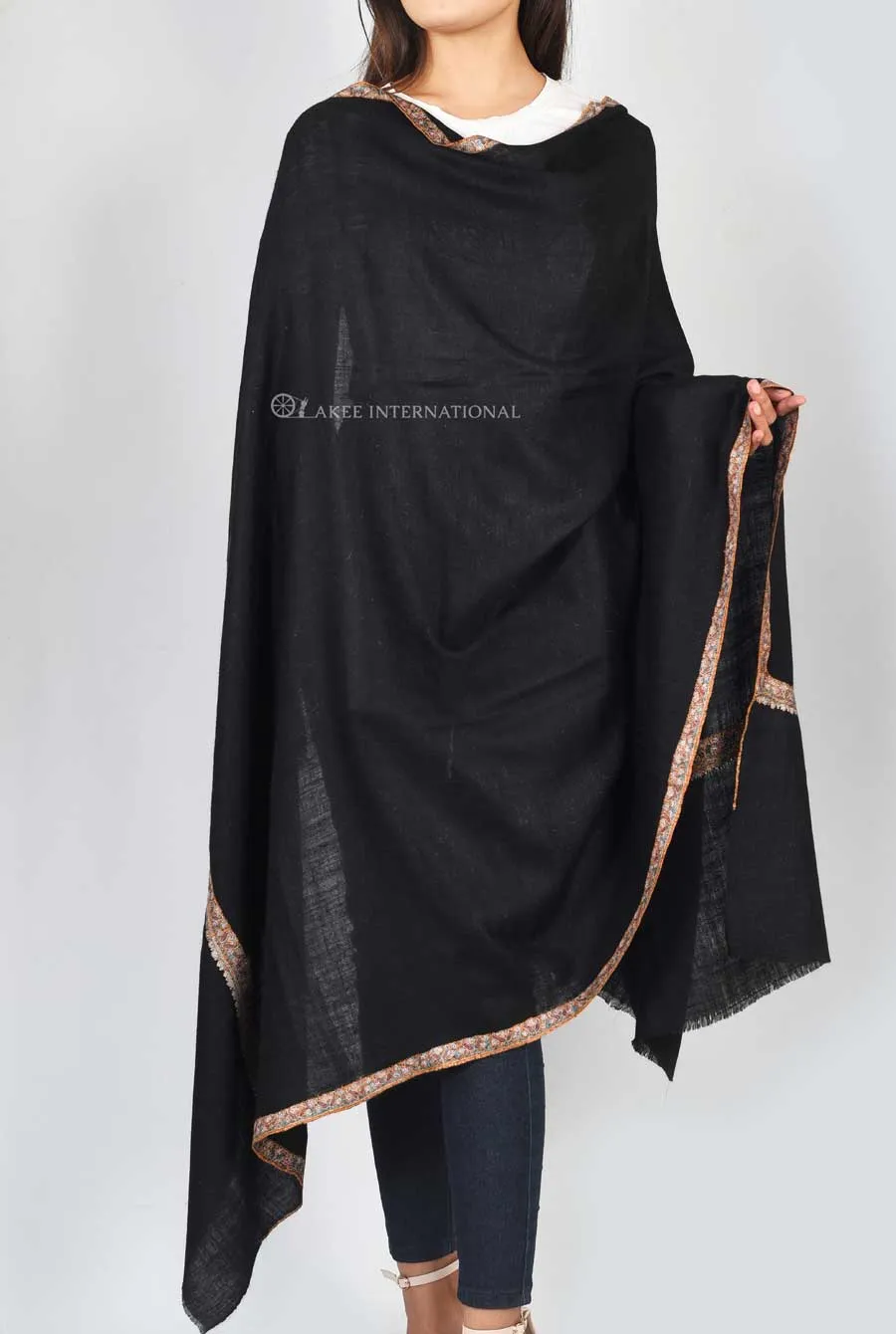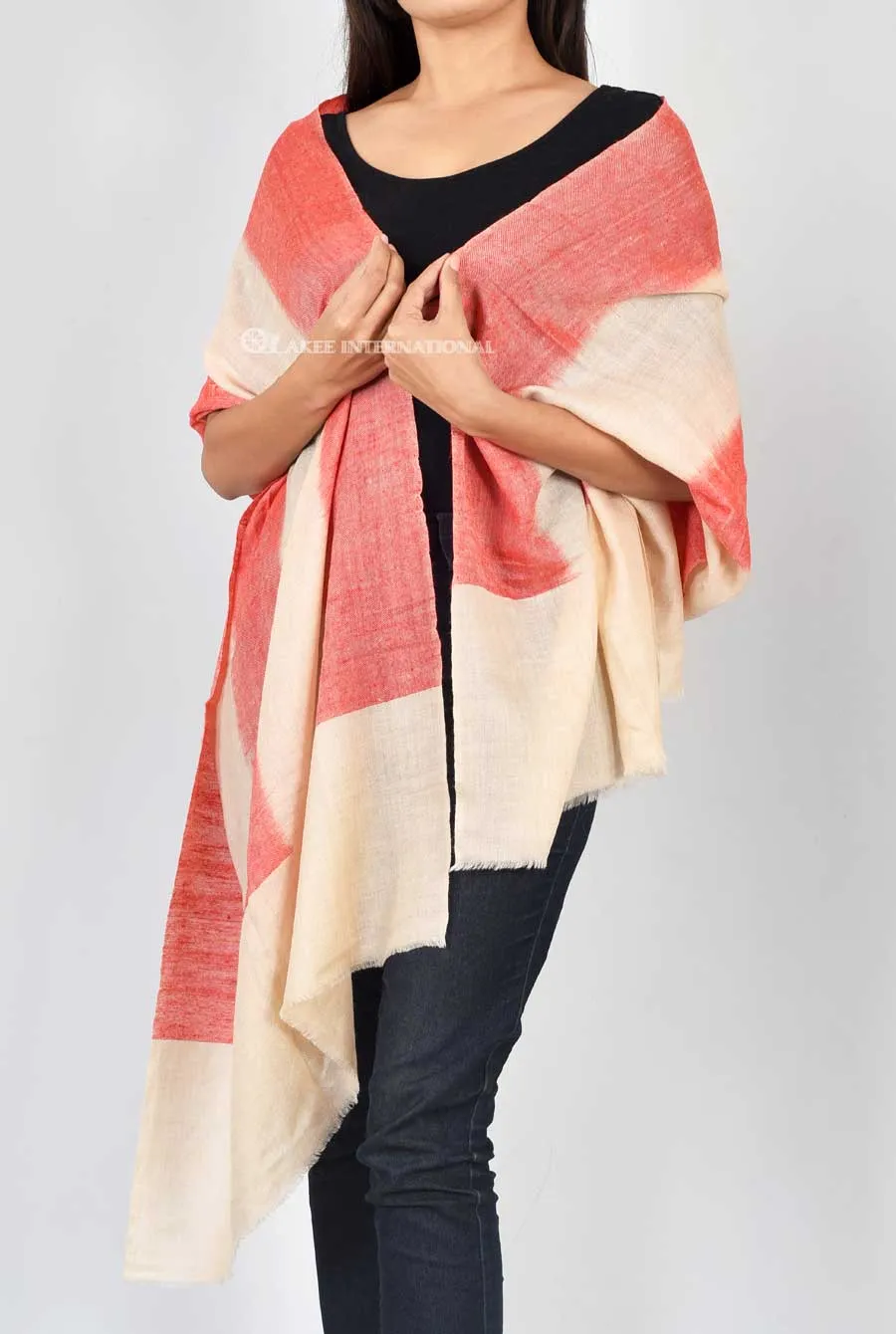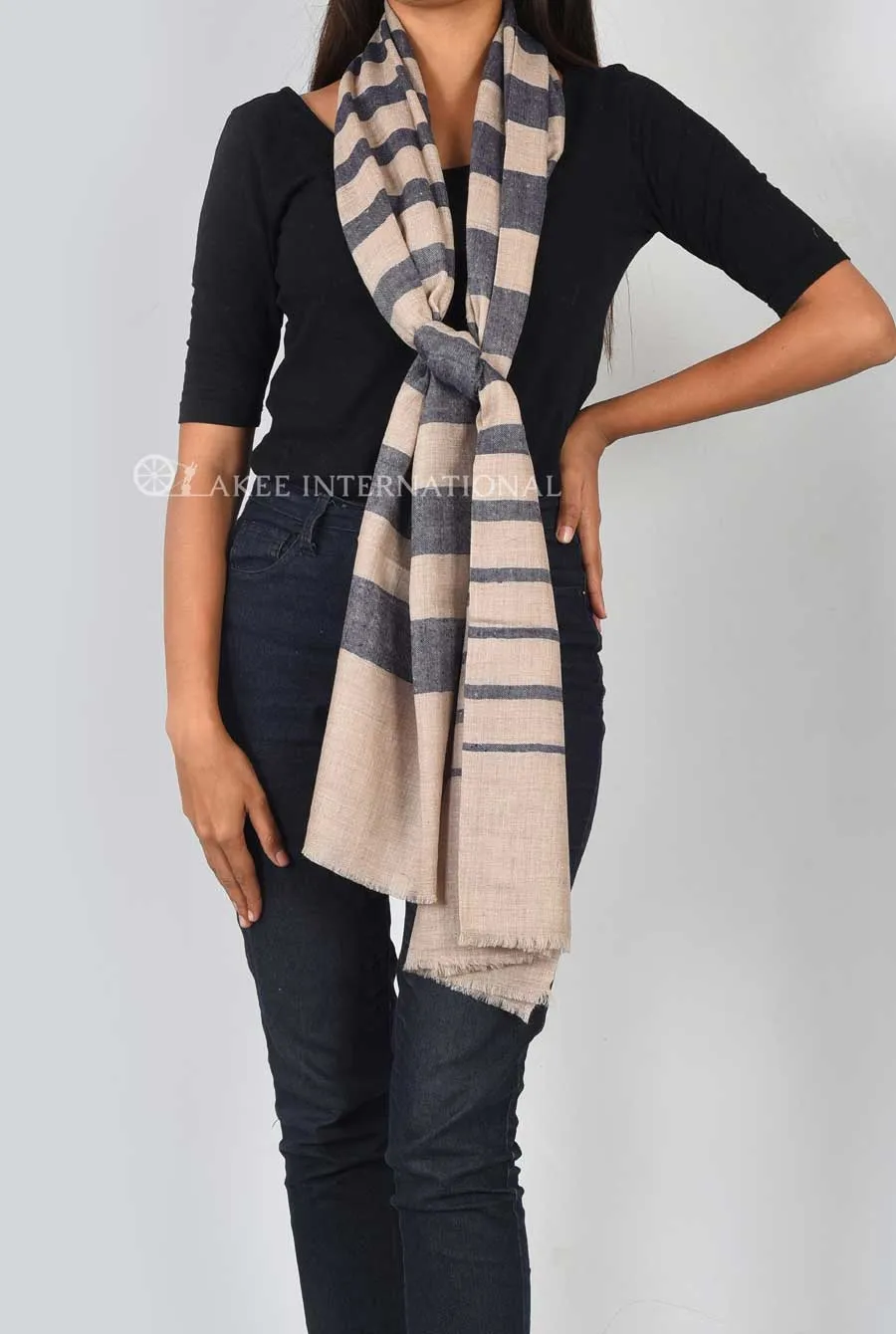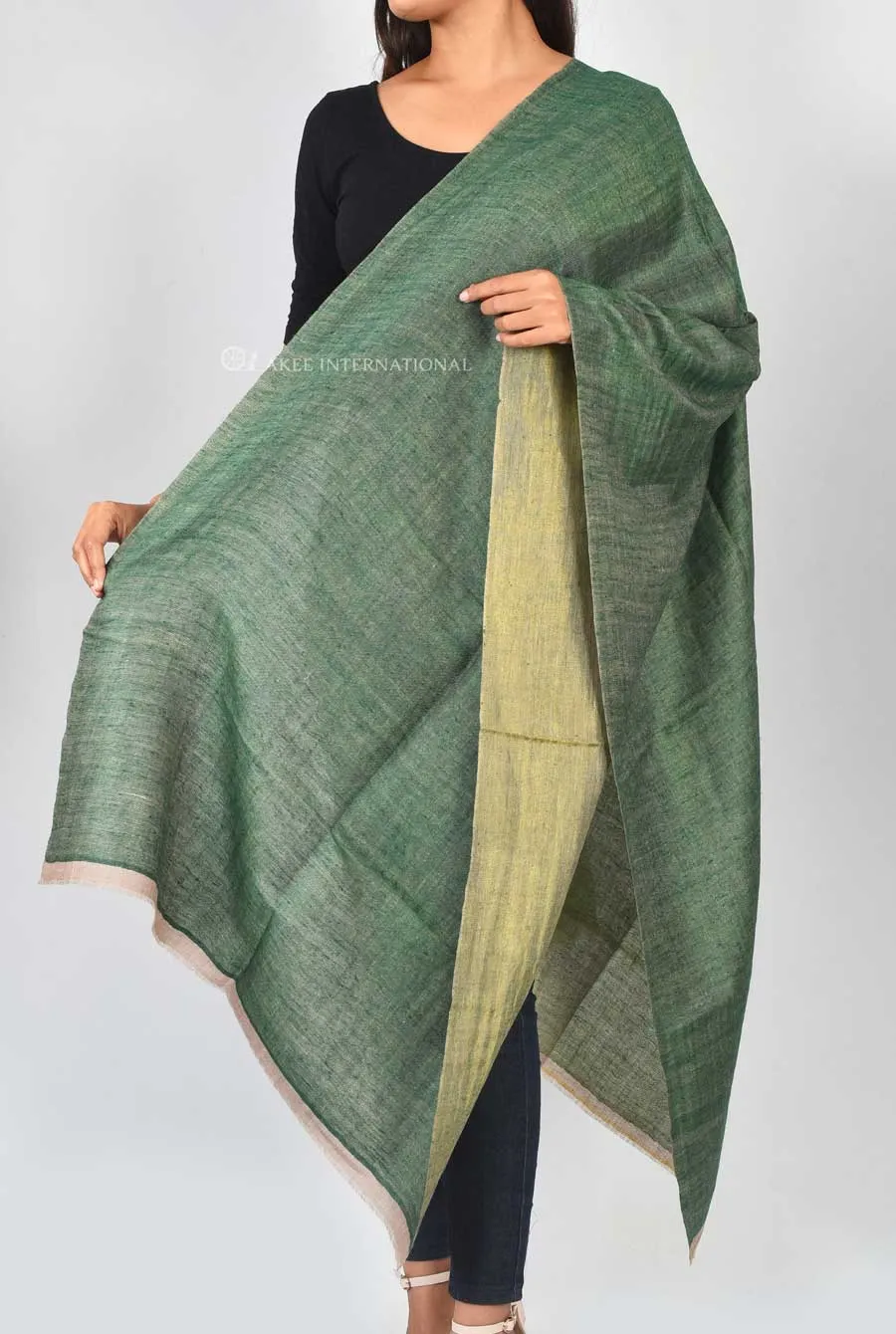
Find Your Perfect Premium Pashmina Shawl
Discover exquisite Pashmina shawls, beautifully crafted with Kashmir’s timeless heritage and artistry.

A finely embroidered Kashmiri shawl is one of the most rewarding textile investments a person can make — but it is also one of the easiest to get wrong. With Pashmina's popularity growing worldwide, the market has filled up with blended fabrics, printed imitations, and machine-embroidered pieces sold under the same name as genuine hand-embroidered Kashmiri work. Knowing how to separate the authentic from the imitation is essential before spending on a piece that's supposed to last a lifetime.
At Akee International, we work directly with artisan networks in Kashmir, so we understand exactly what separates a truly handmade, hand-embroidered shawl from a look-alike. Here's a detailed guide to help you evaluate any hand-embroidered Kashmiri shawl before you buy.
The word "Pashmina" gets attached to all kinds of products, but the label alone tells you nothing. Genuine Pashmina comes from the fine undercoat of the Changthangi goat found in high-altitude Himalayan regions, and it should be described clearly by the seller — not simply implied by the product name. Our Kashmir Pashmina wool shawl collection, for instance, is sourced and hand-spun using traditional methods, and we're always transparent about this with buyers. Never assume authenticity just because a listing mentions Pashmina in its title — always read the full product description.
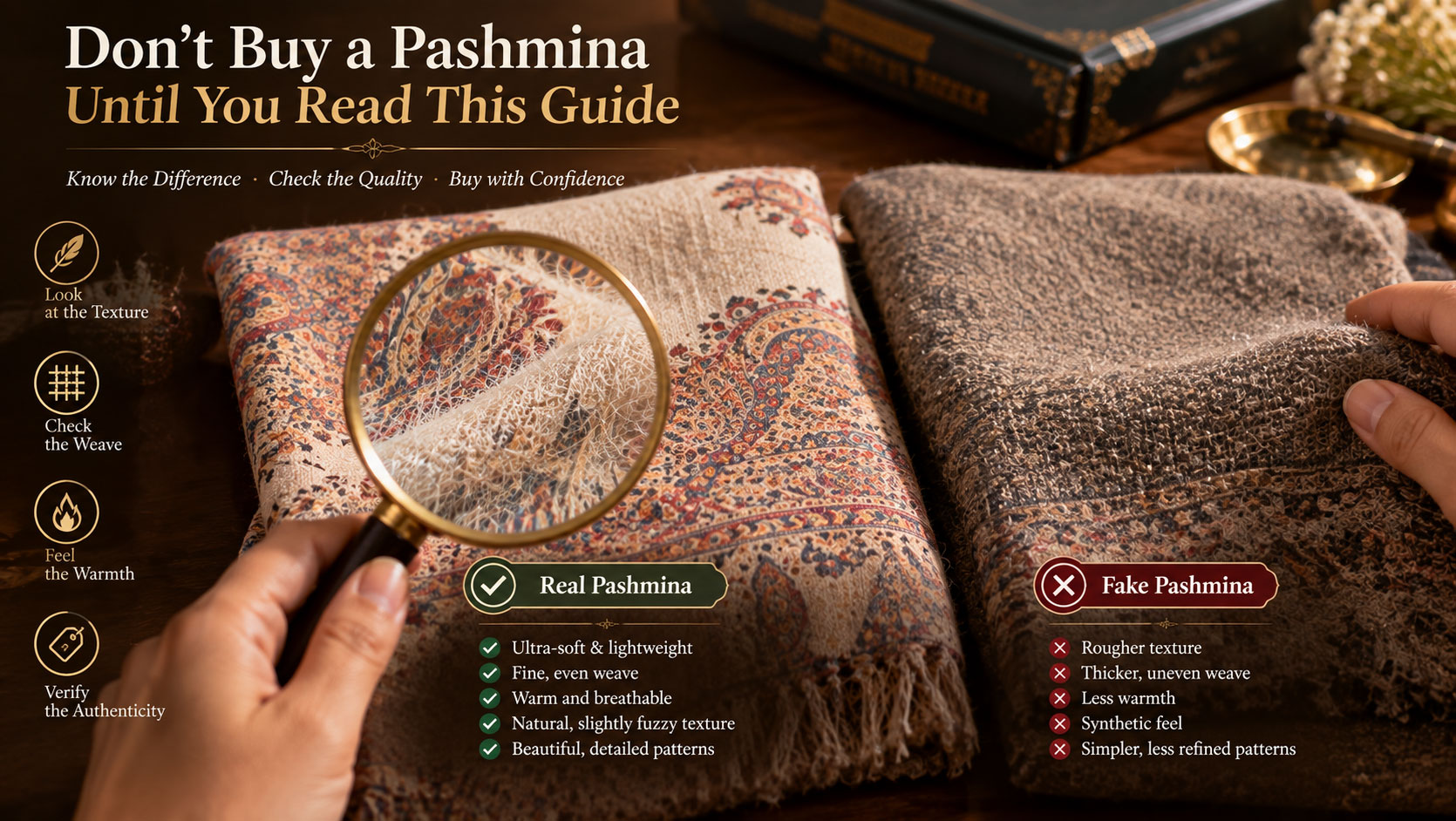
A genuine, fine Pashmina shawl feels remarkably light and soft with a graceful drape. That said, softness by itself proves very little, since some synthetic and blended fabrics can also feel plush to the touch. Treat texture as one data point among several rather than a definitive authenticity test.
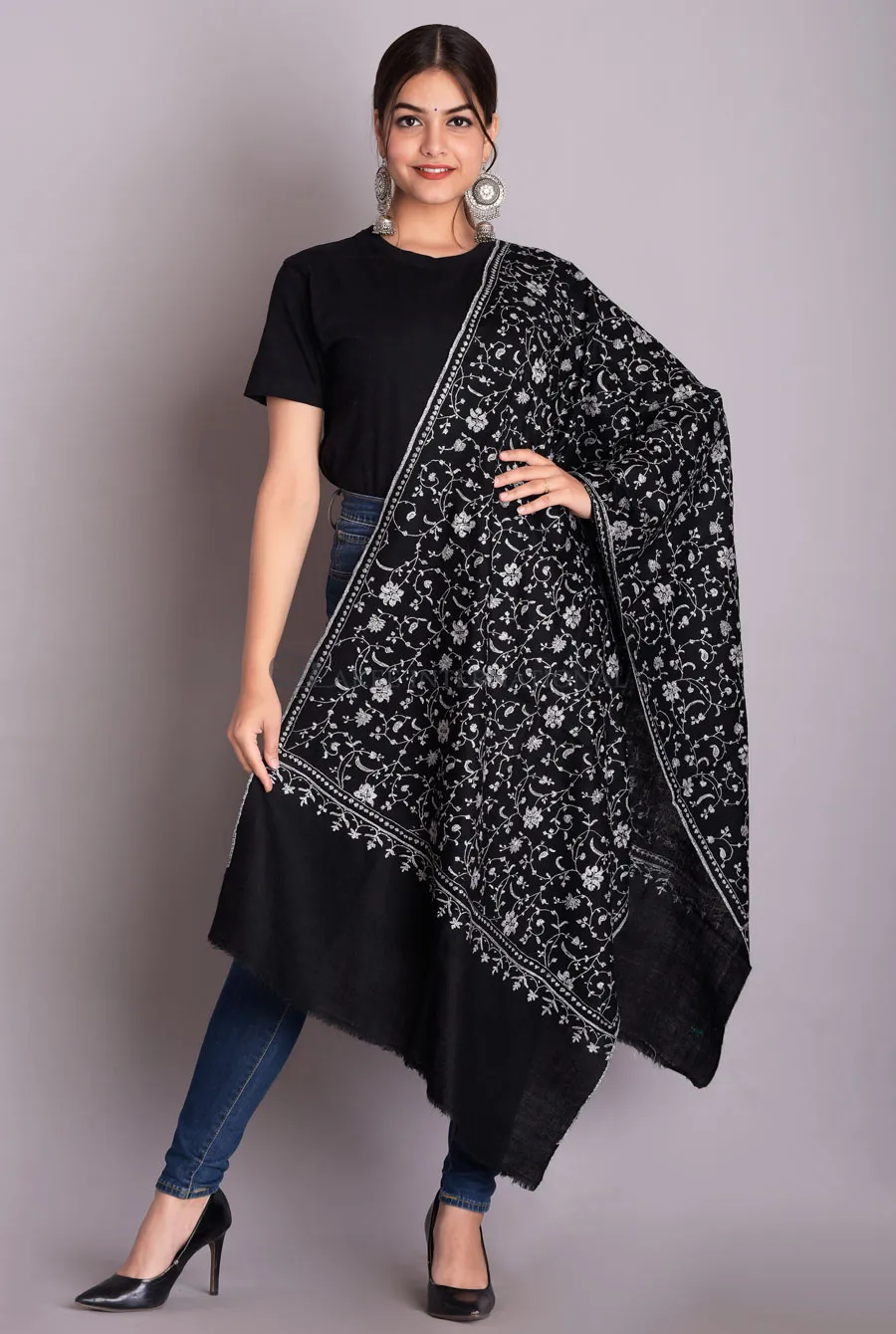
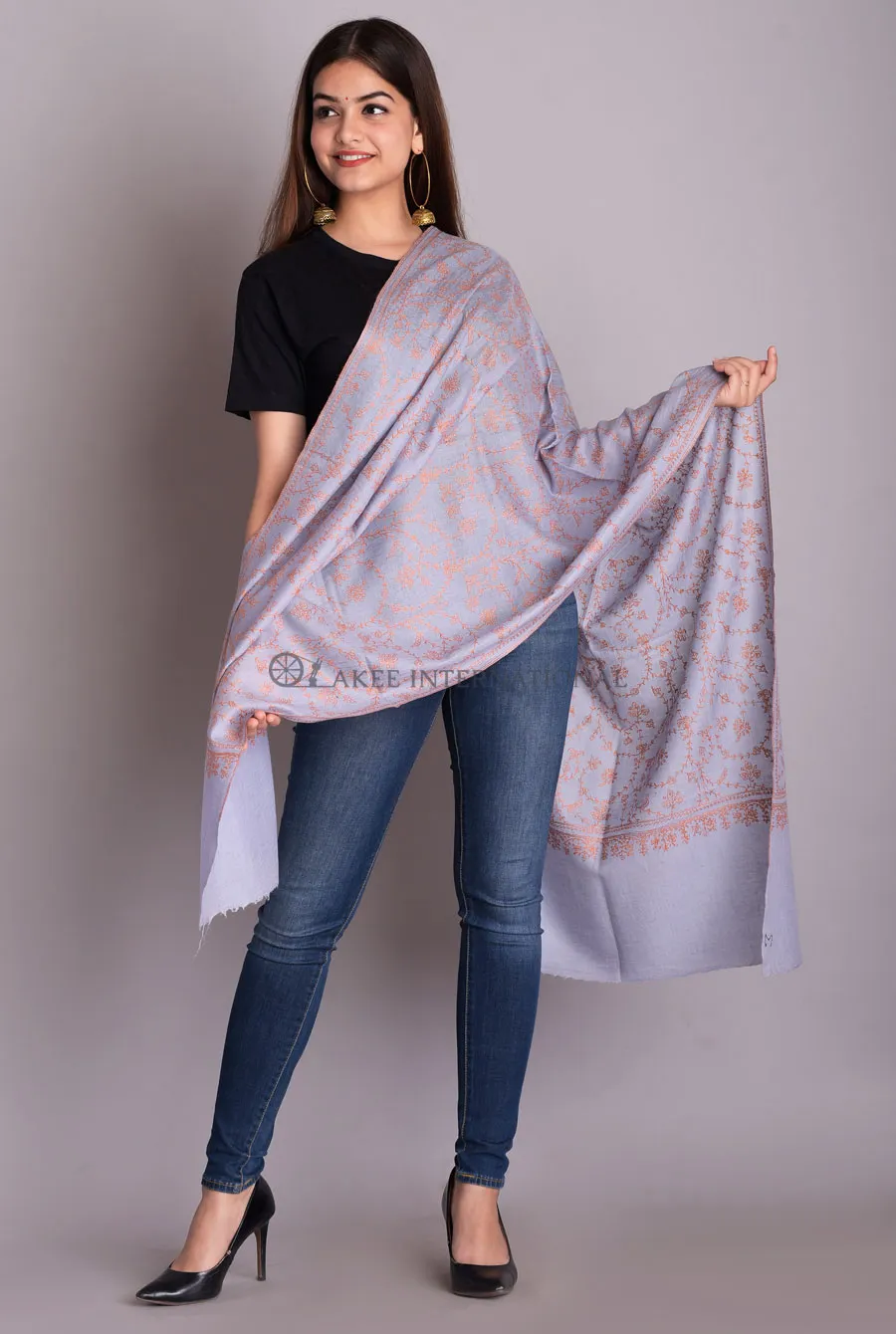
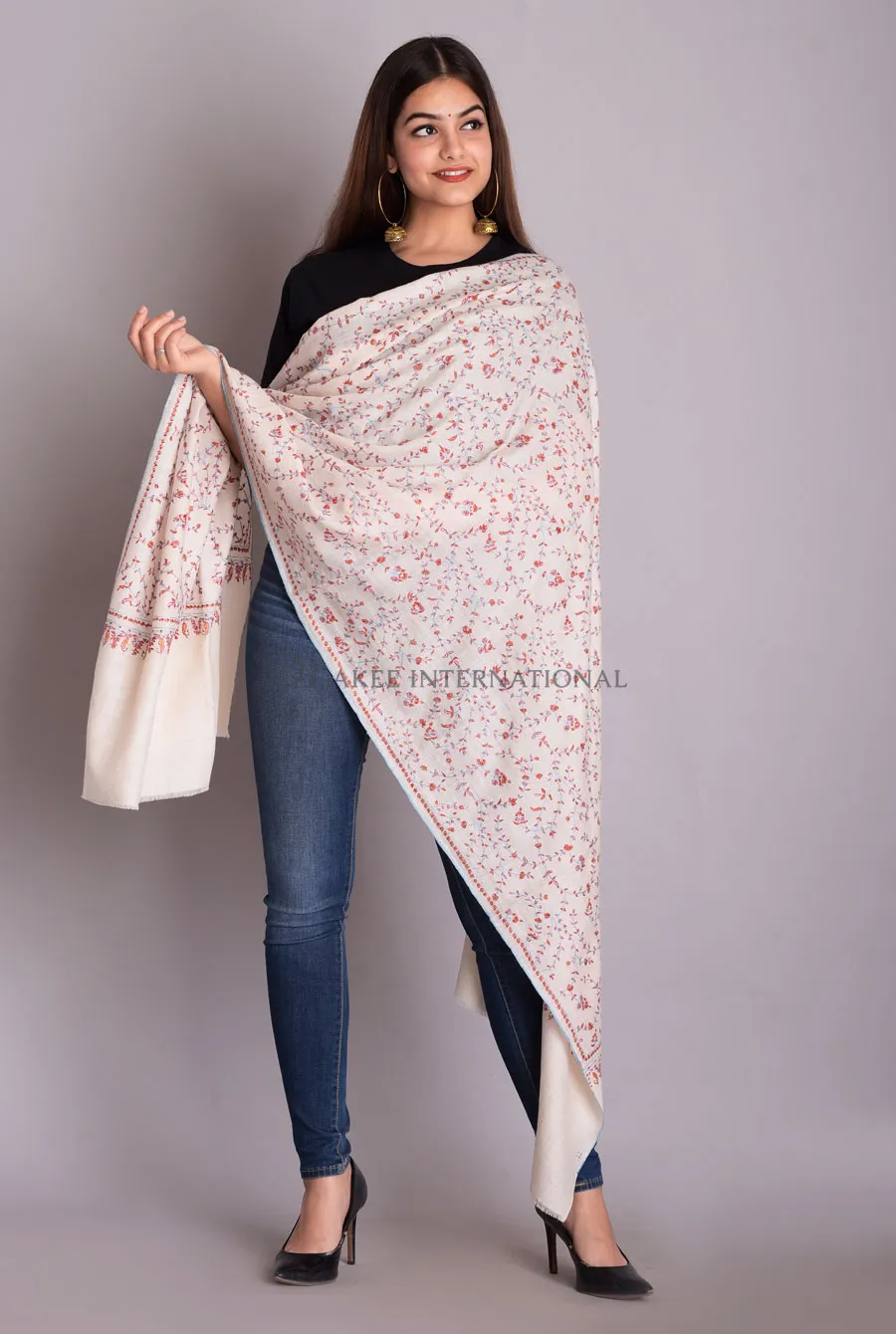
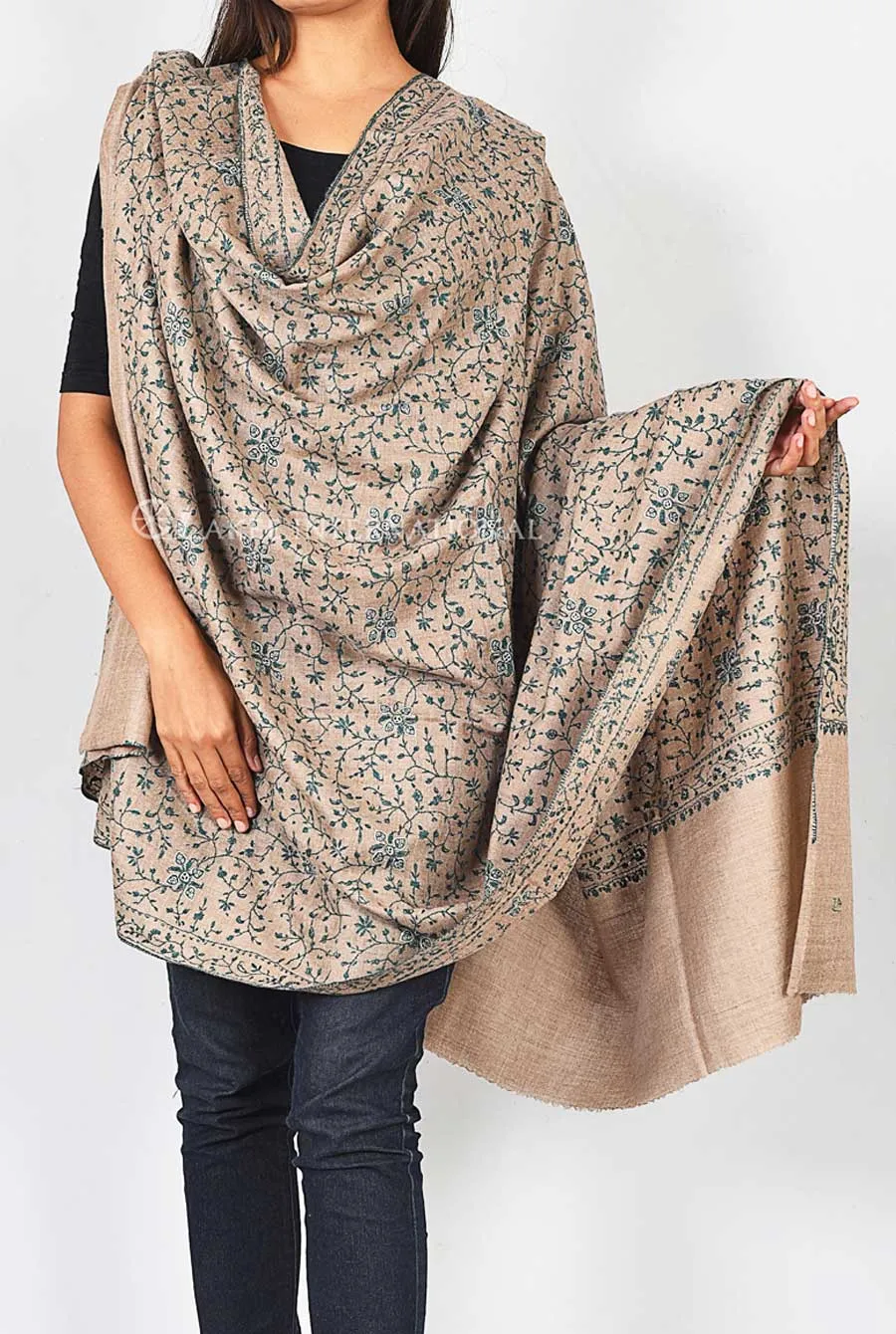
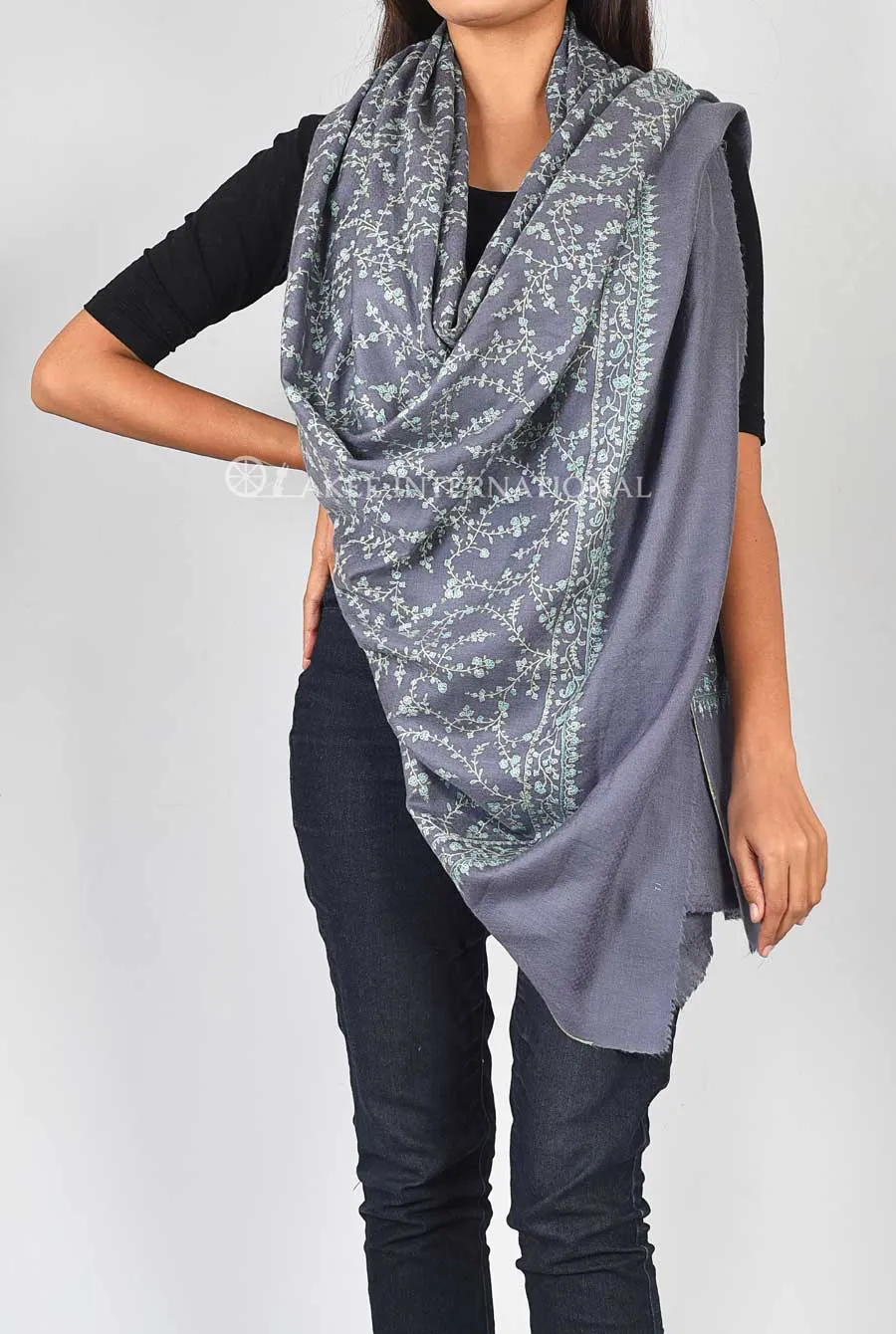
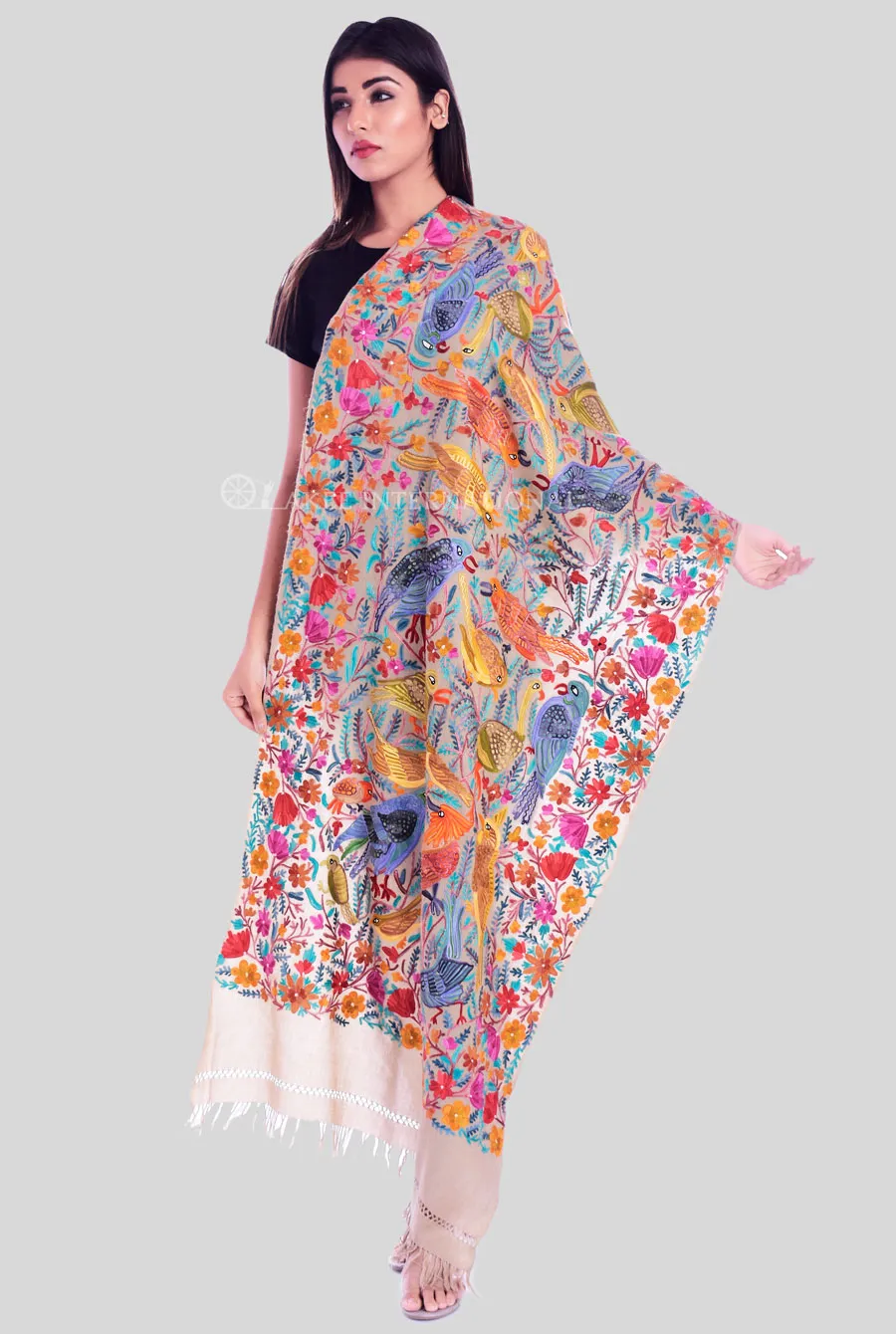
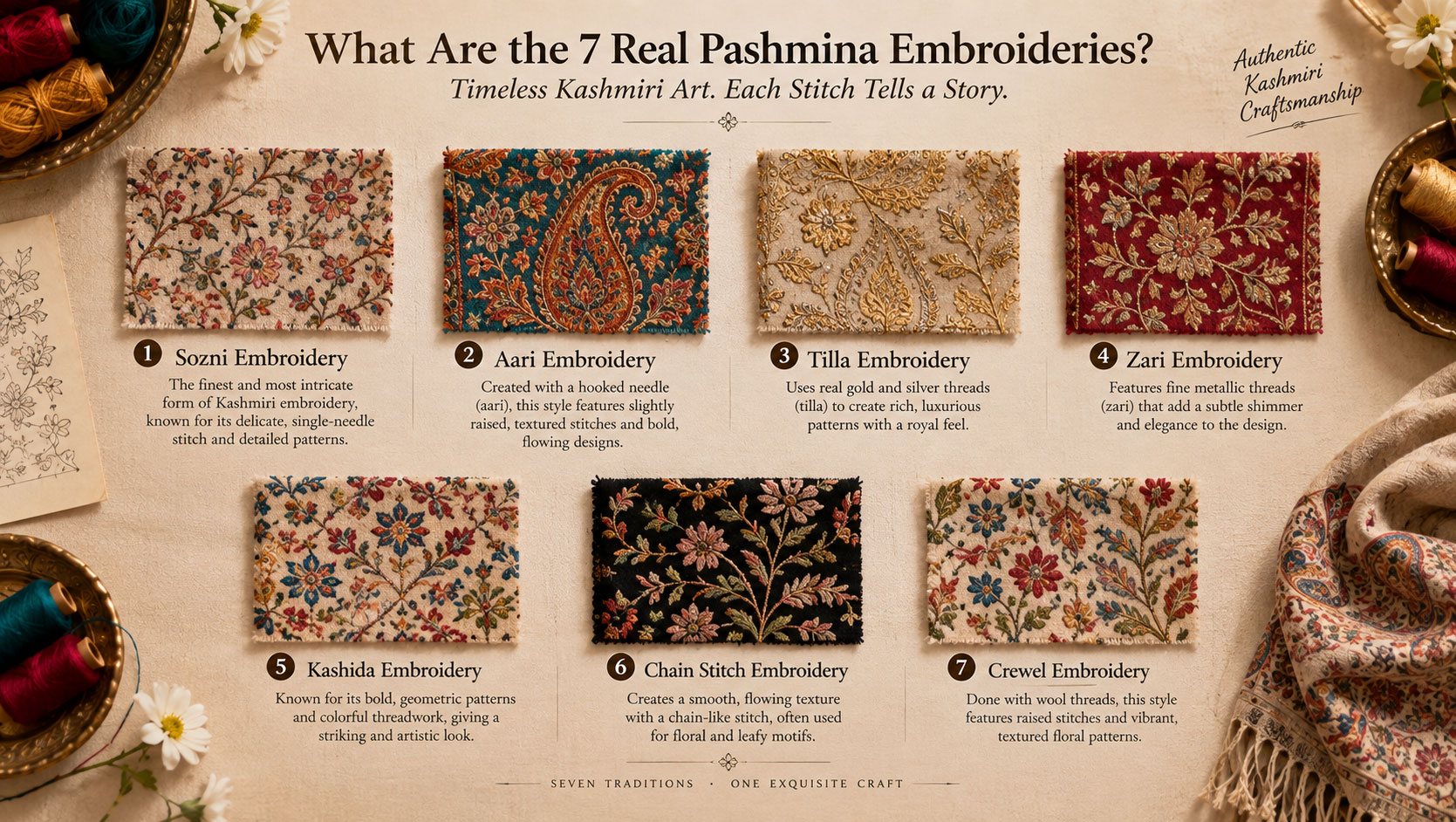
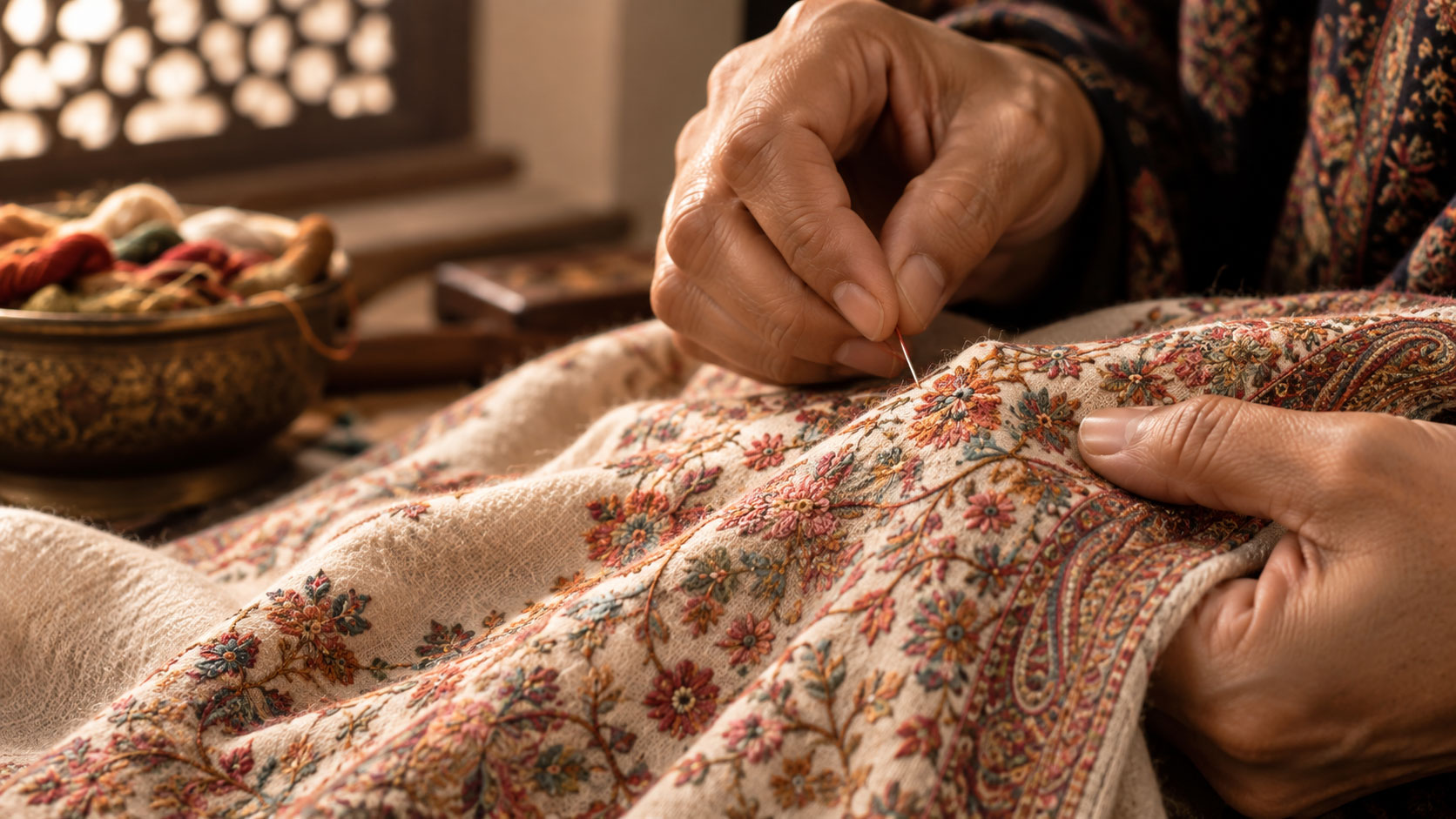
This is where most buyers go wrong — judging embroidery from a photo or a glance rather than examining stitch quality. Traditional Kashmiri needlework, particularly Sozni embroidery, is known for its fine, detailed stitching, often depicting floral motifs, paisleys, and flowing nature-inspired patterns. Genuine hand embroidery involves small, deliberate stitches worked with a needle, which naturally show slight variation from motif to motif — this is a sign of human craftsmanship, not a flaw.
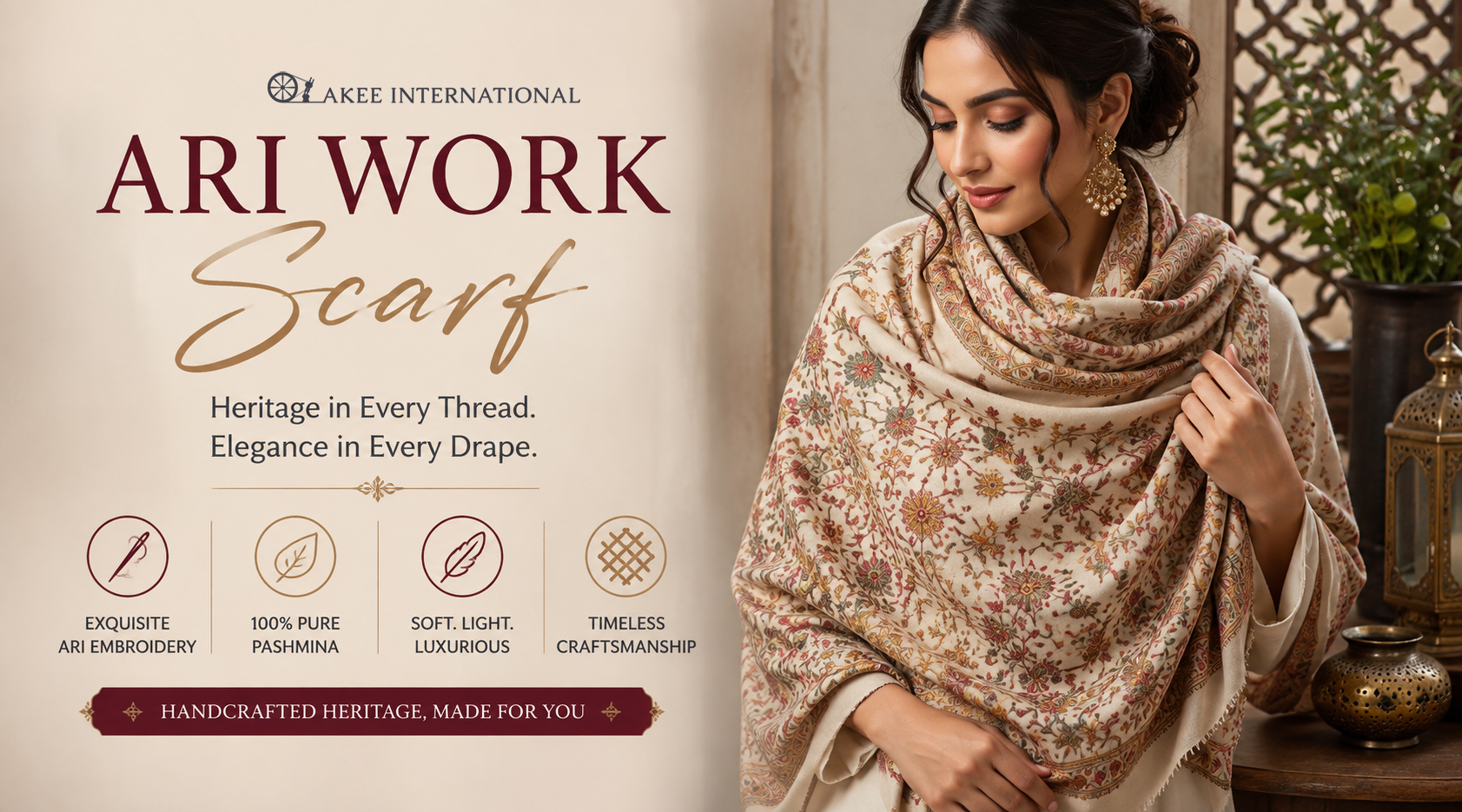
For bolder, faster embroidery styles, Ari work uses a hooked needle to create chain-stitch patterns, giving a different but equally distinctive texture. Whichever technique is used, look at how the thread lies on the fabric — hand embroidery tends to sit with subtle irregularity, while machine work often looks unnaturally uniform.
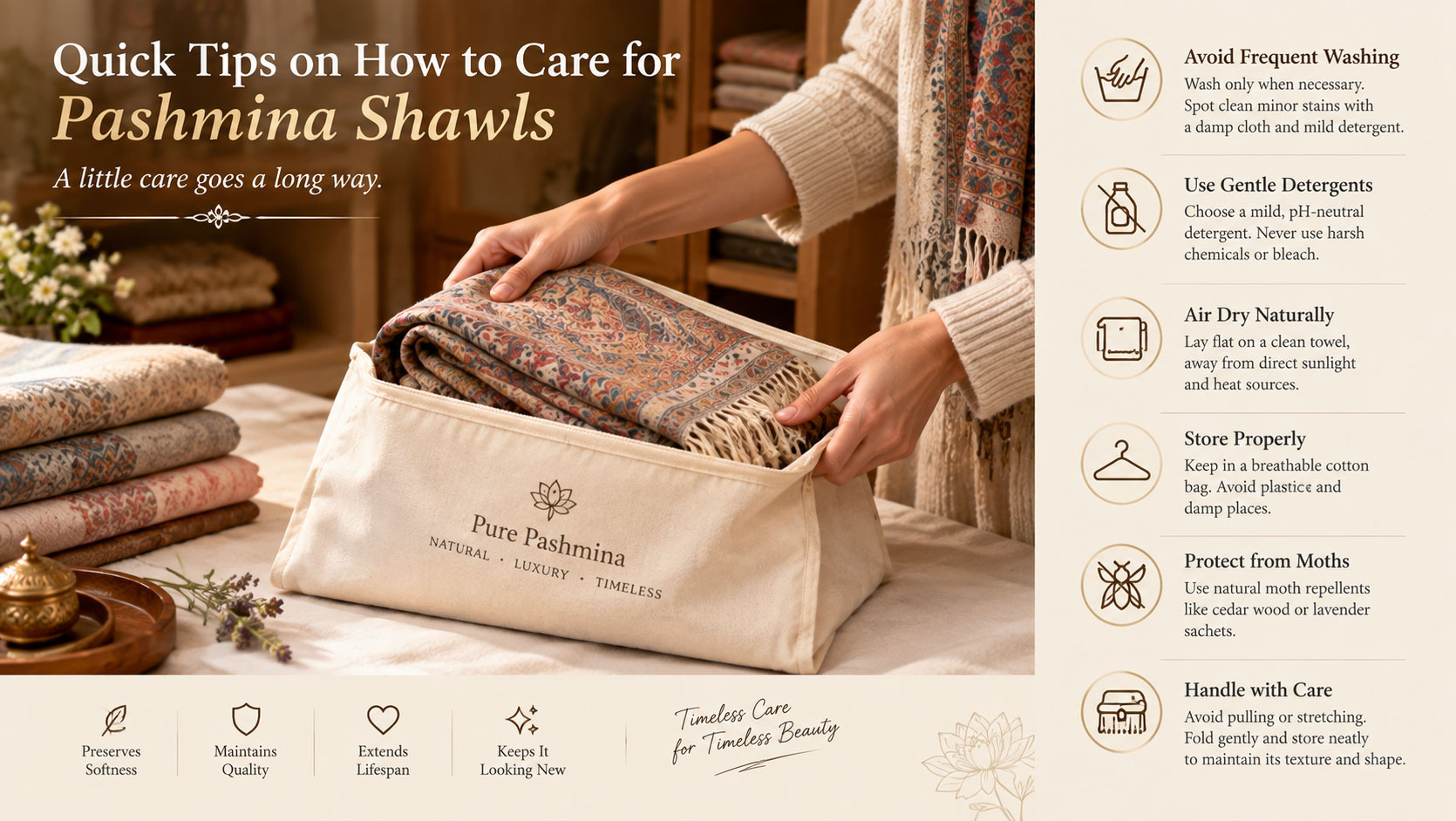
One of the most reliable checks for any embroidered Pashmina is to examine the back of the fabric. In genuine hand embroidery, the reverse side usually shows controlled, deliberate stitching. Machine embroidery, on the other hand, frequently leaves behind tangled threads, visible jump stitches, or an oddly mechanical repeat pattern. If you're buying online, always ask the seller for a clear photograph of both the front and back of the embroidered section — a transparent seller should have no hesitation sharing this.
Because handmade textiles are created by people rather than machines, you'll often notice small inconsistencies — a slightly different stitch length here, a marginally different motif spacing there. These are signs of authentic artisan work rather than quality issues. By contrast, embroidery that looks perfectly repetitive across a large surface area is more likely to be machine-produced.
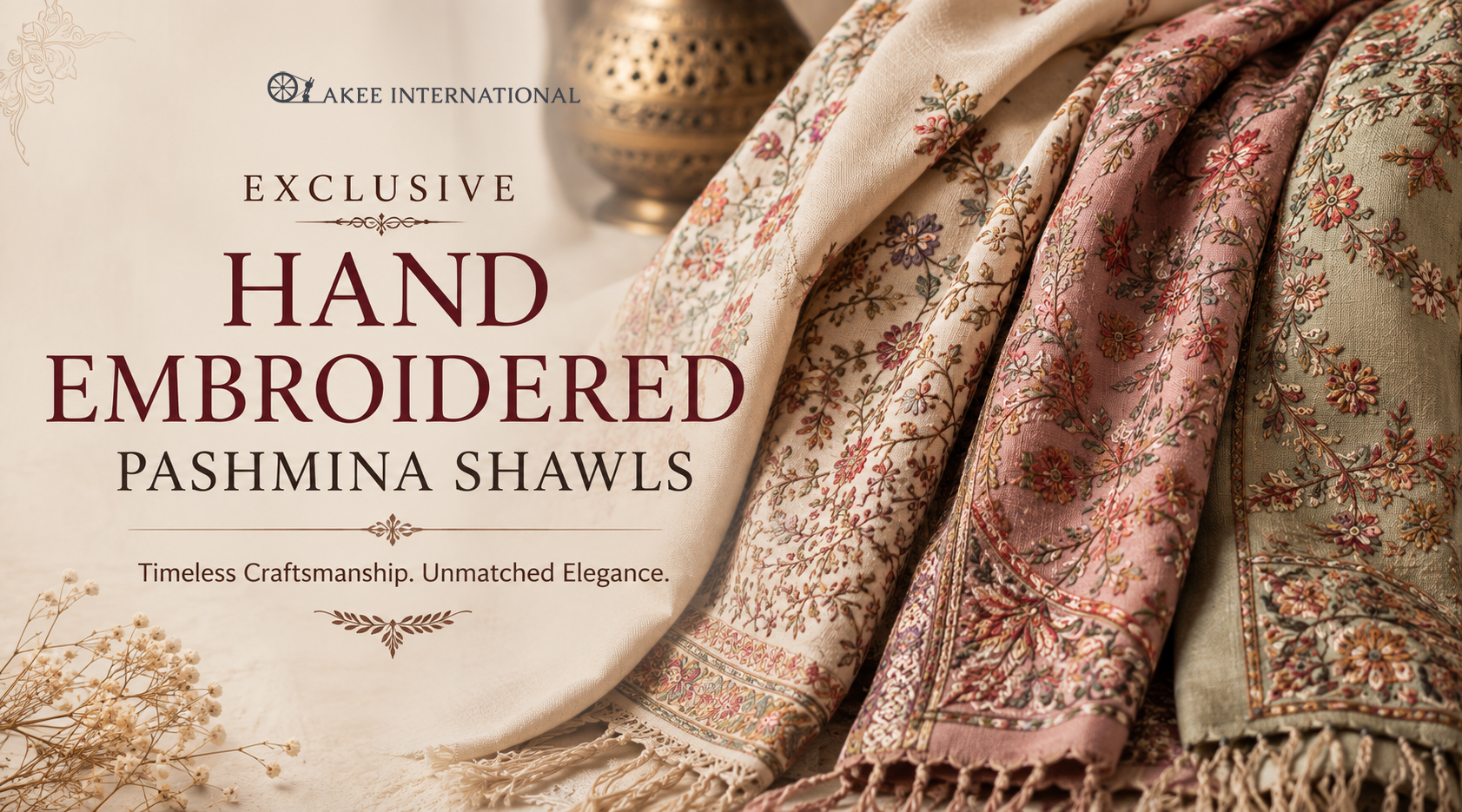
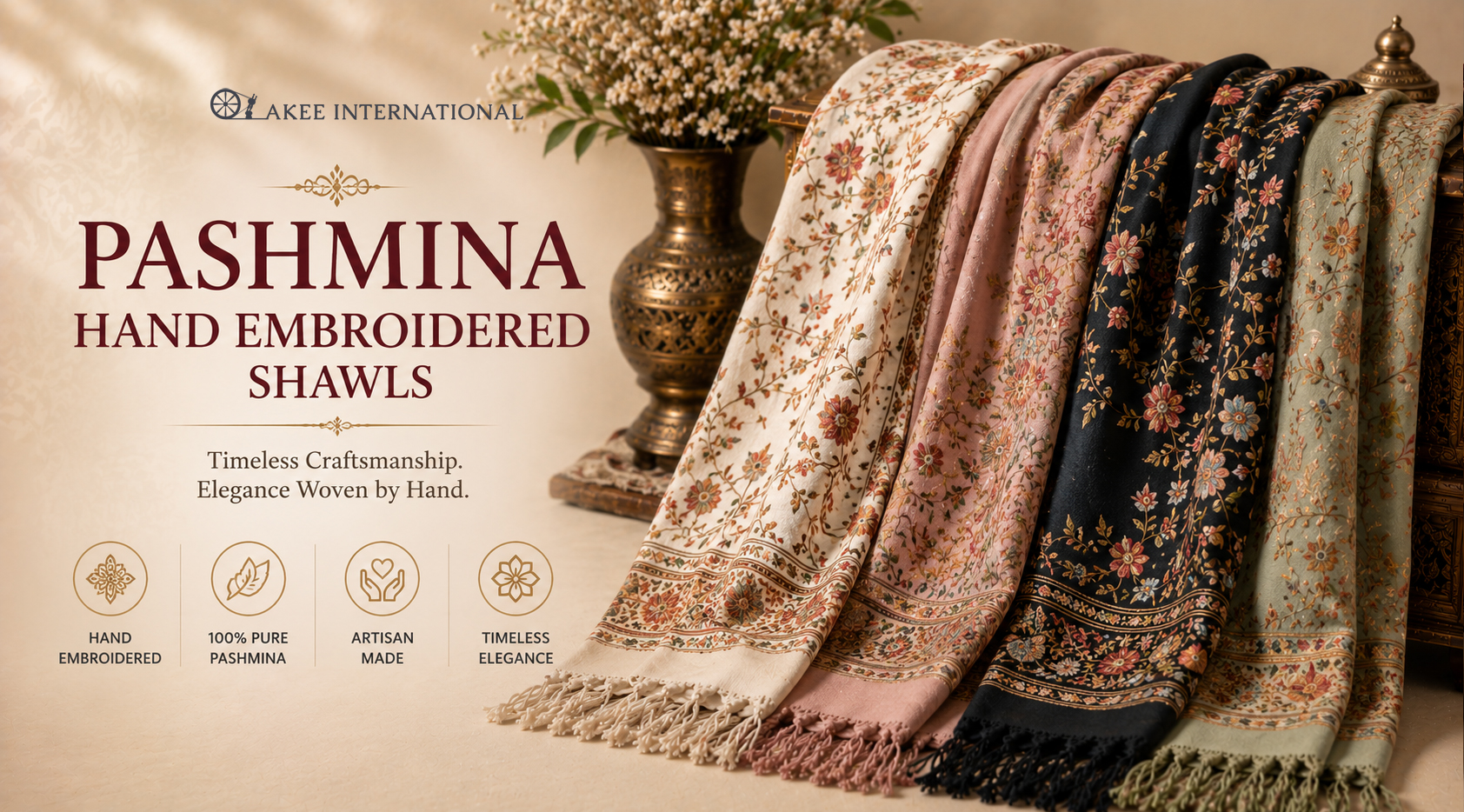
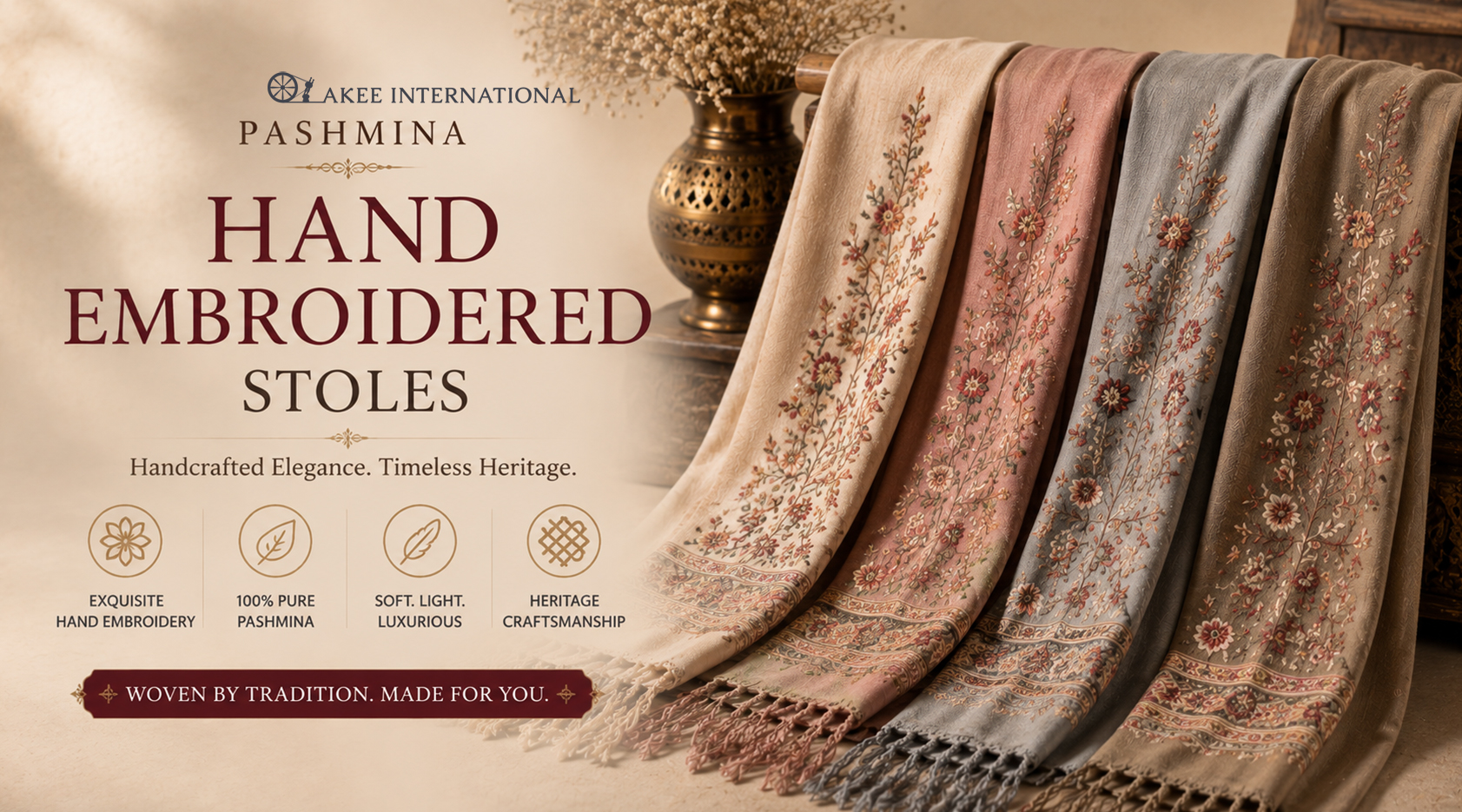
If a shawl is described as Sozni-embroidered, it helps to know a little about the technique itself. Sozni is a traditional Kashmiri needle-embroidery craft, prized for delicate detailing that can take artisans weeks or months to complete on a single piece, depending on the pattern's complexity. Understanding the skill and time involved makes it much easier to appreciate why genuine hand-embroidered pieces — such as those in our Pashmina Hand Embroidered Shawls and Pashmina Hand Embroidered Stoles collections — command a different price point than machine-made alternatives.
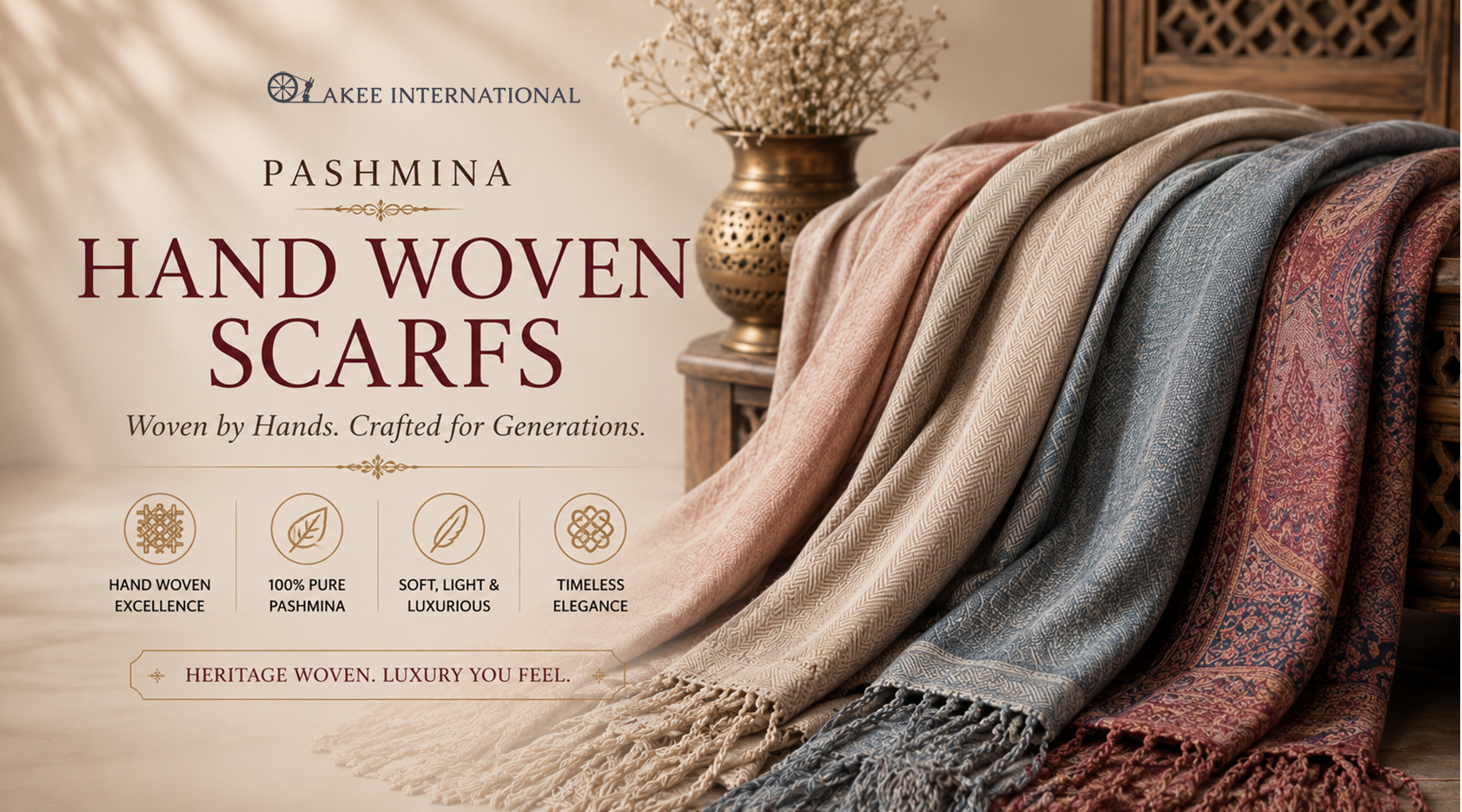
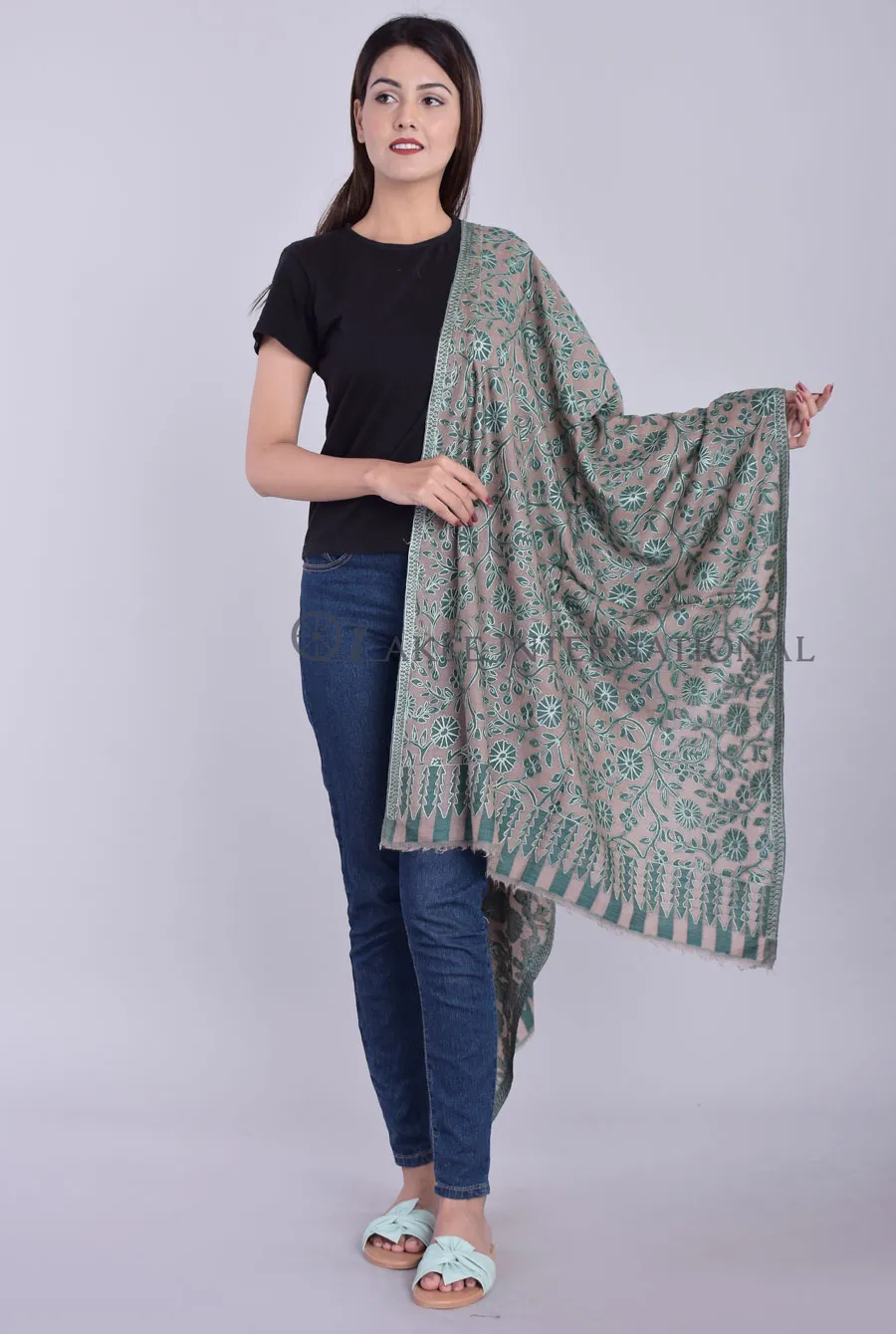
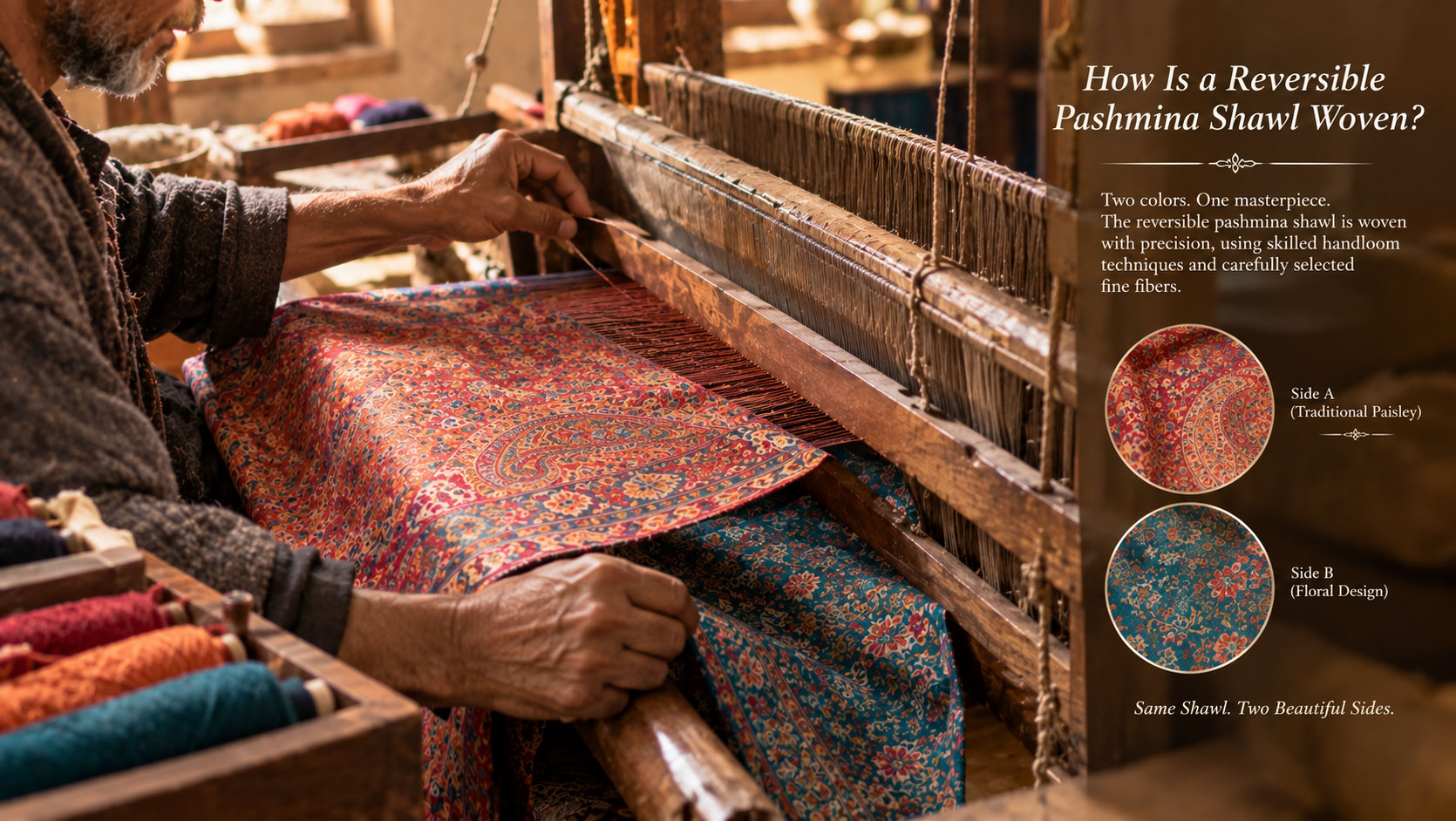
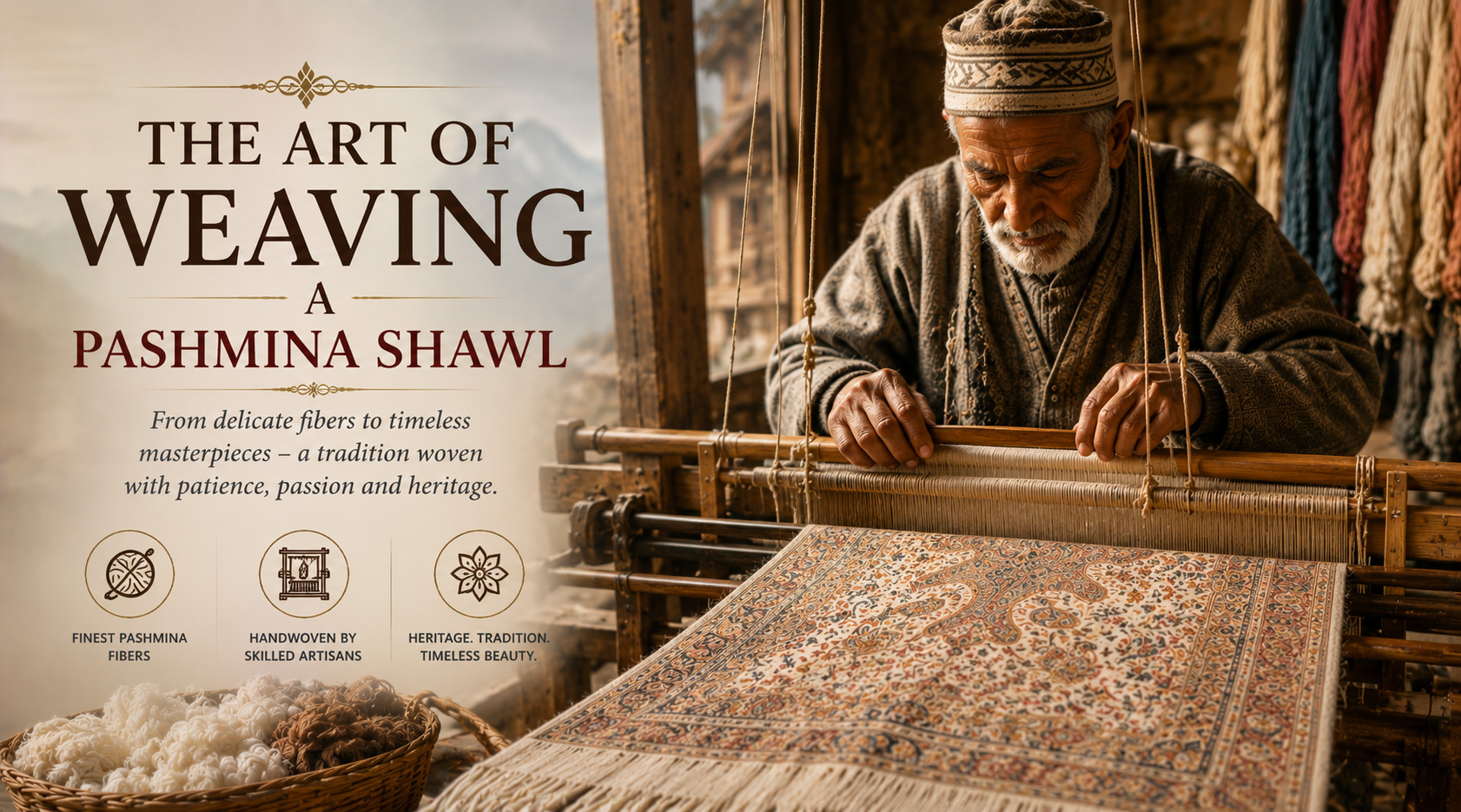
Don't let embroidery distract you from the base fabric itself. A genuinely handwoven Pashmina base should have a natural drape and a refined but not overly stiff texture. Traditional Kashmiri weaving — the kind used to create our handloom Pashmina shawls — involves hand-sorted fibre, hand-spun yarn, and weaving on a traditional loom, all of which contribute to a fabric quality that machine-loomed synthetic blends simply can't replicate.
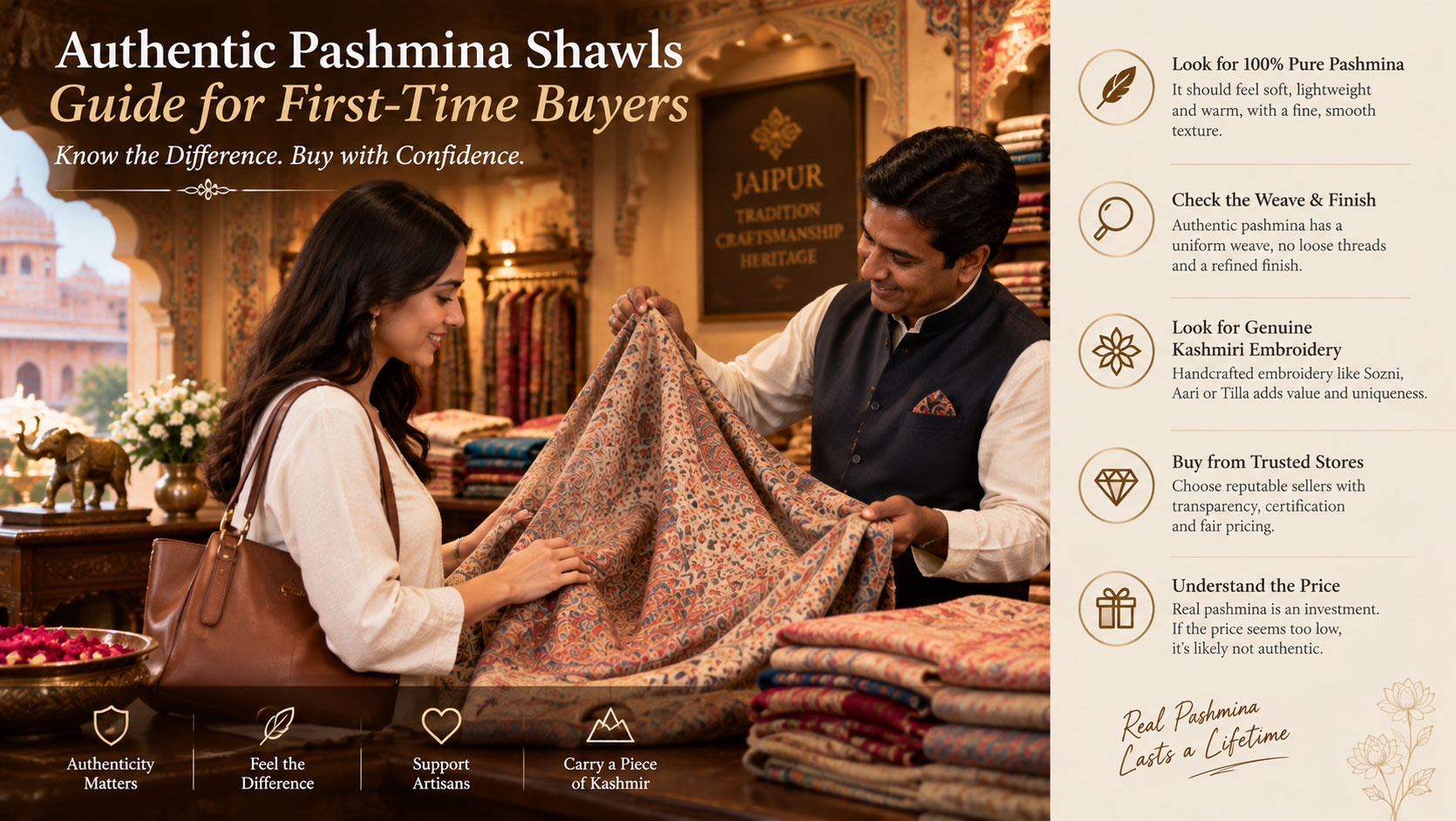
For higher-value purchases, ask what documentation accompanies the piece. This could include information related to GI certification, fibre testing results, or manufacturer details. Importantly, documentation should never be viewed in isolation — it should be consistent with the fibre, craftsmanship, and overall product description the seller provides. A certificate attached to a product that otherwise shows no signs of genuine hand craftsmanship should raise questions, not confidence.
Price is a useful warning sign but not a reliable authentication method on its own. A suspiciously inexpensive shawl marketed as intricately hand-embroidered pure Pashmina deserves closer scrutiny, since genuine fibre and skilled artisan embroidery both carry real material and labour costs. At the same time, a high price tag doesn't automatically guarantee authenticity either — always evaluate material, craftsmanship, documentation, and seller credibility together rather than relying on any single factor.
Perhaps the single most useful step you can take is choosing a seller who's willing to explain exactly how the product was made. A reliable specialist should be able to walk you through the fibre source, weaving method, embroidery technique, dimensions, and care instructions without hesitation. At Akee International, our entire approach is built on this kind of transparency — from our sourcing through Kashmir's artisan network to the finishing details on every piece we sell.
Before purchasing an embroidered Kashmiri shawl online, ask yourself:
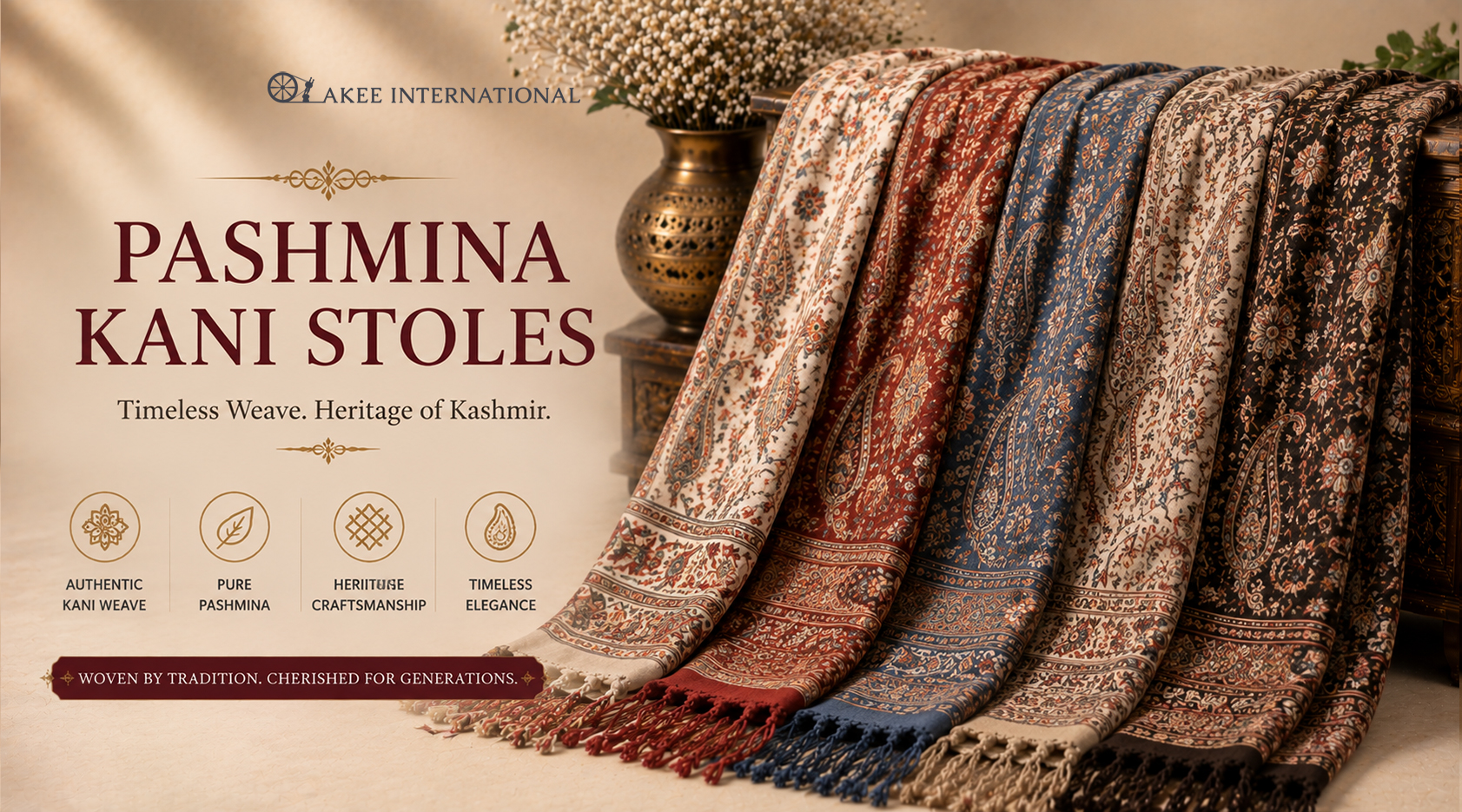
Buying a genuine hand-embroidered Kashmiri Pashmina shawl isn't just about acquiring an expensive accessory — it's about appreciating the fibre, the time, and the traditional knowledge poured into it by artisans who've often spent years mastering their craft. A well-chosen piece can become a long-term wardrobe staple, a wedding accessory, a heartfelt gift, or even a family heirloom passed down through generations. Explore our full hand-embroidered Pashmina collection, or browse Kani Wool Stoles if you're drawn to woven rather than embroidered patterns.
The right question to ask when shopping online isn't just "Does this shawl look beautiful?" It's "Can the seller demonstrate what makes this shawl genuine?" That single shift in approach will save you from disappointment and help you invest in a piece that truly reflects Kashmir's textile heritage.
If you'd like help verifying a piece, understanding embroidery techniques, or choosing the right hand-embroidered shawl for an occasion, our team is happy to guide you.
Explore our full Pashmina collection or reach out via our Contact Us page for personalised guidance on finding a genuinely handmade, hand-embroidered Kashmiri shawl.
Discover exquisite Pashmina shawls, beautifully crafted with Kashmir’s timeless heritage and artistry.
Check the fibre composition, weave, embroidery technique, reverse side of the embroidery, finishing, seller information and available authenticity documentation. No single visual or physical test is sufficient on its own.
Examine the stitching closely and inspect the reverse side. Genuine hand embroidery can show subtle variations and carefully controlled stitches, while machine embroidery may have highly uniform stitching or visible machine-thread structures.
Sozni is a traditional Kashmiri needle-embroidery technique known for fine and detailed patterns, often featuring floral, paisley and nature-inspired motifs.
The reverse side provides useful information about how the embroidery was constructed. It can help distinguish carefully executed handwork from some forms of machine embroidery.
No. Softness is a useful characteristic but is not conclusive proof of fibre authenticity. Blended and synthetic fabrics can also feel soft, so material information and other evidence should be checked.
No. Price alone cannot establish authenticity. A high-quality shawl should be evaluated through its fibre, construction, craftsmanship, documentation and seller transparency.
Ask about fibre composition, embroidery technique, whether the work is handmade, product dimensions, place of manufacture, care instructions and any available authenticity or certification documents.
No. Pashmina shawls can be plain handwoven, patterned or hand-embroidered. Embroidery is an additional form of craftsmanship rather than a requirement for a shawl to be Pashmina.
Choose an established specialist seller that provides detailed product and craftsmanship information. Akee International offers a dedicated collection of hand-embroidered Pashmina shawls and describes its production as artisan-led and heritage-focused.
Yes. A well-made shawl that is properly cared for can remain in excellent condition for many years and may become a meaningful family keepsake.
"Browse our curated collections and shop by category to find the perfect Pashmina shawl or scarf for every occasion."
"Explore our latest collection of exquisite Pashmina shawls and scarves, where luxury meets craftsmanship in every piece."
"Shop our Best Sellers, where luxury meets demand—featuring the most sought-after Pashmina shawls and scarves of the season."
"Read what our clients say about their experience with Akee International's luxurious Pashmina shawls and impeccable service."

Nai Mata Mandir Road, Thathar Road, Delhi By Pass, Amer, Jaipur 302028, Rajasthan India
Get directions Call Now Whatsapp 4.9 based on 269 reviews
Rating: 4.6/5 | 85 Reviews

Rating: 4.9/5 | 269 Reviews

TrustScore: 4.9 | 100 Reviews