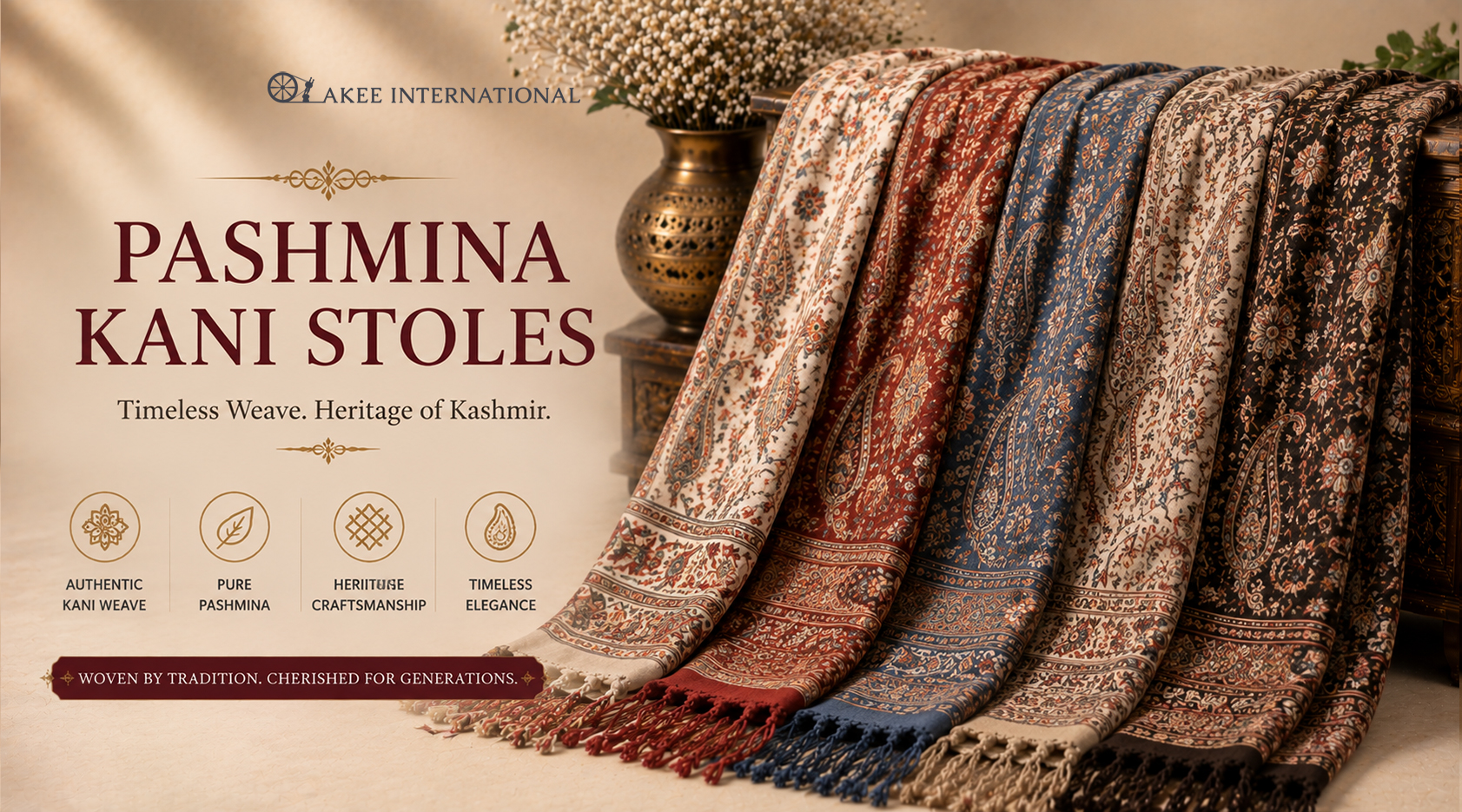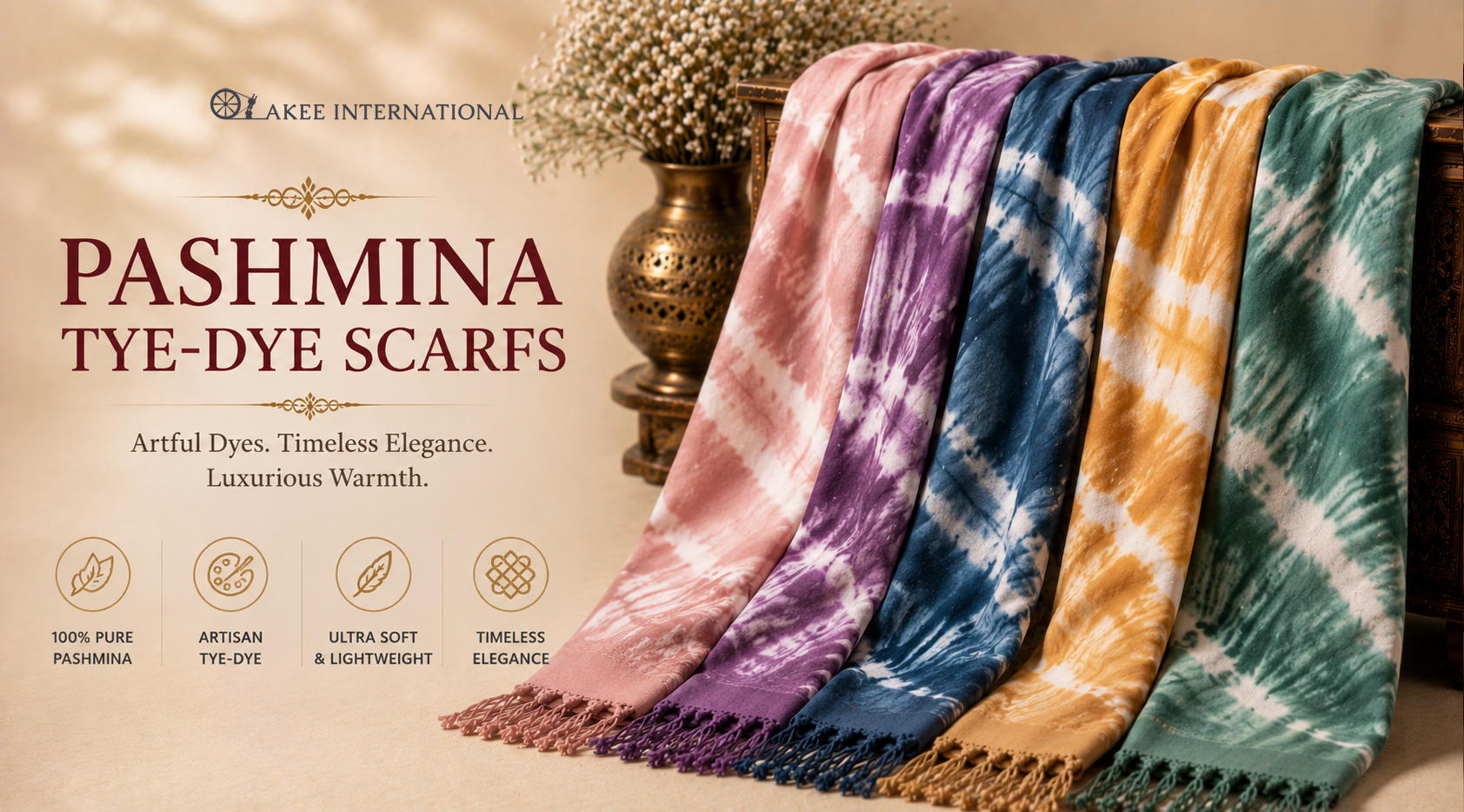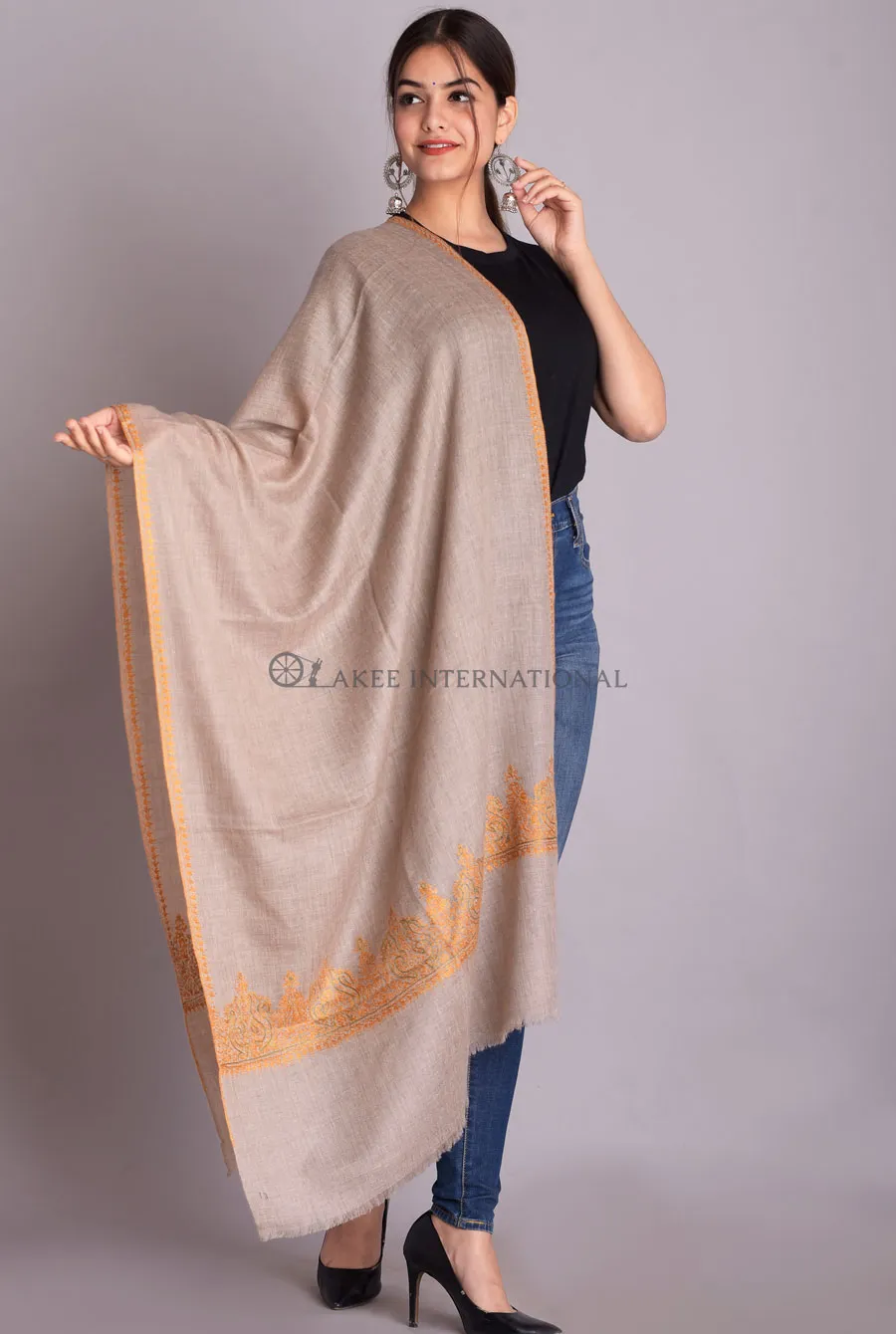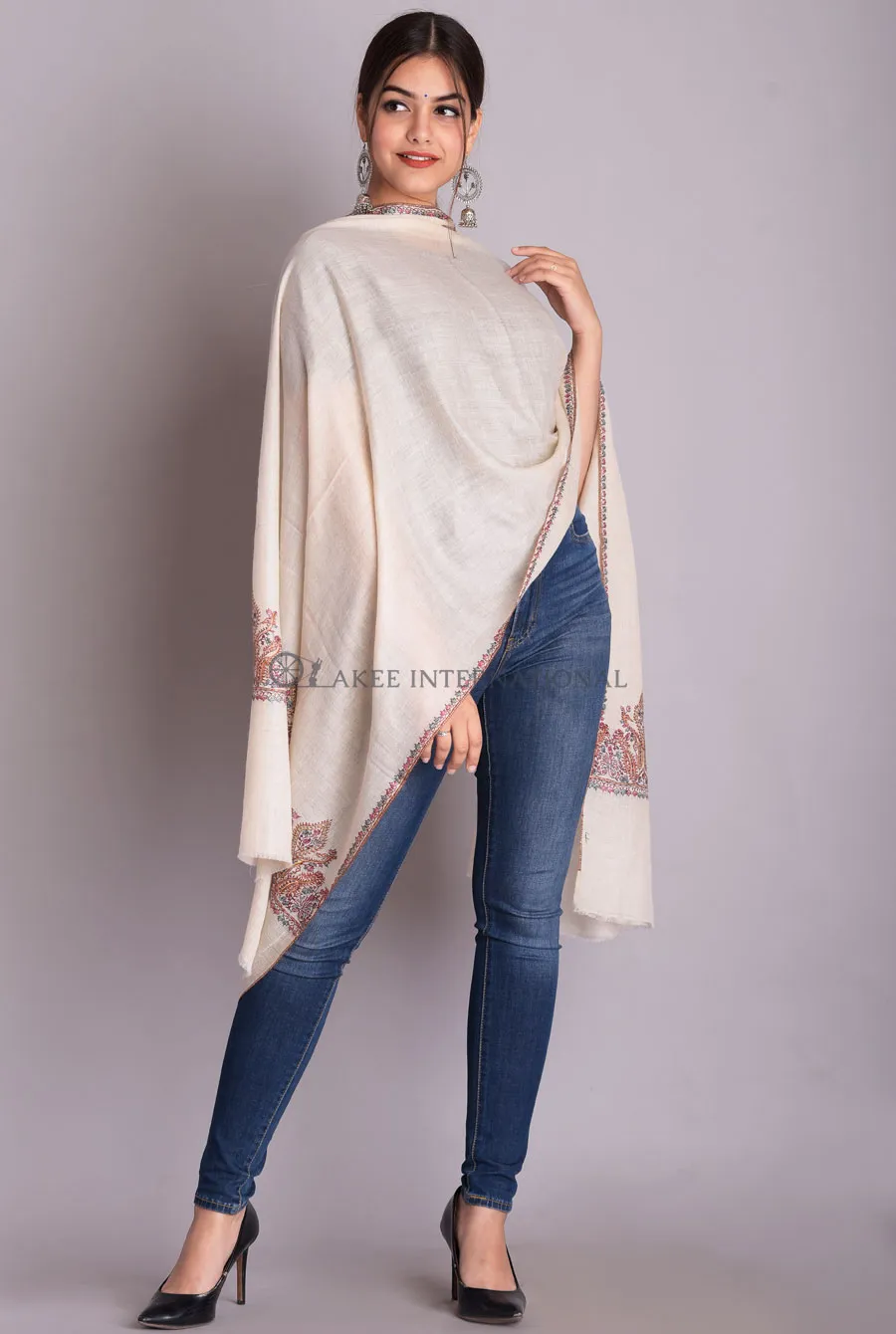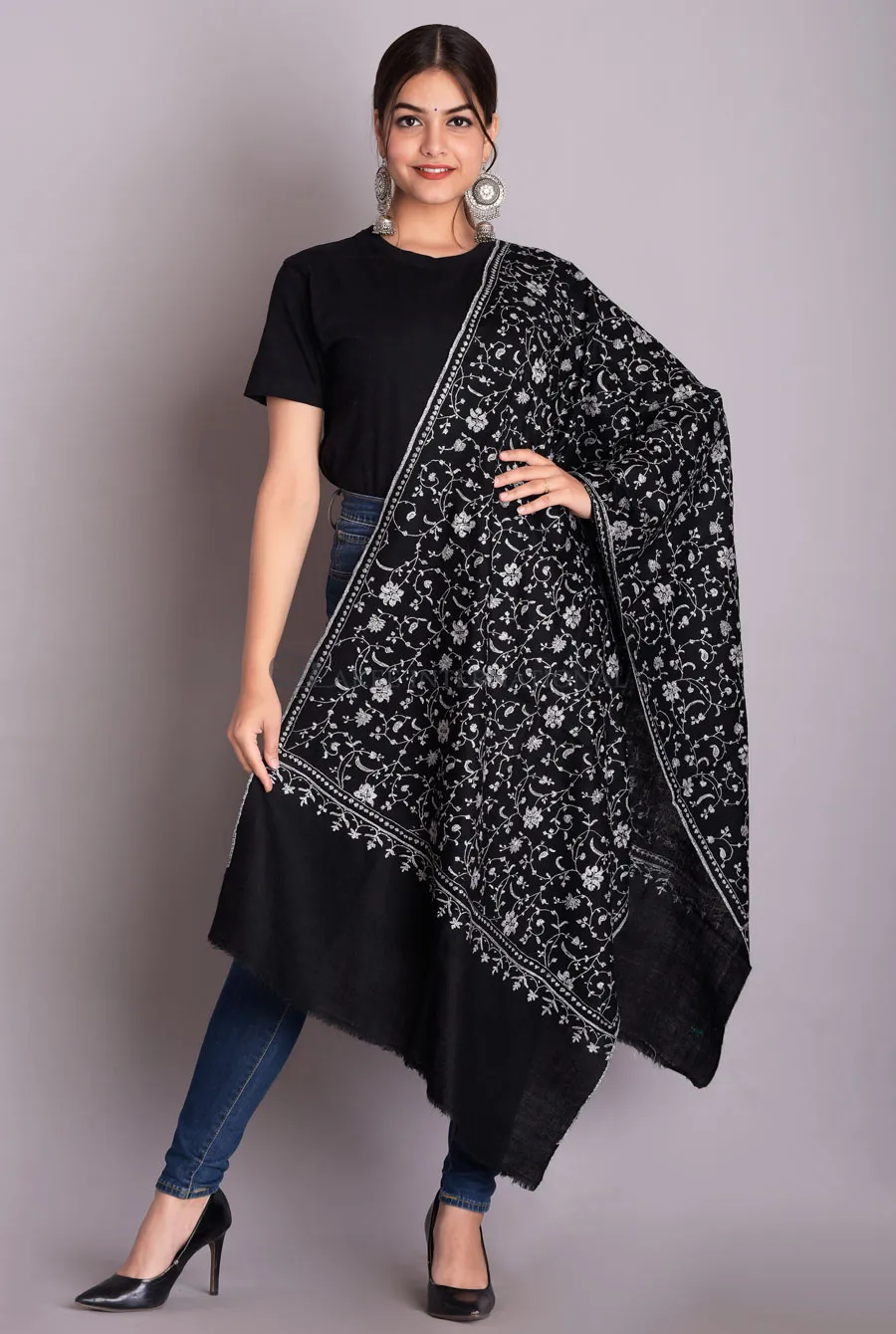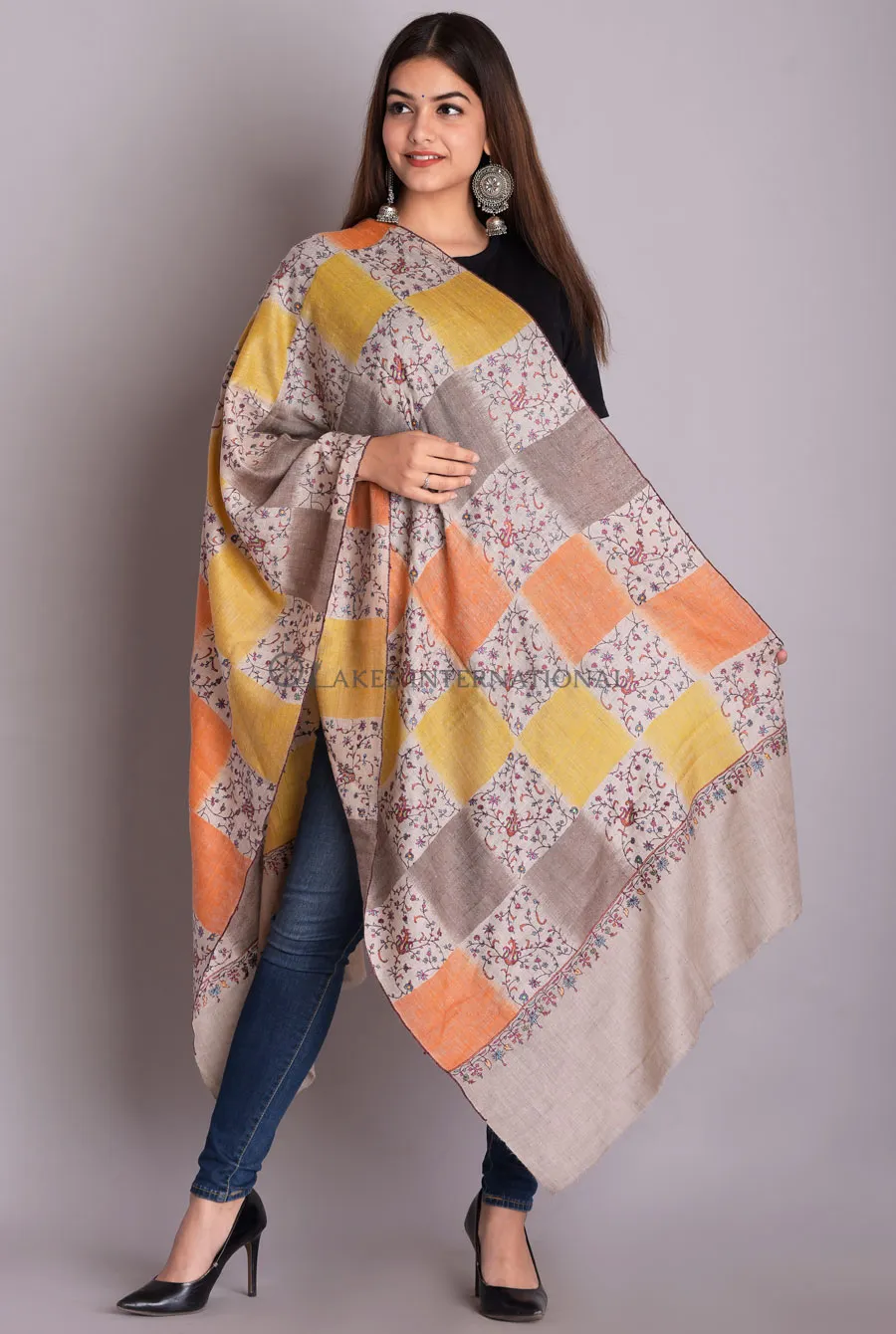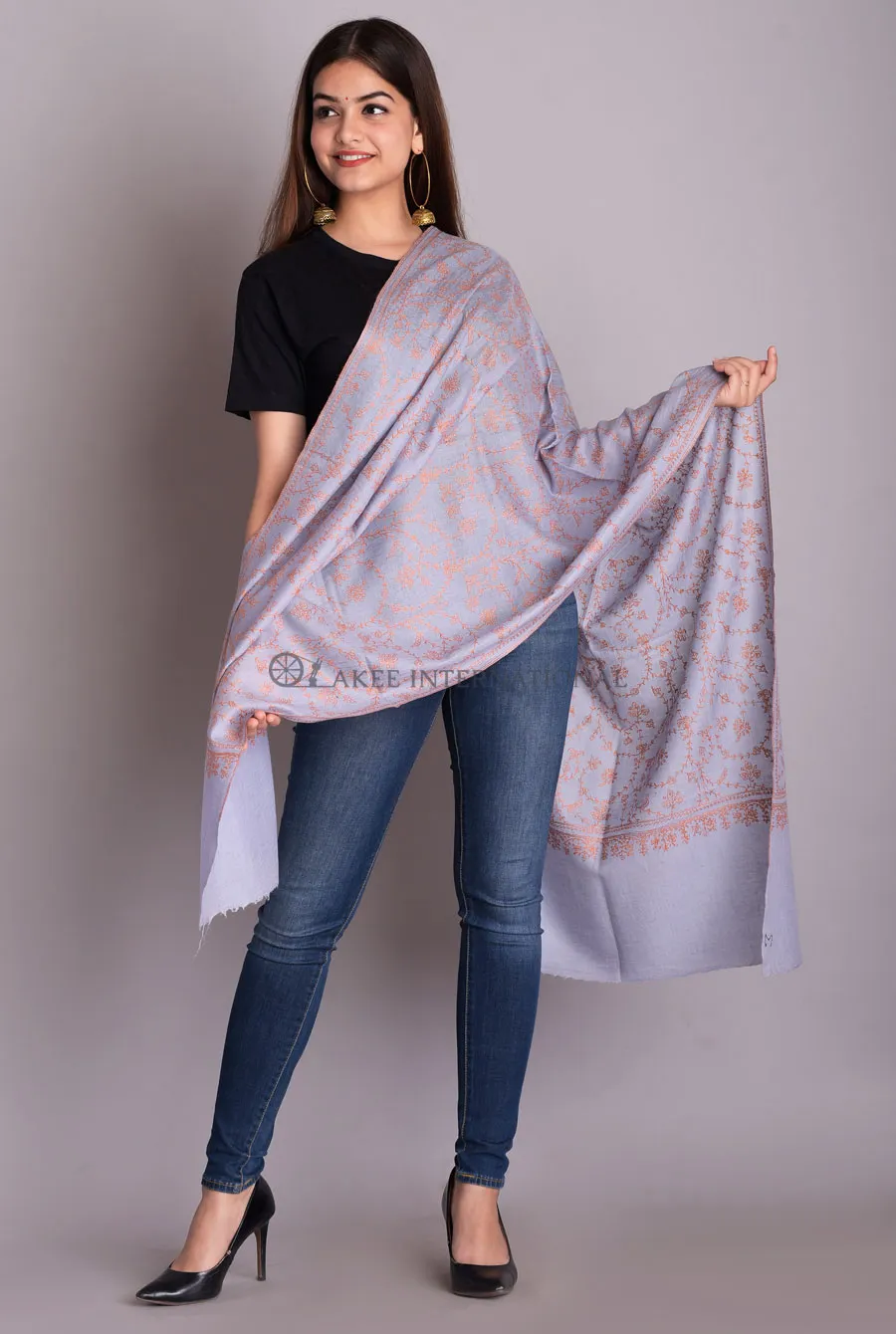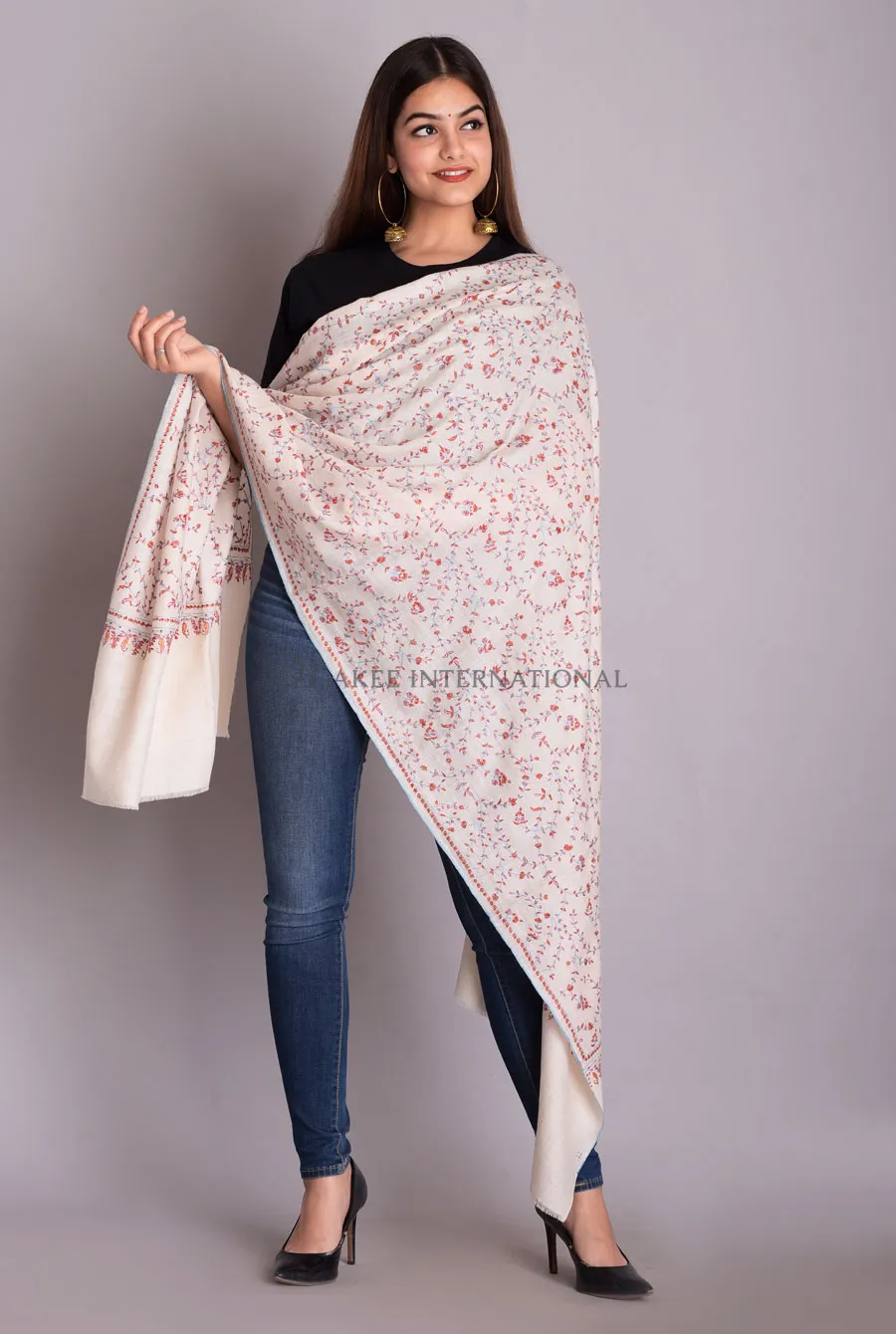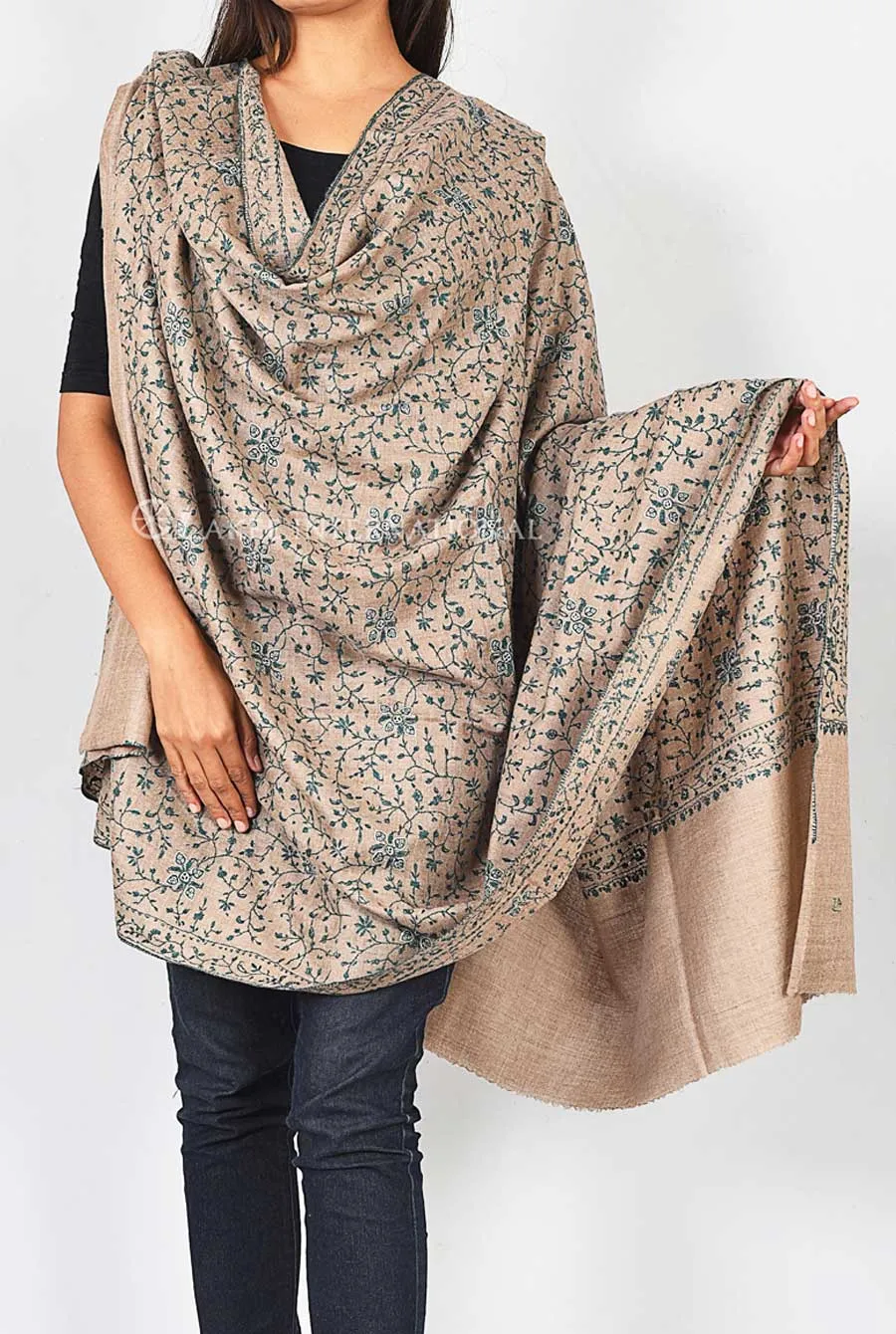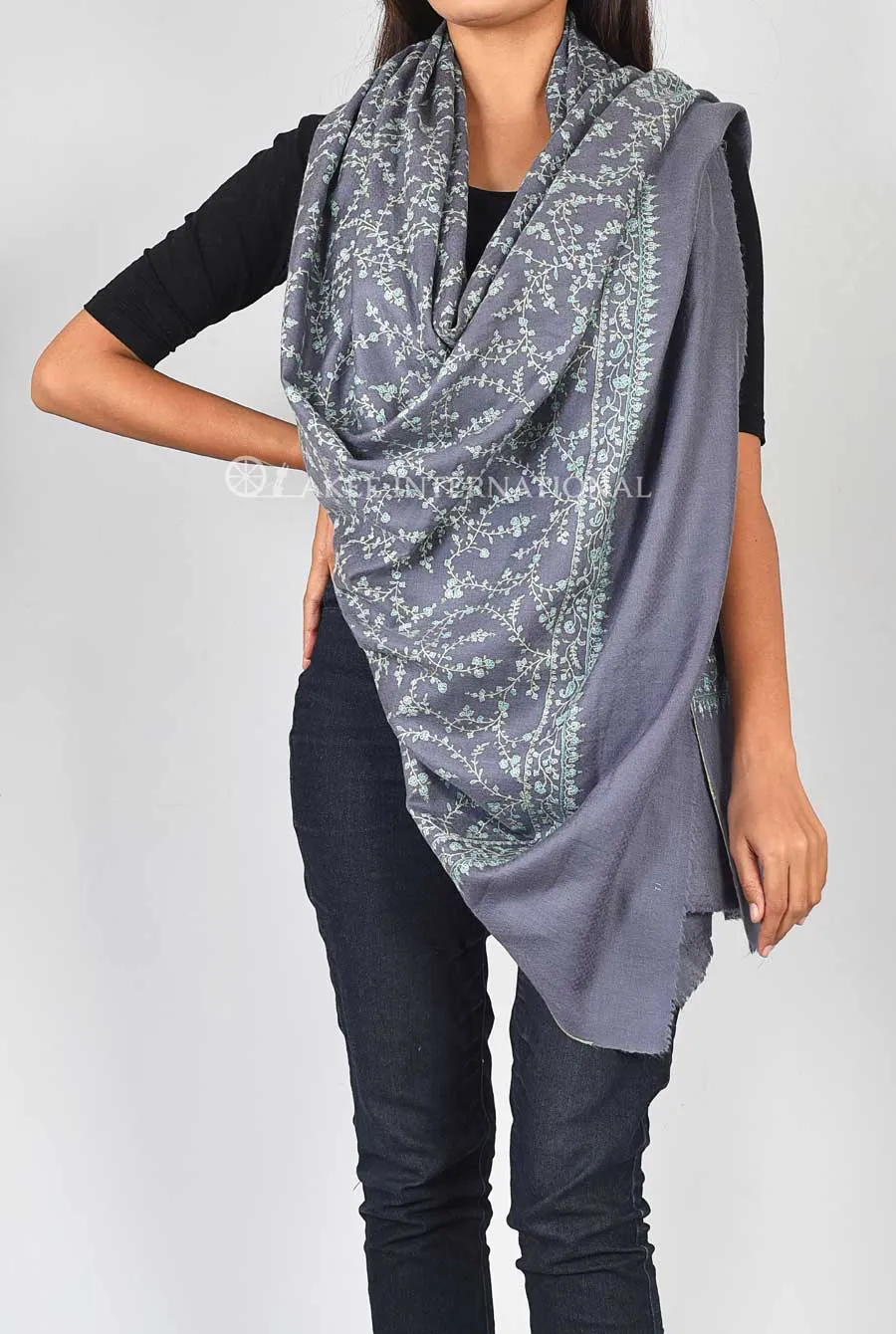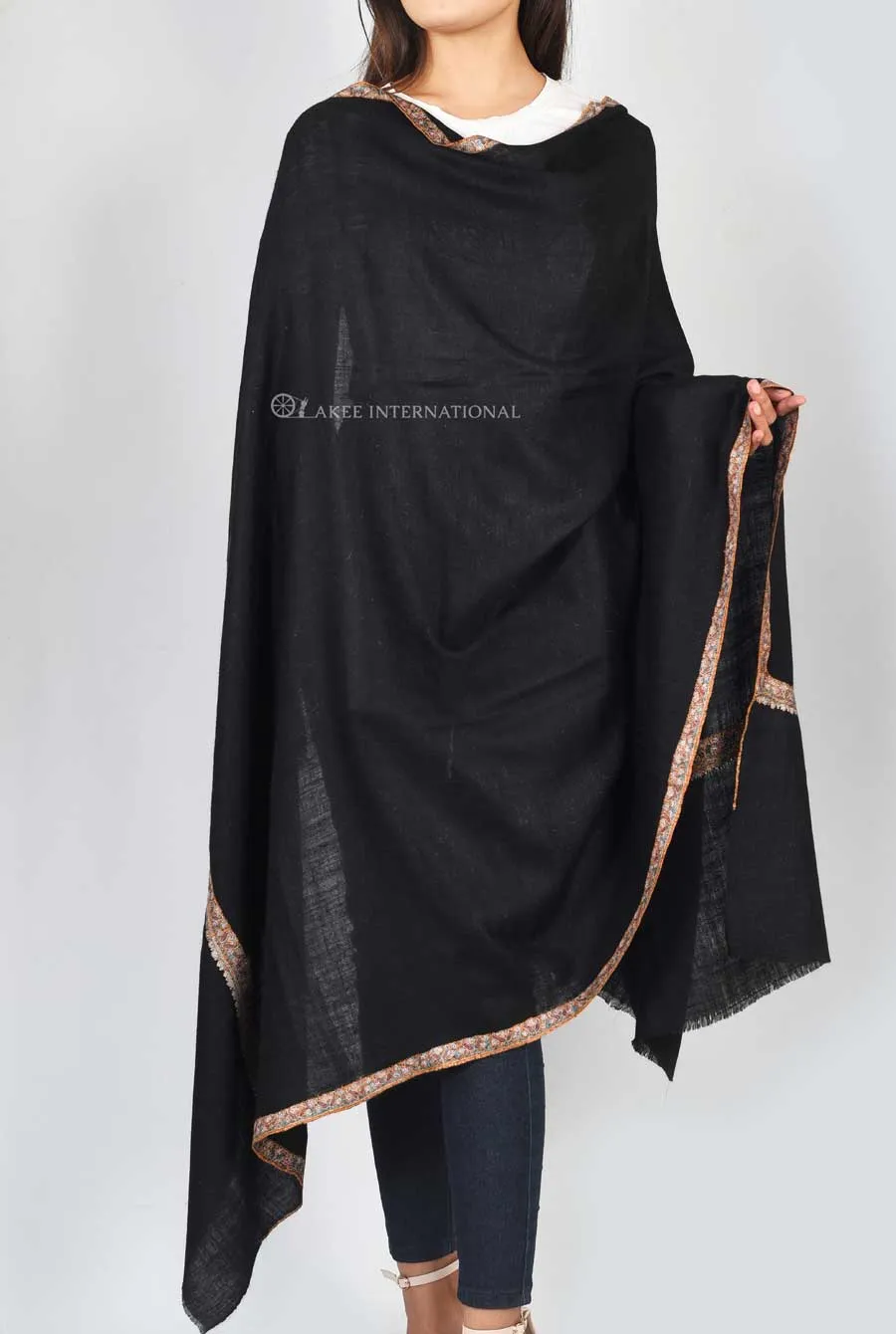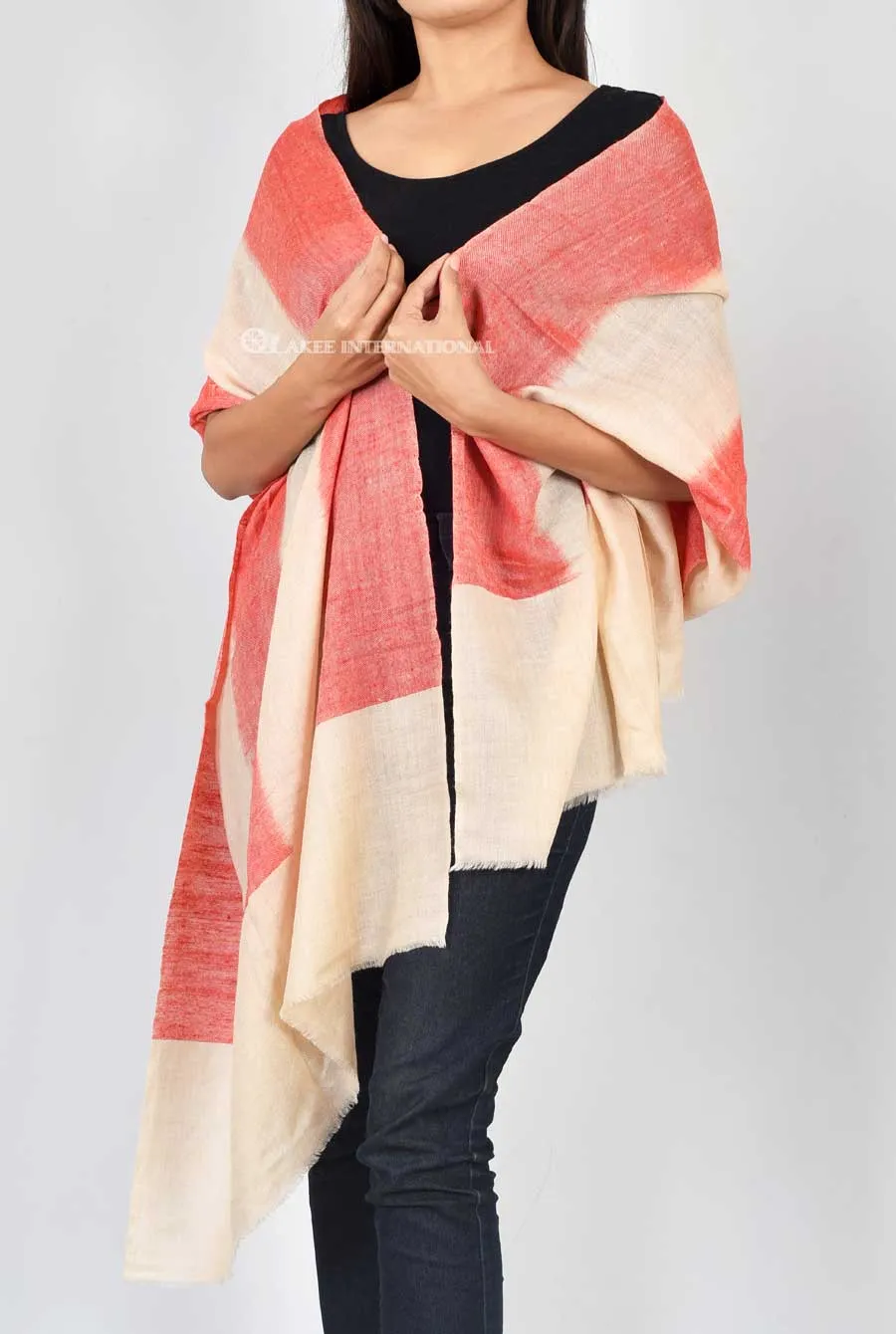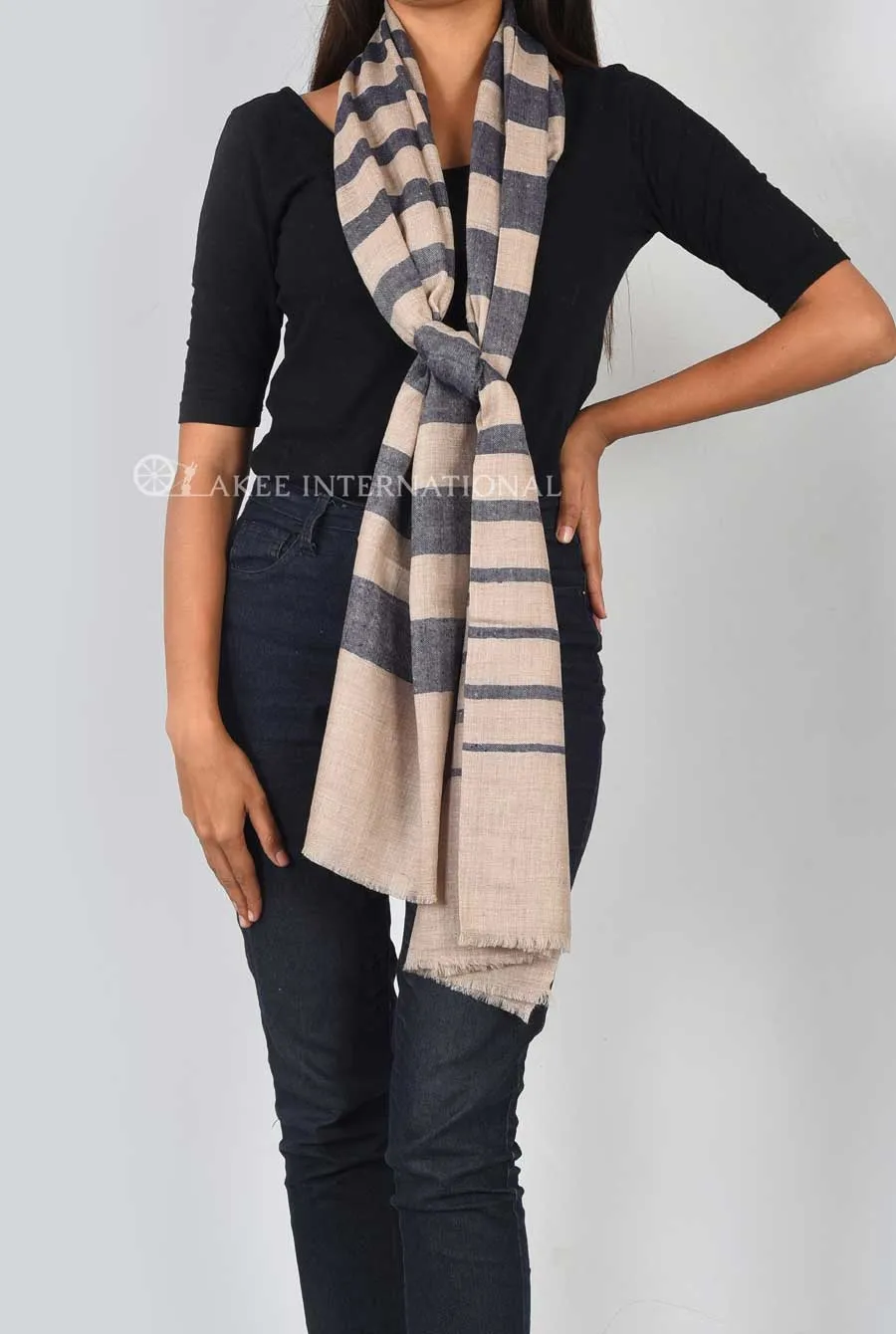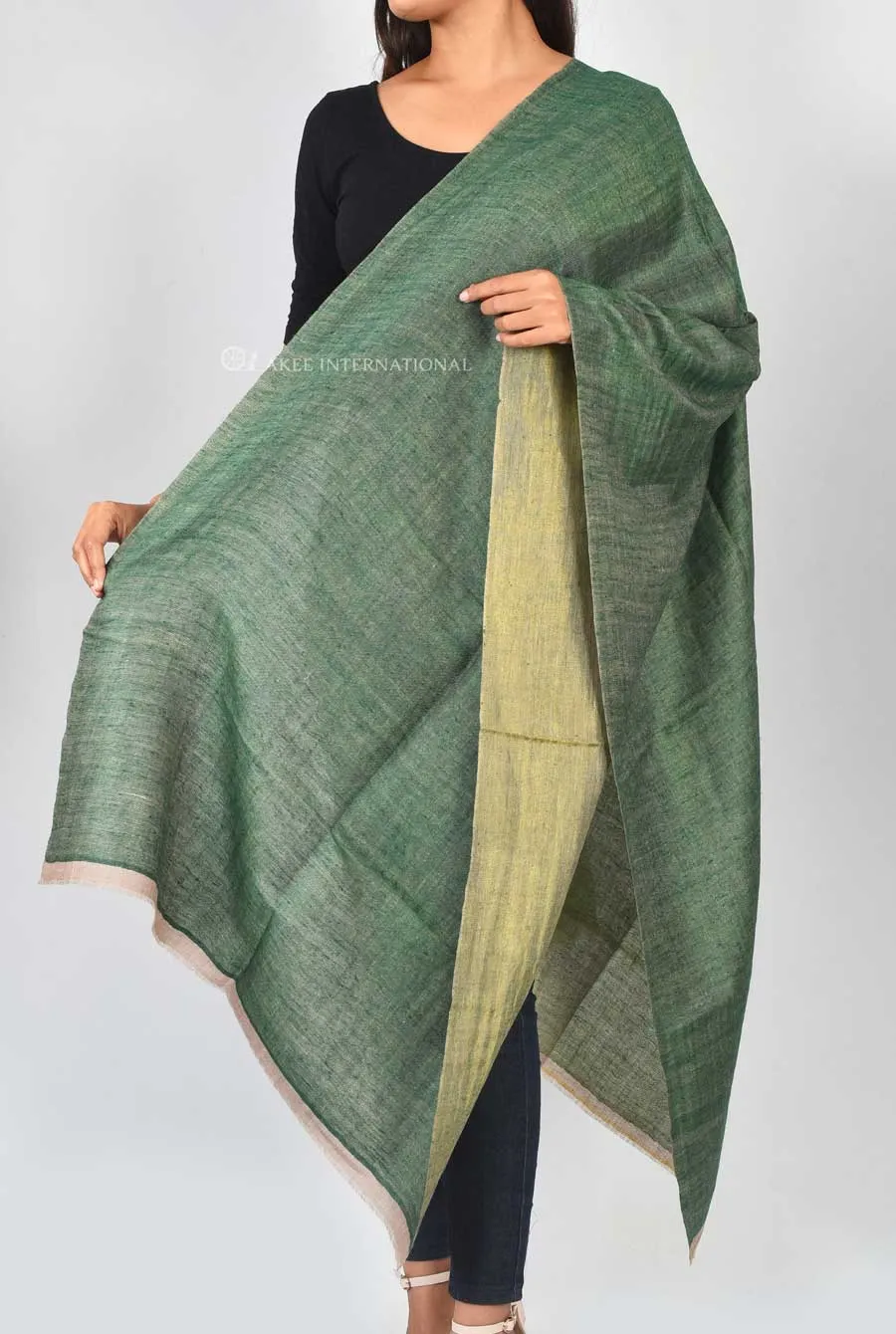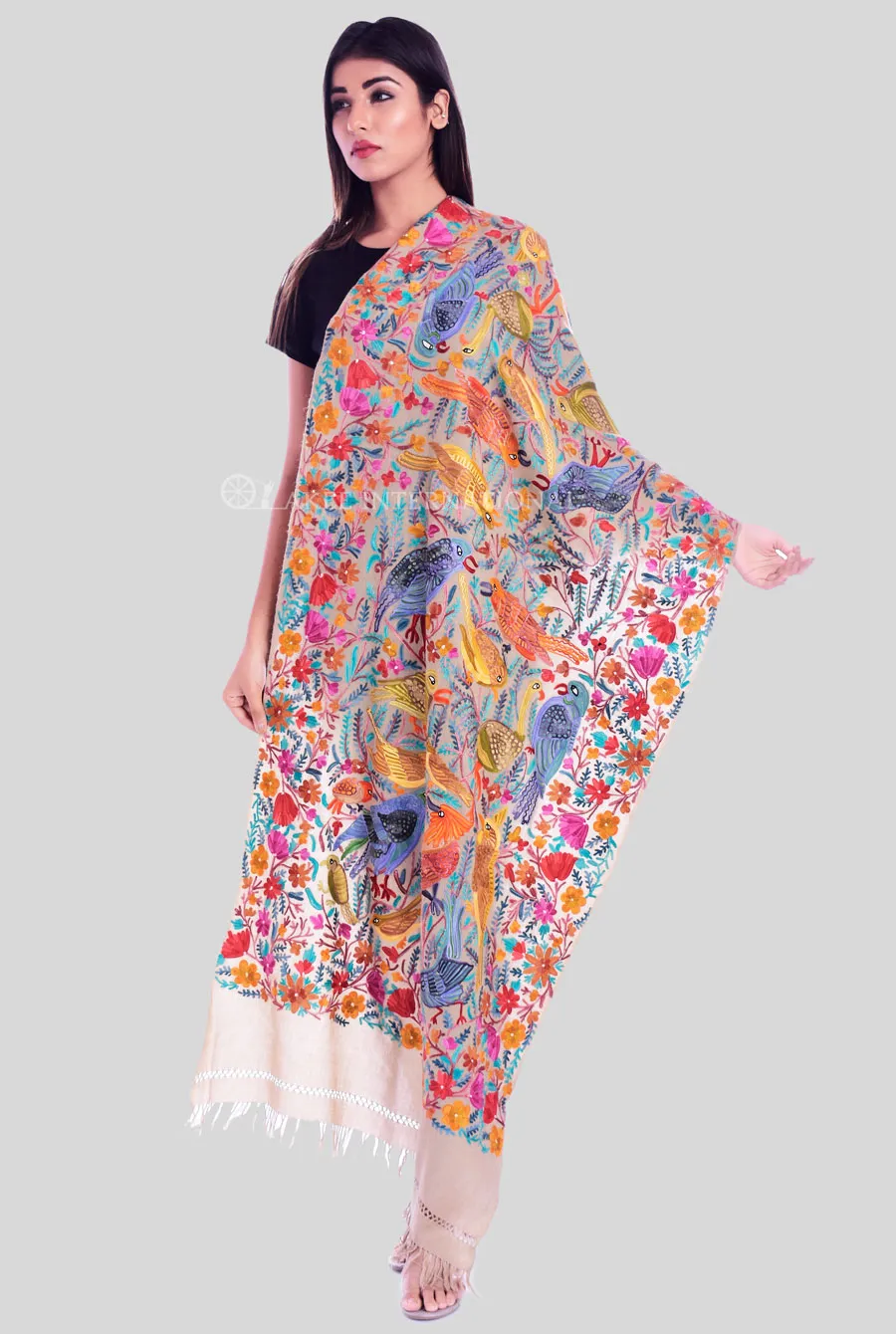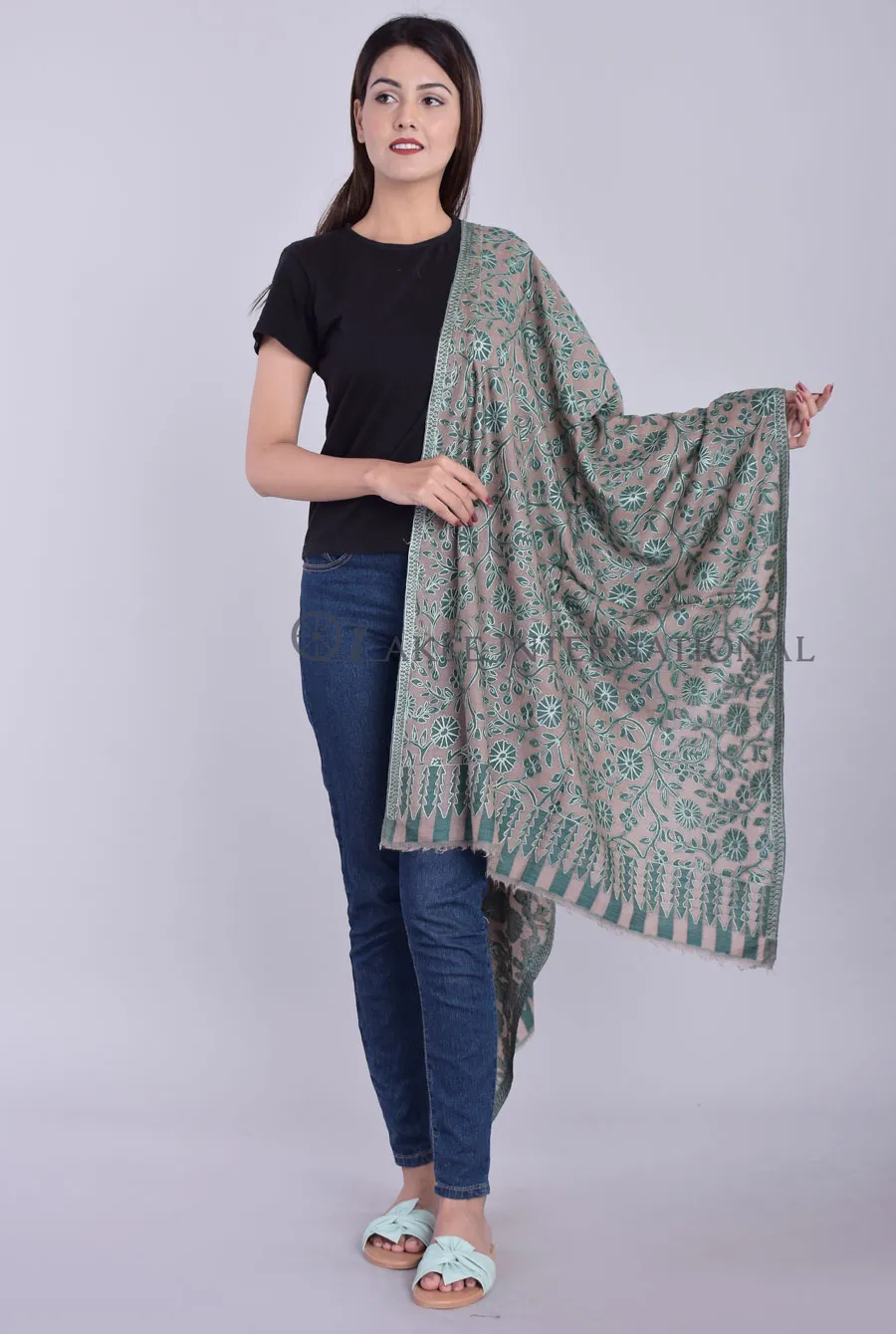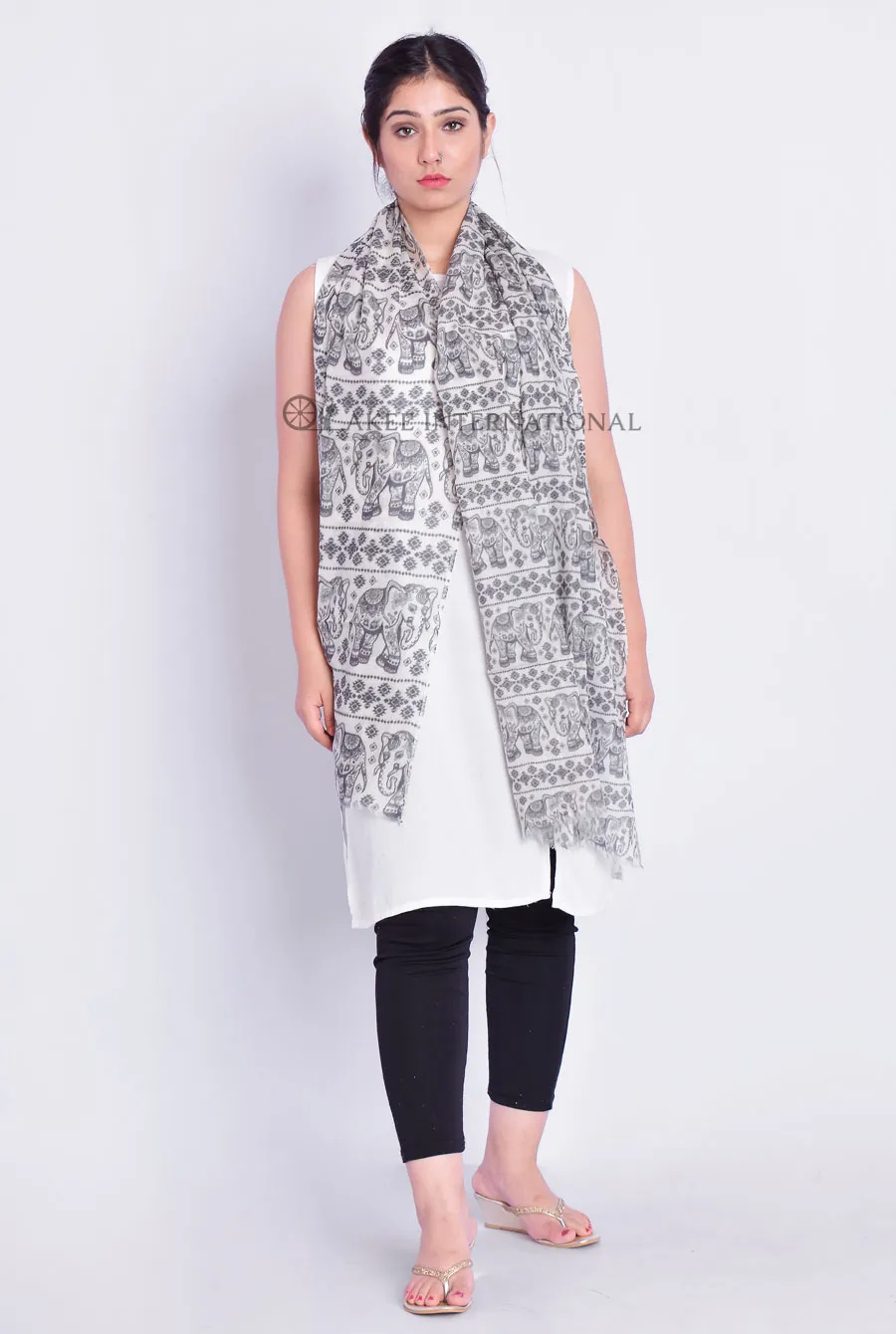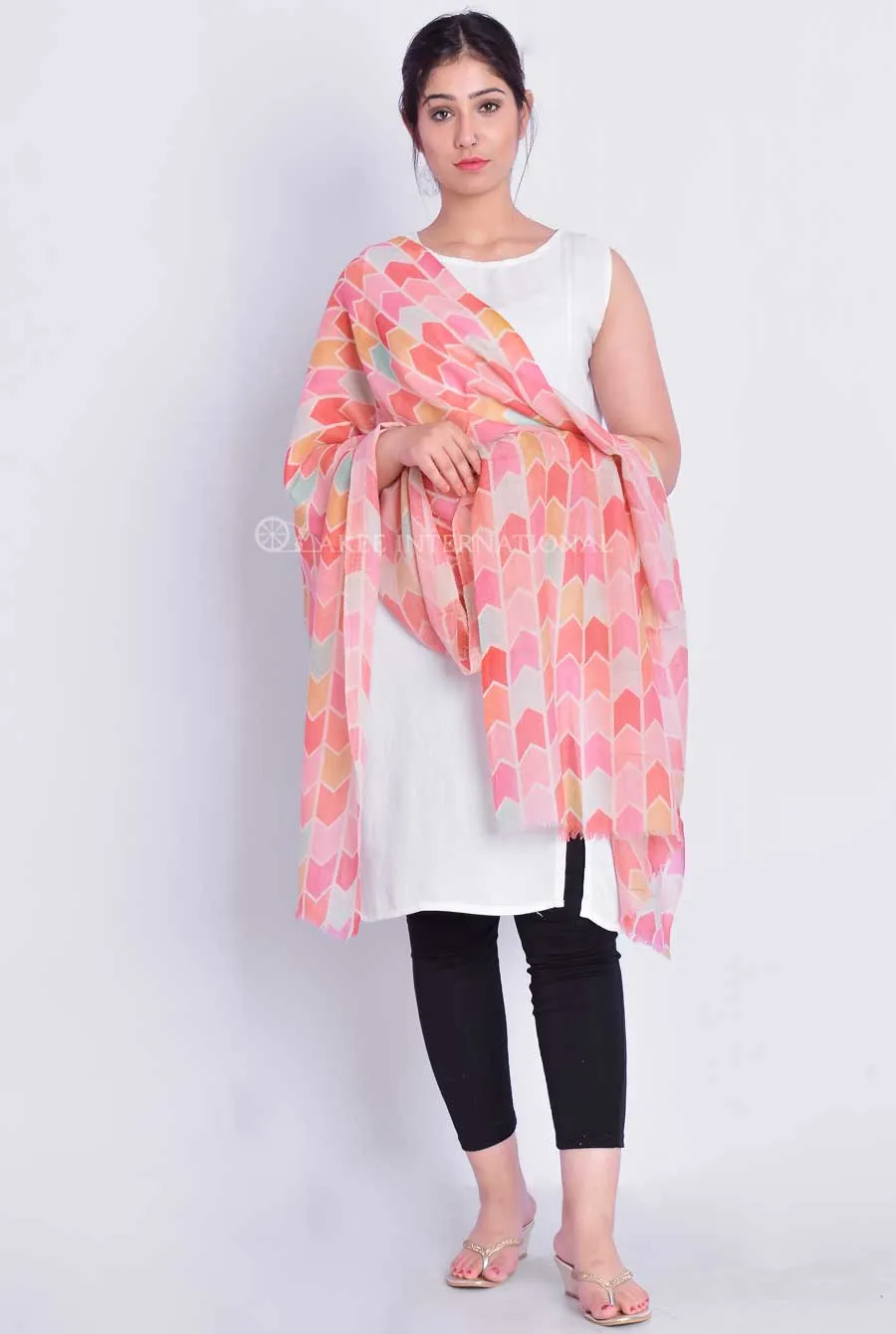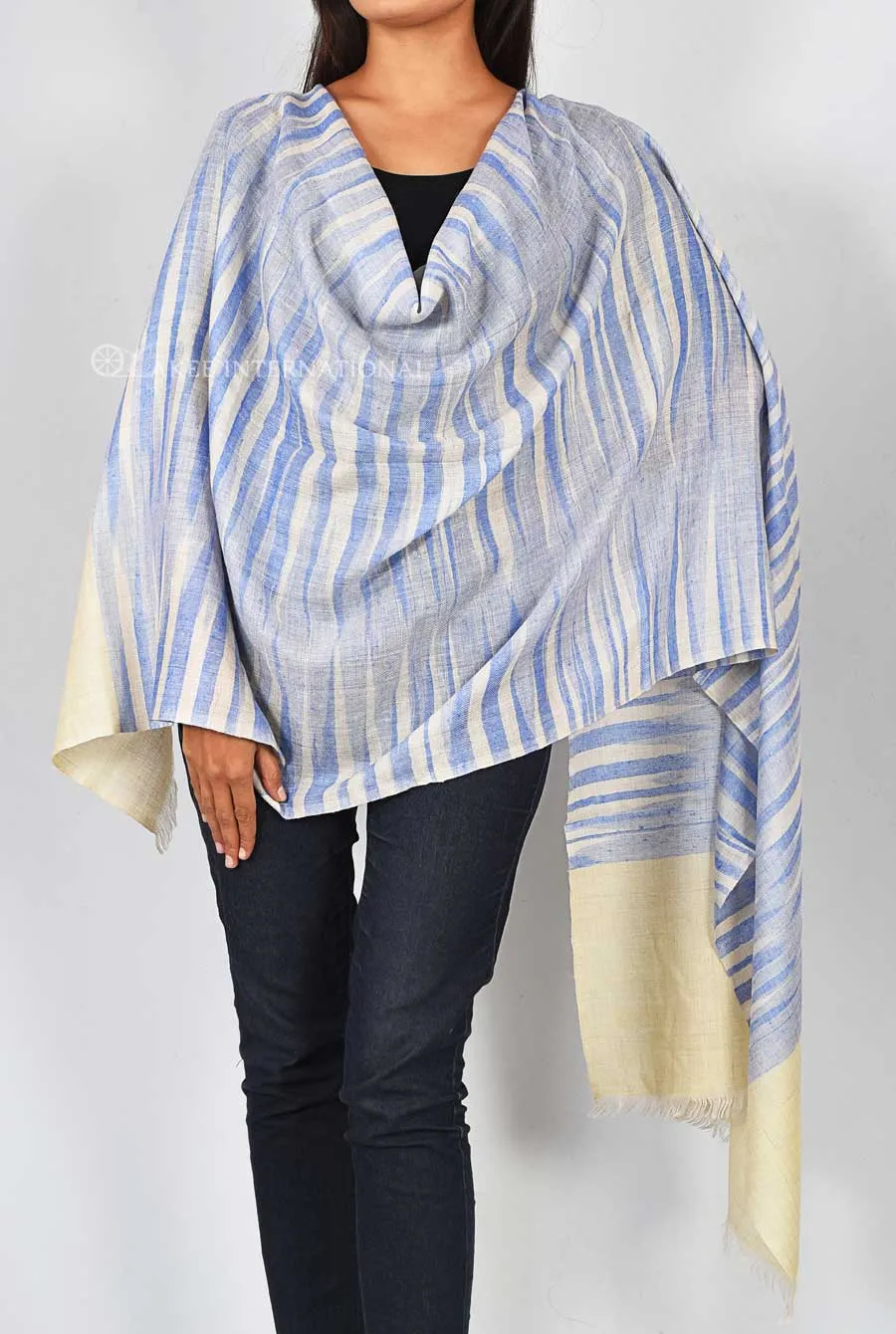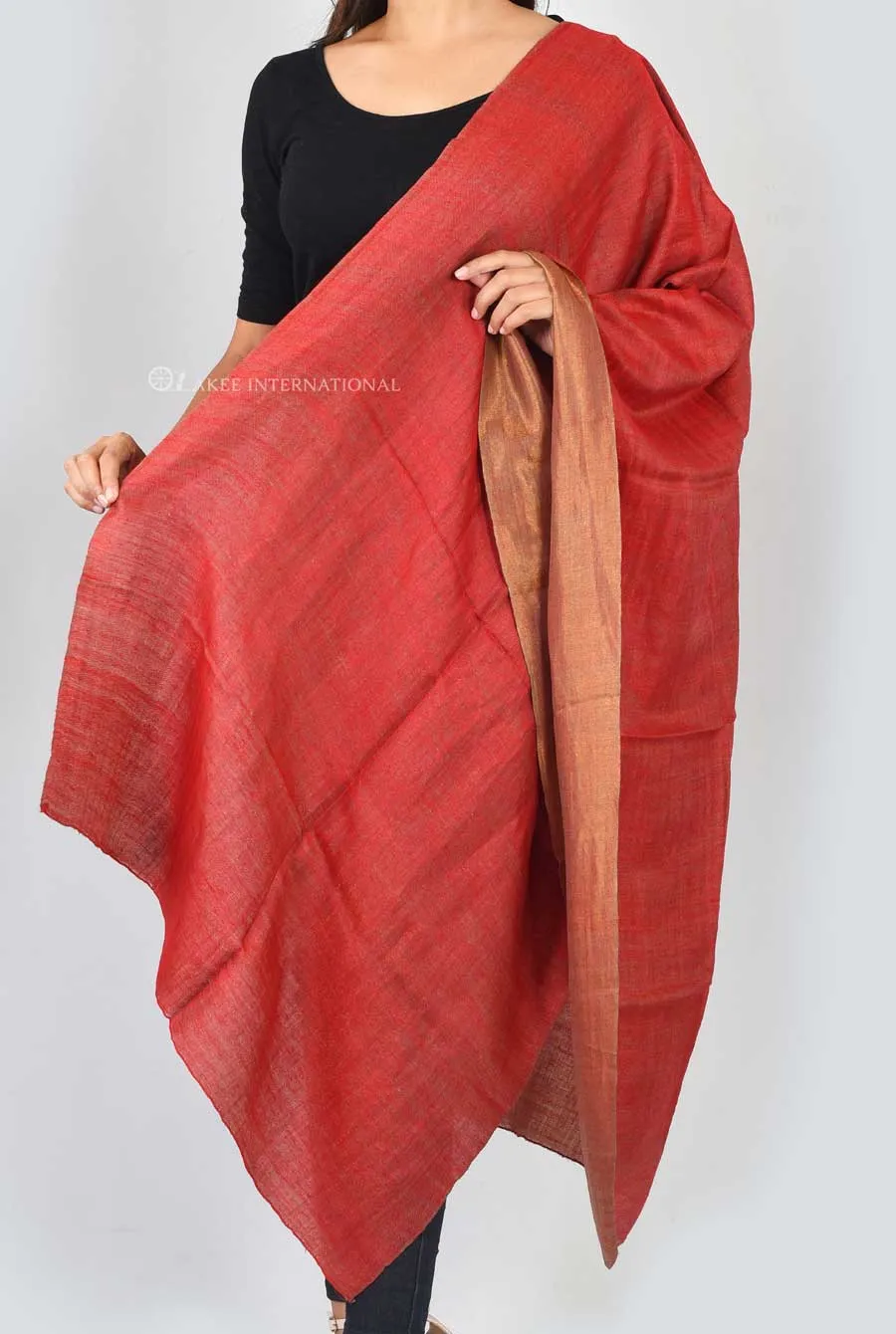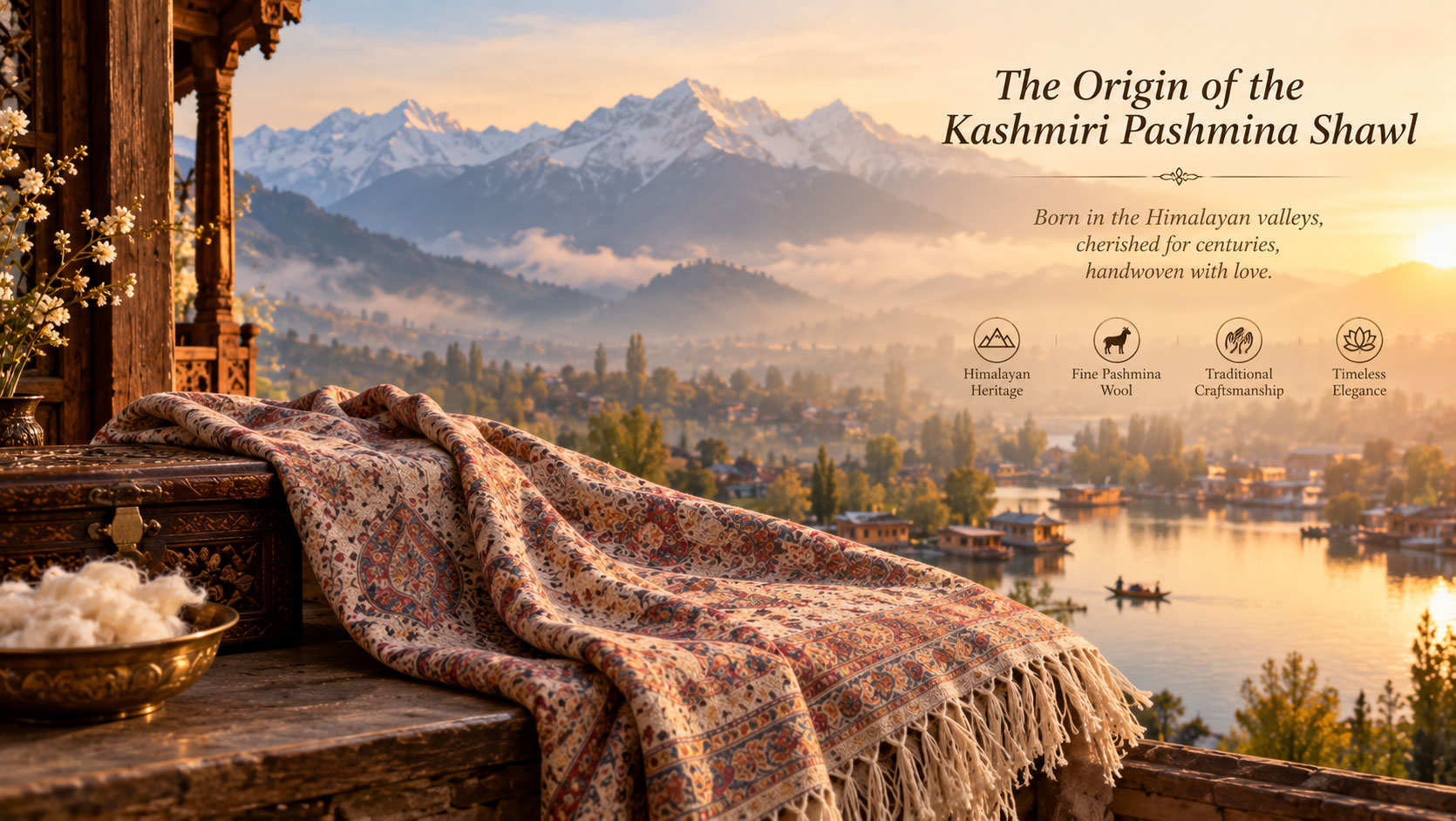
The Kashmiri Pashmina shawl is one of the most celebrated textile traditions associated with the Kashmir region. Admired for its fine texture, lightweight warmth, graceful drape, and intricate craftsmanship, Pashmina has developed from a traditional regional textile into a globally recognised symbol of luxury and artisan skill.
The story of Pashmina is closely connected with the fine undercoat fibre of Himalayan goats and the skilled communities who transformed this delicate fibre into luxurious textiles over many generations. Over time, Kashmir became renowned specifically for its ability to turn exceptionally fine fibre into beautifully woven and embroidered shawls. This article traces that journey — from the high-altitude plateau where the fibre begins, to the looms of Kashmir, to the wardrobes and boutiques that treasure the finished shawl today.
The story begins with the fine undercoat fibre traditionally obtained from Himalayan goats raised in high-altitude regions. The naturally soft and fine fibre helps protect these animals from extremely cold mountain temperatures throughout the harsh winter months. In the Changthang plateau of Ladakh, herding communities have long raised Changthangi goats, and it is their soft inner coat — grown as insulation against extreme cold — that becomes Pashmina fibre.
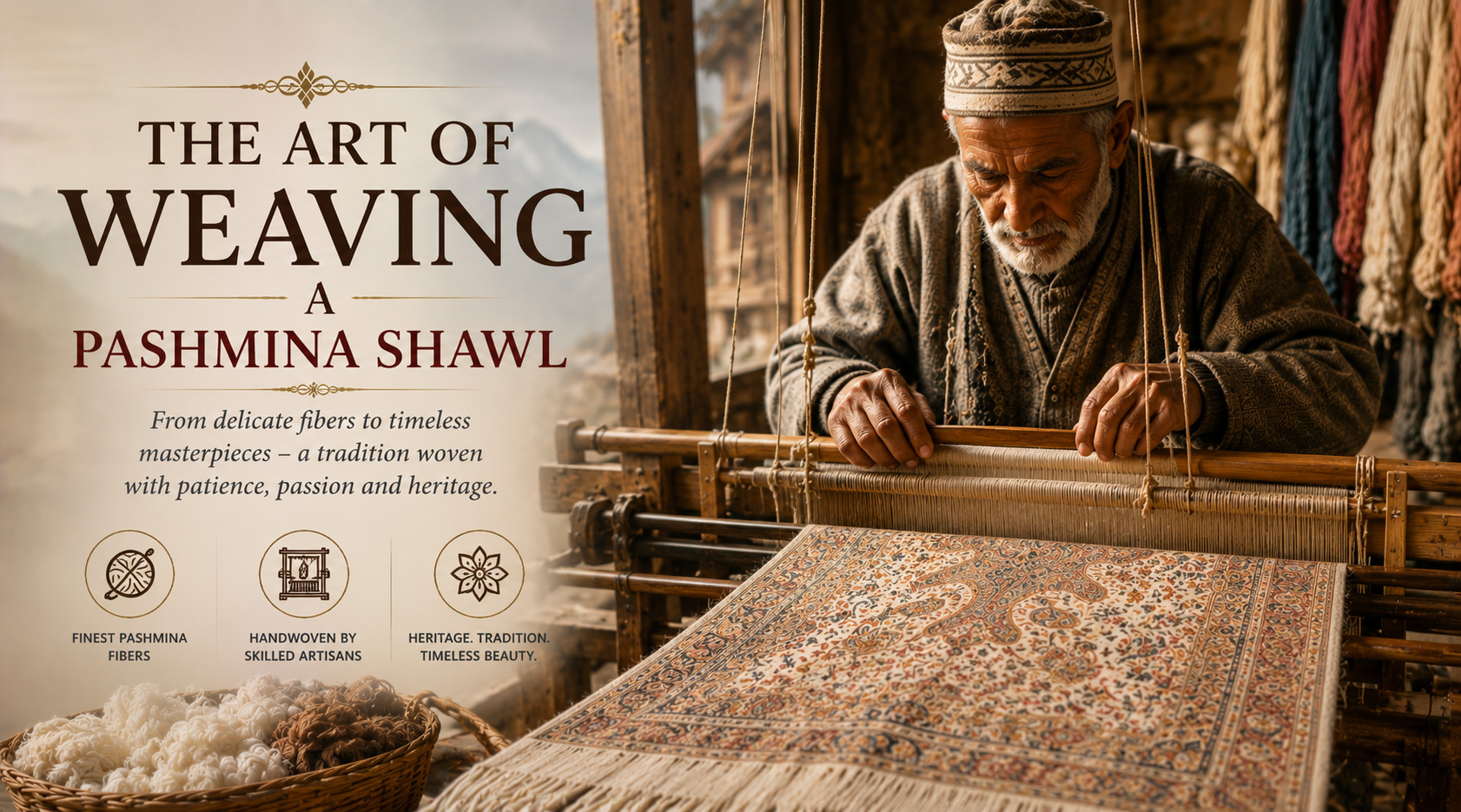
This delicate fibre is carefully collected and prepared before being transformed into yarn. It is gathered by gentle combing during the natural spring shedding season rather than by shearing, which helps preserve the fineness that makes the fibre so valuable. Its fine nature makes the preparation and spinning process particularly demanding, requiring genuine experience and patience — our guide on the art of weaving a Pashmina shawl explains this process in greater depth, and our page on what Pashmina actually is covers the fibre's science and characteristics in more detail.
The fibre's connection with the Himalayan landscape is an important part of the heritage associated with authentic Kashmir Pashmina wool. The altitude, the climate, and the traditional herding practices all contribute to a raw material that cannot be convincingly reproduced elsewhere.
The word "Pashmina" is generally traced to the Persian word "pashm," meaning wool, and over time it came to refer specifically to the finest grade of this Himalayan fibre. That linguistic thread is a small reminder of how Kashmir has long been part of wider cultural and trade networks across Central and South Asia, with ideas, techniques, and textiles moving along the same routes. It also helps explain why the term is so frequently used, and so frequently misused, in markets far from where the fibre originates — a confusion we address in our comparison of Pashmina vs Cashmere.
Kashmir's shawl-making tradition is generally described as having developed over many centuries, with local tradition often crediting royal patronage and the arrival of skilled weavers and artisans from neighbouring regions as important influences on its growth. While the precise details of that early history are difficult to pin down and vary between accounts, what is consistently recognised is the outcome: Kashmir became the centre where the fine fibre from the high plateau was turned into shawls of a quality and sophistication found nowhere else.
Part of this rests on the distinctive, specialised division of labour that grew up around the craft. Different families and communities developed expertise in different stages — fibre preparation, spinning, weaving, dyeing, embroidery, and finishing — with each stage refined over generations. This layered, collaborative structure is still visible today in how a genuine Kashmiri shawl comes together, and it is a large part of why the craft cannot be shortcut without losing what makes it special. Our page on the Kashmiri shawl weaving tradition explores this structure further.
Over time, Kashmir became an important centre for the production and artistic development of Pashmina shawls. Skilled artisans developed specialised techniques for spinning, weaving, dyeing, and decorating the fine fibre, gradually refining their craft over many generations.
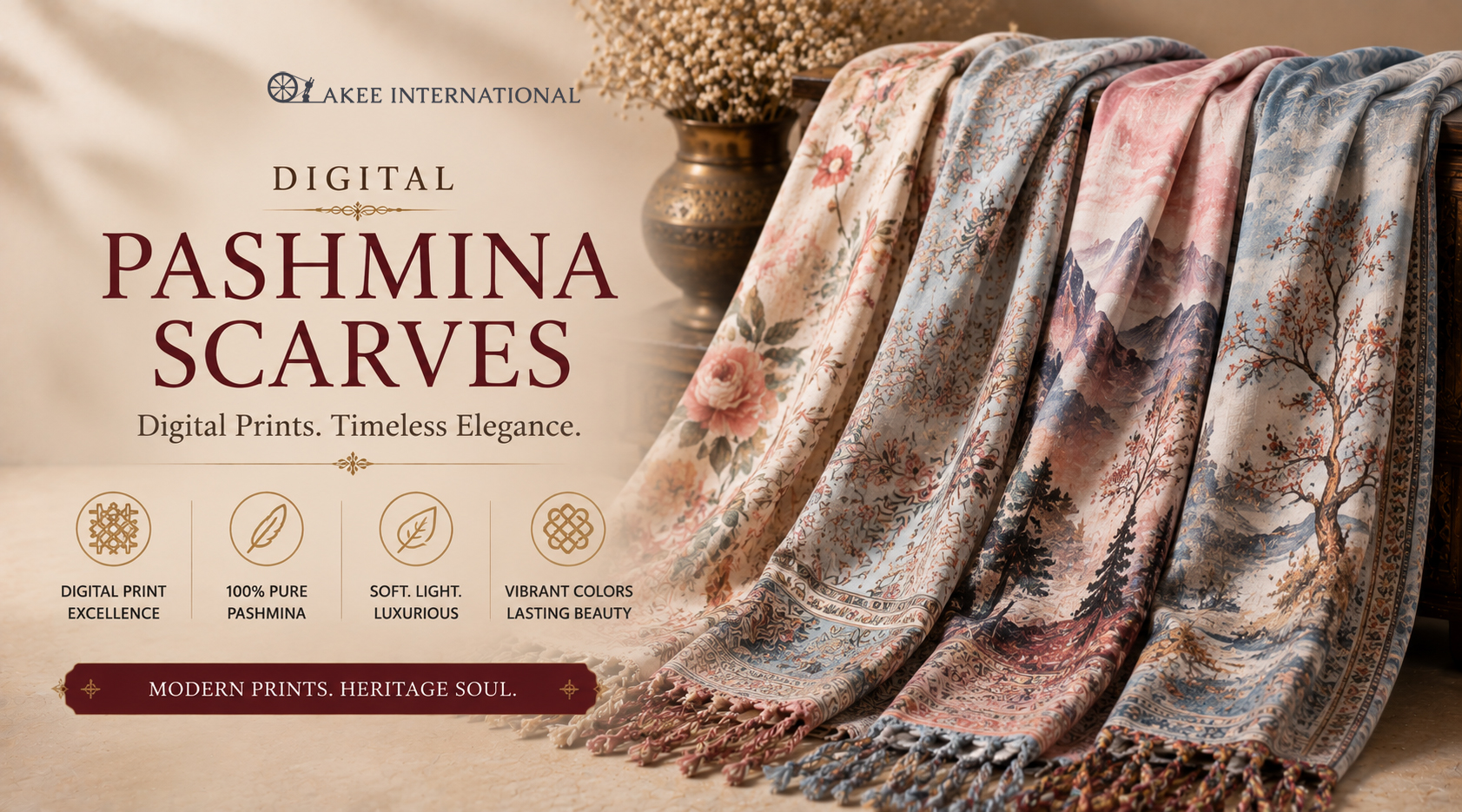
The traditional craft evolved into a sophisticated textile art. Shawls could be left elegantly plain or enhanced with detailed embroidery and elaborate patterns, depending on the intended design and occasion. This combination of fine fibre and skilled craftsmanship helped establish the reputation of Kashmiri Pashmina shawls far beyond the region itself.
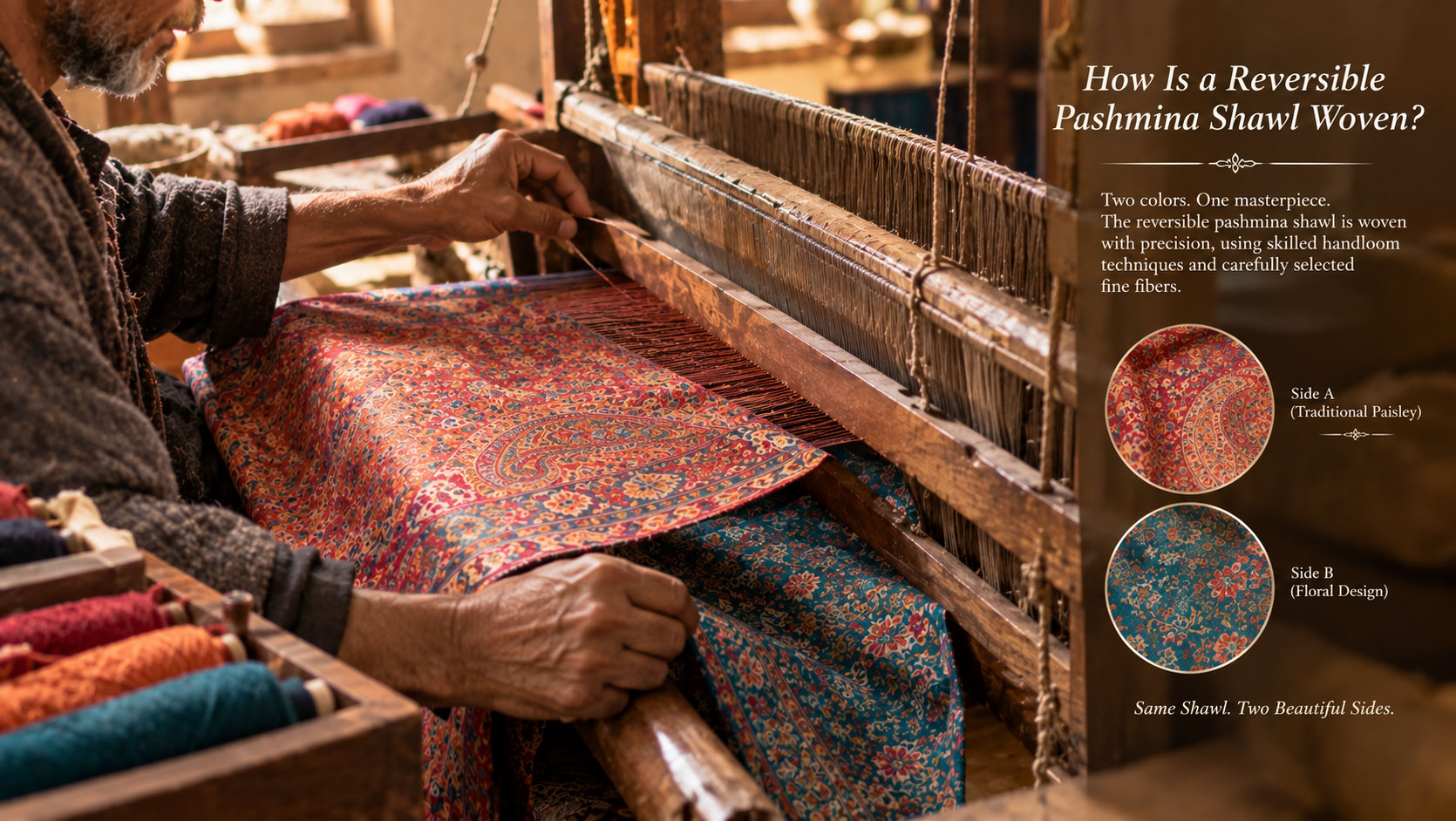
Traditional Pashmina production involves several stages, beginning with preparing and spinning the fine fibre into yarn. The raw fibre must first be cleaned and carefully sorted to separate the fine down from coarser hairs, a slow and largely manual task. The prepared fibre is then hand-spun into an exceptionally fine thread. The delicate yarn is then carefully woven, often using traditional handlooms passed down through generations of the same artisan families — a process reflected in our handloom Pashmina collection.
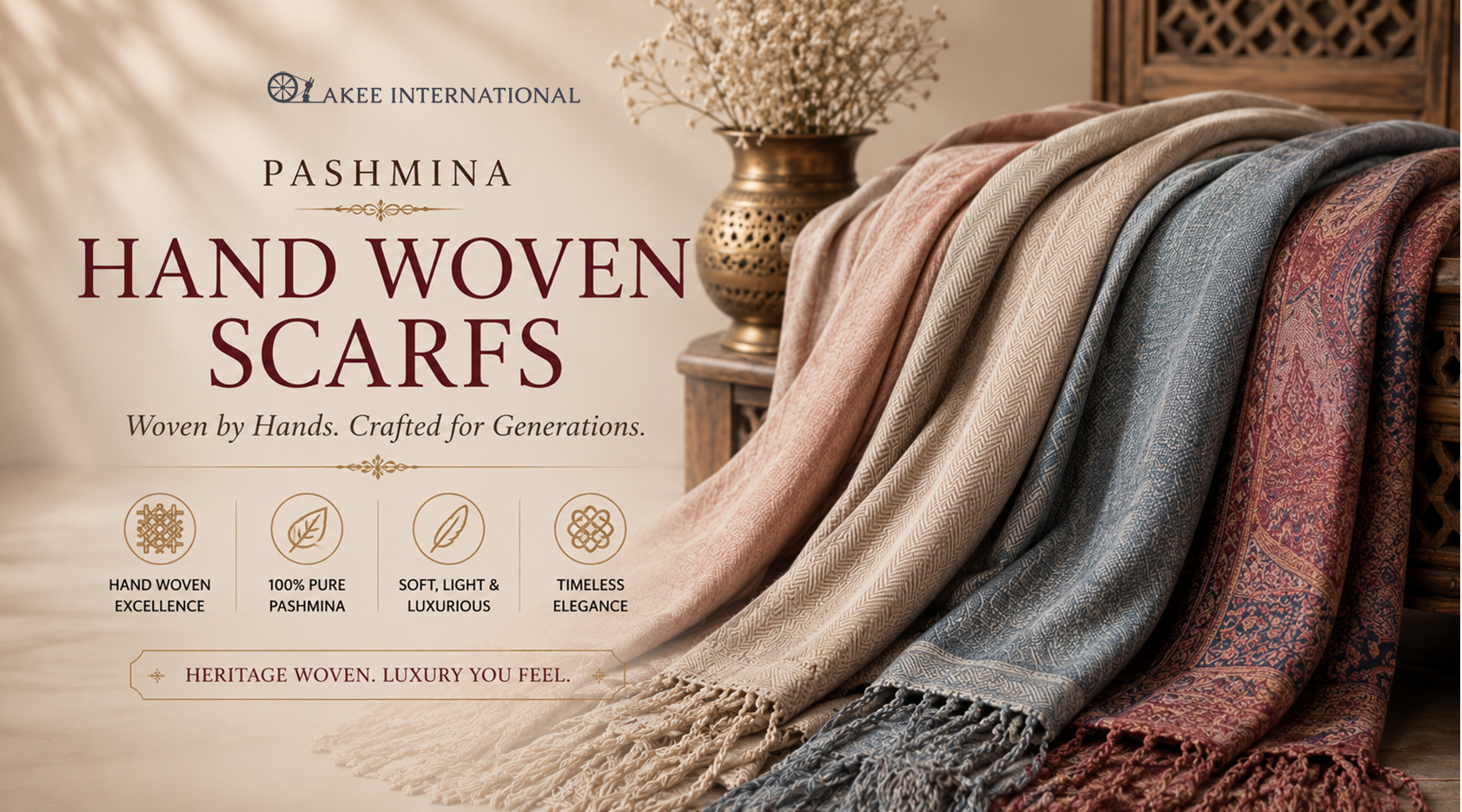
The skill of the artisan is essential because fine Pashmina yarn requires careful, deliberate handling. Maintaining the correct tension and creating an even weave can require considerable experience built up over years of practice. The resulting fabric is known for its soft feel and graceful drape, qualities that have contributed to the enduring appeal of Pashmina across centuries. Pieces from our Pashmina Hand Woven Scarfs collection show what this handloom character looks and feels like in a finished piece.
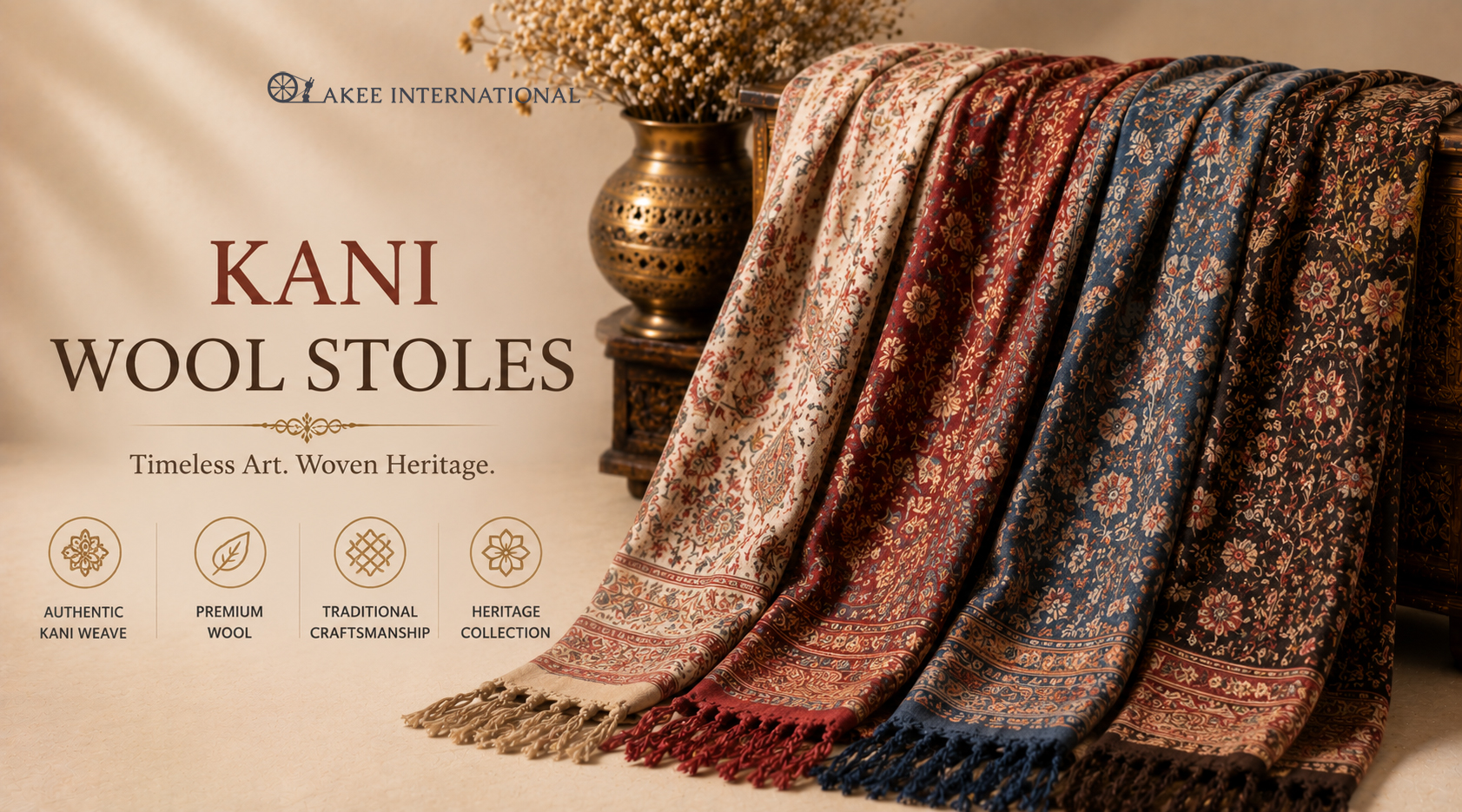
Among the most distinctive traditions to emerge from Kashmir is Kani weaving, in which the pattern is built directly into the fabric during weaving rather than added afterwards. Instead of a conventional shuttle, small wooden spools called "kanis" — each carrying a different colour of thread — are used to construct the design line by line. Because so many colours and spools may be involved in a single row, a detailed Kani piece can take many months to complete. It is a technique that rewards patience, and it remains one of the most admired expressions of Kashmiri weaving skill. You can see this tradition in our Kani Wool Stoles, Pashmina Kani Stoles, and Kashmir Kani Shawl Online collections.
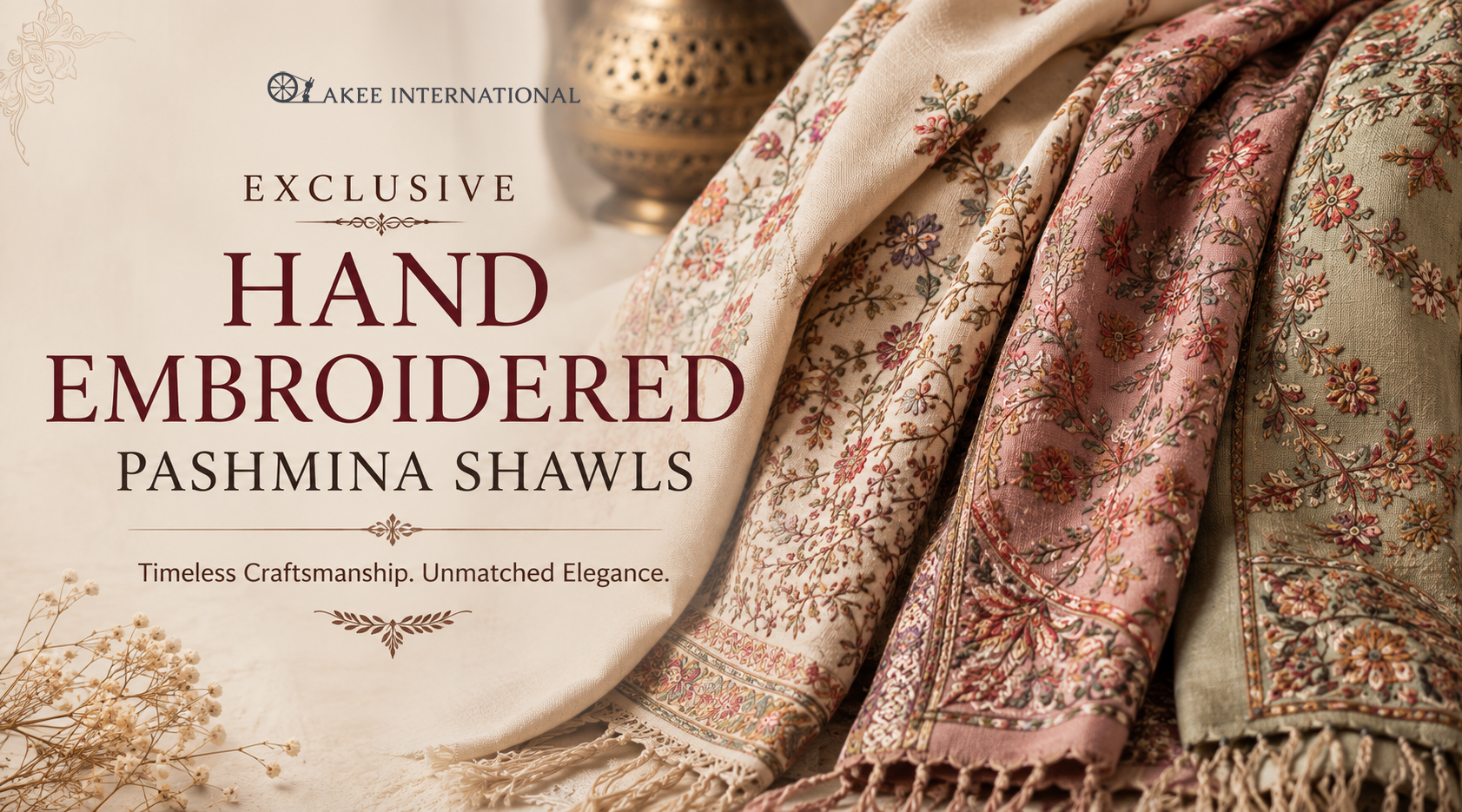
Pashmina shawls became increasingly associated with artistic expression as artisans developed intricate decorative traditions. Floral motifs, paisleys, vines, borders, and other traditional patterns could be introduced through embroidery or elaborate weaving techniques.
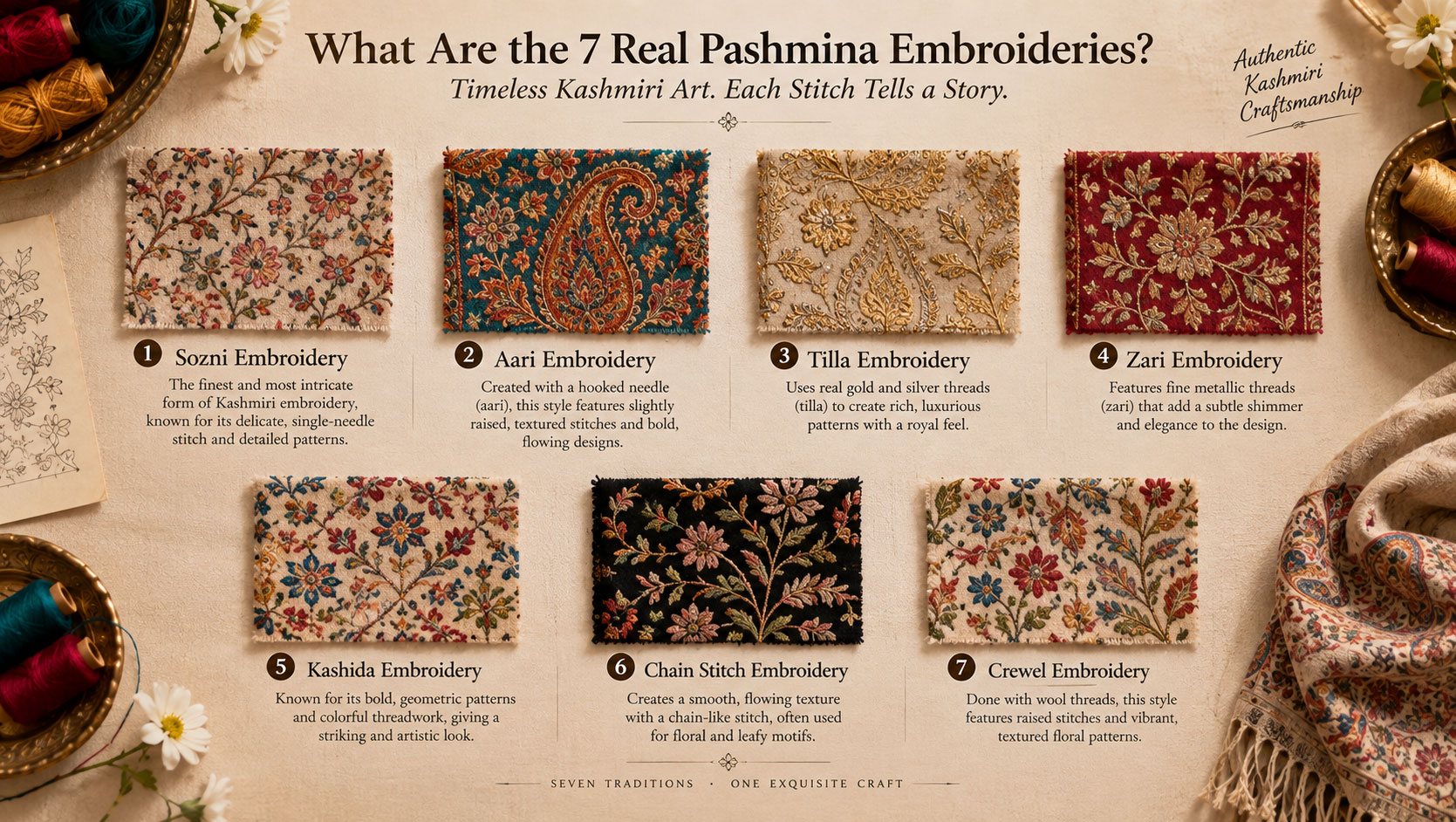
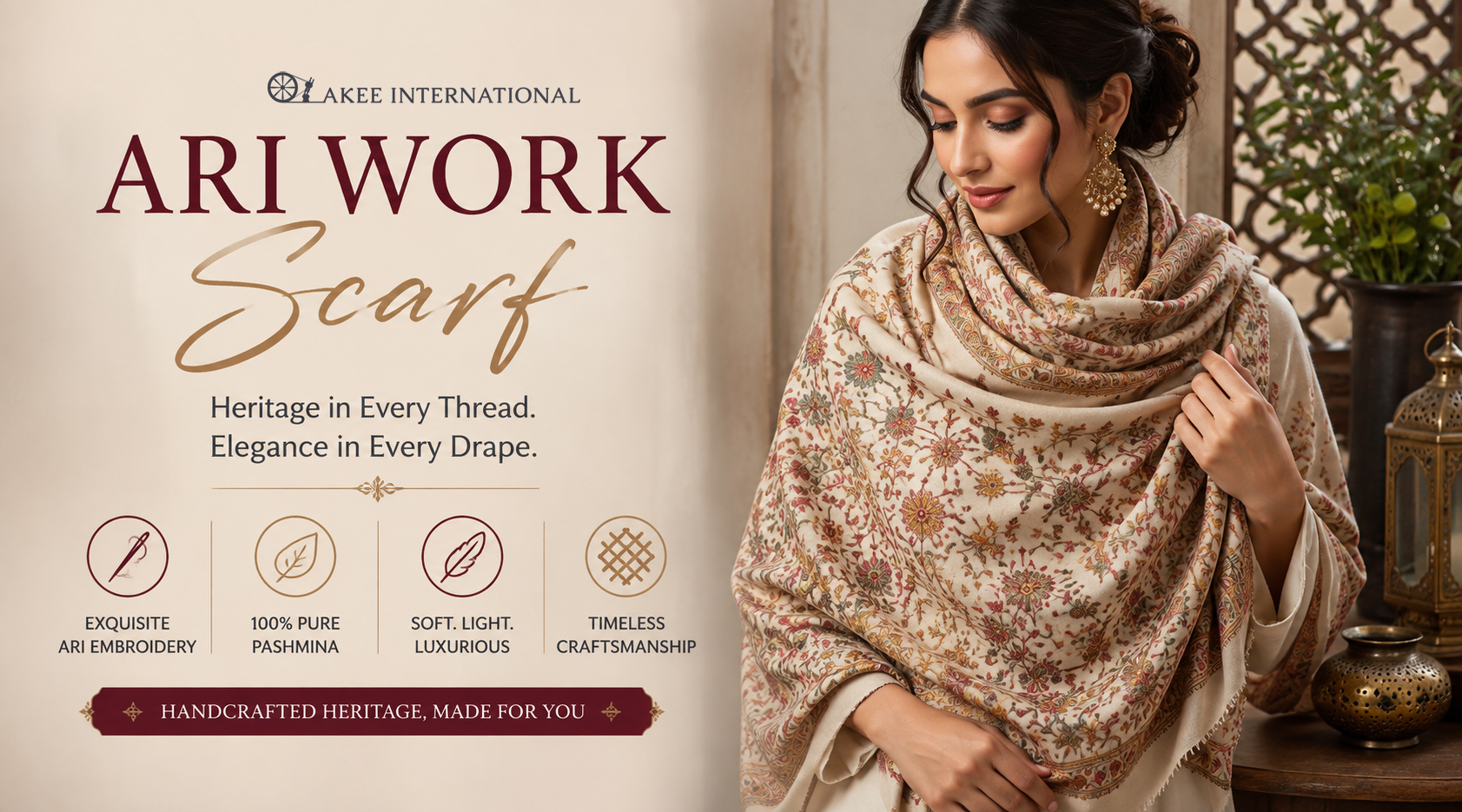
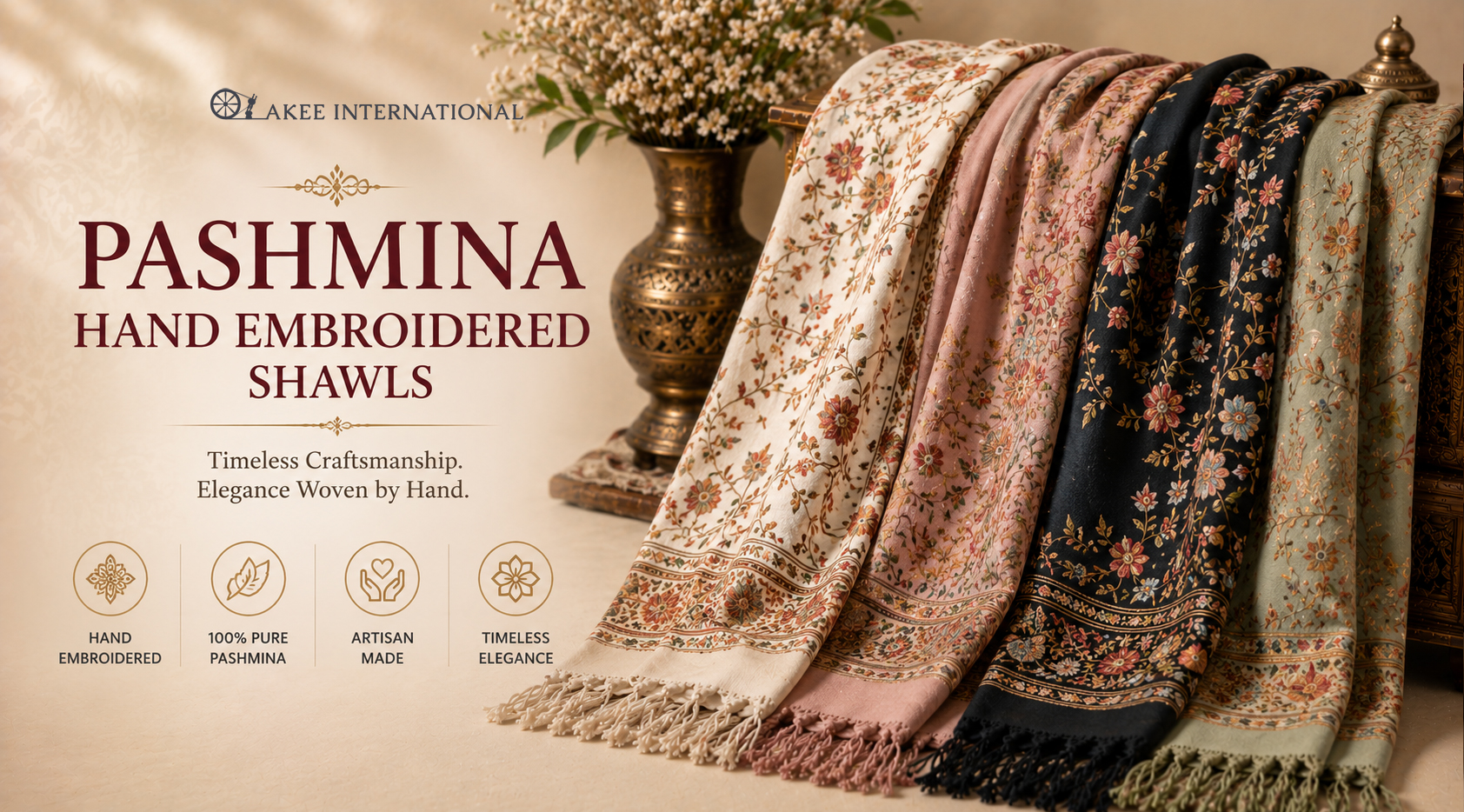
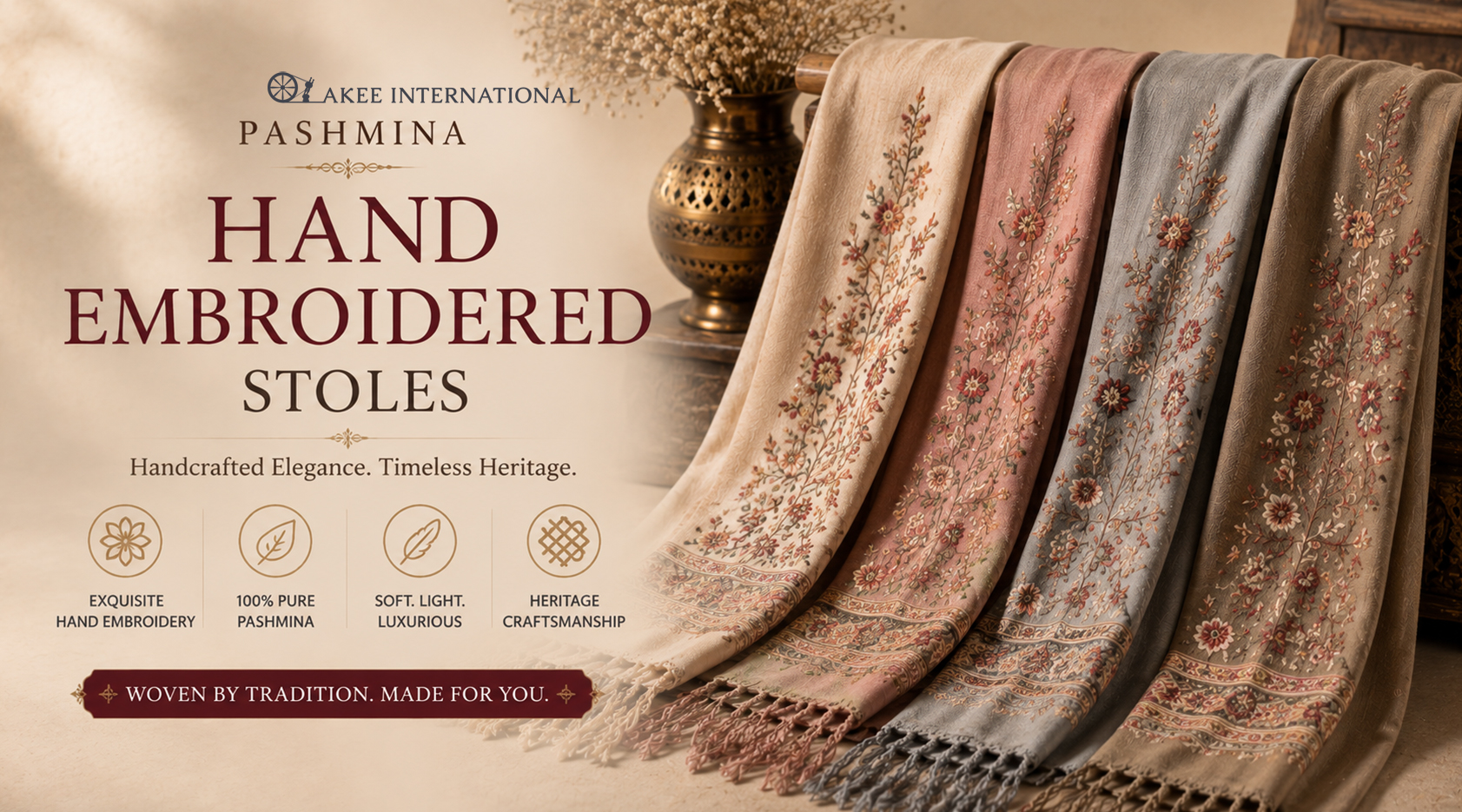
Sozni embroidery became particularly admired for its fine needlework and detailed patterns, while other techniques such as Ari work and metallic threadwork added different decorative characteristics. Sozni is known for its extremely delicate stitching, often so fine that dense coverage can resemble a printed pattern from a distance, while Ari work, done with a hooked needle, tends to produce bolder, more textured motifs. The combination of luxurious fabric and artistic craftsmanship transformed the shawl from a simple garment into a treasured textile passed down through families. For a deeper look at the range of embroidery styles, our guide on the 7 real Pashmina embroideries is a useful companion read, and our page on Sozni embroidery Pashmina shawls shows the technique in finished pieces.
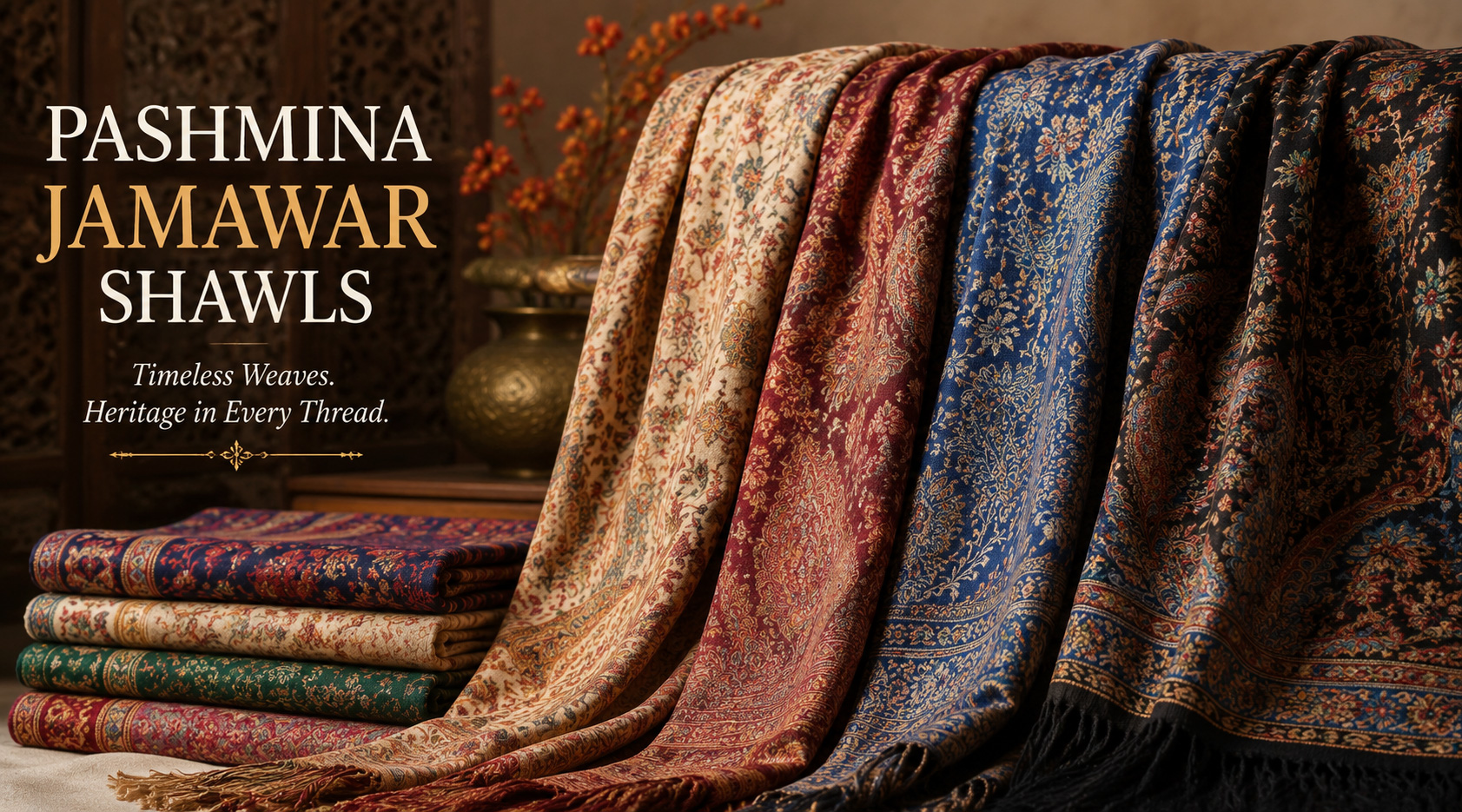
The tradition of elaborate patterning is also represented by Jamawar Pashmina shawls. Jamawar is associated with intricate traditional patterning and weaving, often featuring elaborate floral, paisley, and ornamental motifs woven directly into the fabric.
These designs demonstrate how Kashmiri textile traditions evolved to combine technical skill with genuine artistic creativity. A detailed Jamawar piece can require considerable patience and craftsmanship to produce, sometimes taking artisans several months to complete a single design. Our pages on Jamawar Pashmina Shawl Online and Kashmiri Jamawar Shawl Online explore this tradition further, and our blog on Pashmina Jamawar shawls covers how this historic weave is available today.
As the reputation of Kashmiri shawls spread, they travelled well beyond the valley. Historical accounts describe Kashmiri shawls being prized at royal and aristocratic courts across South Asia, and later becoming highly sought after in Europe, where demand for them was strong enough that local weavers in several countries began producing imitations. The best-known example is the town of Paisley in Scotland, whose mills produced woven versions of the teardrop-shaped motif so successfully that the pattern itself came to be known by the town's name in English. It is a telling reminder that Kashmiri shawls have been admired — and imitated — for a very long time, and that the question of authenticity is far from new.
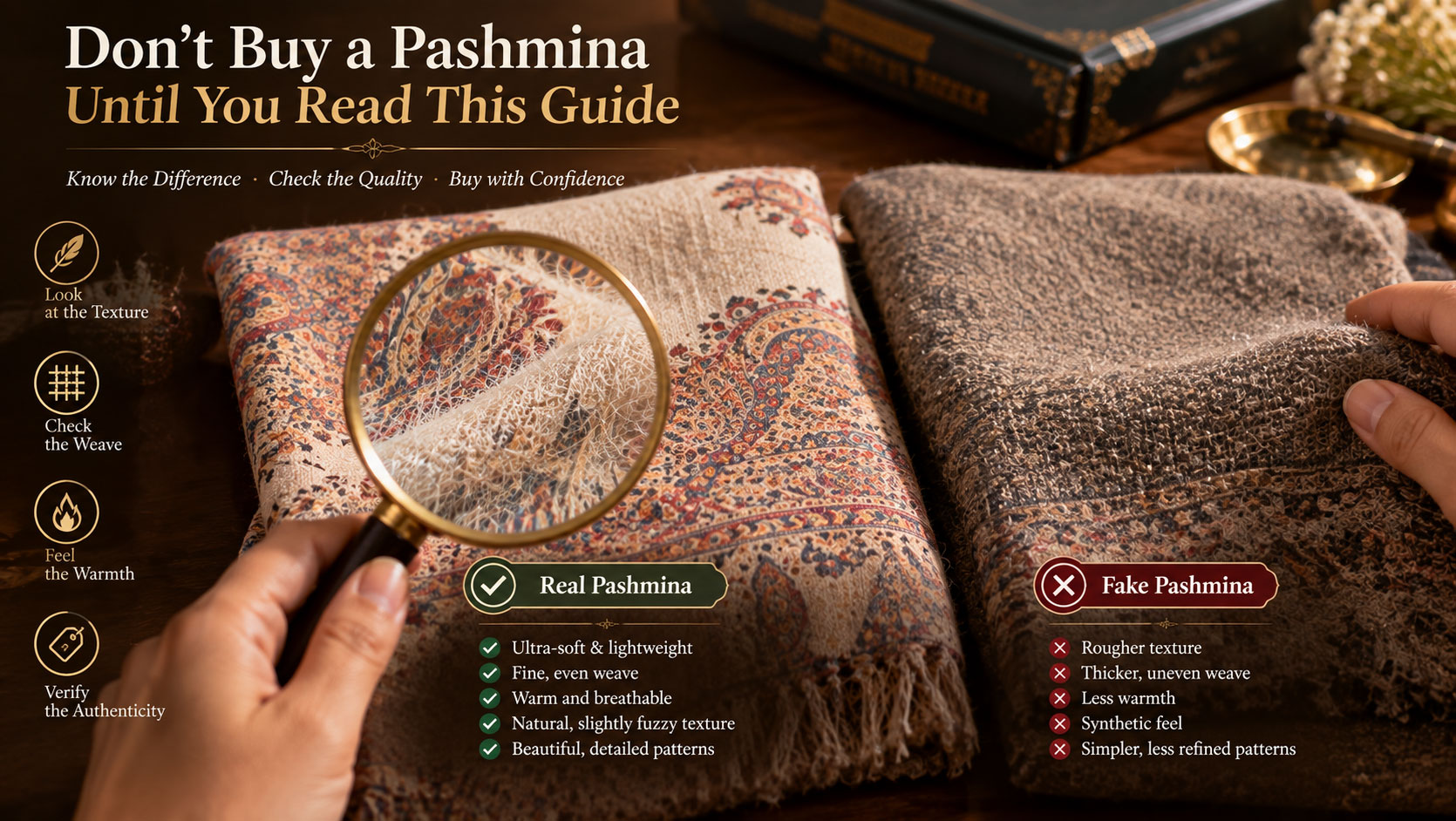
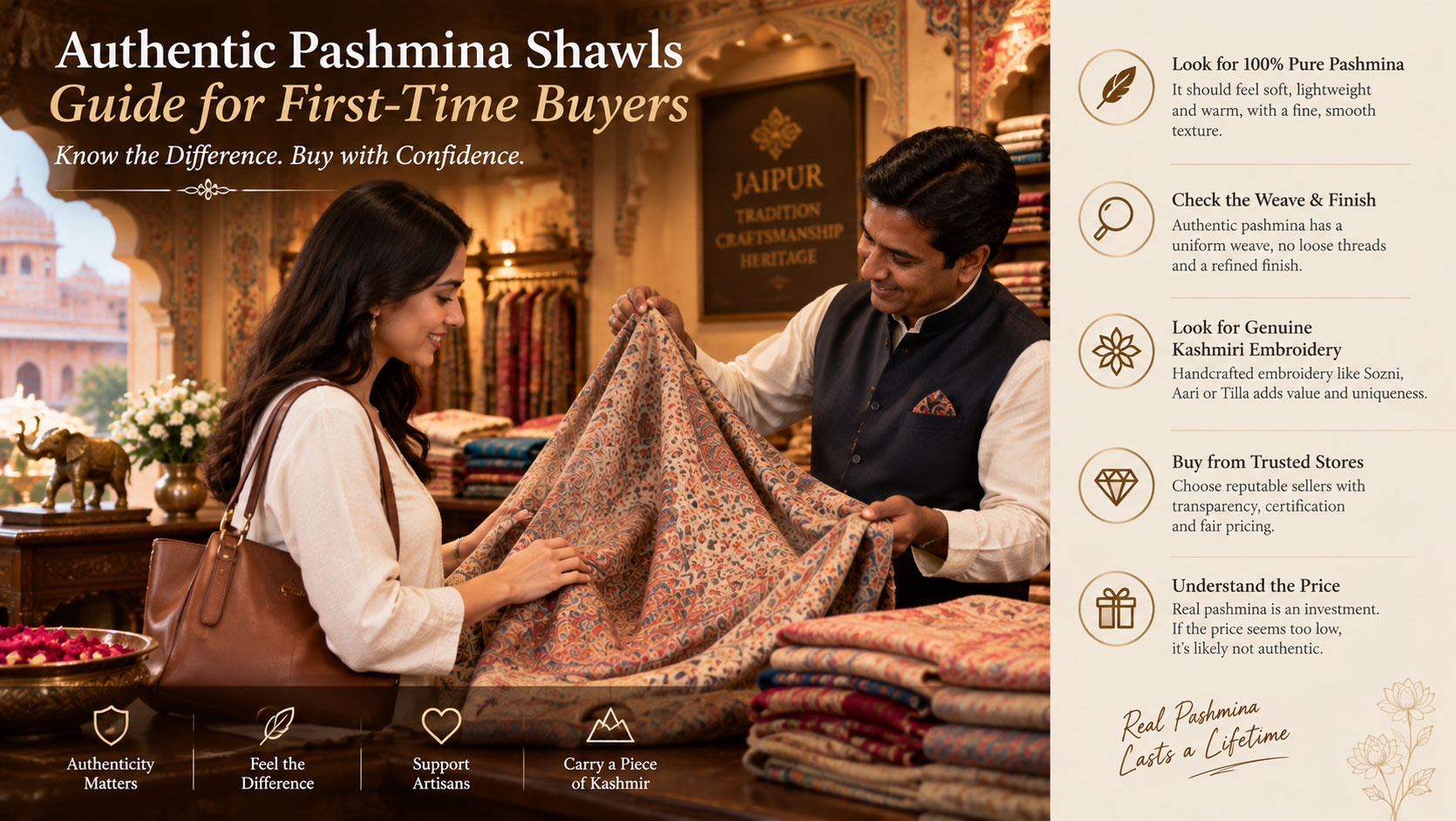
That history is part of why verifying genuine origin still matters today. If you would like to know how to tell an authentic piece from an imitation, our guides on how to identify an original Pashmina shawl, real Kashmiri Pashmina vs fake, and whether your Pashmina shawl is from Kashmir walk through the practical checks.
As the reputation of Kashmiri shawls spread, Pashmina became associated with refinement, luxury, and cultural prestige across many regions and cultures. Its delicate texture and labour-intensive craftsmanship made it particularly valued as a premium textile among those who could appreciate genuine artisan work.
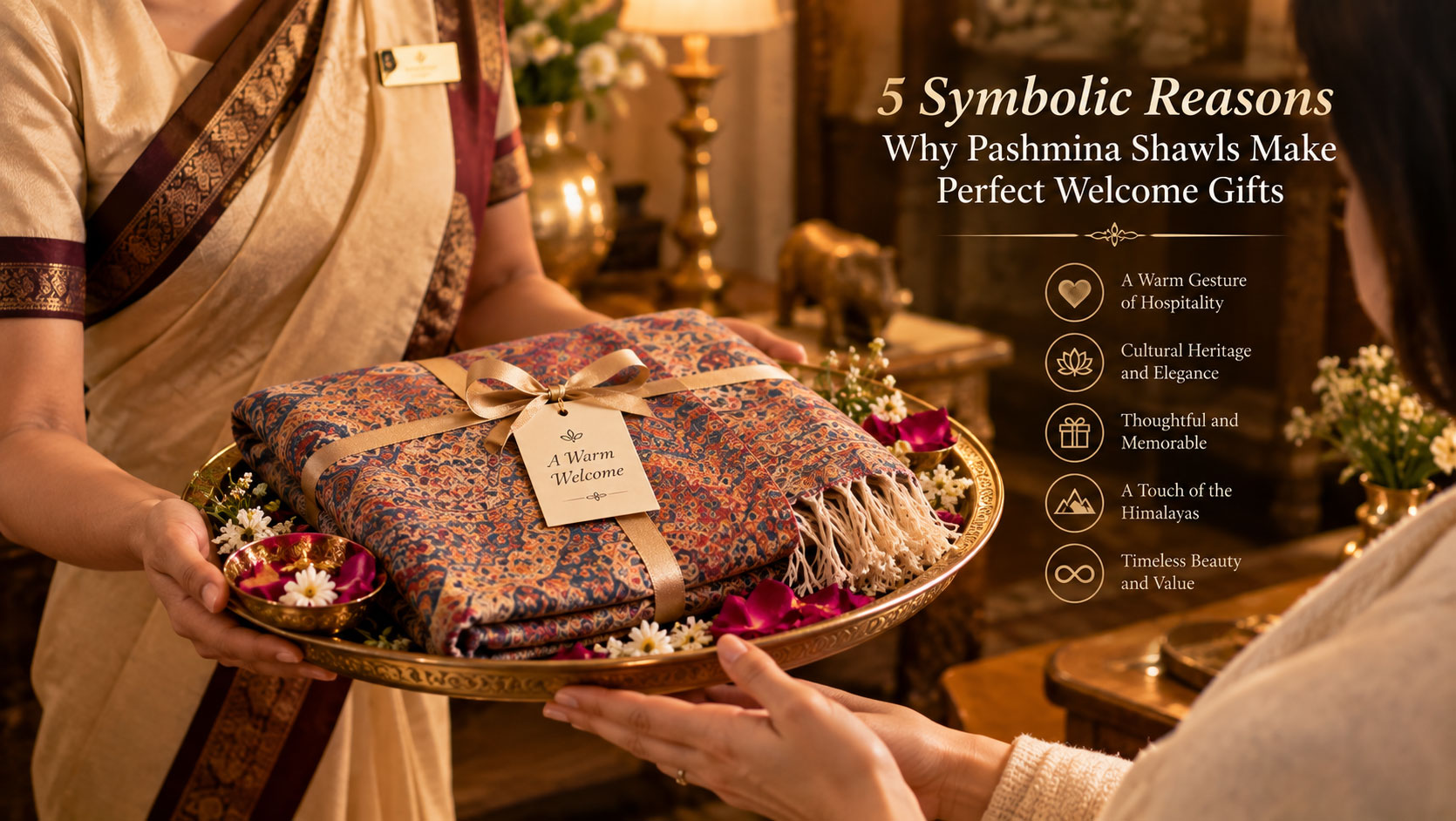
Today, Pashmina continues to appeal to people who appreciate traditional craftsmanship while also fitting naturally into contemporary fashion. A beautifully made shawl can be styled with traditional Indian clothing as well as modern outfits — see our GI-certified Kashmir Pashmina collection for pieces that carry this heritage forward with verified authenticity. For those buying with a particular occasion in mind, our collections for bridal Pashmina shawls, wedding gifts, and anniversary gifts continue the long tradition of gifting Pashmina to mark meaningful moments.
Because the name "Pashmina" carries so much value, formal protections have been developed to safeguard the traditional craft. The Geographical Indication (GI) framework is designed to recognise shawls made in Kashmir using traditional methods, helping buyers distinguish genuine pieces from imitations sold under the same name. Our explainer on what the GI tag for Kashmir Pashmina means covers how this works, our Kashmir Pashmina Certificate of Authenticity page explains the documentation we provide, and our Kashmir Pashmina shawl verification guide shows how to check a piece you already own. For a first-hand example of hand-spun, certified craftsmanship, browse our Pashmina Hand Spun GI Shawl collection.
While the heart of the craft lies in Kashmir, its reach extends well beyond the valley. Jaipur, with its own deep textile heritage, has long been a place where Kashmiri craftsmanship meets a wider market, and established retailers and manufacturers here maintain direct working relationships with Kashmiri artisans. Our page on buying a Kashmir shawl from Jaipur explains how this connection works, while our Pashmina shawl shop in Jaipur and store near Amer Fort pages welcome visitors who would like to see the craft firsthand. For international readers, our page on buying a Kashmiri shawl for NRIs and our export pages for the USA, UK, and Europe explain how this heritage reaches buyers around the world.
The importance of Pashmina lies not only in the finished shawl but also in the knowledge and skills involved in creating it. Traditional spinning, weaving, embroidery, and finishing techniques represent generations of artisan craftsmanship that continue to be passed down today.
At Akee International, the beauty of handmade Pashmina shawls reflects this connection between heritage and contemporary luxury, sourced through our Kashmiri artisan network. Our pages on the Kashmir artisan network and the top Pashmina weavers in Srinagar introduce the communities behind the craft in more detail, and our sustainability page explains how we approach fair, responsible sourcing. From finely woven designs to intricate traditional patterns, each style celebrates the enduring artistry associated with Kashmiri textile craftsmanship.
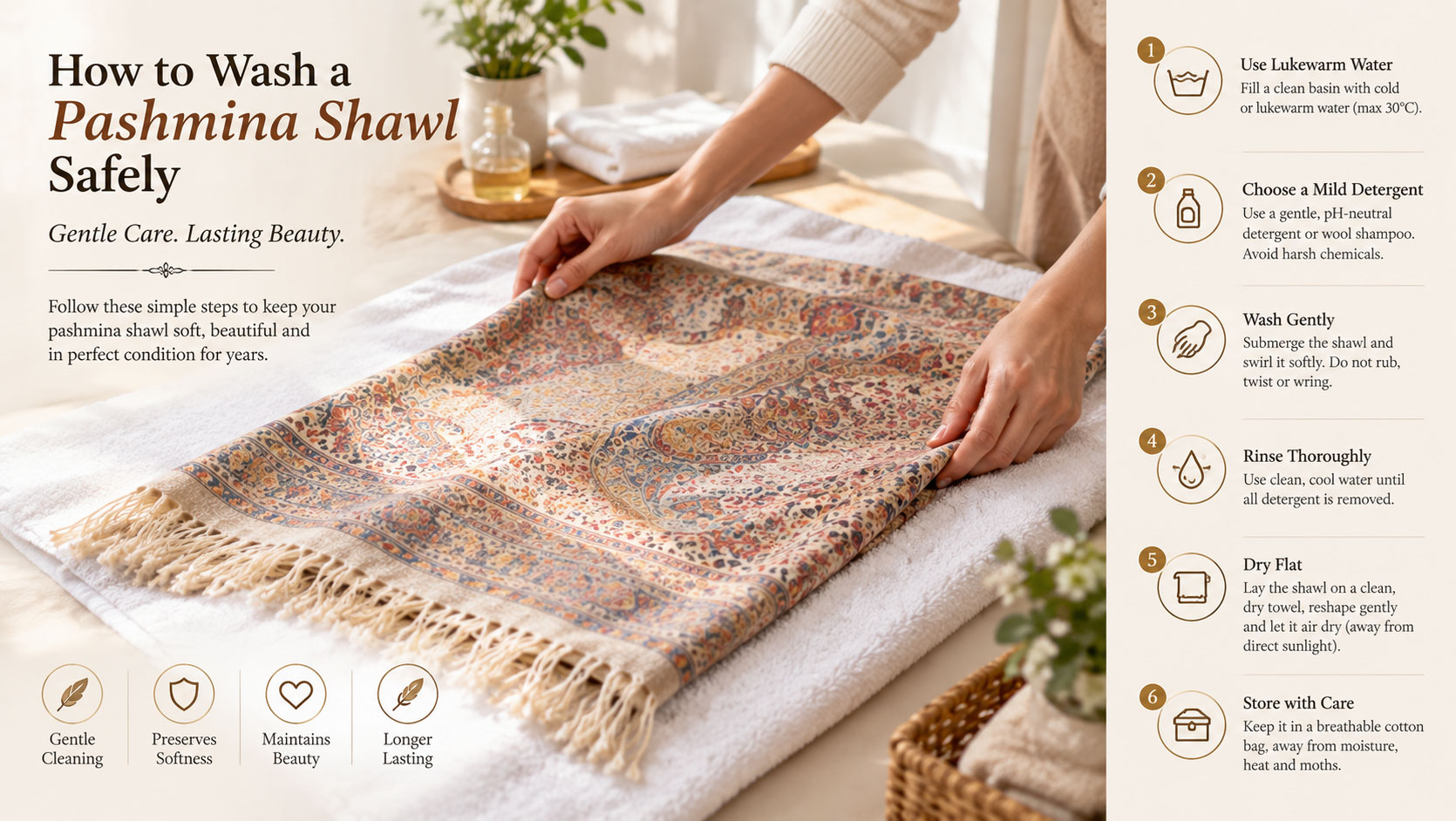
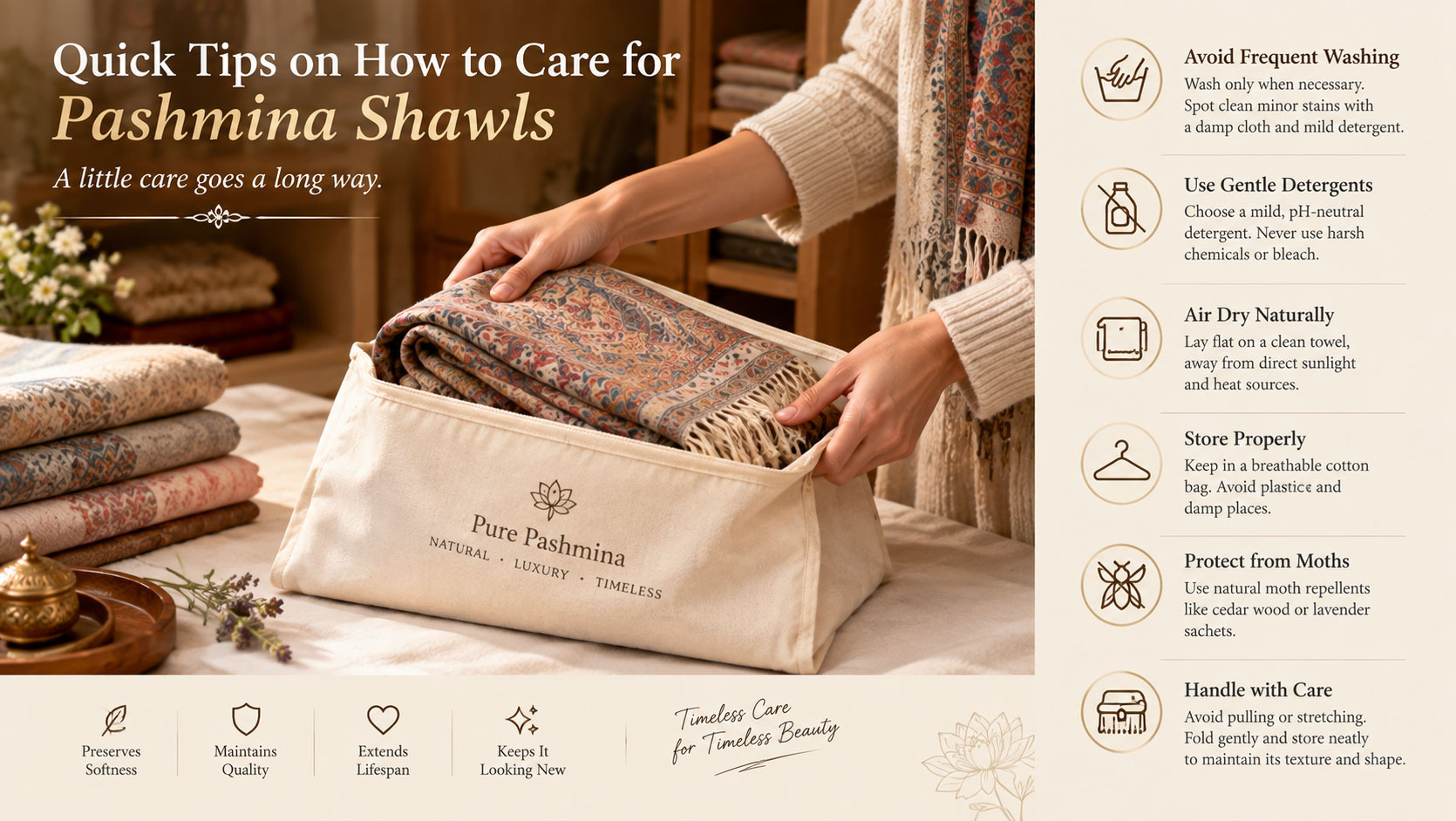
Keeping this heritage alive also depends on how these shawls are looked after once they are owned. A well-made piece can last for decades, and our Pashmina shawl care guide, along with our pages on how to wash and how to store a Pashmina shawl, explain how to keep it in good condition for future generations.
The origin of the Kashmiri Pashmina shawl is therefore a story of fine Himalayan fibre, skilled artisans, traditional techniques, and generations of textile heritage. This combination is what continues to make Pashmina one of the world's most admired luxury textiles.
Browse our Kani Wool Stoles and hand-embroidered Pashmina shawls to experience this heritage firsthand, or explore our Kashmir Heritage Pashmina Collection and Genuine Kashmiri Handmade Shawl pages. If you are planning a purchase, our Pashmina Shawl Price Guide sets realistic expectations, and our guide on how to identify an original Pashmina shawl is worth reading before making your purchase. For men's and women's collections specifically, see our women's Pashmina shawls and men's Pashmina shawls pages.
If you'd like to learn more about the history behind a specific design or technique, our team is happy to share what we know. Reach us on WhatsApp or by phone at +91-9772777770, write to us at akee.international@gmail.com, or visit us at Nai Mata Mandir Road, Thathar Road, Delhi By Pass, Amer, Jaipur 302028, Rajasthan, India. Browse our full Pashmina collection or reach out via Contact Us to explore this centuries-old Kashmiri heritage for yourself.
The Kashmiri Pashmina shawl is associated with the Kashmir region, where artisans developed highly skilled traditions of spinning, weaving, and decorating fine Pashmina fibre.
Pashmina fibre traditionally comes from the fine undercoat of Himalayan goats raised in high-altitude regions. The fibre naturally helps protect the animals from cold mountain climates.
Kashmir developed a renowned tradition of transforming fine Pashmina fibre into luxurious textiles through skilled hand weaving, embroidery, and other traditional techniques.
Pashmina developed as an important textile tradition in Kashmir, where generations of artisans refined techniques for spinning, weaving, dyeing, and decorating fine fibre into elegant shawls.
The process involves preparing the fine fibre, spinning it into yarn, weaving the yarn into fabric, and potentially adding embroidery or other decorative craftsmanship depending on the design.
Its appeal comes from the combination of fine natural fibre, lightweight warmth, soft texture, elegant drape, and generations of traditional artisan craftsmanship.
Sozni is a traditional Kashmiri needlework technique known for delicate and detailed patterns, including floral, paisley, leaf, and vine motifs.
A Jamawar Pashmina shawl combines fine Pashmina with elaborate traditional patterning and intricate woven designs, often featuring floral and ornamental motifs.
Traditional Kashmiri Pashmina craftsmanship can involve extensive handwork, including spinning, weaving, embroidery, and finishing. The specific production method depends on the individual shawl.
Their luxury appeal comes from the fine fibre, skilled craftsmanship, detailed traditional designs, and time and expertise required to transform the fibre into an elegant finished shawl.
"Browse our curated collections and shop by category to find the perfect Pashmina shawl or scarf for every occasion."
"Explore our latest collection of exquisite Pashmina shawls and scarves, where luxury meets craftsmanship in every piece."
"Shop our Best Sellers, where luxury meets demand—featuring the most sought-after Pashmina shawls and scarves of the season."
"Read what our clients say about their experience with Akee International's luxurious Pashmina shawls and impeccable service."

Nai Mata Mandir Road, Thathar Road, Delhi By Pass, Amer, Jaipur 302028, Rajasthan India
Get directions Call Now Whatsapp 4.9 based on 269 reviews
Rating: 4.6/5 | 85 Reviews

Rating: 4.9/5 | 269 Reviews

TrustScore: 4.9 | 100 Reviews