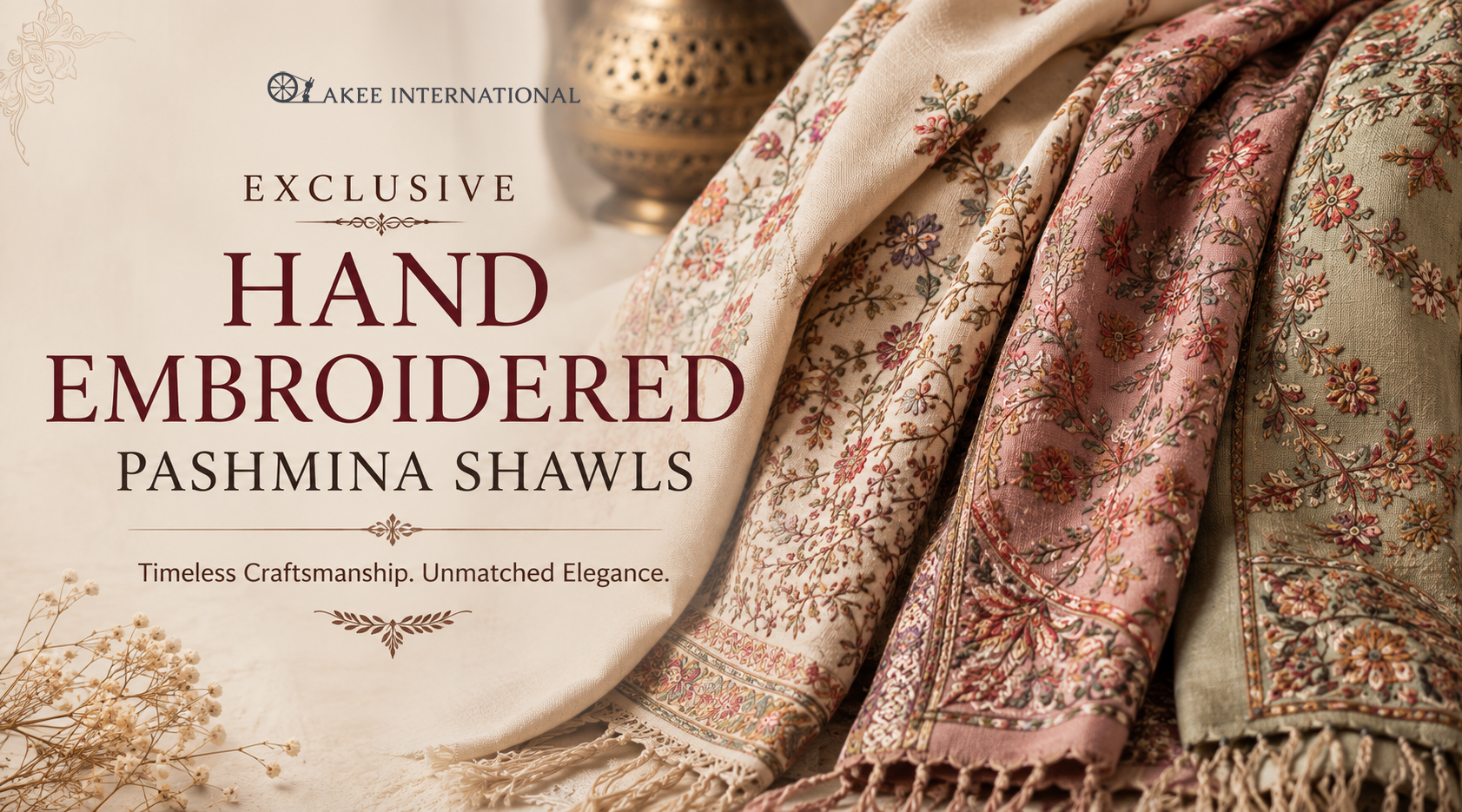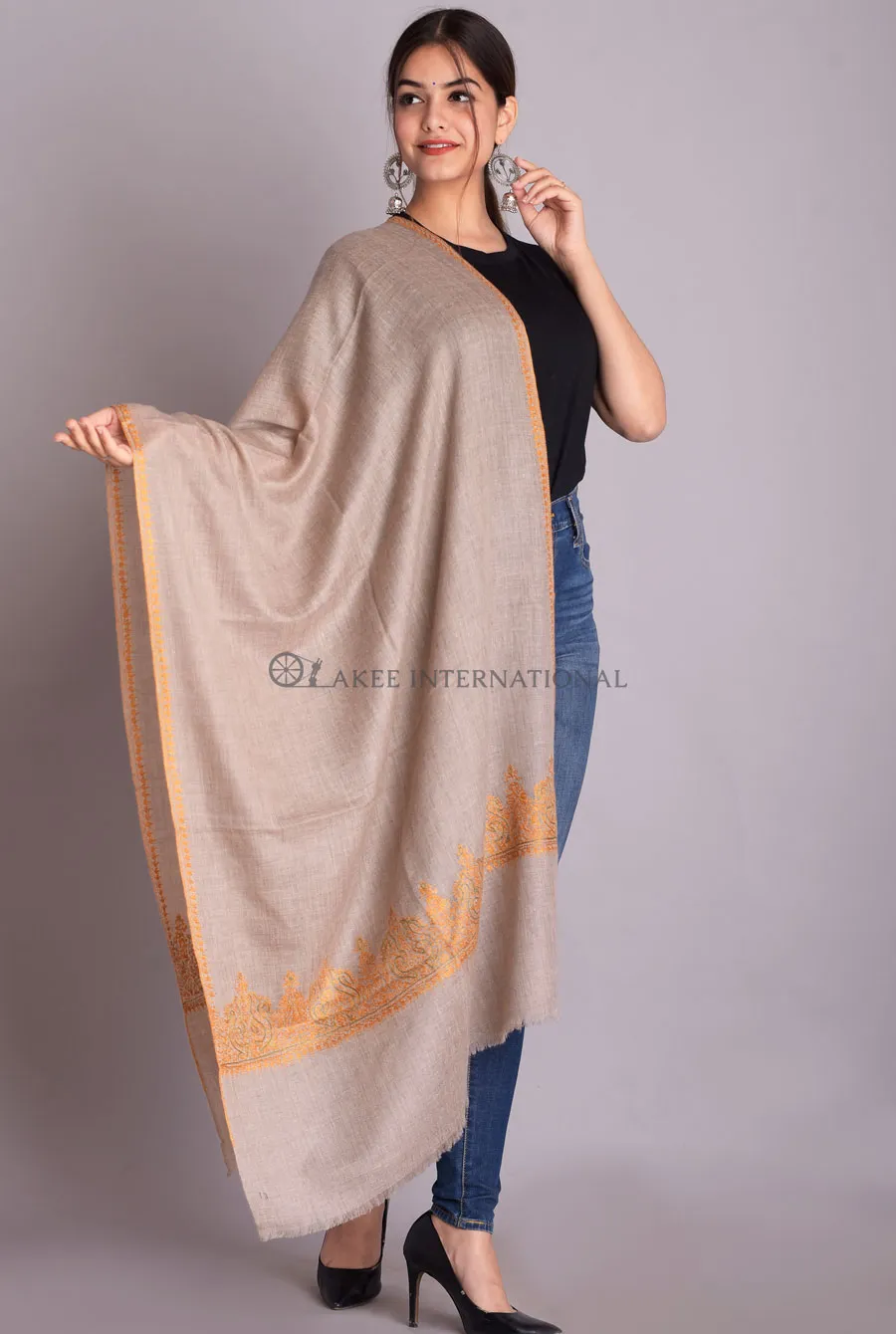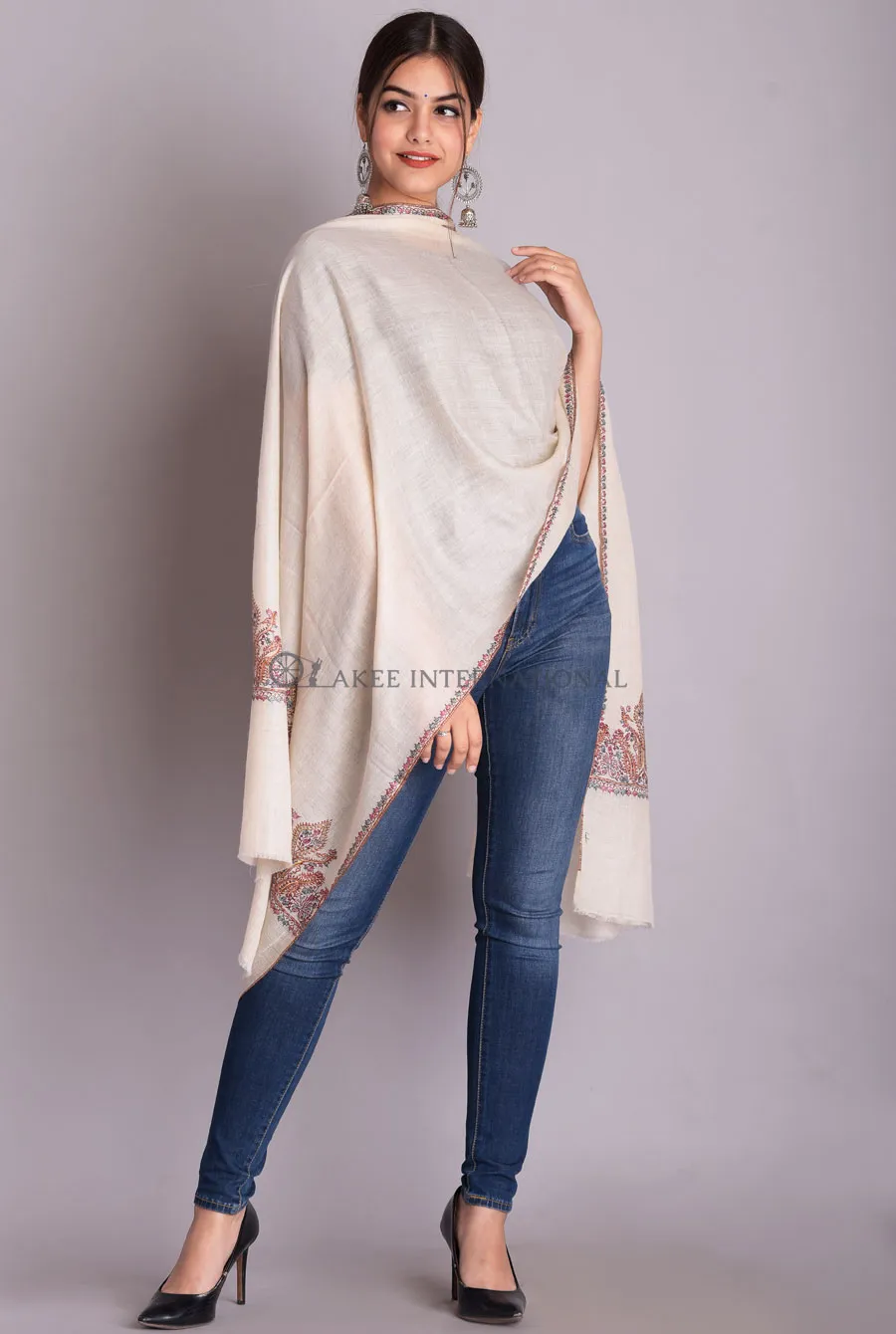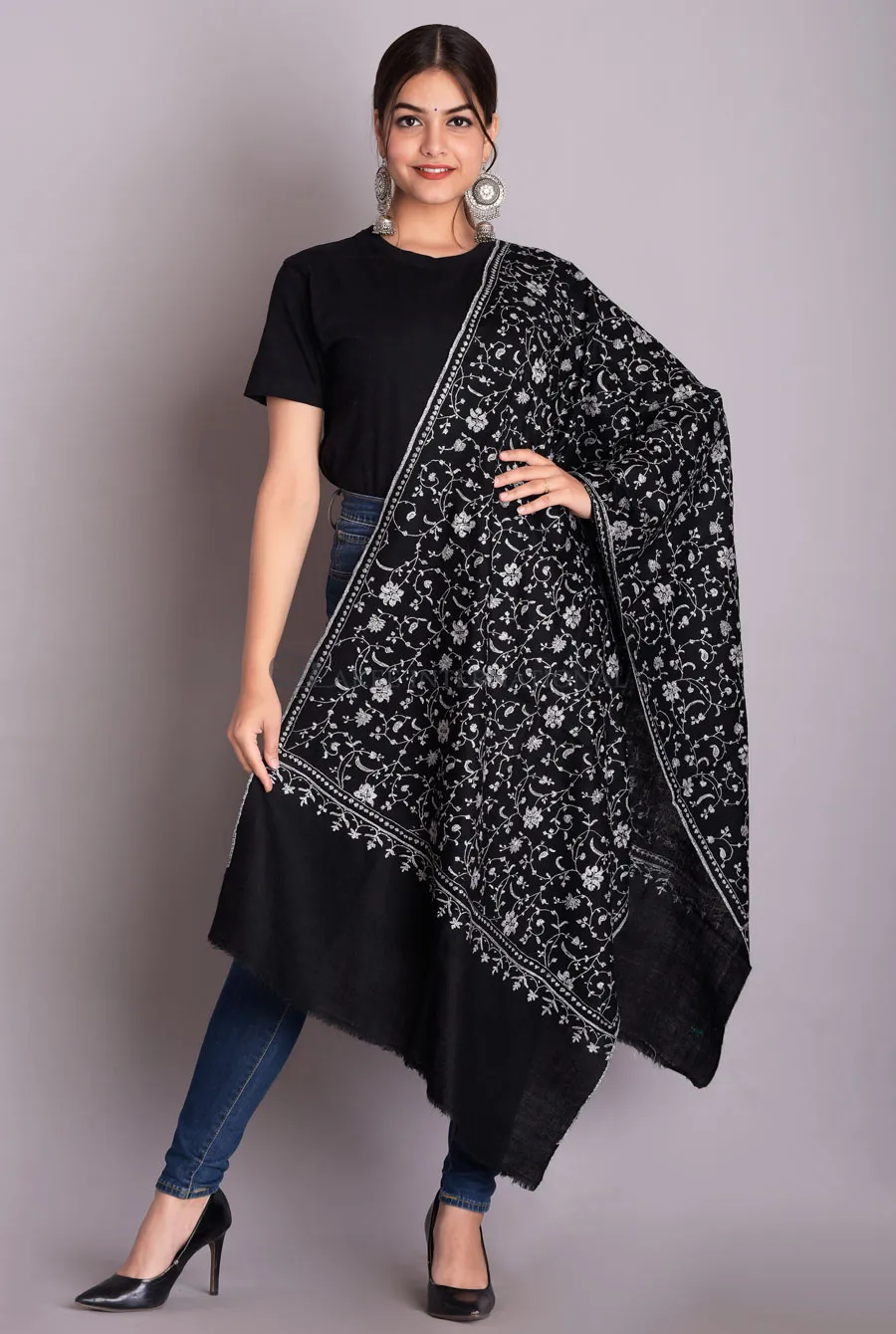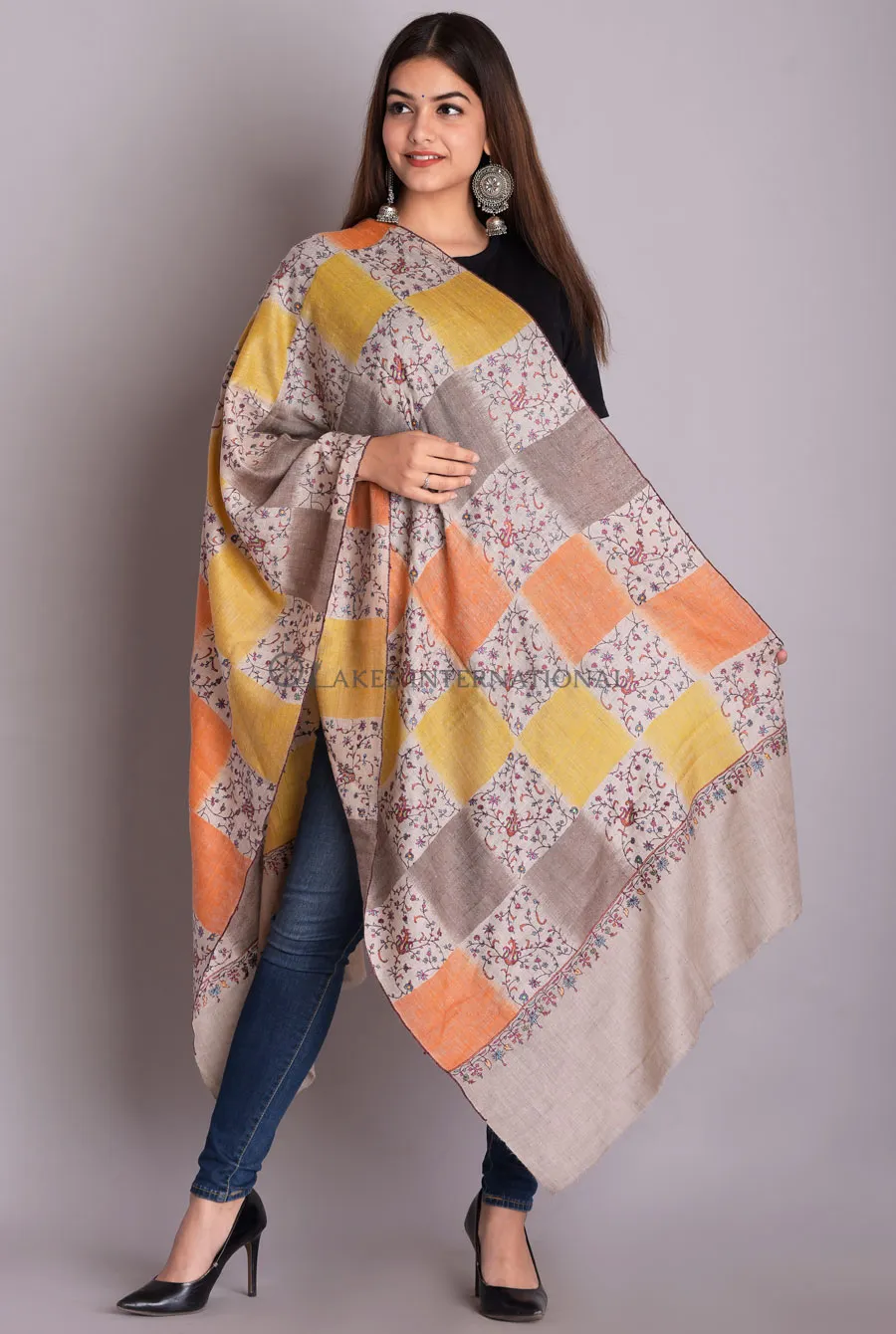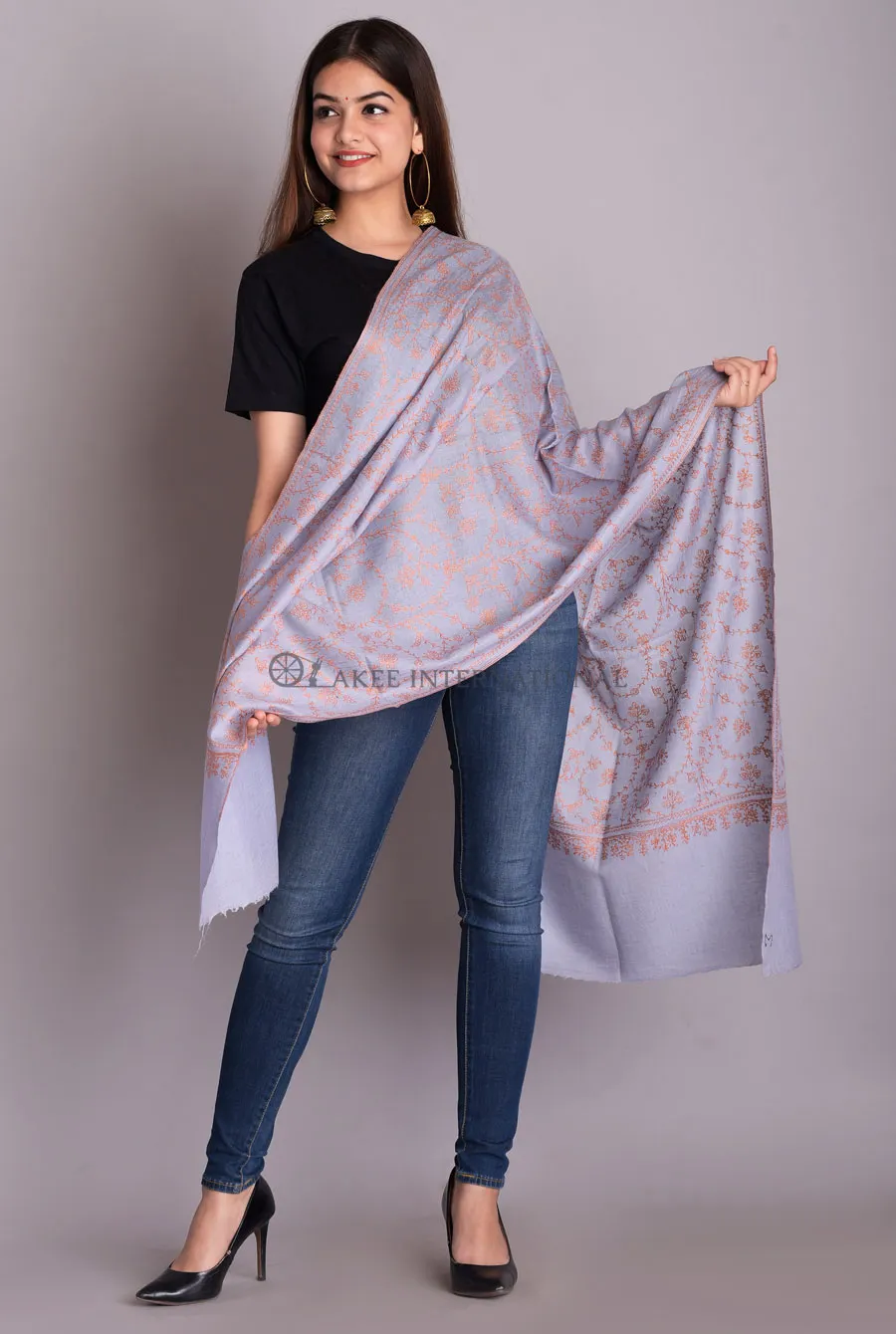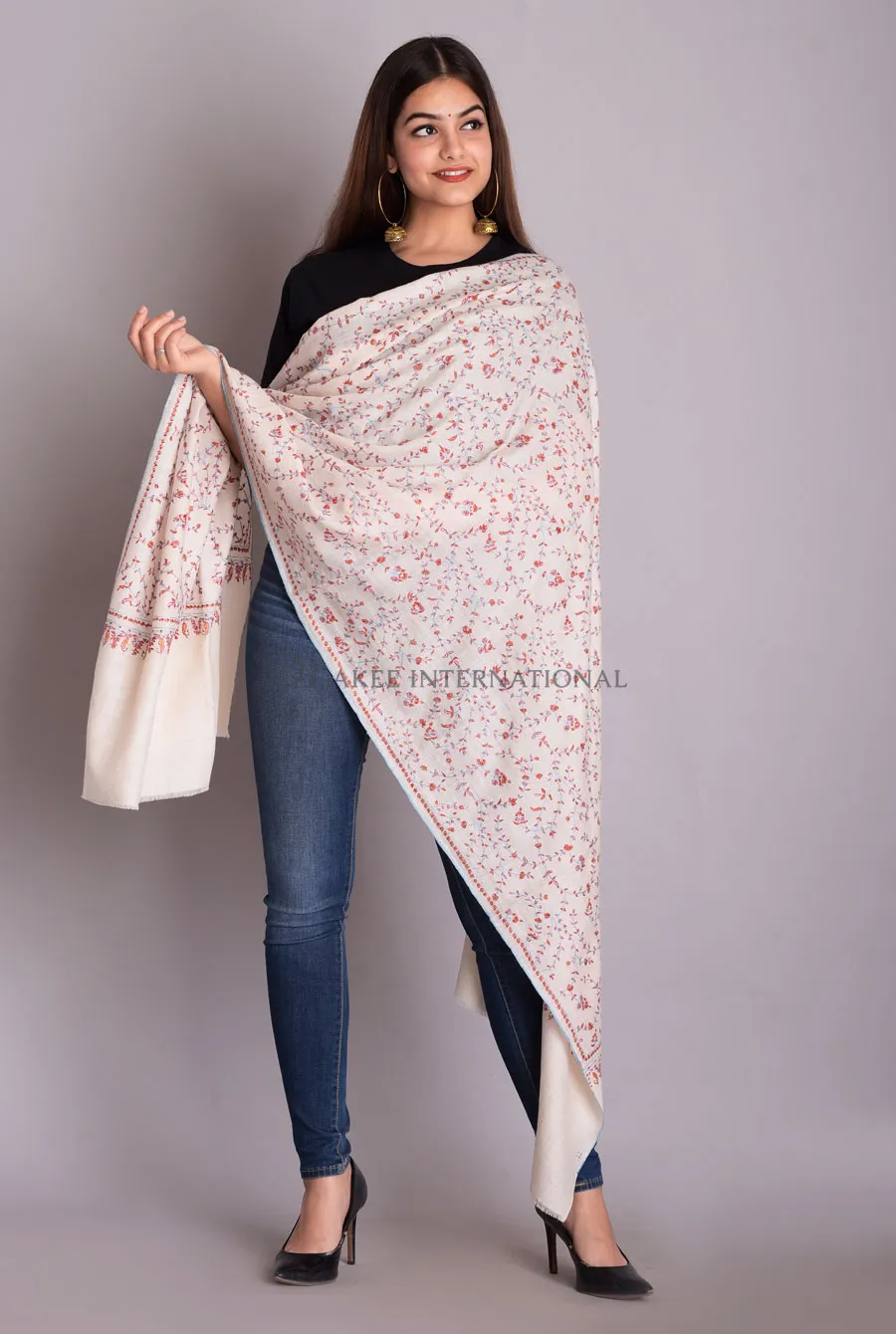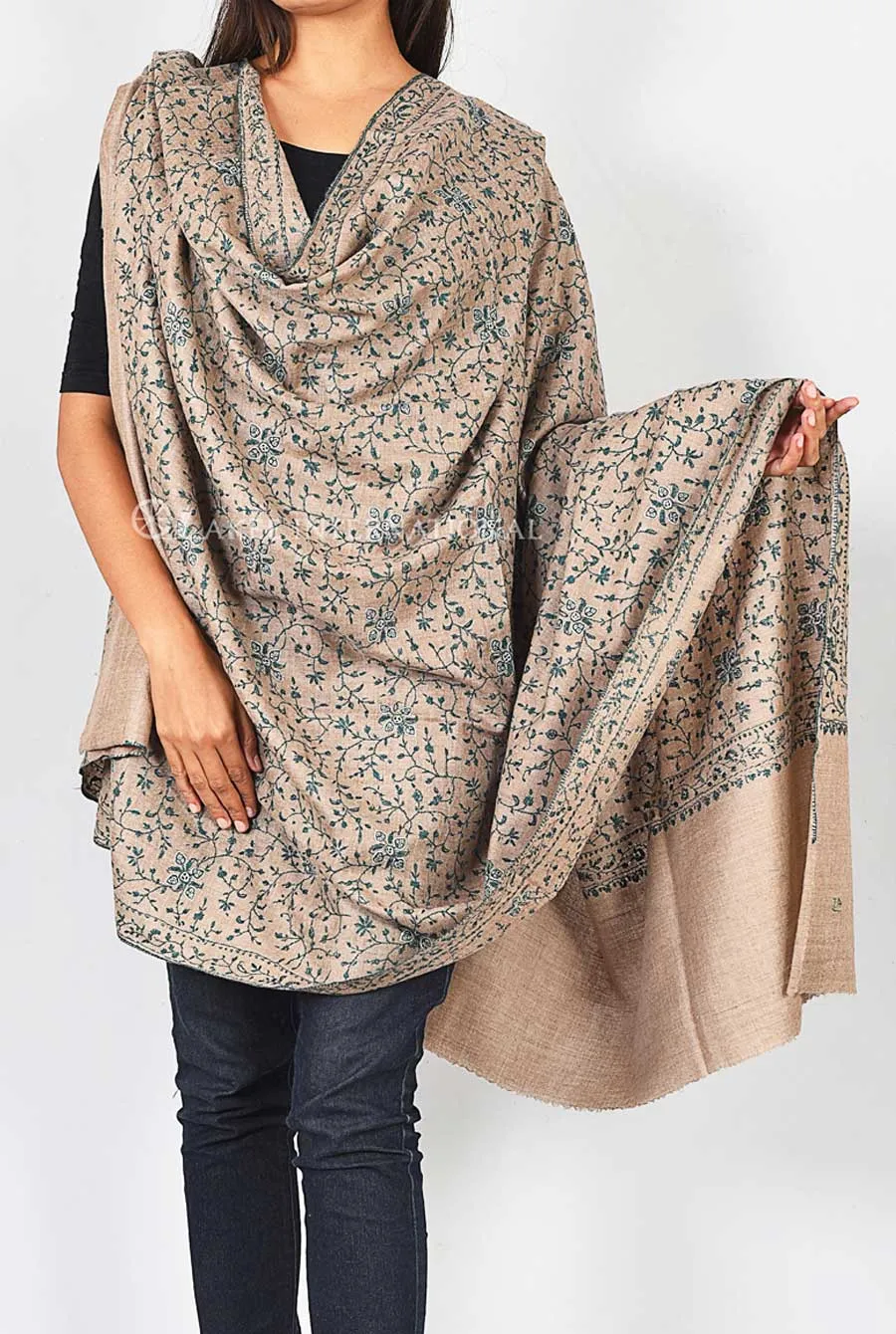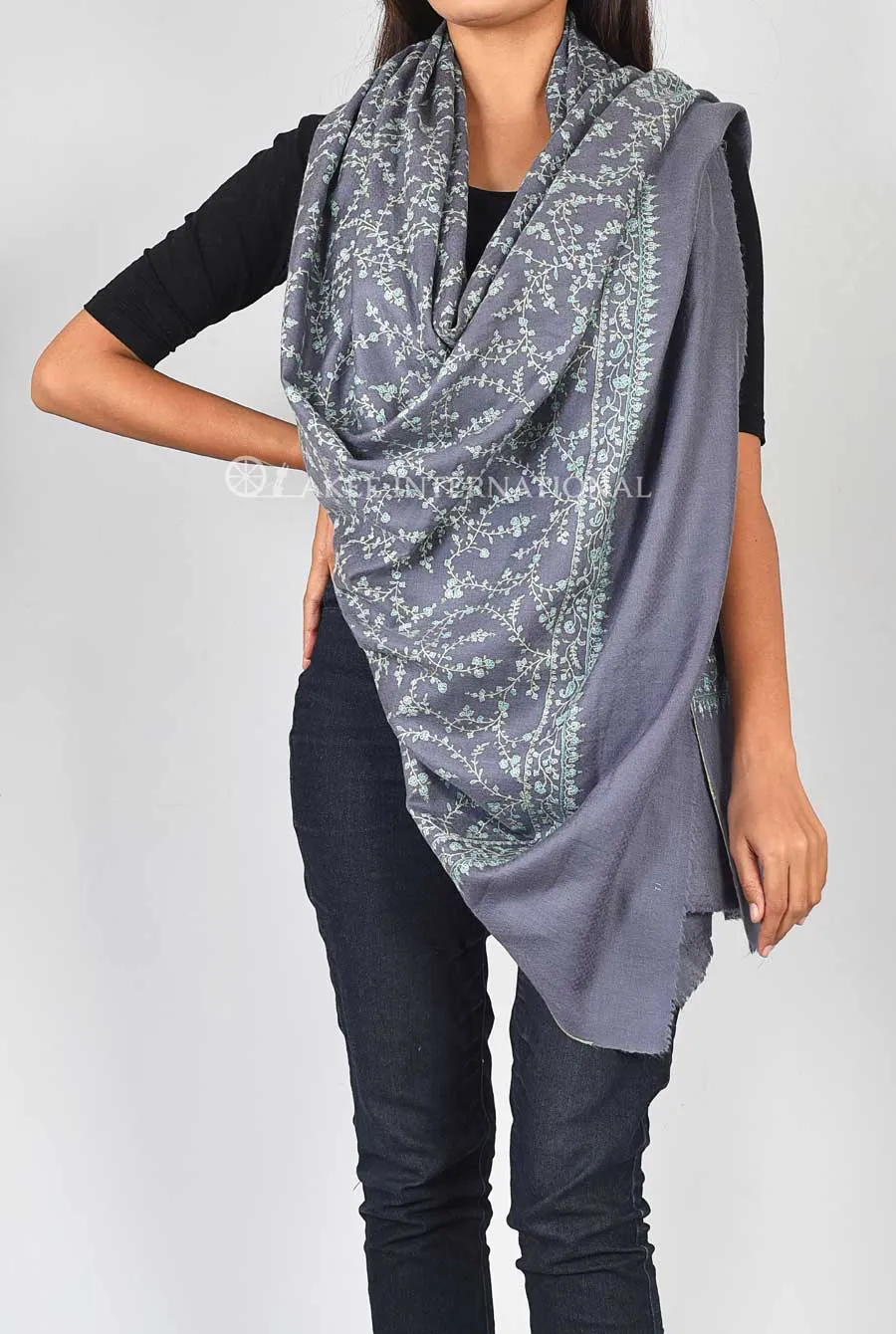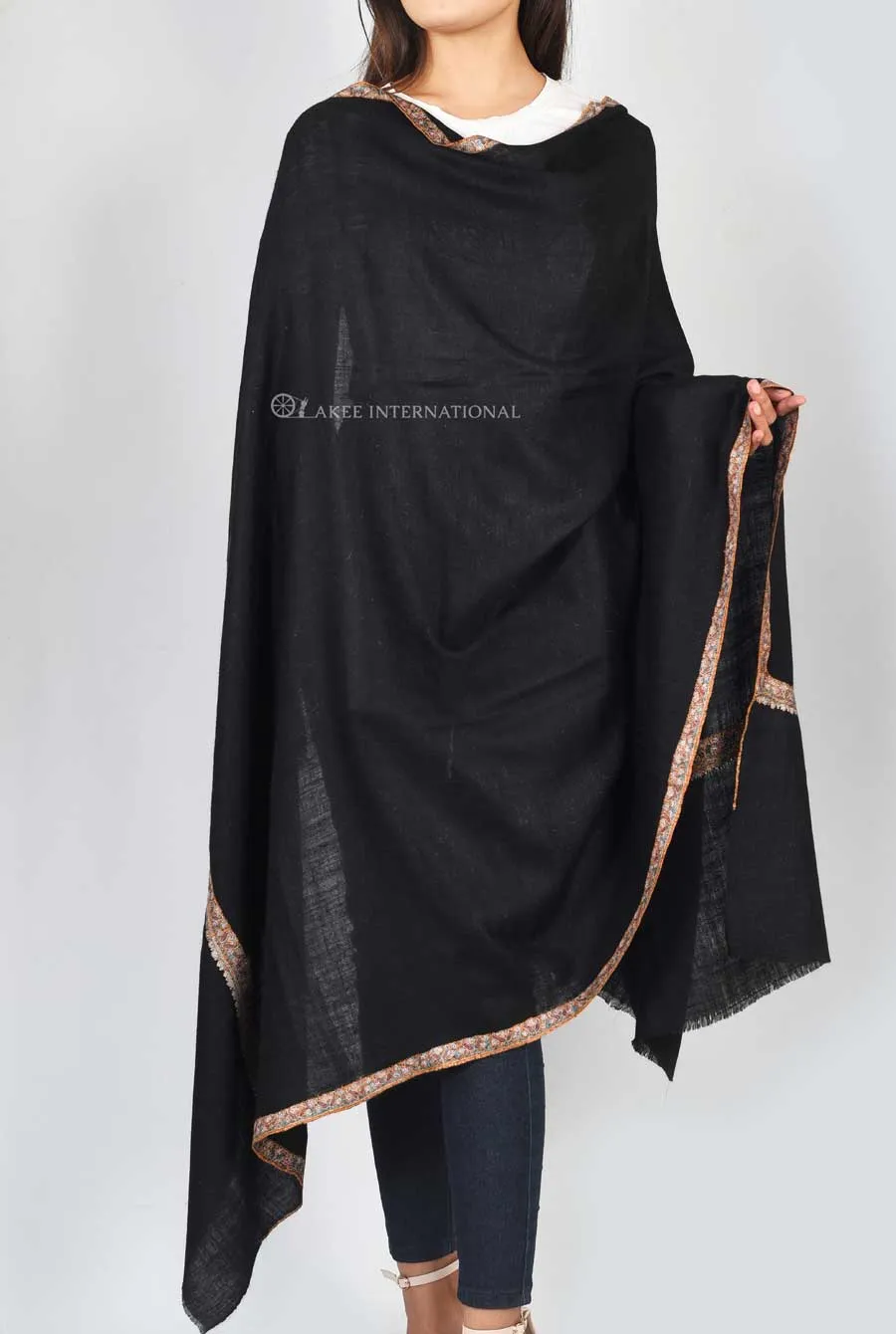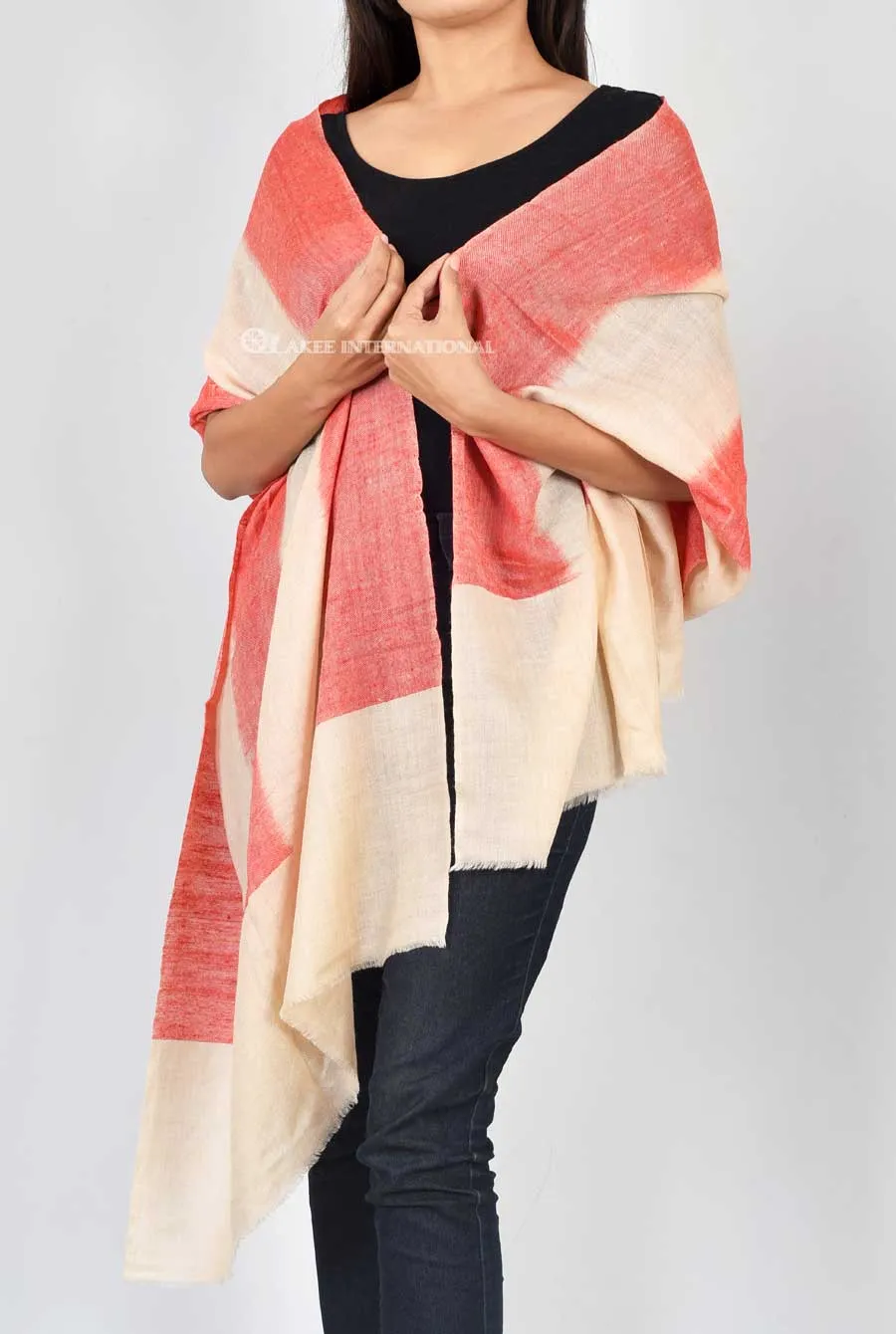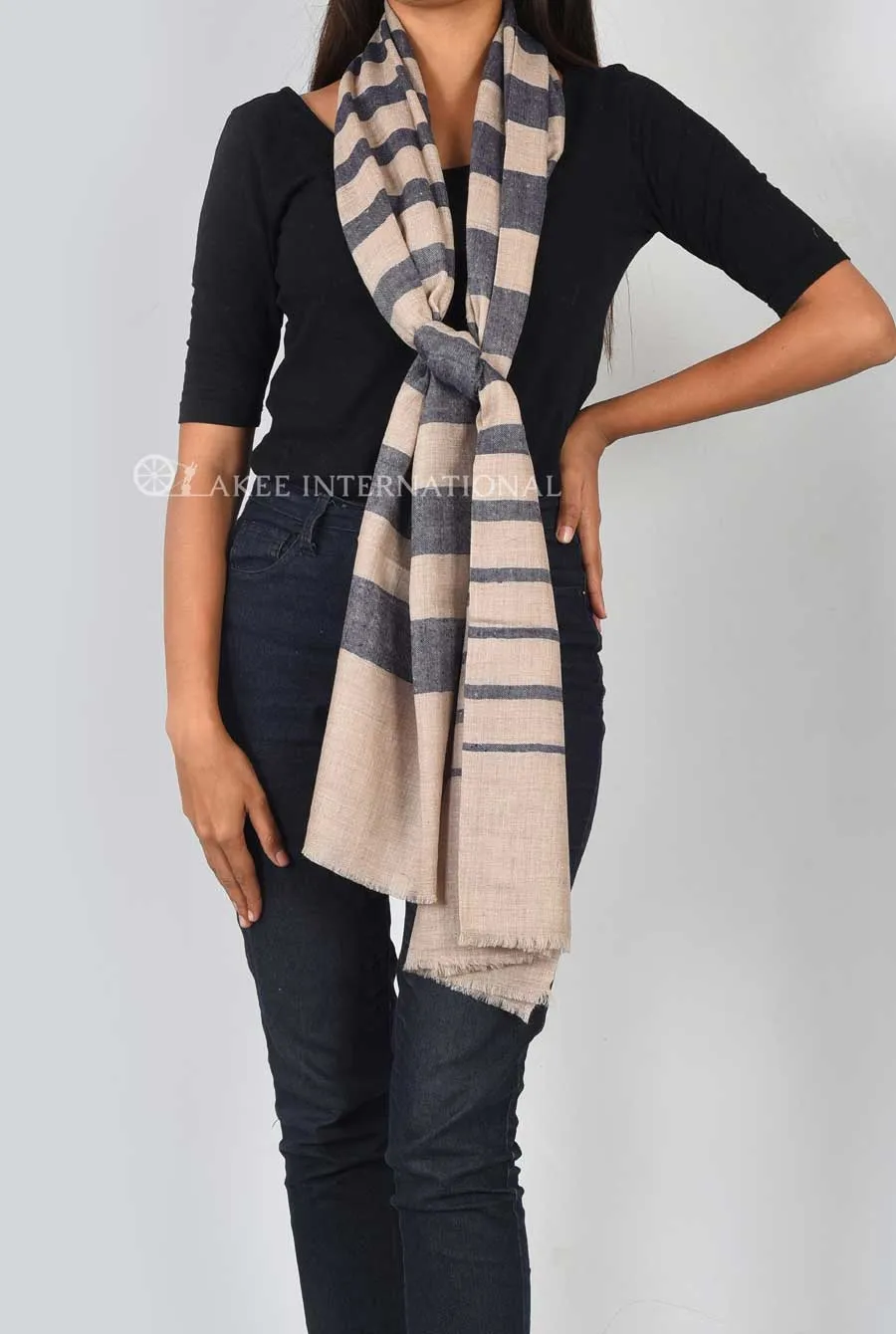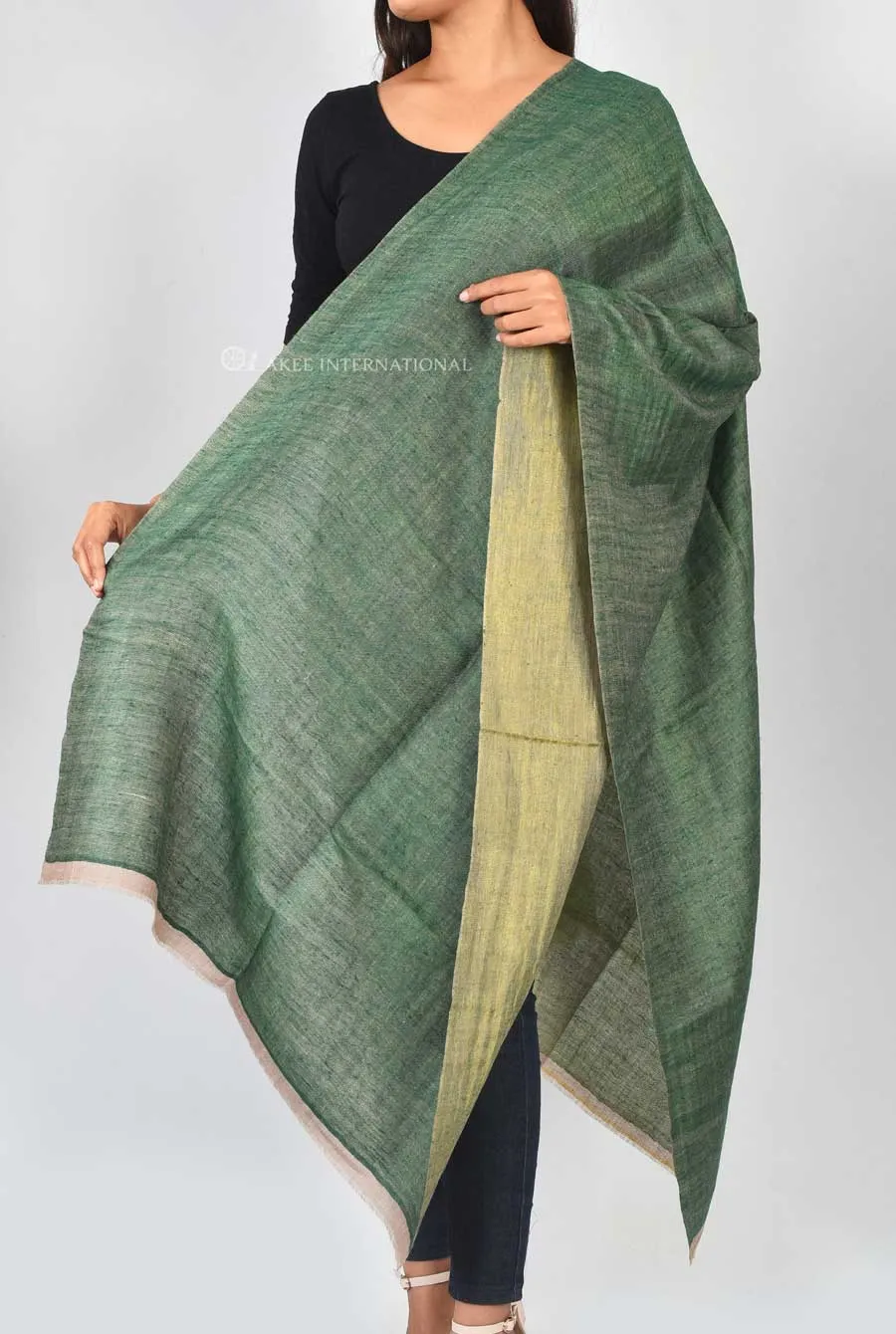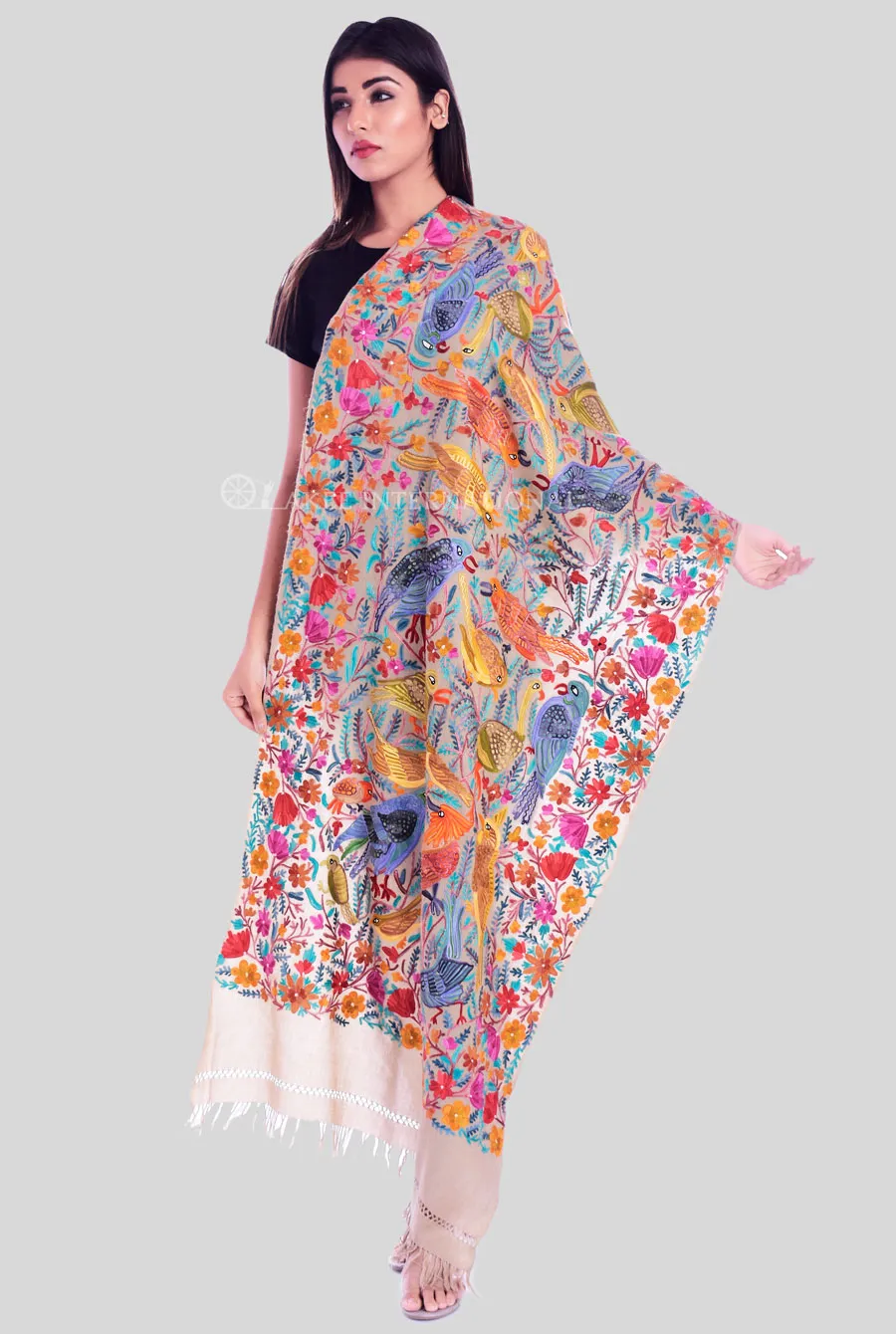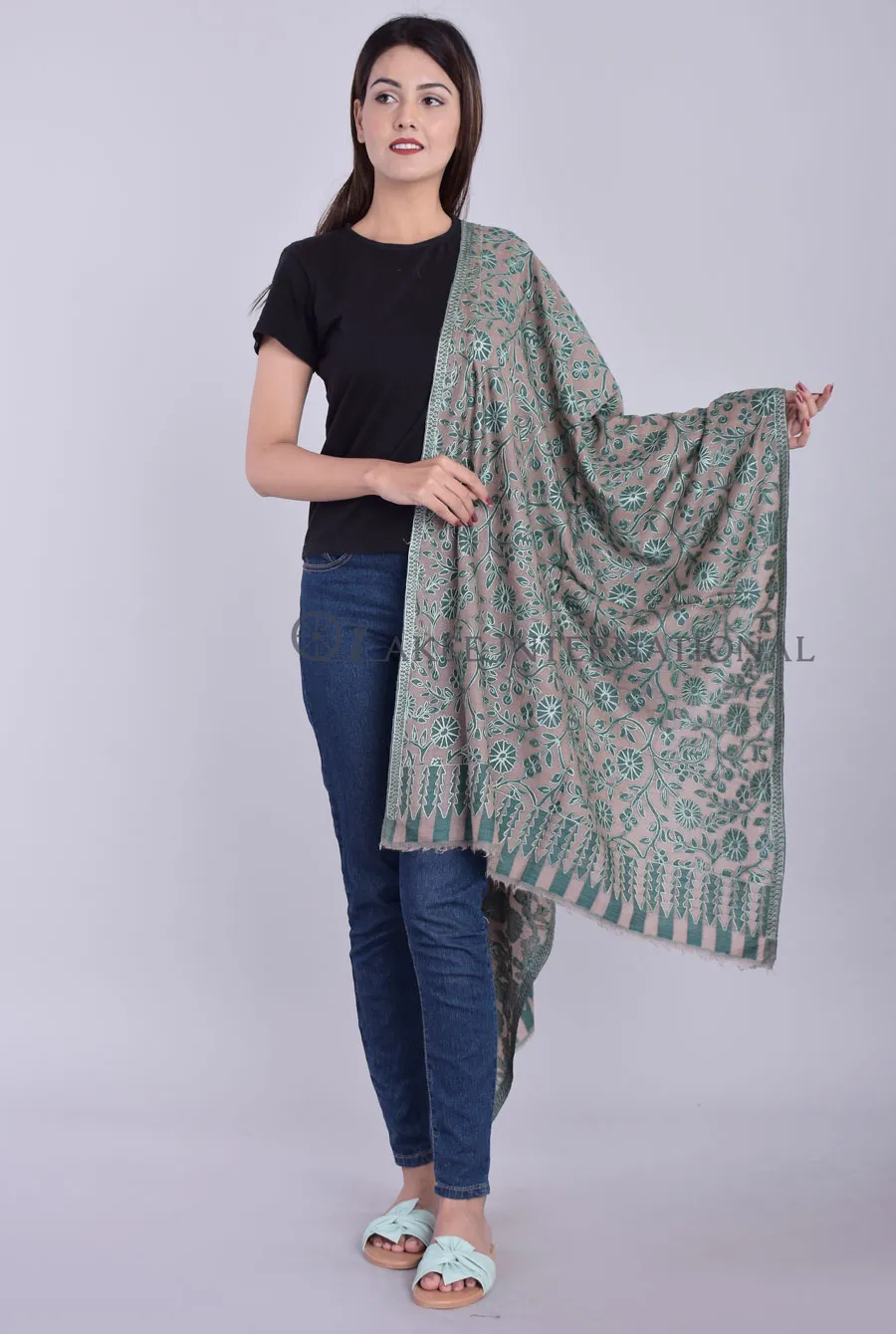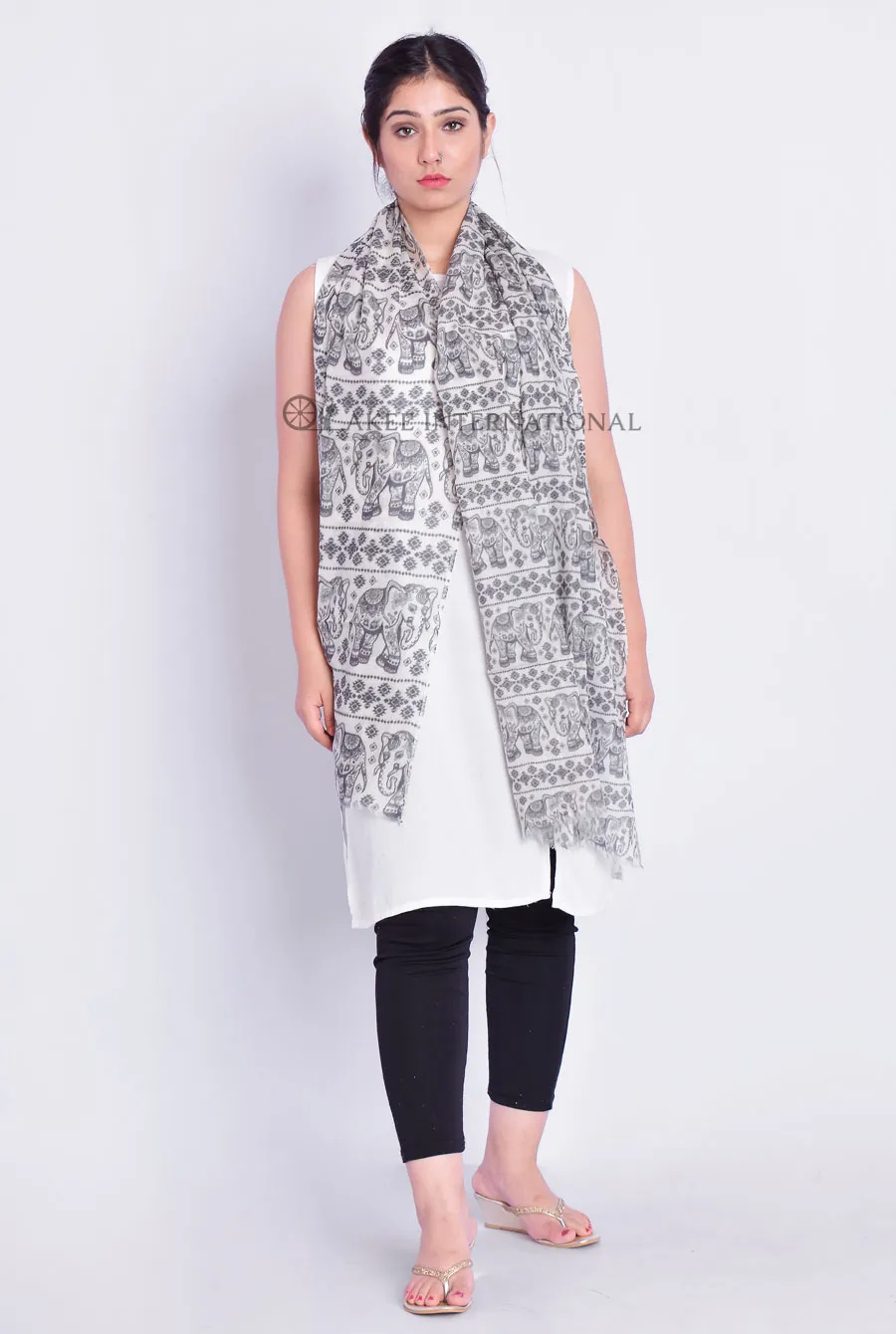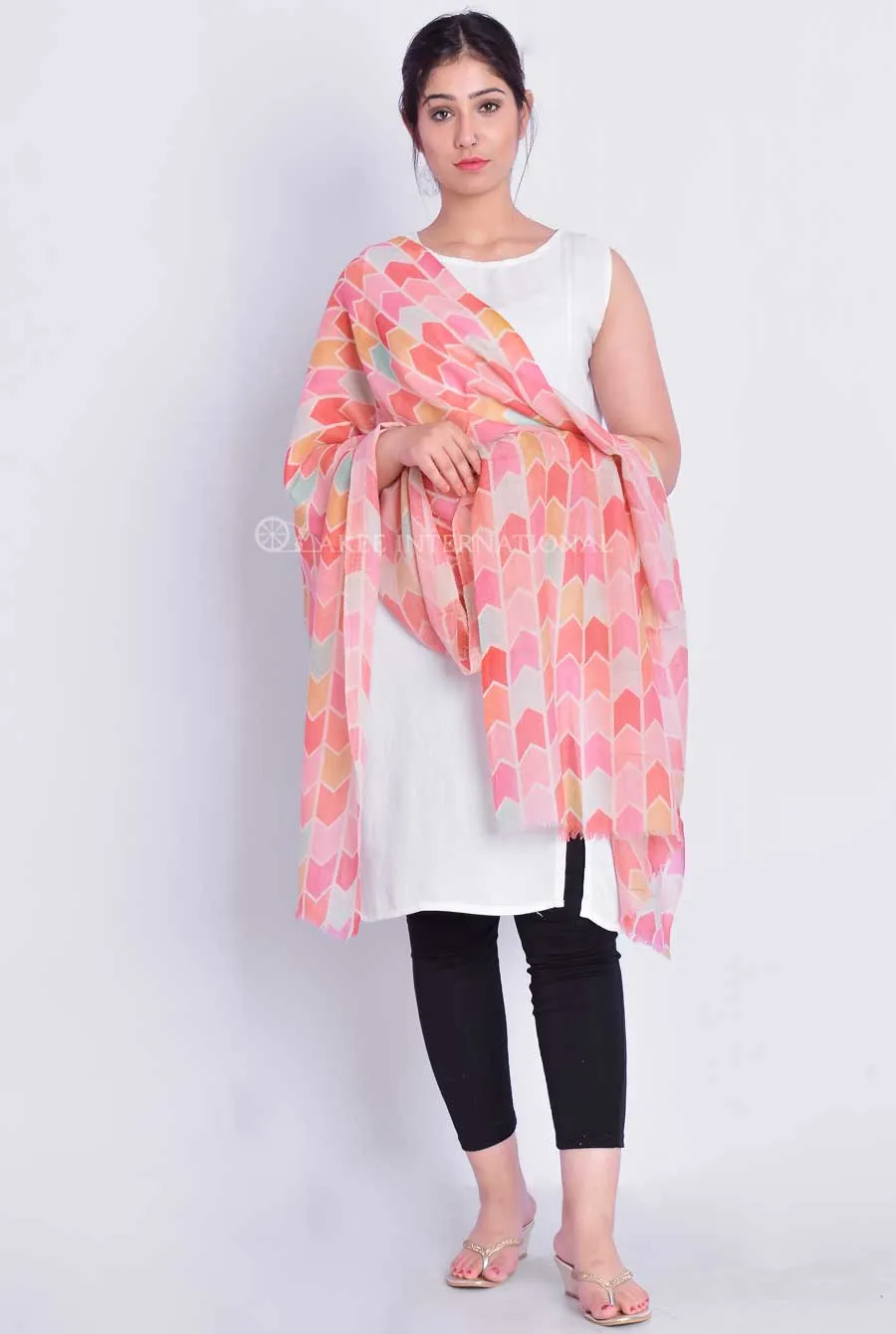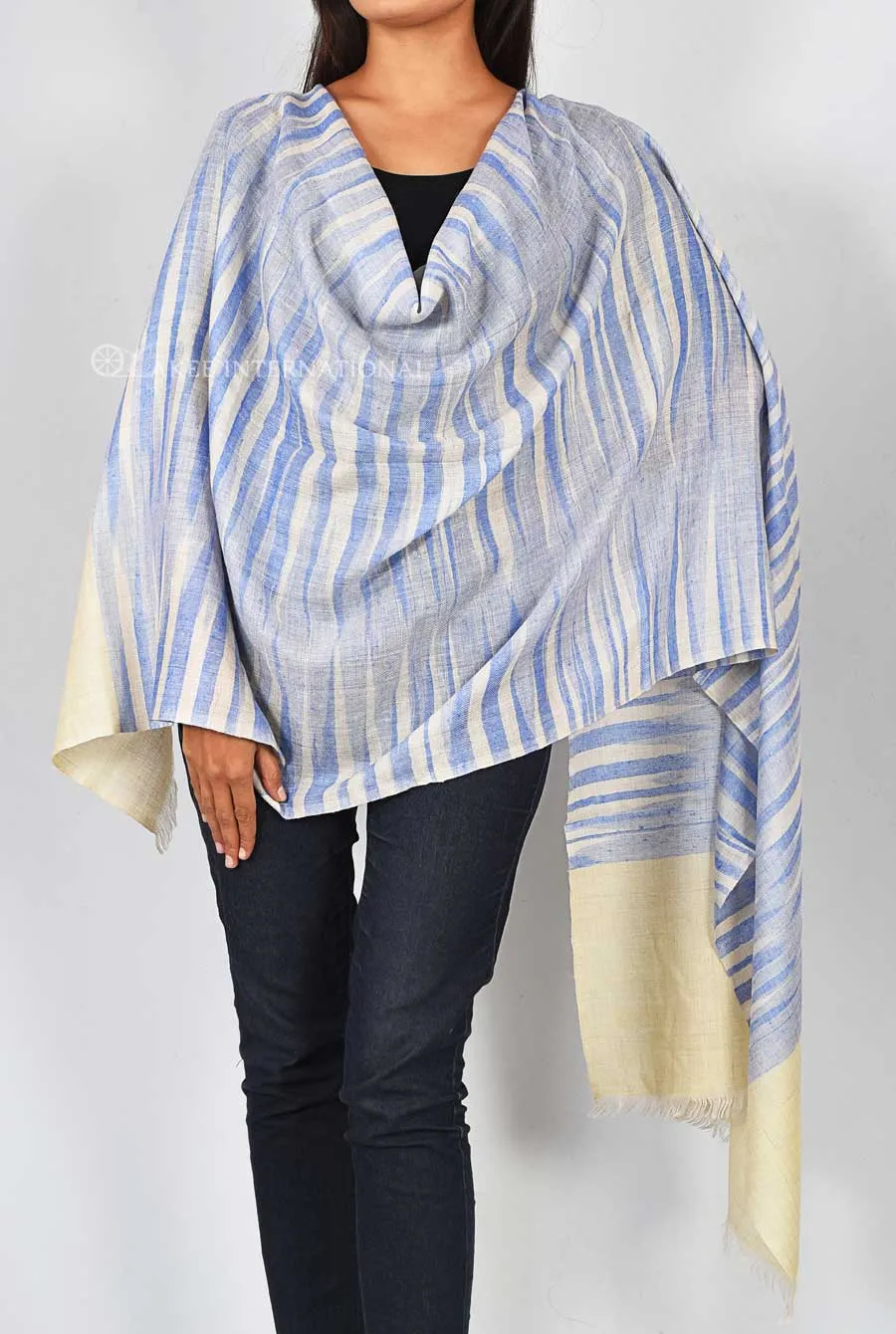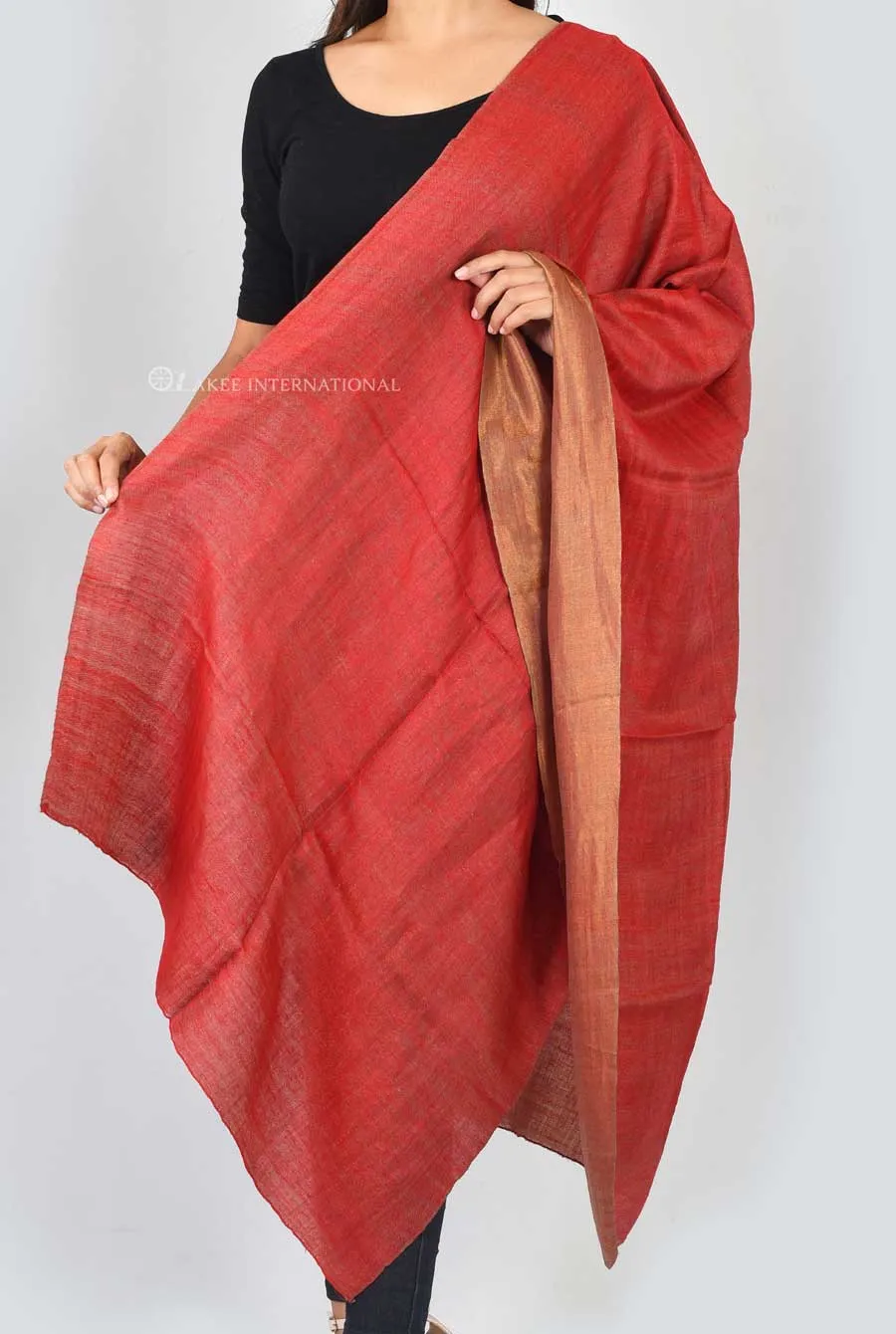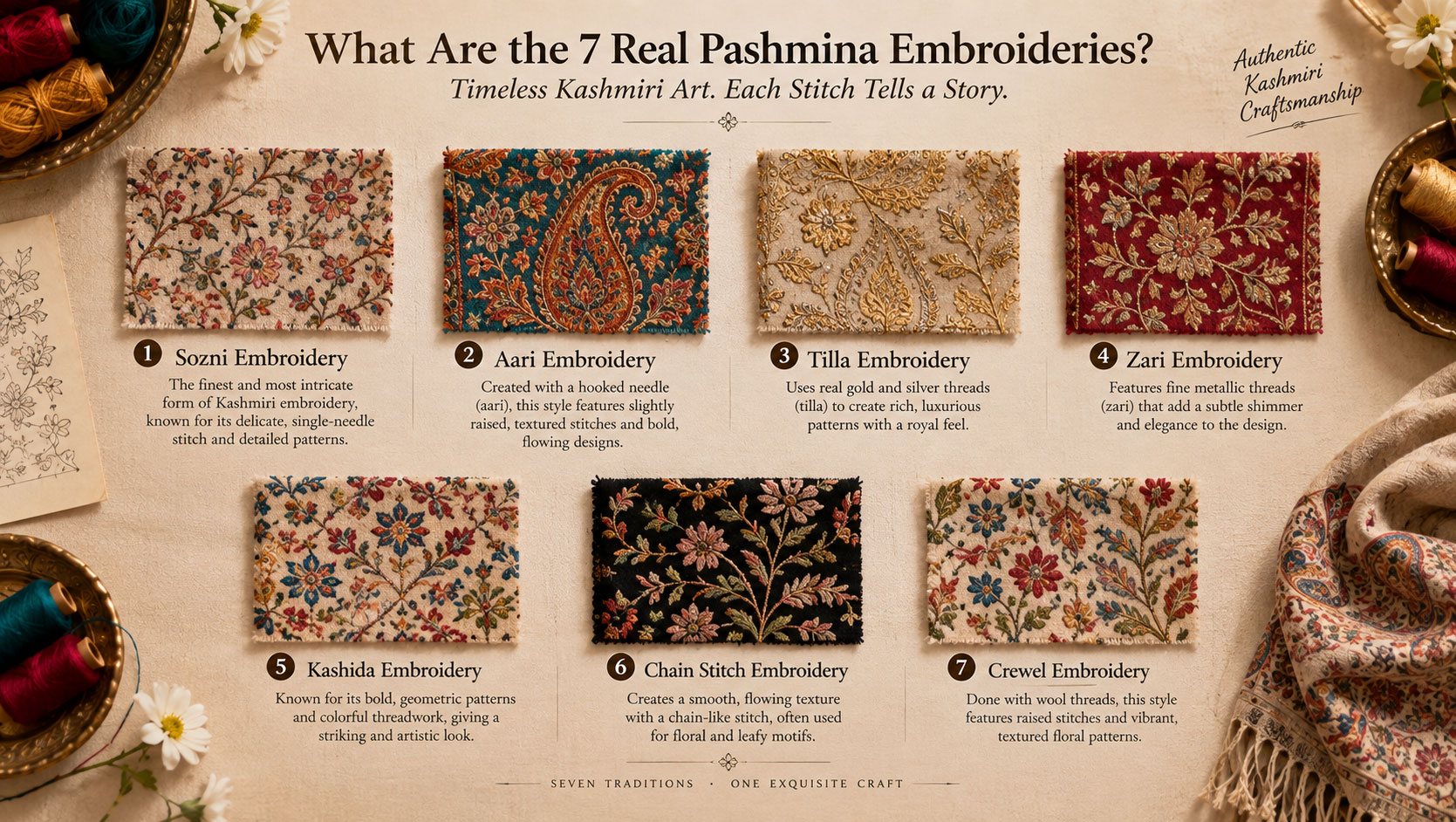
A Pashmina shawl becomes even more distinctive when traditional embroidery is added to its delicate fabric. Across Kashmir, skilled artisans have developed and preserved a variety of embroidery traditions, using fine threads and detailed motifs to transform luxurious Pashmina into genuine works of textile art.
For buyers exploring handmade Pashmina shawls, understanding different embroidery styles makes it easier to appreciate the craftsmanship, time, and artistic detail behind each piece. From delicate needlework to elaborate floral patterns, every embroidery technique carries its own visual character.
Here are seven embroidery styles and decorative traditions commonly associated with Kashmiri Pashmina craftsmanship.
Sozni embroidery is one of the most recognised forms of fine Kashmiri needlework, known for delicate, detailed patterns created using fine needles and coloured threads. Artisans create floral motifs, vines, paisleys, leaves, and other traditional designs across the Pashmina surface. Because the work is highly detailed, creating an intricately embroidered shawl can require considerable time and skill.
What sets genuine Sozni apart from a machine imitation is the reverse side of the fabric: authentic hand-done Sozni work is nearly identical on both sides, since the needle passes through the fabric with the same care each time, whereas a machine-embroidered or printed copy typically shows loose threads or a messier underside. Buyers examining a piece up close can use this as a practical check alongside the visual pattern itself. Our page on Sozni embroidery Pashmina shawls goes further into this specific technique, and our page on the best Sozni embroidery workshops in Srinagar introduces the specific artisan communities in Kashmir who specialise in this needlework.
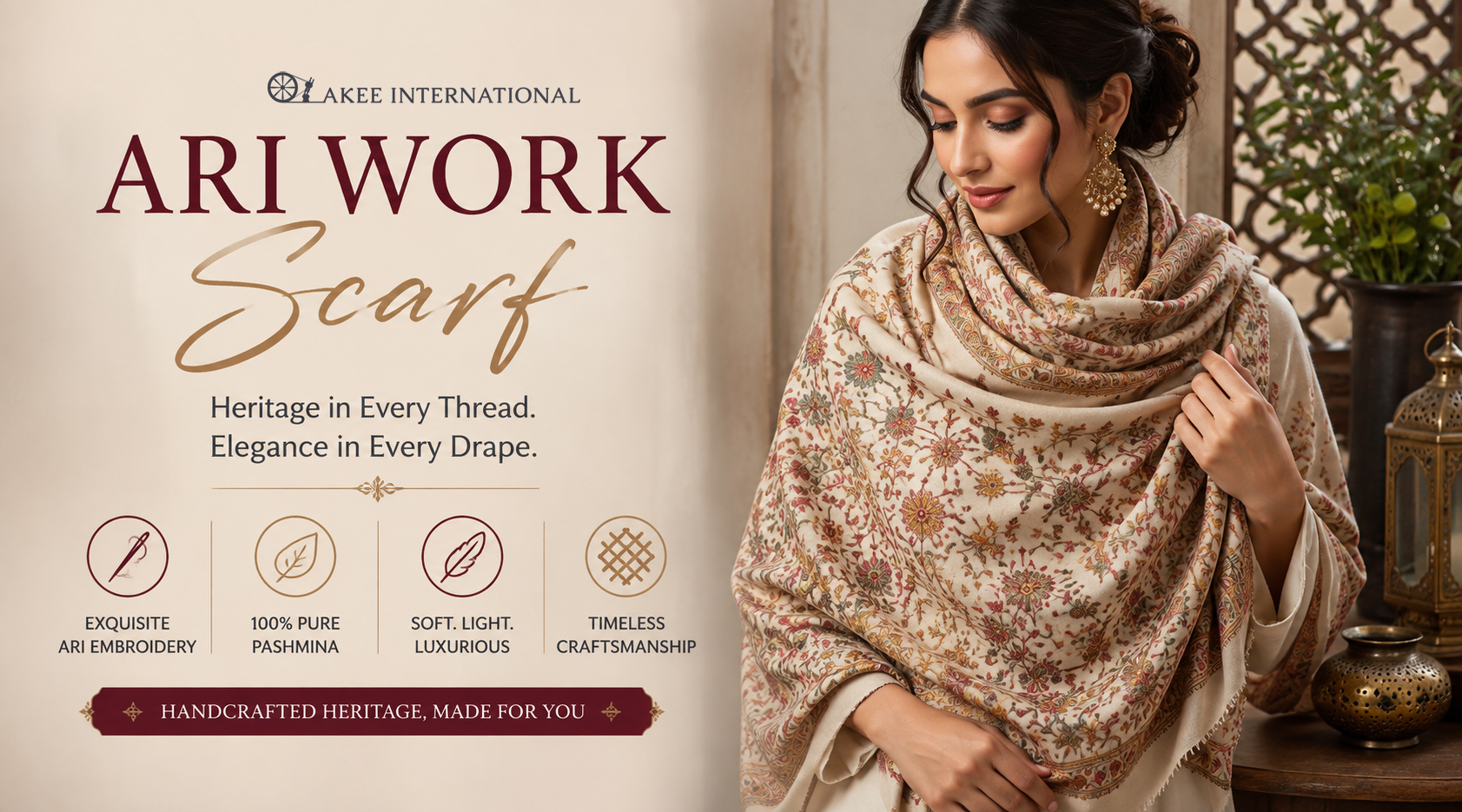
Aari embroidery is traditionally created using a specialised hooked needle. This technique allows artisans to produce flowing patterns and decorative motifs with a distinctive appearance. Floral designs are particularly popular in Aari work, making this style an attractive choice for buyers looking for richly decorated embroidered Pashmina shawls.
Because the hooked needle allows for faster, chain-stitch style movement compared to the finer, slower needlework of Sozni, Aari embroidery tends to cover larger areas of fabric more quickly, which is part of why it's often chosen for bolder, more graphic patterns rather than the extremely fine detailing associated with Sozni. Our Hand Embroidered Pashmina Wrap collection showcases this technique applied to a more contemporary wrap format alongside traditional shawls.
Tilla embroidery is recognised for its metallic threadwork and luxurious appearance. Traditionally, metallic threads are used to create decorative motifs, borders, and intricate patterns. The shimmering effect of Tilla work can give a Pashmina shawl a particularly elegant appearance, making it suitable for festive occasions and formal wear.
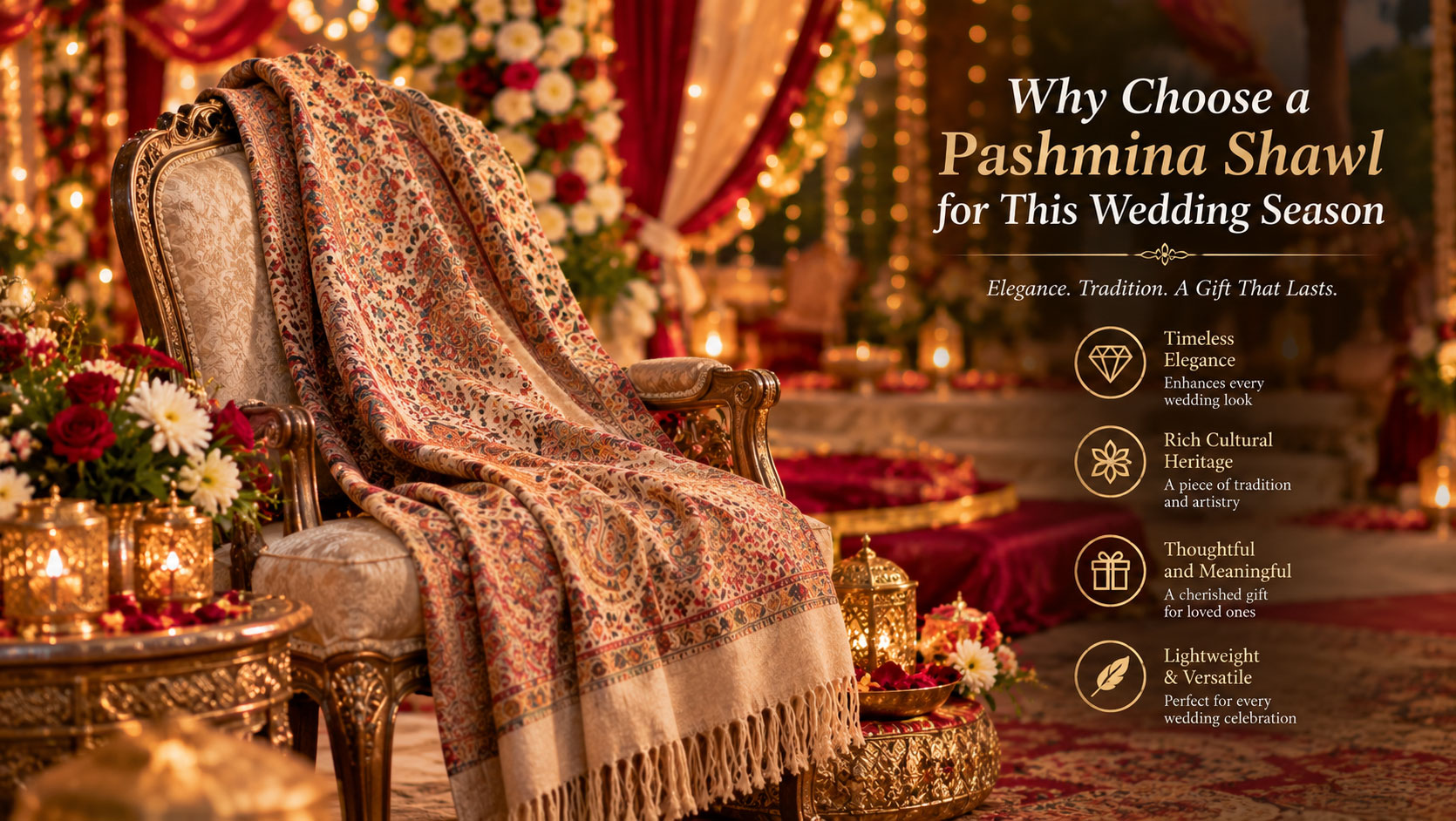
Historically, Tilla work used genuine gold and silver-wrapped thread, which is part of why antique Tilla pieces can carry significant value beyond just their craftsmanship. Modern Tilla embroidery more commonly uses metallic-coated thread that achieves a similar visual effect at a more accessible price point, without sacrificing the technique's distinctive shimmer. This makes it a popular choice for wedding season and celebratory gifting specifically — see our Pashmina Shawl for Wedding Gift and Bridal Pashmina Shawl Online collections for pieces that lean into this festive shimmer.
Zari work uses metallic threads to create decorative detailing on textiles. When combined with fine Pashmina, the metallic accents add richness and visual depth to the overall design. Zari embellishment is often used around borders, floral motifs, or selected areas of a shawl rather than covering the entire fabric.
Zari and Tilla are sometimes used interchangeably by buyers, though artisans generally distinguish them by application style — Zari tends to be used more sparingly, as a highlighting technique layered onto another base embroidery or weave, while Tilla work can form the primary decorative pattern across a larger section of fabric. Knowing this distinction is useful when discussing a custom order with a seller, since asking specifically for "Zari borders" versus "Tilla motifs" communicates a fairly different visual result.
Kashida embroidery represents a broad tradition of Kashmiri decorative needlework. It commonly features nature-inspired designs such as flowers, leaves, vines, birds, and other regional motifs. On Pashmina, detailed Kashida work creates an elegant balance between the softness of the fabric and the richness of traditional embroidery.
Because Kashida is something of an umbrella term covering several related needlework styles rather than one single fixed technique, pieces described as Kashida can vary considerably in density and colour approach from one workshop to another. This variety is actually part of the appeal for buyers who want something distinctive rather than a widely repeated pattern — two Kashida pieces from different artisans rarely look identical, even when working from a similar general motif.
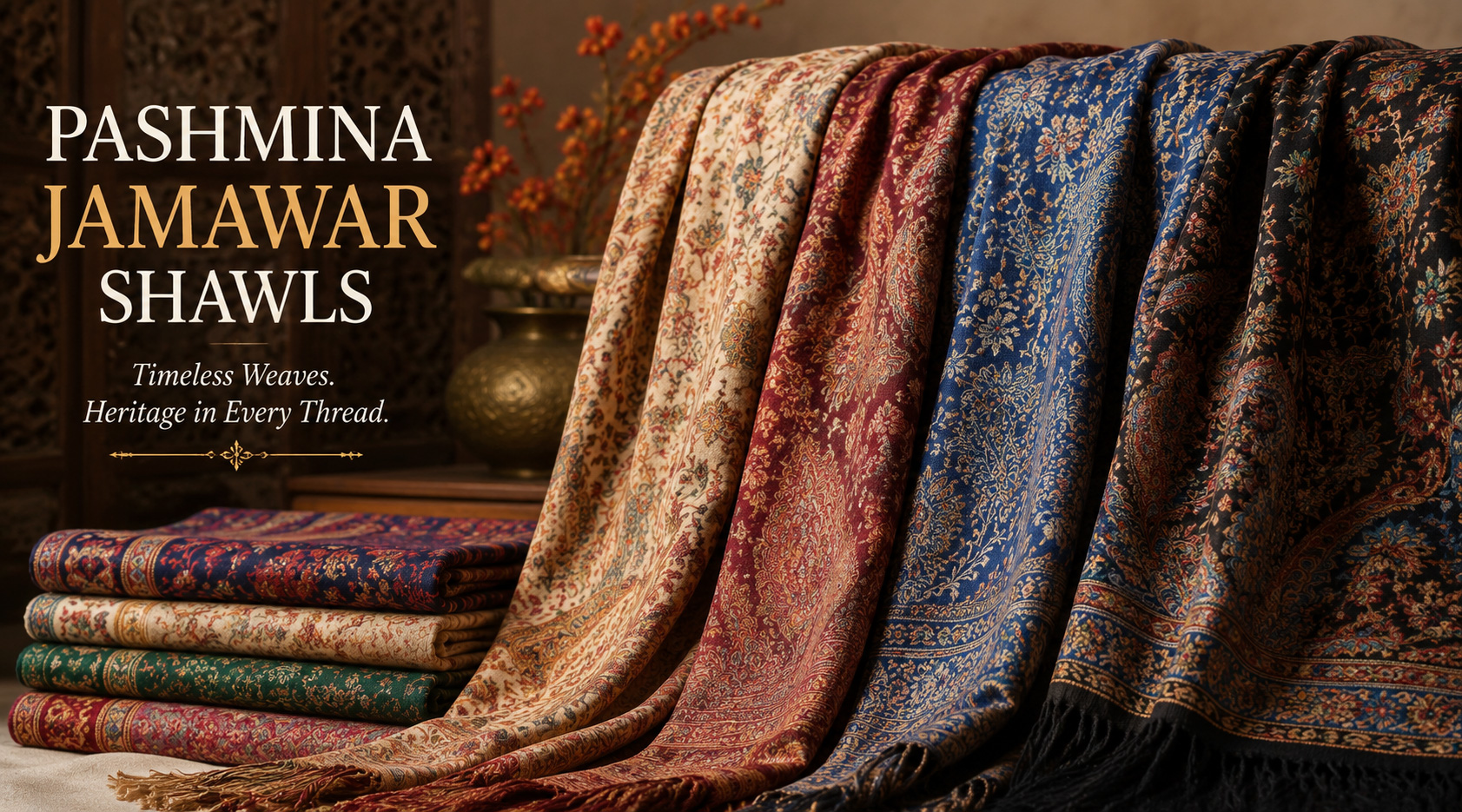
Jamawar Pashmina shawls are particularly admired for their elaborate patterns and traditional motifs. While Jamawar is primarily associated with intricate weaving and pattern creation rather than being a single embroidery technique, its decorative tradition remains an important part of Kashmir's luxury textile heritage. Detailed floral, paisley, and geometric patterns create an exceptionally ornate appearance.
Because the pattern in genuine Jamawar is woven directly into the fabric rather than stitched on afterward, it survives washing and wear in a fundamentally different way than embroidery does — there's no thread sitting on the surface that can snag or fray over time, since the design is structurally part of the weave itself. This is part of why Jamawar pieces are often treated as heirloom-grade investments. Our pages on Jamawar Pashmina Shawl Online, Kashmiri Jamawar Shawl Online, and buying authentic handmade Jamawar Pashmina shawls online cover this weaving tradition from several angles, useful if you're comparing Jamawar specifically against the six needlework techniques covered elsewhere on this page.
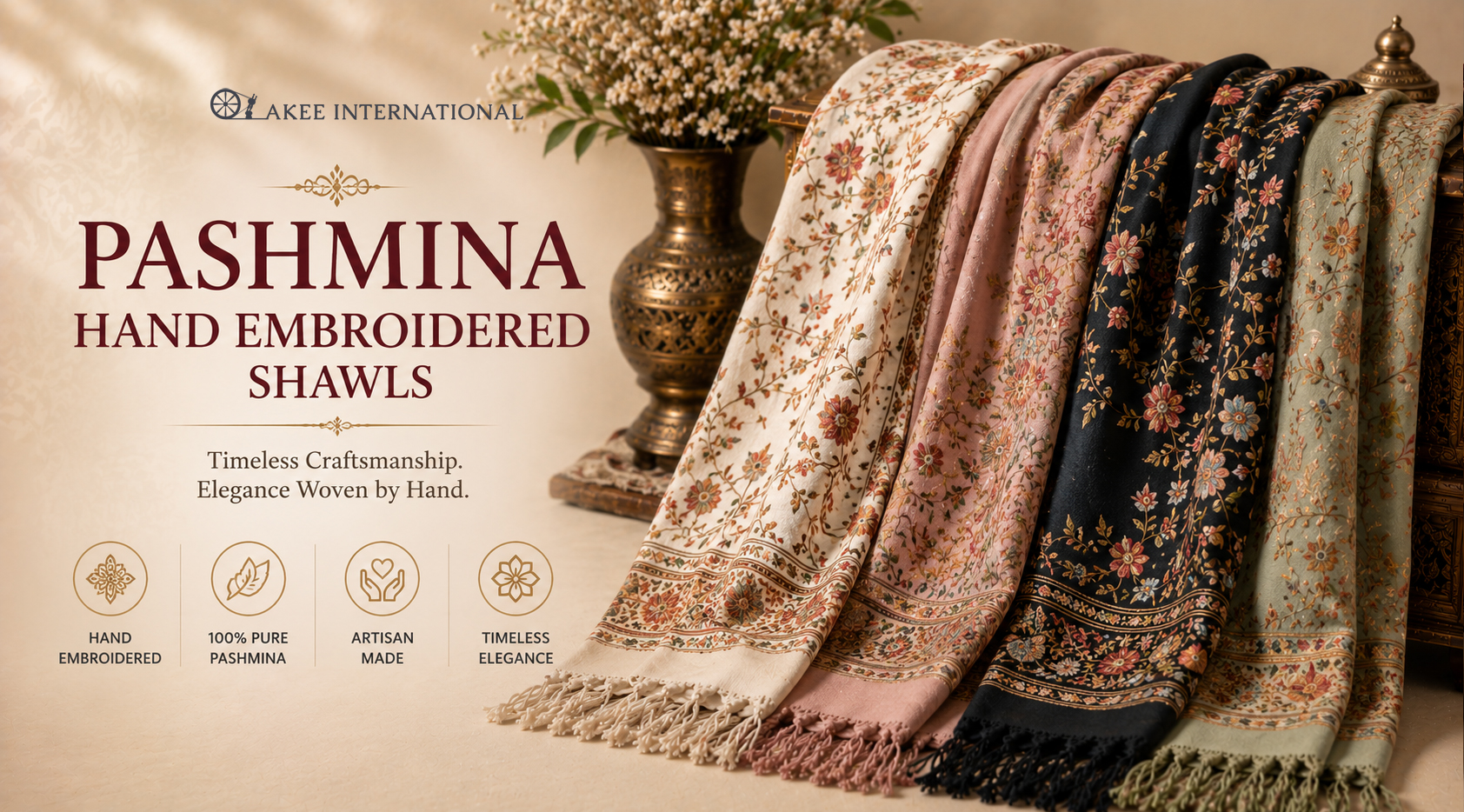
Floral hand embroidery is another popular decorative approach used on Pashmina shawls. Artisans create flowers, leaves, vines, and paisley-inspired compositions using carefully selected threads. The placement, colour combination, density, and intricacy of the motifs can dramatically influence the final appearance of the shawl — because this work is created by hand, each piece has its own distinctive character.
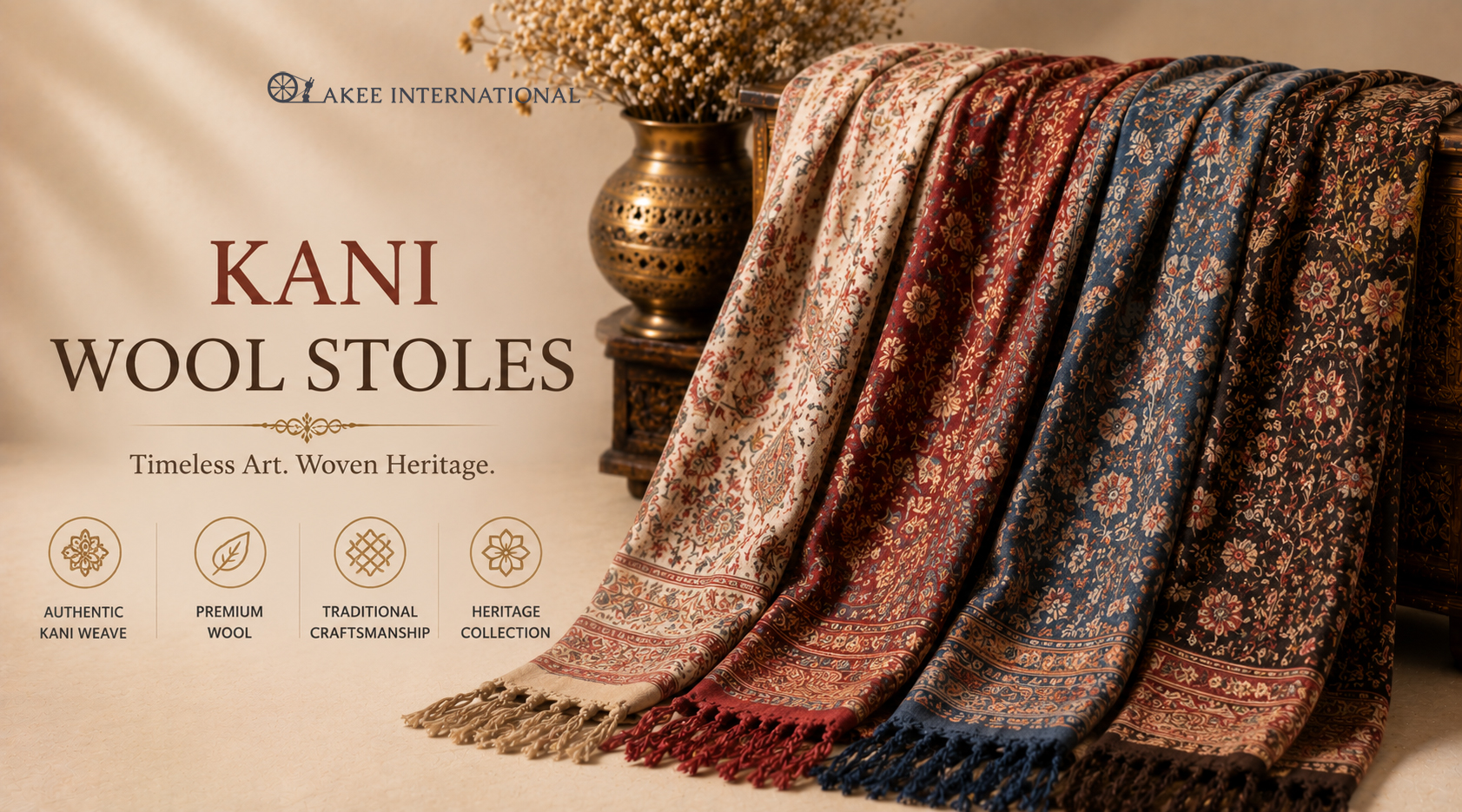
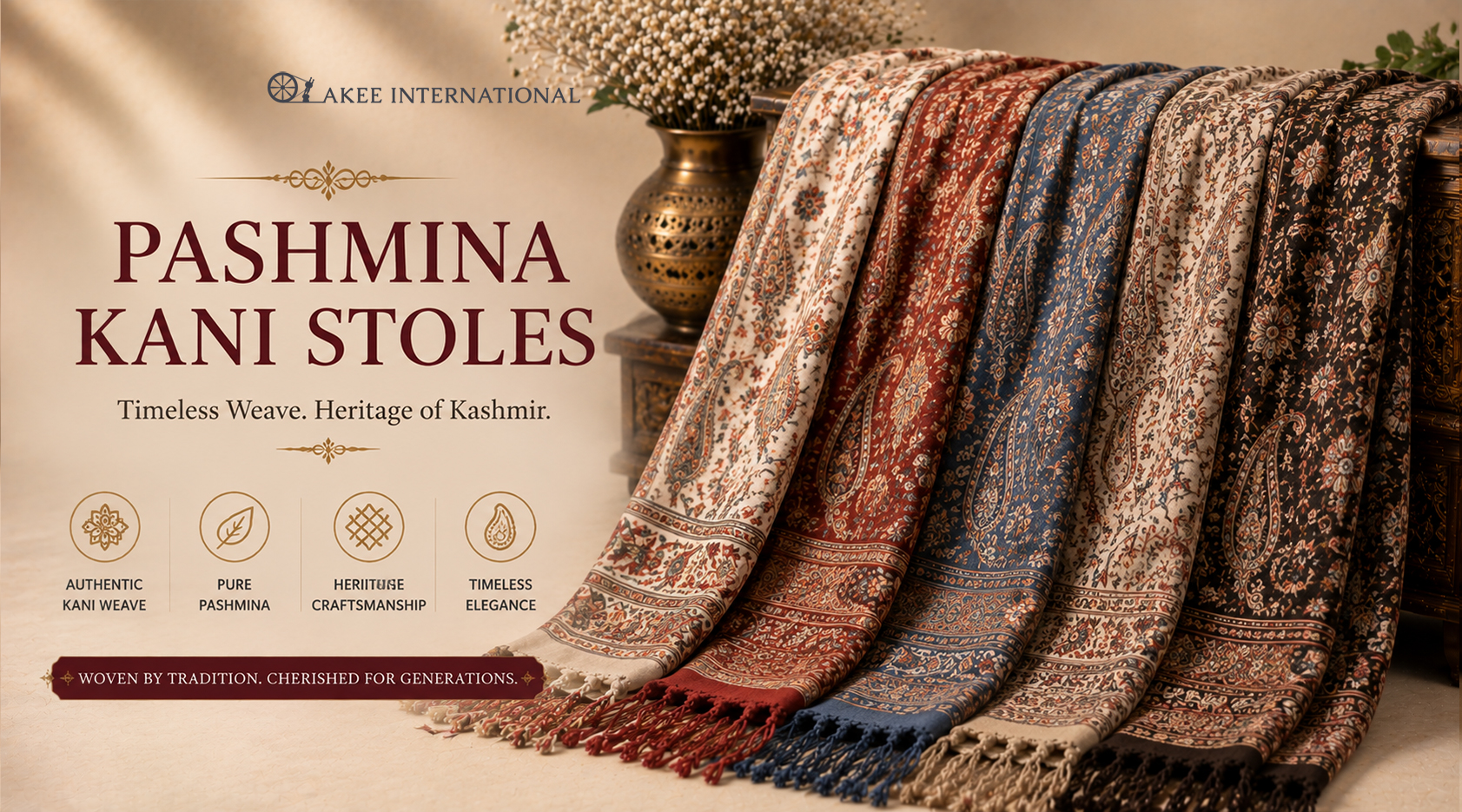
While it isn't embroidery in the traditional sense, Kani weaving deserves a mention alongside these seven traditions because buyers often encounter it in the same conversation. Rather than stitching a pattern onto finished fabric, Kani weaving builds the design directly into the fabric during weaving, using small wooden spools called "kanis" instead of a shuttle. Each colour in the pattern requires its own spool, and a detailed Kani piece can take many months to complete on the loom. Our Pashmina Kani Stoles and Kani Pashmina Shawl Online in India pages, along with our page on the best Kani shawl weavers in Kashmir, cover this weaving tradition in more depth for buyers curious how it compares to the needlework techniques above.
Once you understand what separates these techniques, matching one to a specific occasion becomes considerably easier. For formal, understated elegance — a business event, a quiet evening out, or everyday luxury — a finely worked Sozni piece tends to suit best, since its detail rewards close inspection without ever feeling loud from a distance. For celebratory occasions where the shawl itself is meant to make a visual statement, Tilla or Zari-embellished pieces bring a shimmering, festive quality well suited to weddings and major celebrations. Our page on best Pashmina shawl colours for weddings pairs naturally with this decision, since colour and embroidery style together shape how formal or festive a piece ultimately reads.
For gifting specifically, Aari and Kashida pieces often strike a useful middle ground — detailed and clearly handcrafted, without the higher price ceiling that dense Sozni or Jamawar work can reach, making them practical choices for corporate gifting at bulk or a thoughtful anniversary gift without stretching a budget designed for multiple recipients.
Because each of these seven traditions demands a different amount of artisan time, embroidery technique is one of the biggest factors behind price variation across otherwise similar-looking shawls. A lightly worked Aari border costs meaningfully less than a densely covered Sozni piece that may have taken a single artisan several months to complete, even though both are genuinely handmade. Our Embroidered Pashmina Shawl Price page breaks this down by technique and density, which is useful context before comparing quotes from different sellers, and our broader Pashmina Shawl Price Guide sets realistic expectations across the wider catalogue.
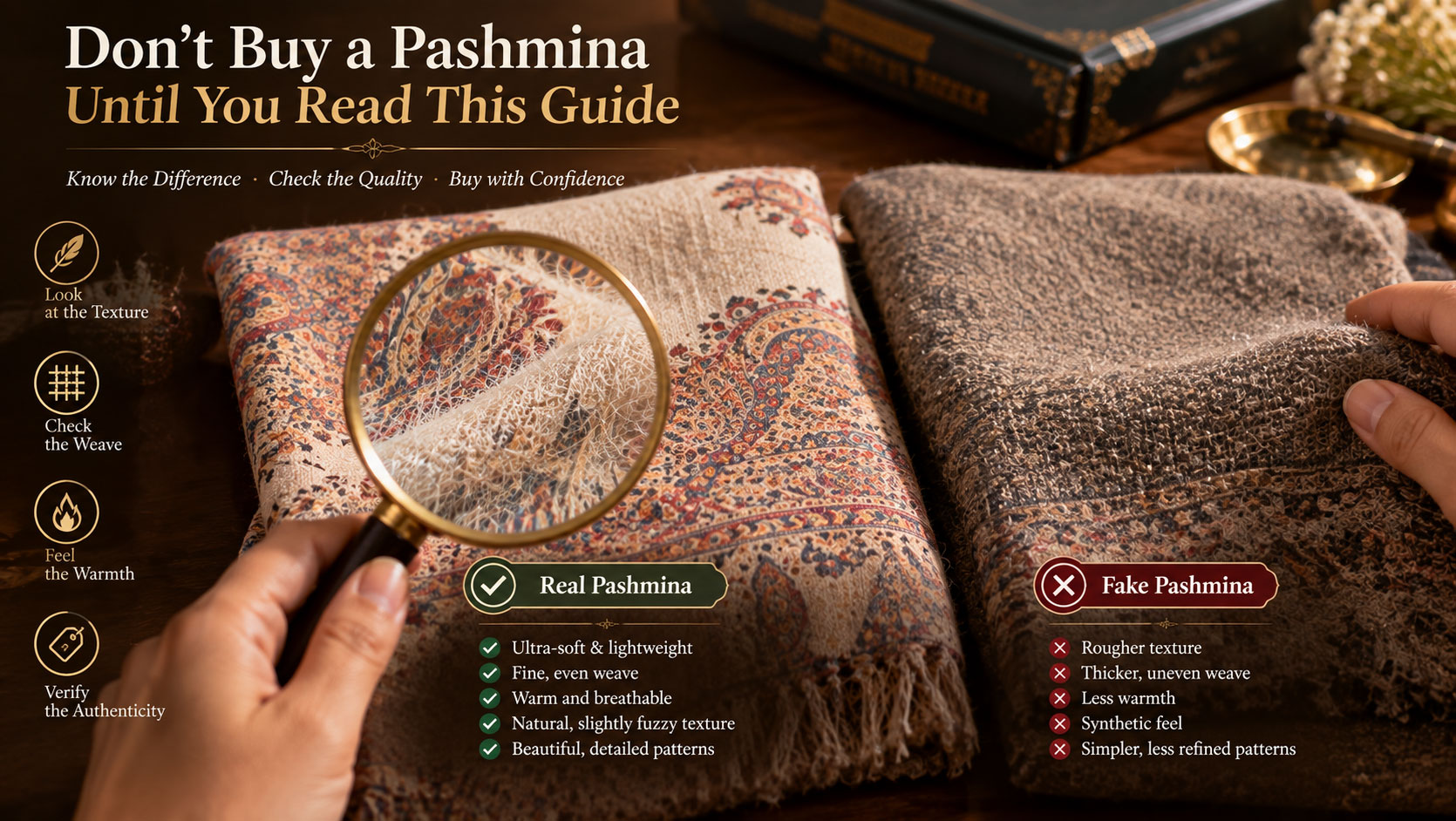
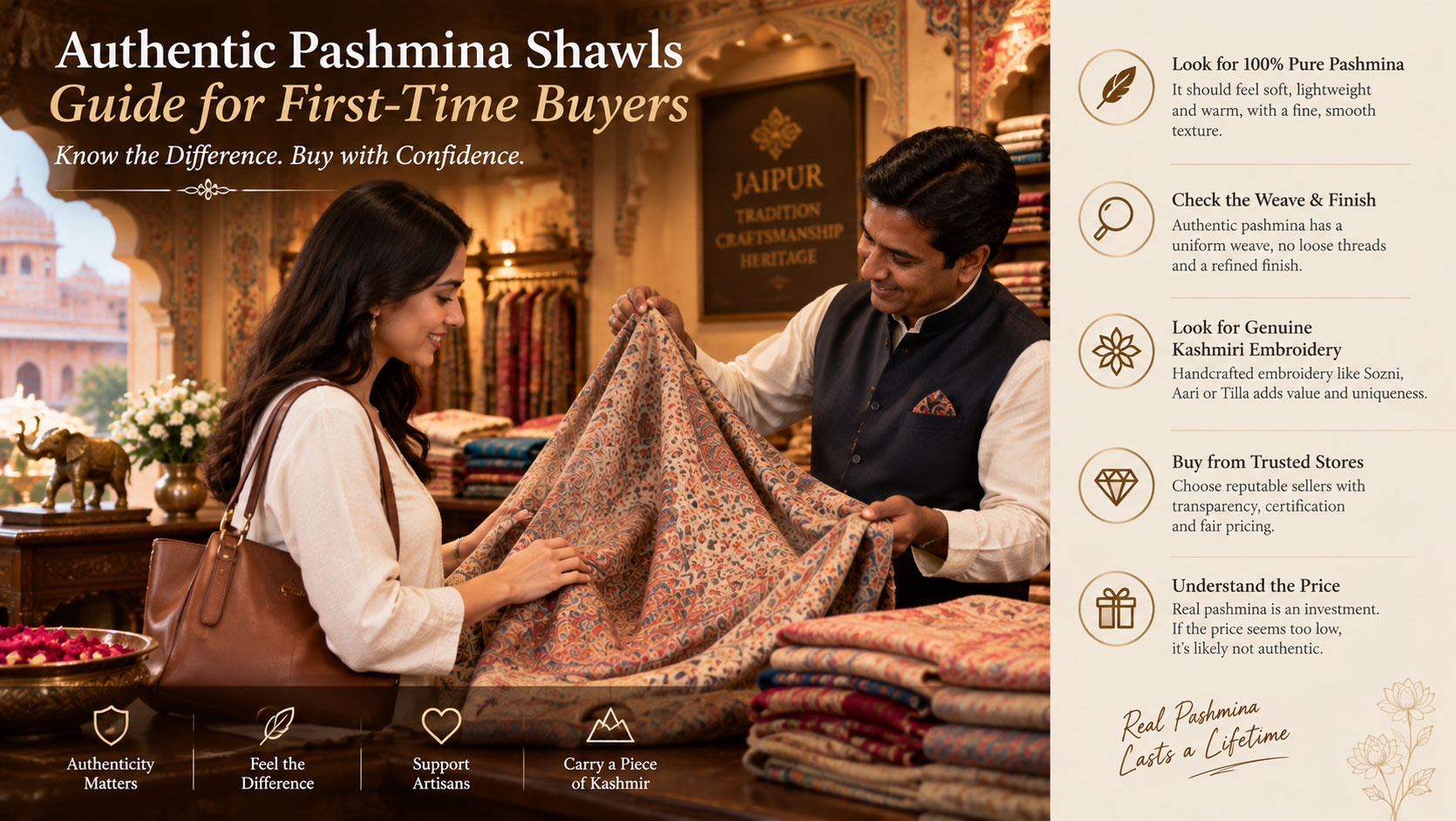
Because embroidered Pashmina sits at a higher price point than plain handloom pieces, it's also more frequently targeted by sellers passing off machine embroidery or printed imitations as handwork. Beyond checking the reverse side of the fabric as described under Sozni above, look for slight irregularities in stitch spacing and thread tension — genuine handwork rarely repeats with mechanical precision across an entire pattern. Our guide on how to identify an original Pashmina shawl covers this and other checks in more depth, and our page on the best Pashmina embroidery artisans in Kashmir introduces some of the specific craftspeople whose work sits behind these traditions.
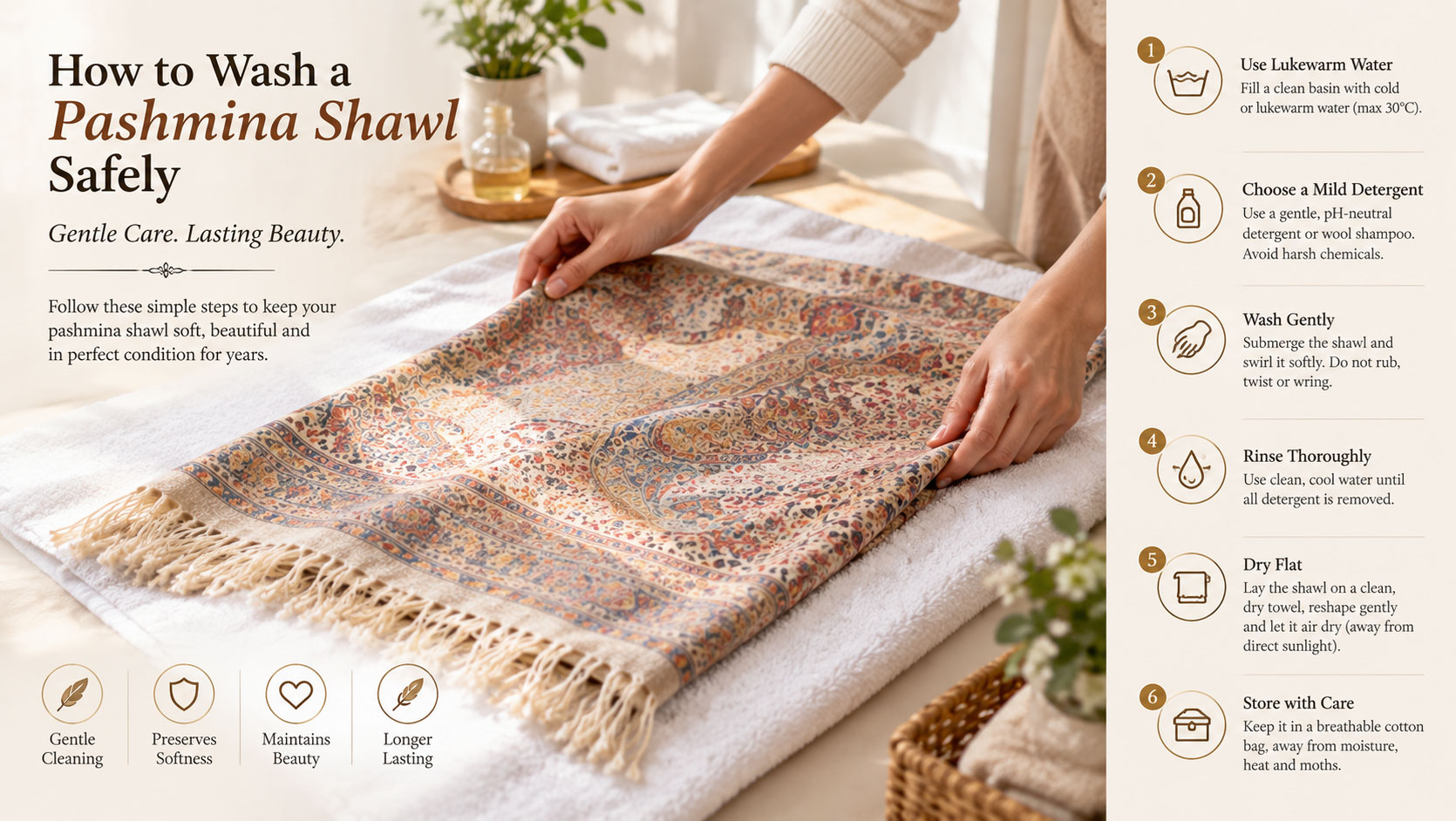
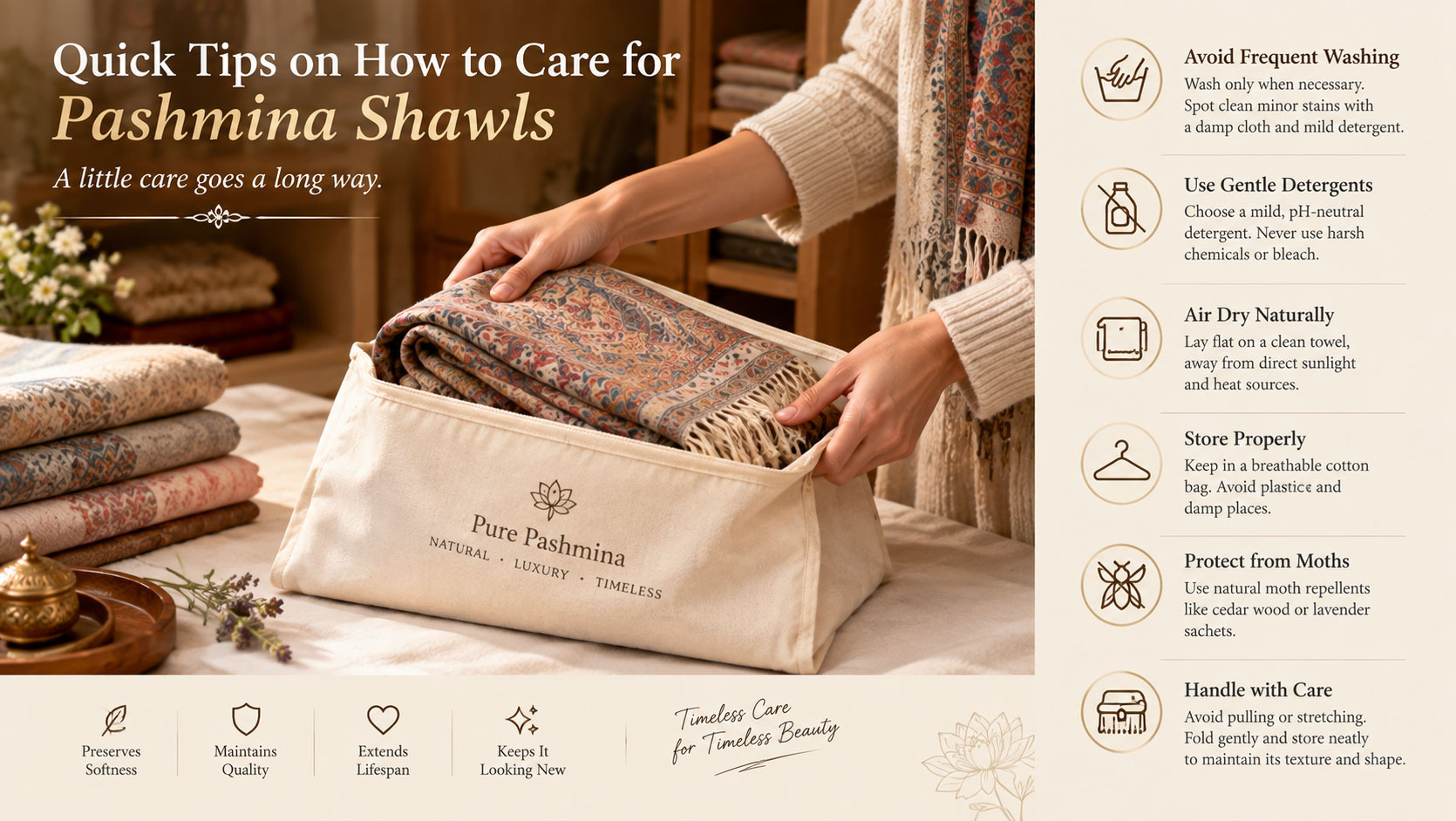
Embroidered Pashmina needs slightly more careful handling than a plain handwoven piece, since the added thread — particularly metallic Tilla or Zari work — can be more delicate than the base fabric itself. Dry cleaning is generally the safest option for heavily embroidered shawls, and even a gentle hand wash should avoid direct scrubbing over embroidered sections. Our complete Pashmina Shawl Care Guide, along with our specific pages on how to wash and how to store a Pashmina shawl, cover these extra precautions in more detail.
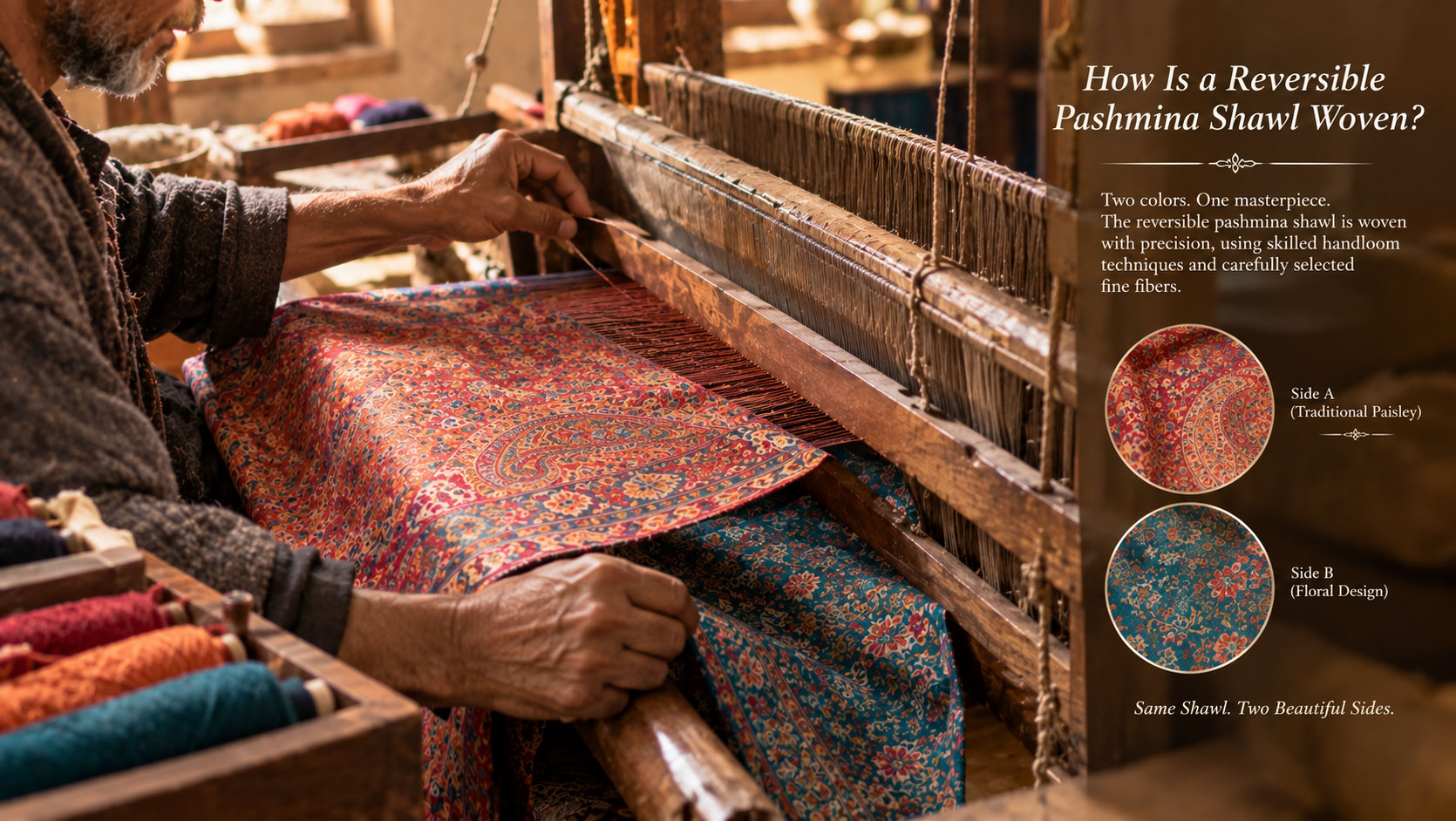
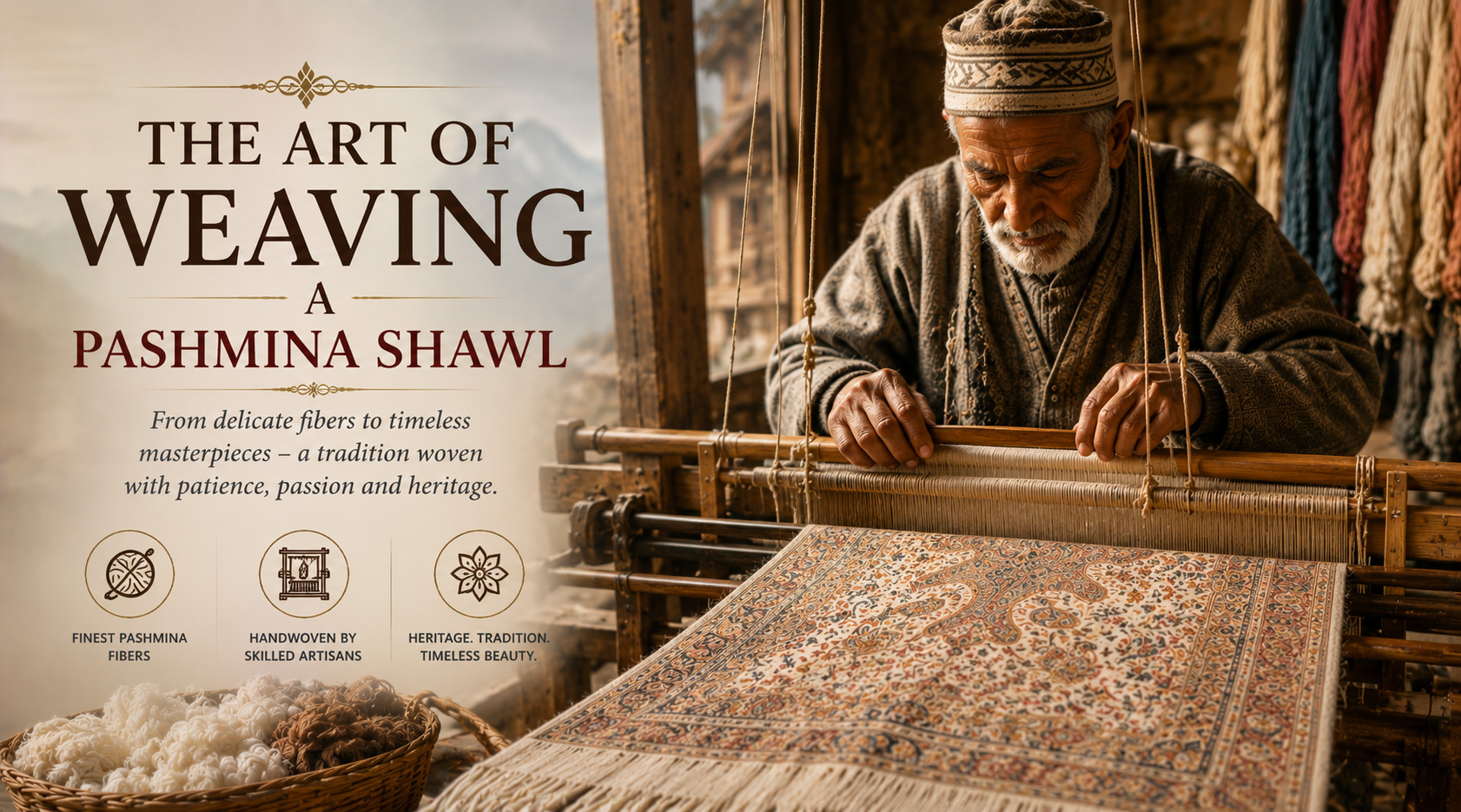
The beauty of an embroidered Pashmina shawl comes from the combination of fine fabric and skilled craftsmanship. Embroidery requires precision, patience, and an understanding of traditional motifs — as our guide on the art of weaving a Pashmina shawl explains, the finer the detailing, the more time and skill it takes to complete.
For this reason, an authentic handmade embroidered Pashmina is not simply a fashion accessory — it represents a connection between luxury textile production and the artistic traditions of Kashmir.
When choosing an embroidered Pashmina shawl, consider the technique, density of the pattern, colour palette, and the occasion you're shopping for. A finely worked Sozni piece suits understated elegance, while a Tilla or Zari-embellished design adds a shimmering, festive touch. Our guide on how to identify an original Pashmina shawl can also help you verify the authenticity of hand embroidery before you buy.
At Akee International, the beauty of Pashmina is reflected through carefully crafted designs that celebrate traditional artistry, sourced through our Kashmiri artisan network. Whether you prefer delicate Sozni-inspired work, richly detailed embroidery, or elaborate Jamawar patterns, each style offers a different expression of the timeless Pashmina tradition. Our page on the Kashmiri Hand Embroidered Shawl brings several of these techniques together in one collection for buyers who'd rather browse the full range than commit to one style upfront.
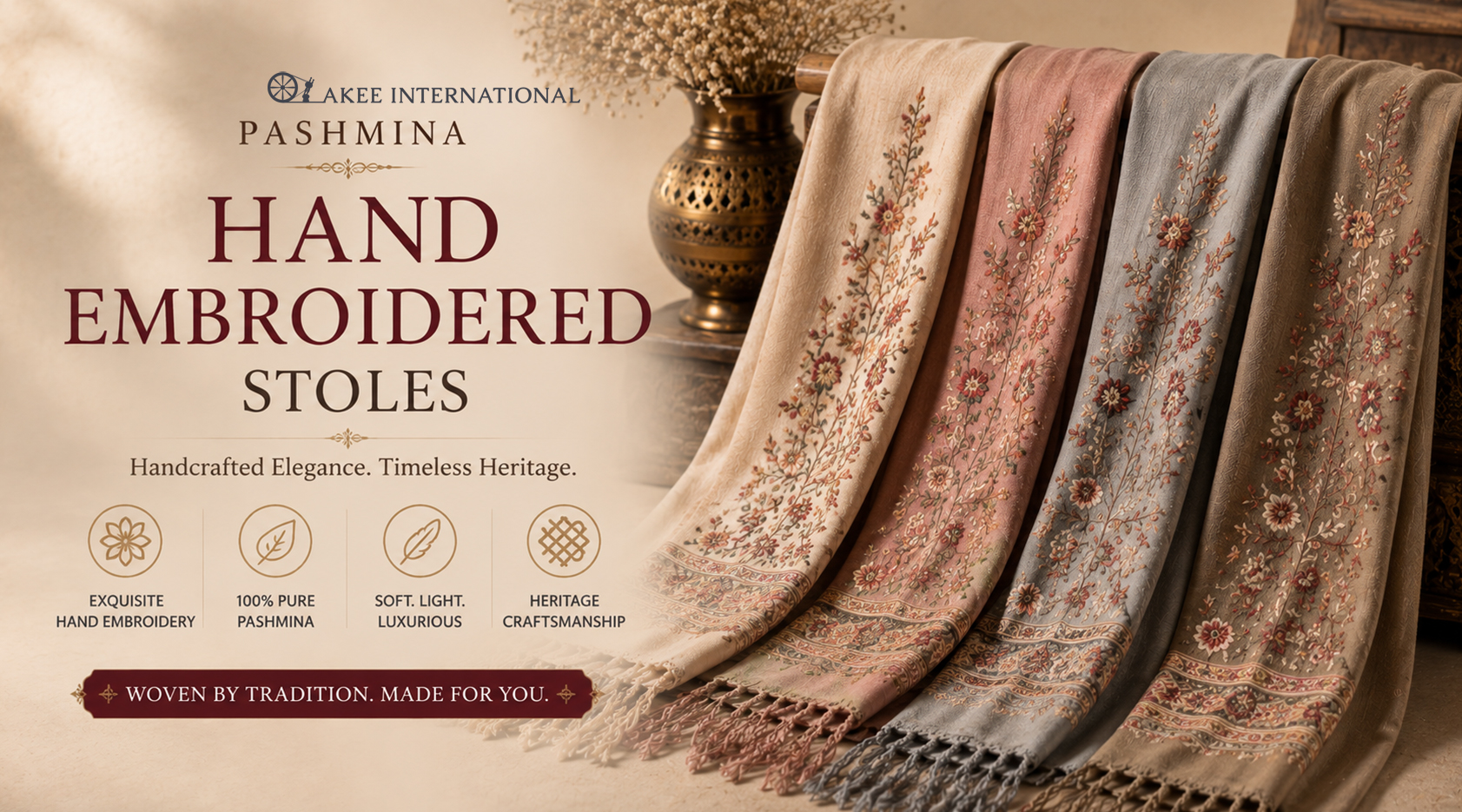
Browse our Pashmina Hand Embroidered Shawls and Pashmina Hand Embroidered Stoles, or explore our Exclusive Hand Embroidered Pashmina Shawls collection for our most detailed designs.
If you'd like to learn more about a specific embroidery technique or which style suits your occasion, our team is happy to help.
Call/WhatsApp: +91-9772777770
Email: akee.international@gmail.com
Visit us: Nai Mata Mandir Road, Thathar Road, Delhi By Pass, Amer, Jaipur 302028, Rajasthan, India
Reach out via Contact Us to explore our embroidered Pashmina collection in more detail.
Traditional Pashmina craftsmanship can feature techniques such as Sozni, Aari, Tilla, Zari, and Kashida, along with various floral and decorative hand-embroidery styles.
Sozni is a fine Kashmiri needlework technique known for delicate floral, paisley, leaf, and vine patterns. It is often used to create detailed designs on Pashmina shawls.
Aari embroidery is created using a specialised hooked needle. It allows artisans to produce flowing floral and decorative patterns with a distinctive handcrafted appearance.
Tilla embroidery traditionally uses metallic threadwork to create decorative motifs and borders. It gives the Pashmina shawl a rich and elegant appearance.
Yes, Kashida represents a broad tradition of Kashmiri decorative needlework and can be used to create nature-inspired designs on Pashmina and other textiles.
Traditional embroidered Pashmina shawls can involve extensive hand craftsmanship. However, buyers should check the individual product description to understand how a particular shawl was made.
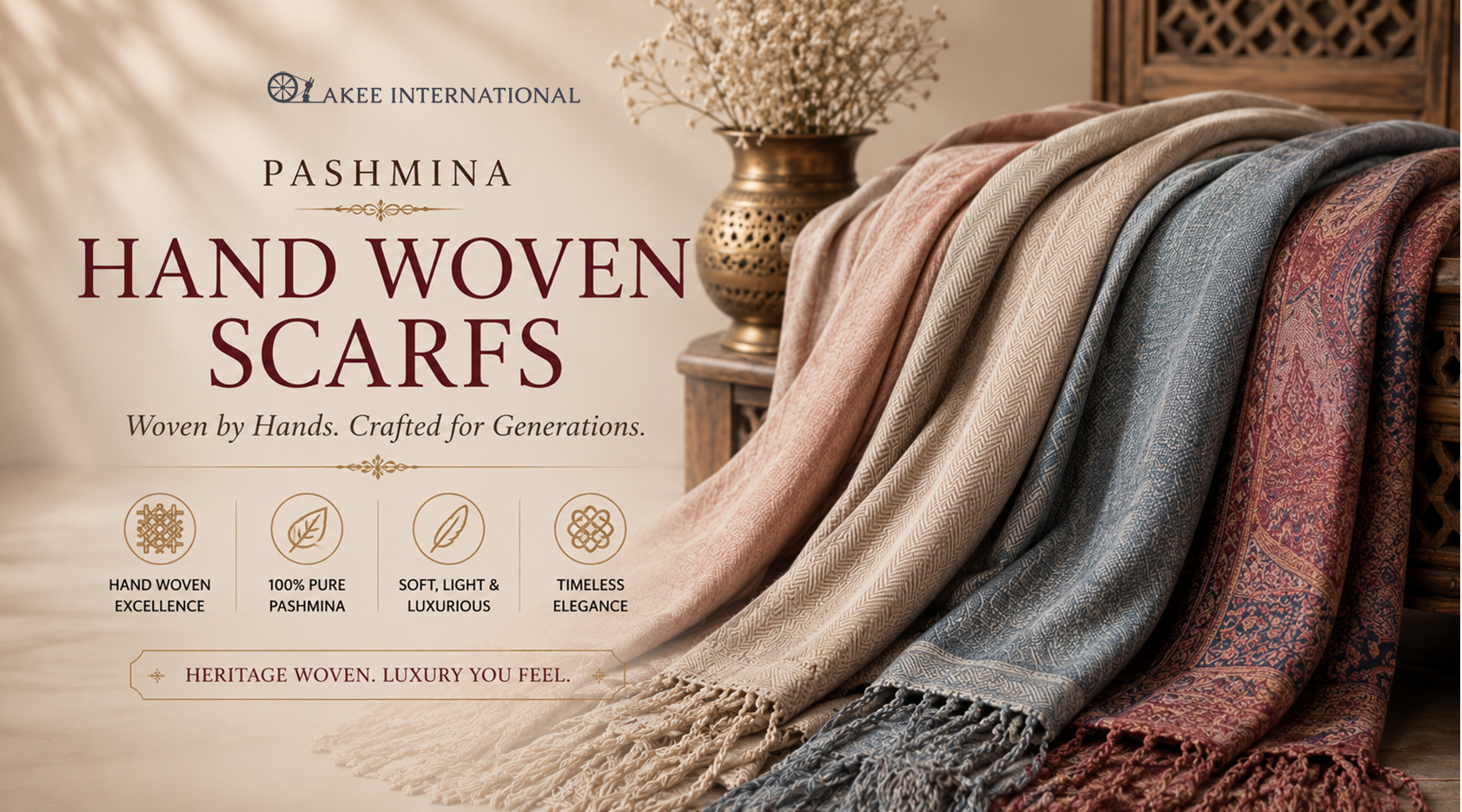
Woven Pashmina derives its design primarily from the weaving process, while embroidered Pashmina has additional decorative patterns created using needlework and thread.
Jamawar primarily refers to an intricate patterning and weaving tradition rather than one specific embroidery technique. Jamawar Pashmina shawls are known for their elaborate woven designs and traditional motifs.
Fine embroidery requires careful stitching, detailed pattern work, and considerable artisan skill. The complexity and density of the design can significantly affect the time required.
Consider the embroidery style, pattern, colour, craftsmanship, fabric details, size, and intended occasion. Choosing a reputable seller with clear product information can also help when buying an authentic Pashmina shawl.
"Browse our curated collections and shop by category to find the perfect Pashmina shawl or scarf for every occasion."
"Explore our latest collection of exquisite Pashmina shawls and scarves, where luxury meets craftsmanship in every piece."
"Shop our Best Sellers, where luxury meets demand—featuring the most sought-after Pashmina shawls and scarves of the season."
"Read what our clients say about their experience with Akee International's luxurious Pashmina shawls and impeccable service."

Nai Mata Mandir Road, Thathar Road, Delhi By Pass, Amer, Jaipur 302028, Rajasthan India
Get directions Call Now Whatsapp 4.9 based on 269 reviews
Rating: 4.6/5 | 85 Reviews

Rating: 4.9/5 | 269 Reviews

TrustScore: 4.9 | 100 Reviews