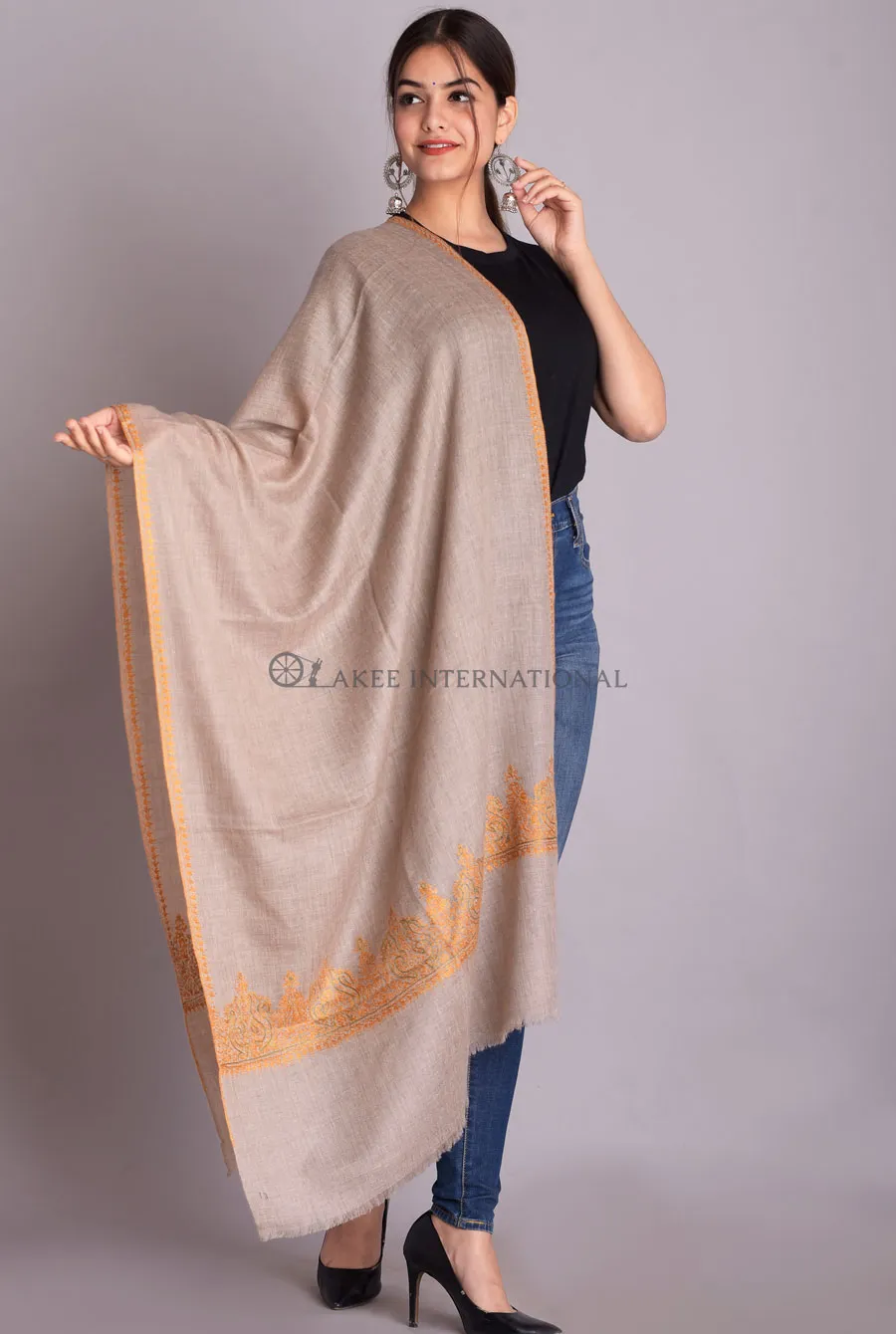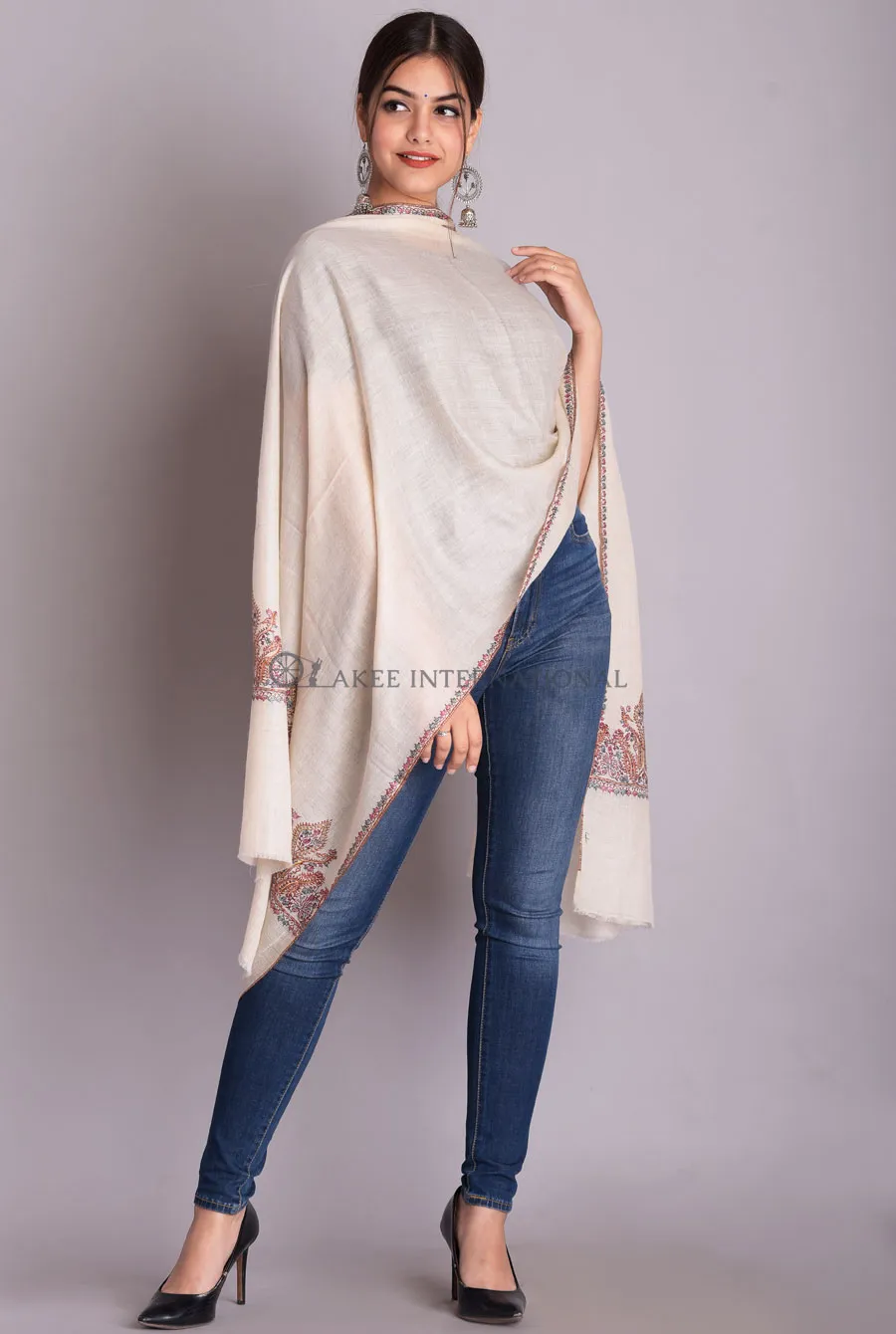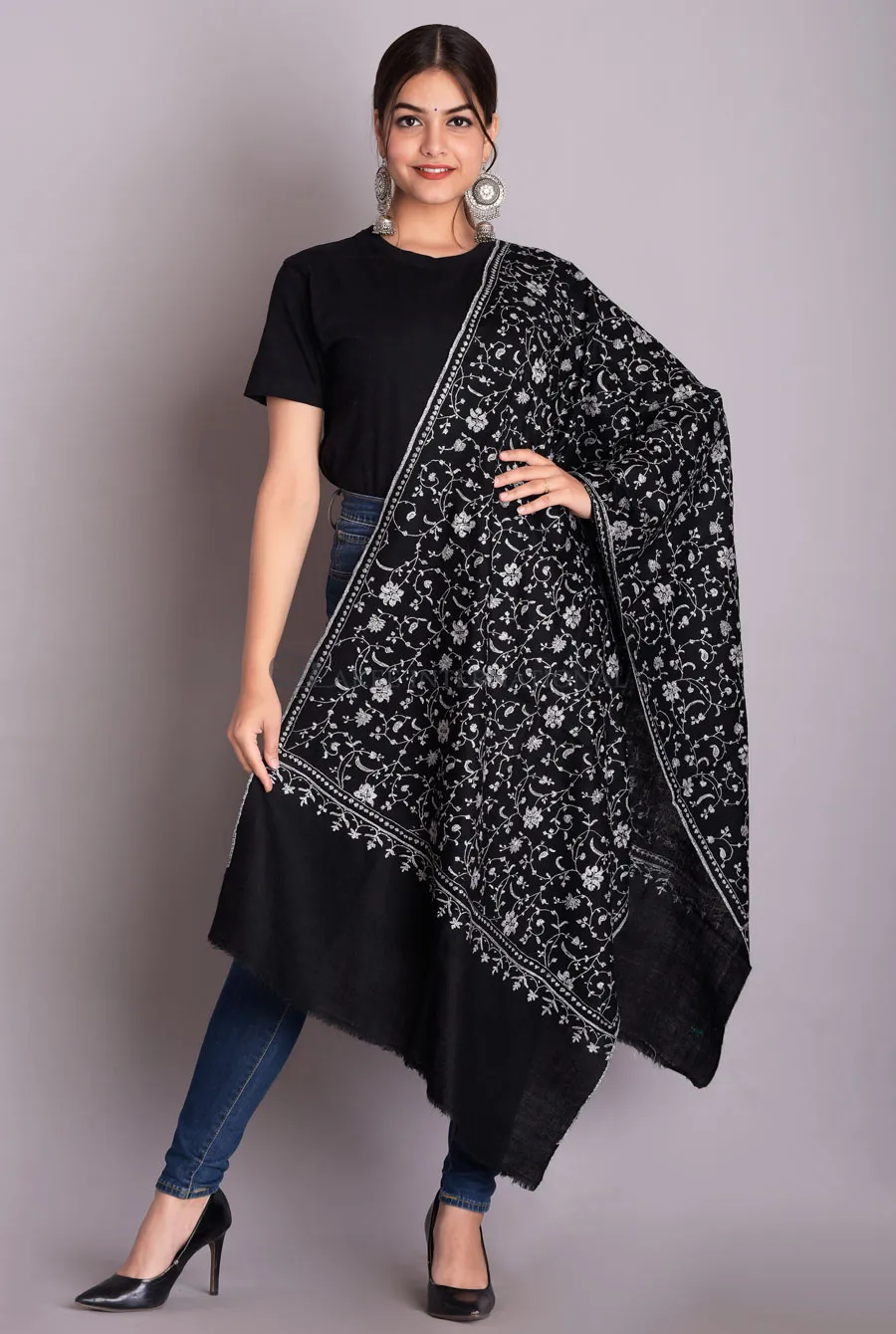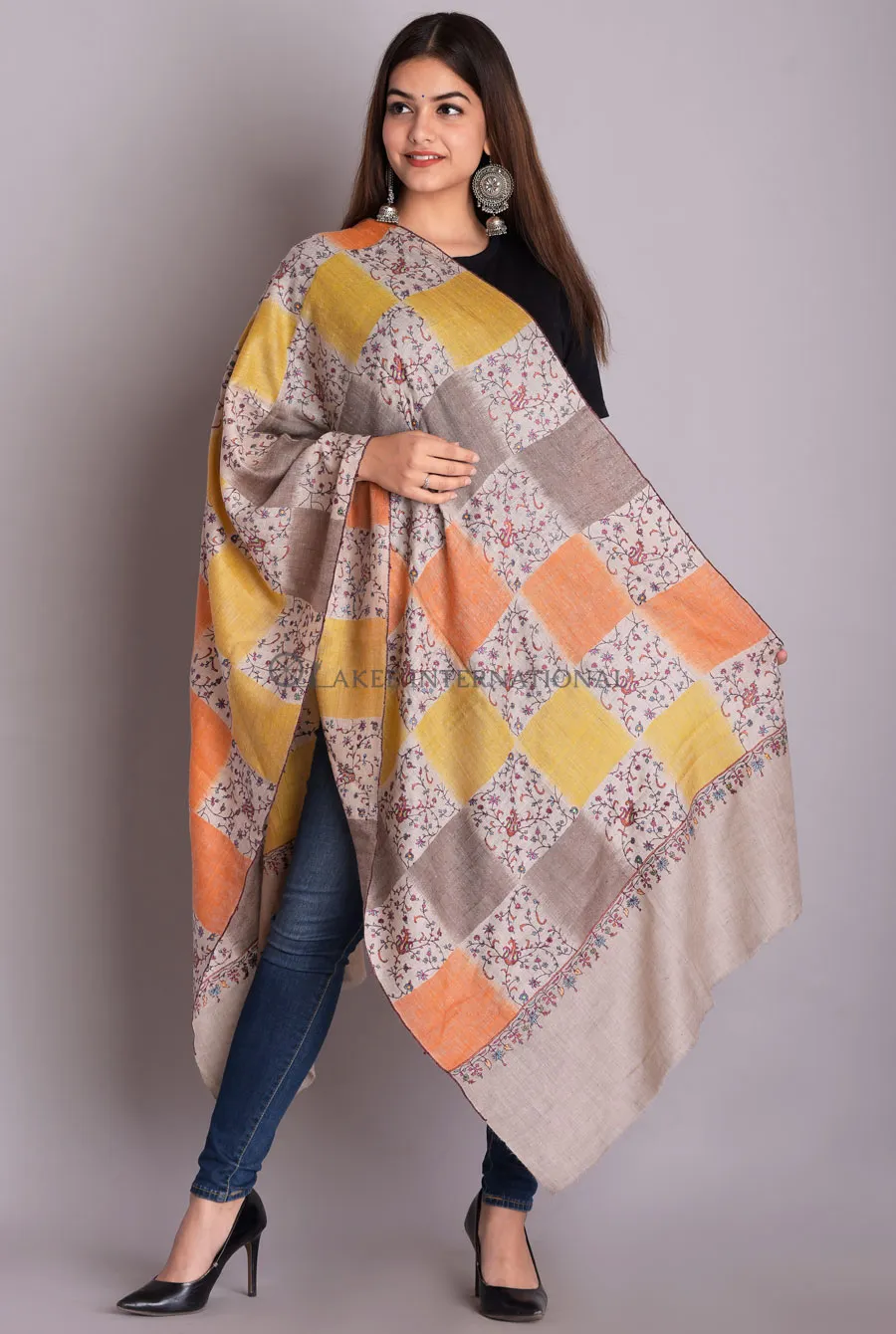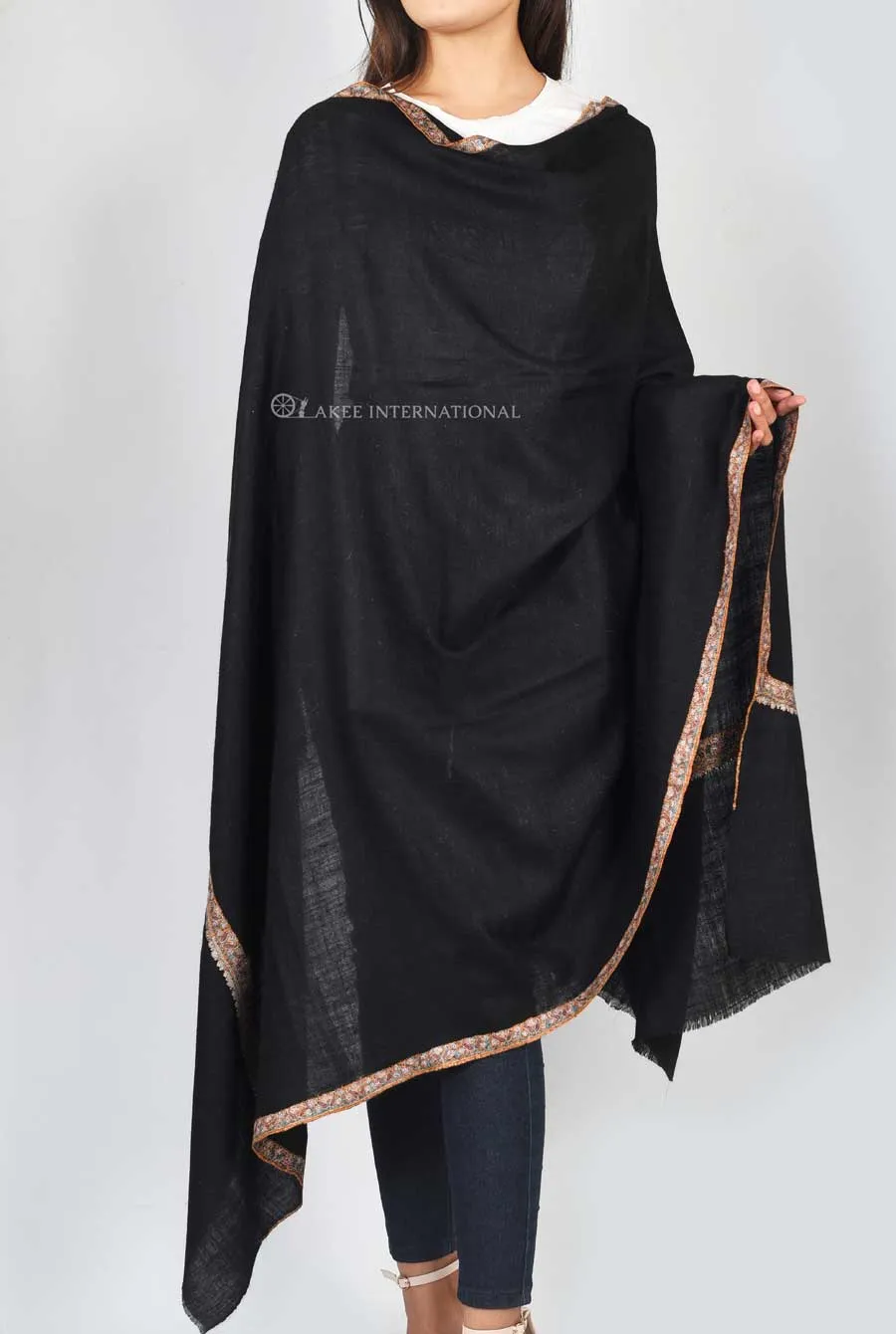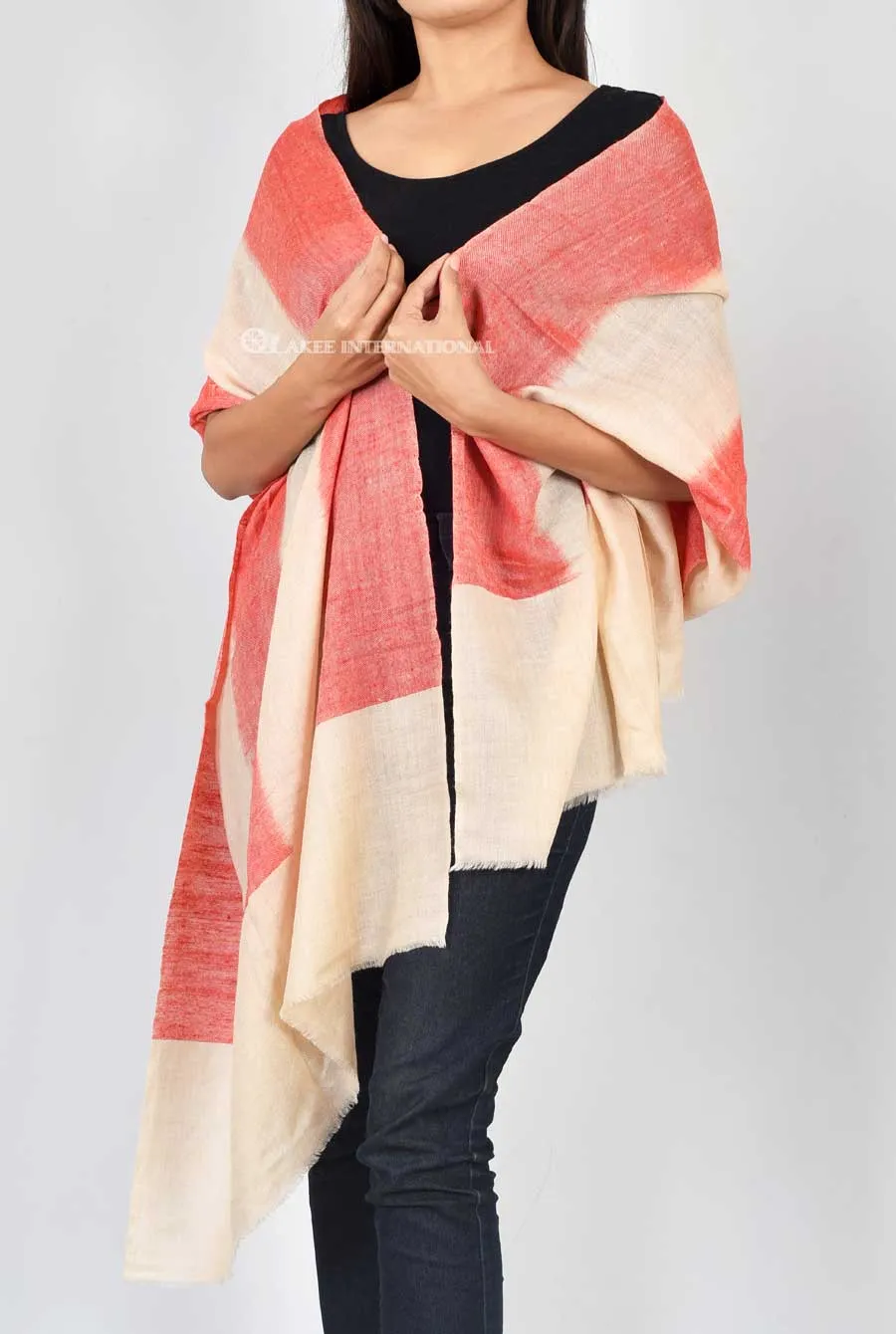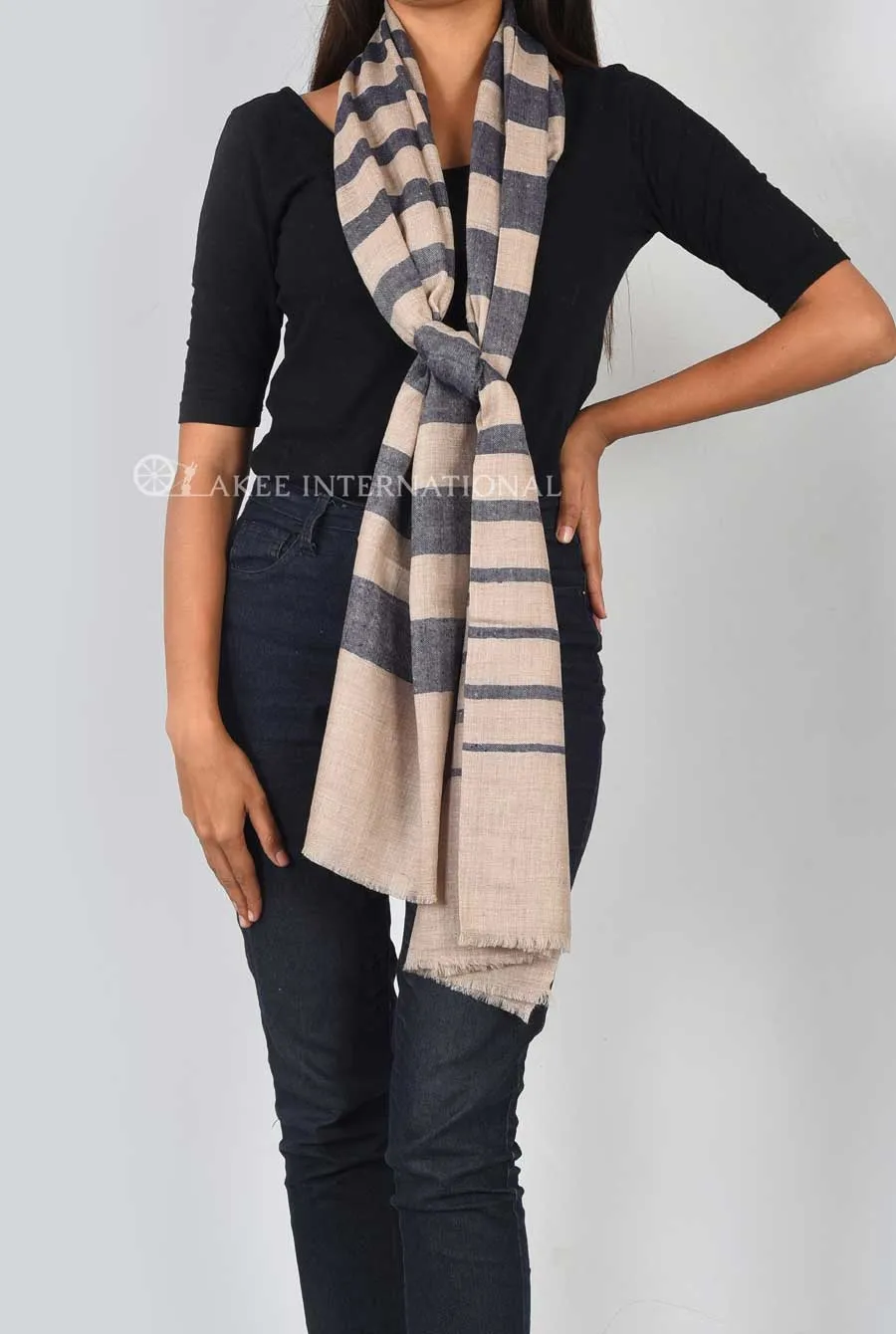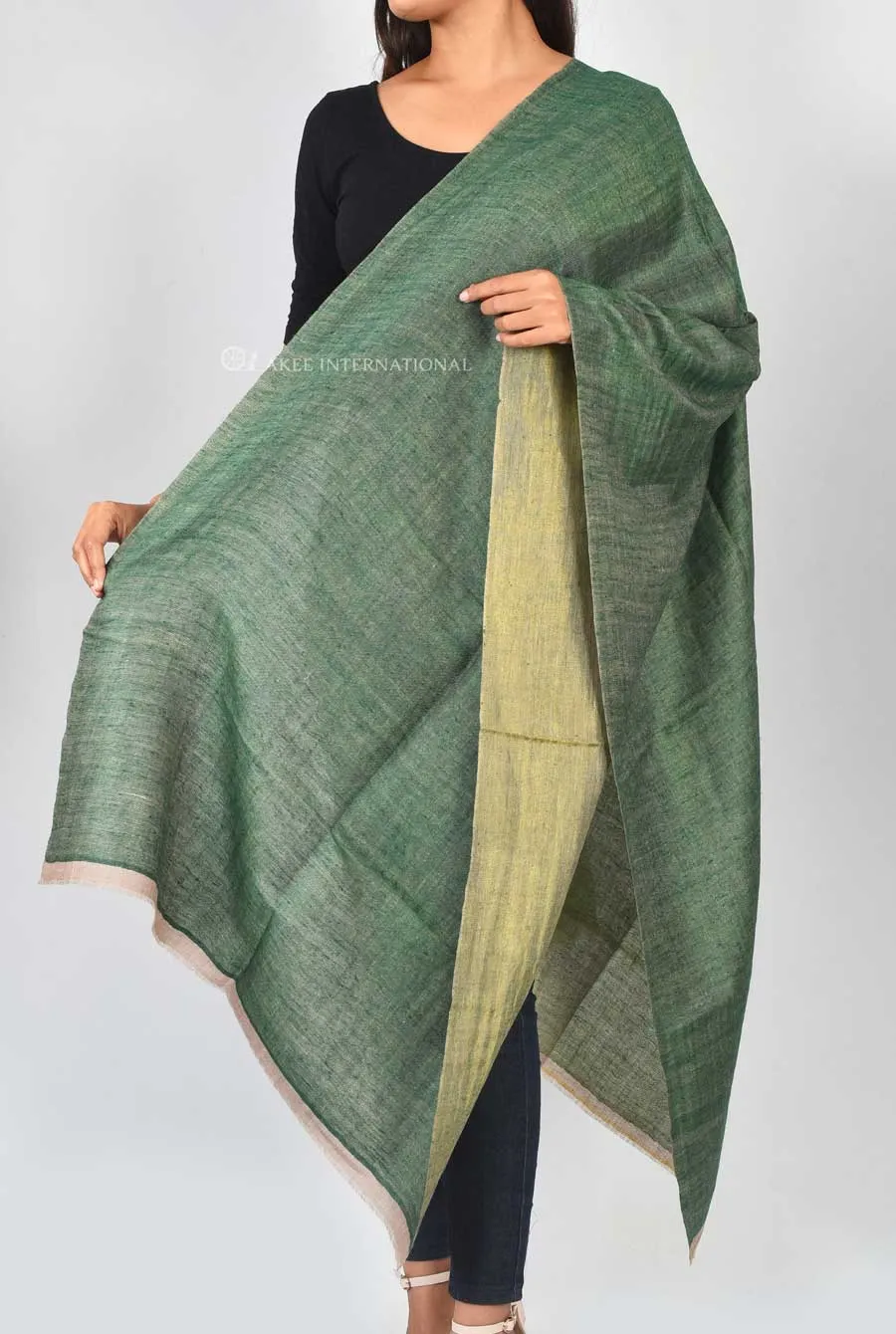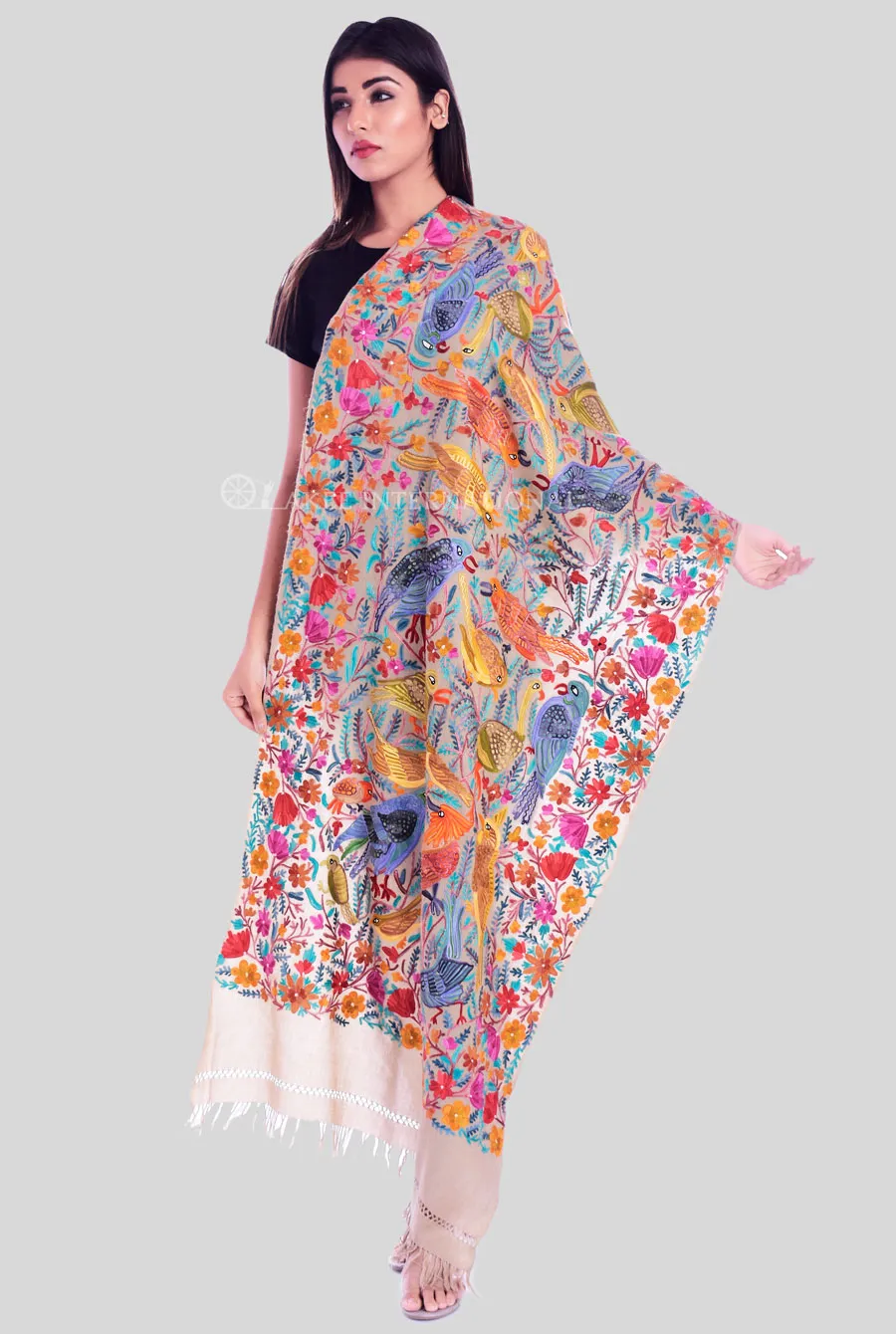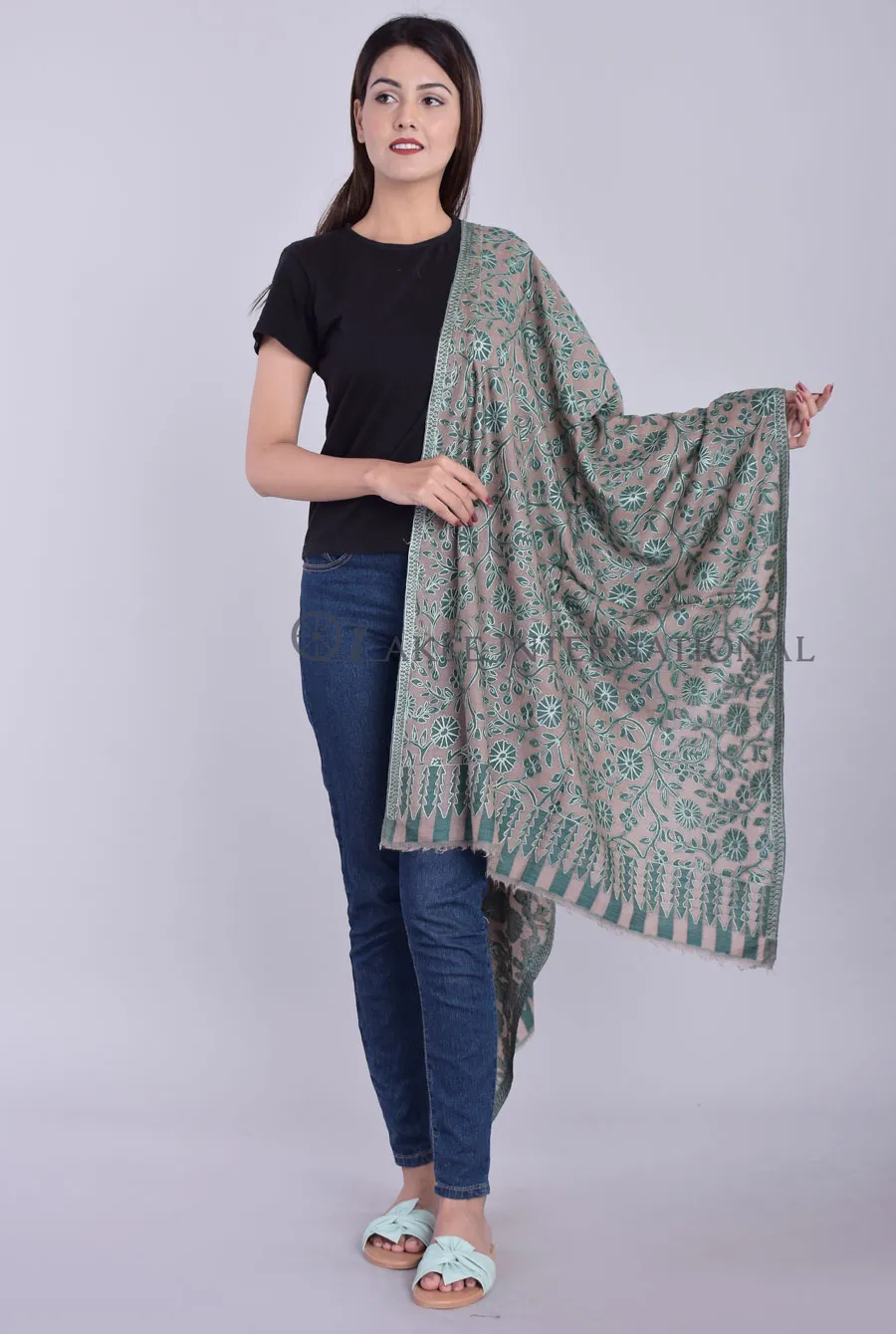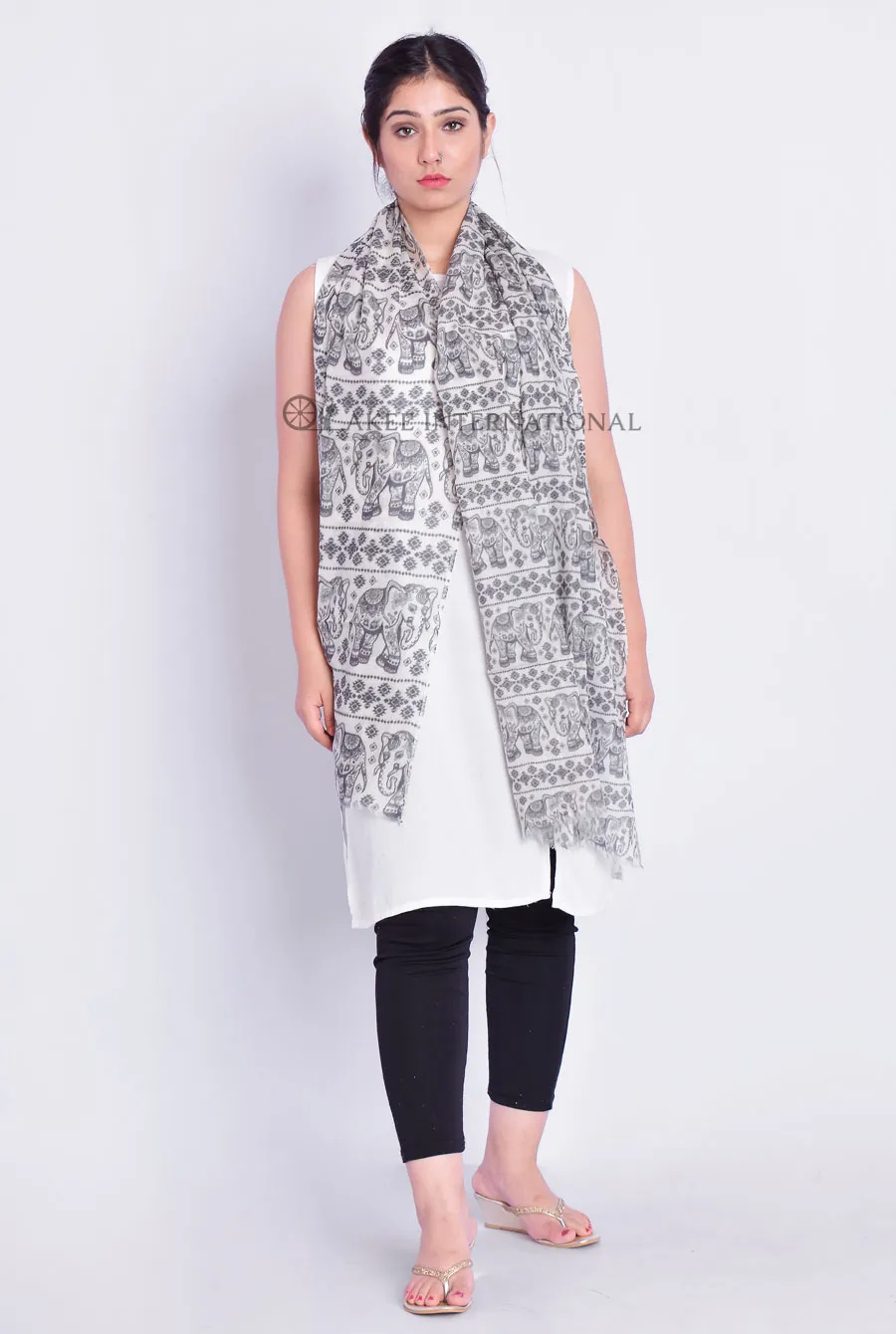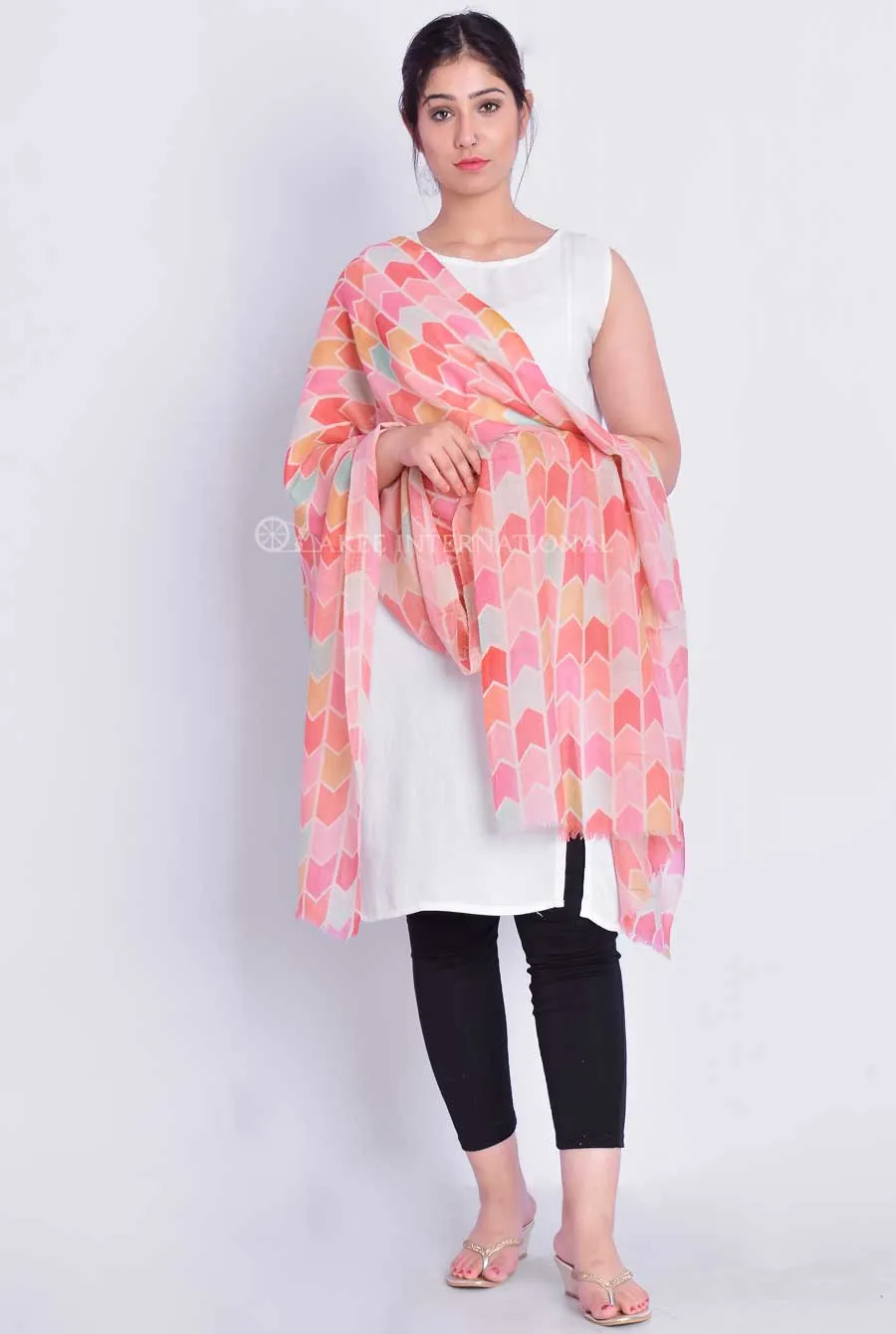
Find Your Perfect Premium Pashmina Shawl
Discover exquisite Pashmina shawls, beautifully crafted with Kashmir’s timeless heritage and artistry.

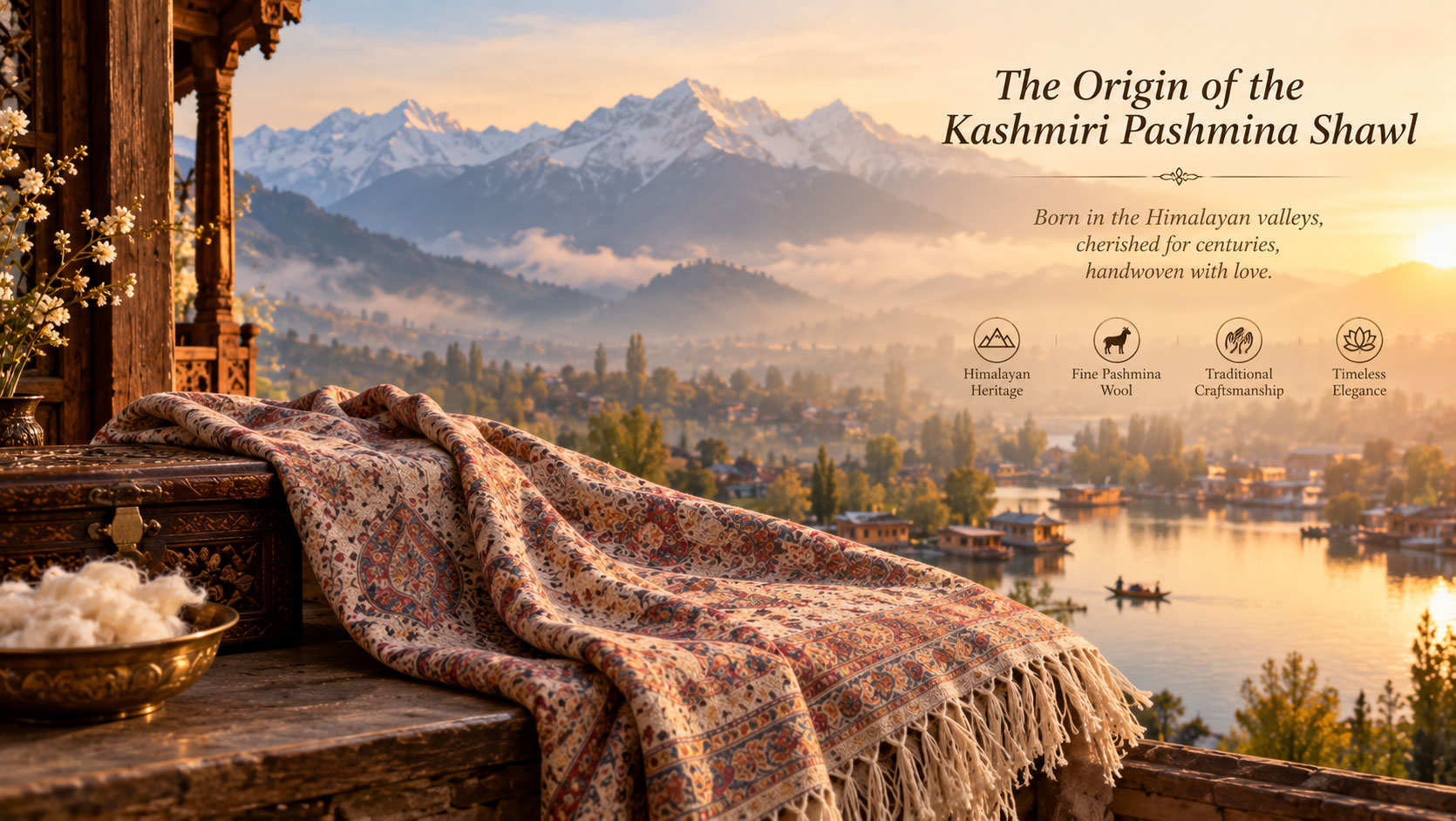
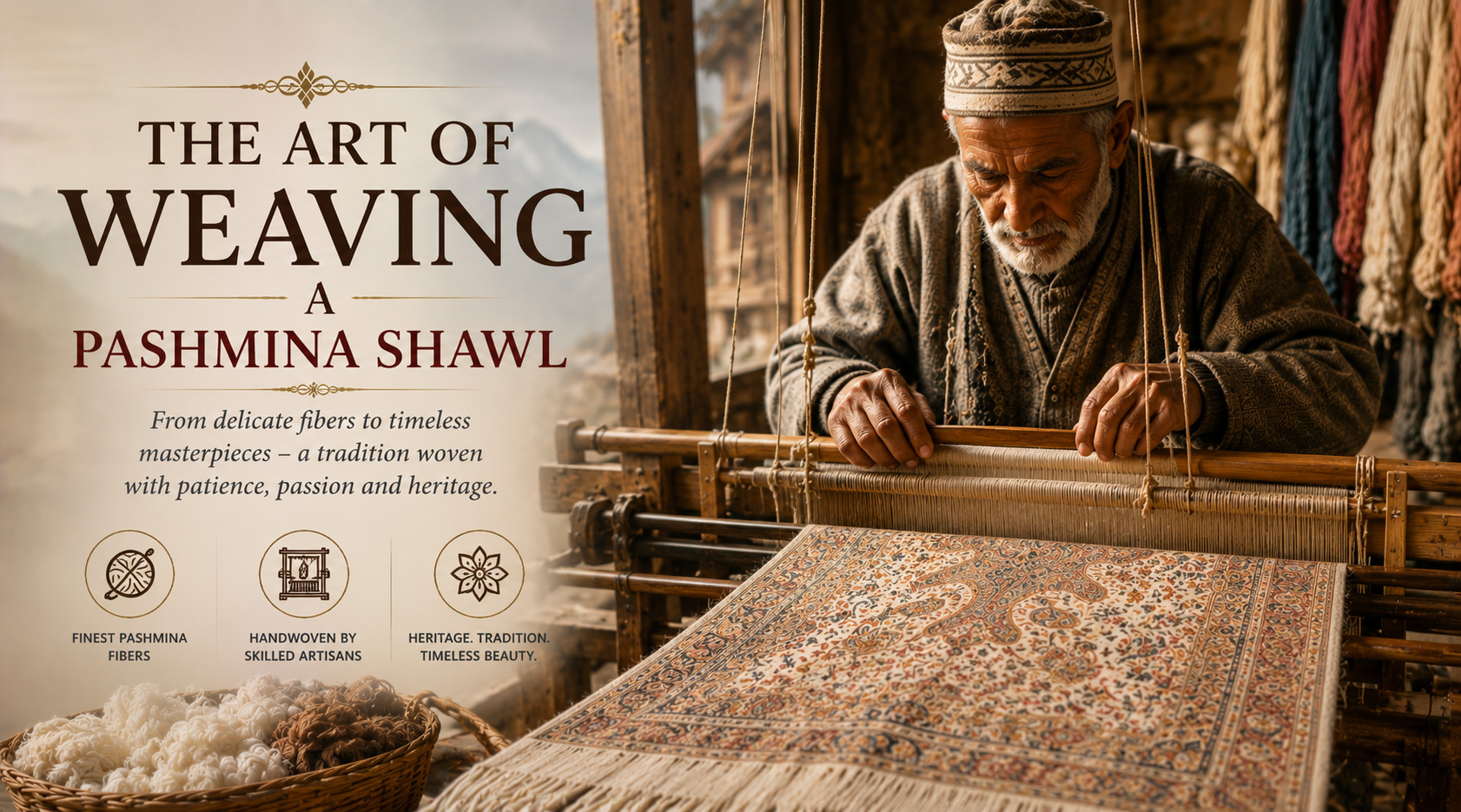
High in the Himalayas, where winter silence is broken only by the sound of wind, a story begins long before a Pashmina shawl ever reaches a boutique or a website. It is not a factory story. It is a human story, carried forward by hands that have never met a machine that could replace them.
Every year, when temperatures drop far below zero across the high-altitude plateaus of Ladakh and Kashmir, the Changthangi goats grow an exceptionally fine undercoat to protect themselves from the extreme cold. This soft fibre is nature's gift — rare, delicate, and impossible to rush. Unlike ordinary wool, it exists in this exact quality specifically because of where the goat lives: the altitude, the dry air, and the punishing winter cold all work together to produce a fibre that simply cannot be replicated anywhere else in the world.
When spring finally arrives and the worst of winter eases, local herders gently collect this fibre by hand. No machines. No shortcuts. The goat is combed, not shorn, meaning the undercoat is carefully removed without harming the animal at all — a practice that has stayed unchanged for generations, precisely because it works and because any faster method would compromise the fibre's quality. Our page on what Pashmina actually is explores this origin in more depth for anyone curious about the fibre itself.
The raw fibre then travels down from the high plateau into small homes and workshops, where generations of artisans have kept this specific craft alive. Elderly hands spin the fibre slowly, often while sitting near a window, letting natural daylight guide their work rather than relying on artificial lighting that can hide small inconsistencies in the yarn. Each thread is spun with real patience, because even a small mistake at this stage can weaken the yarn permanently, undoing weeks of careful sourcing before the weaving has even begun.
This hand-spinning stage is arguably the most underappreciated part of the entire journey. Machines can spin wool quickly, but they cannot replicate the sensitivity of a human hand adjusting tension in real time, feeling for the exact moment a strand needs more or less twist to hold together without becoming stiff. It's part of why genuine handspun Pashmina yarn carries a texture that's genuinely different from anything mass-produced. Our Pashmina Hand Spun GI Shawl collection specifically highlights this stage as a mark of authenticity in its own right.
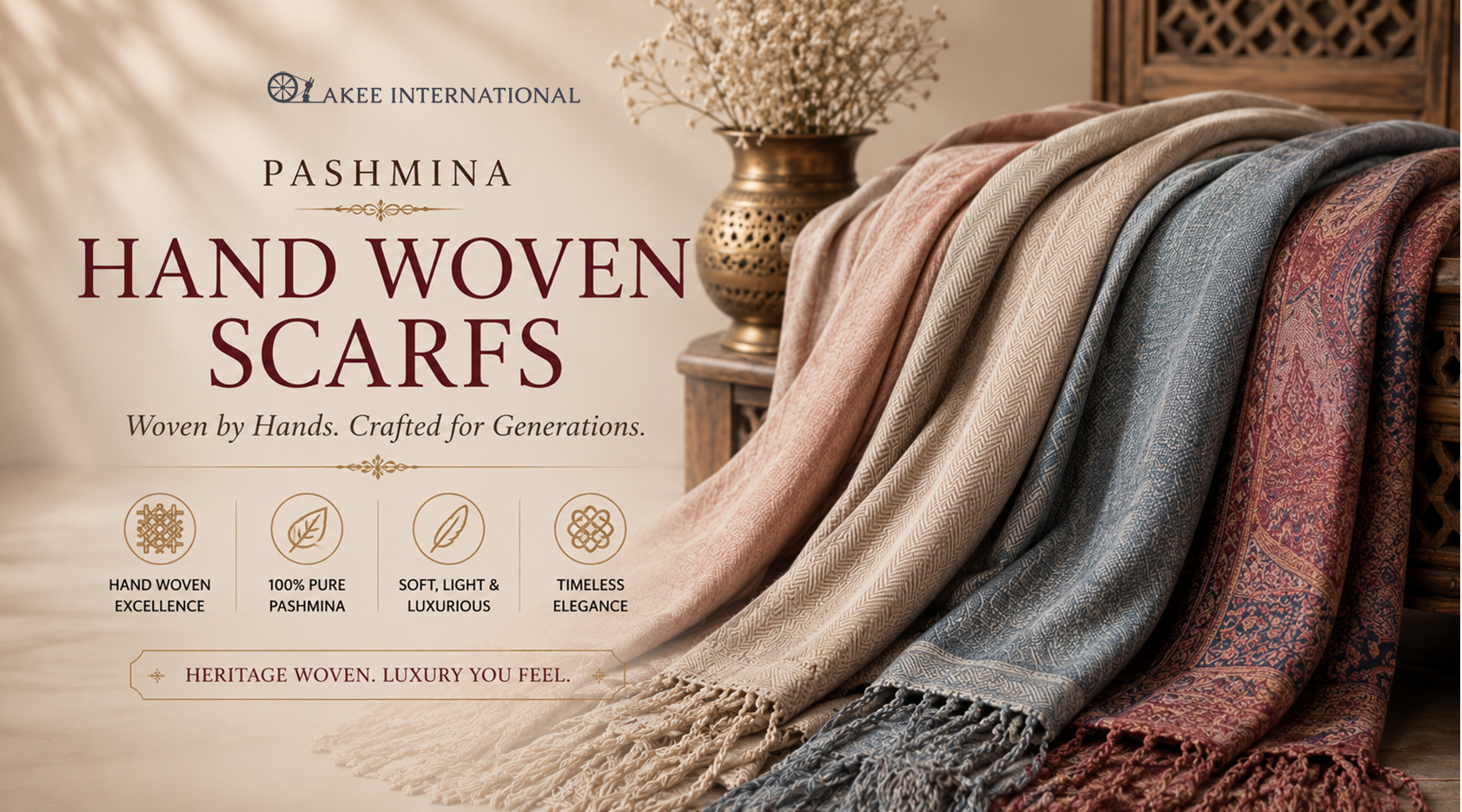
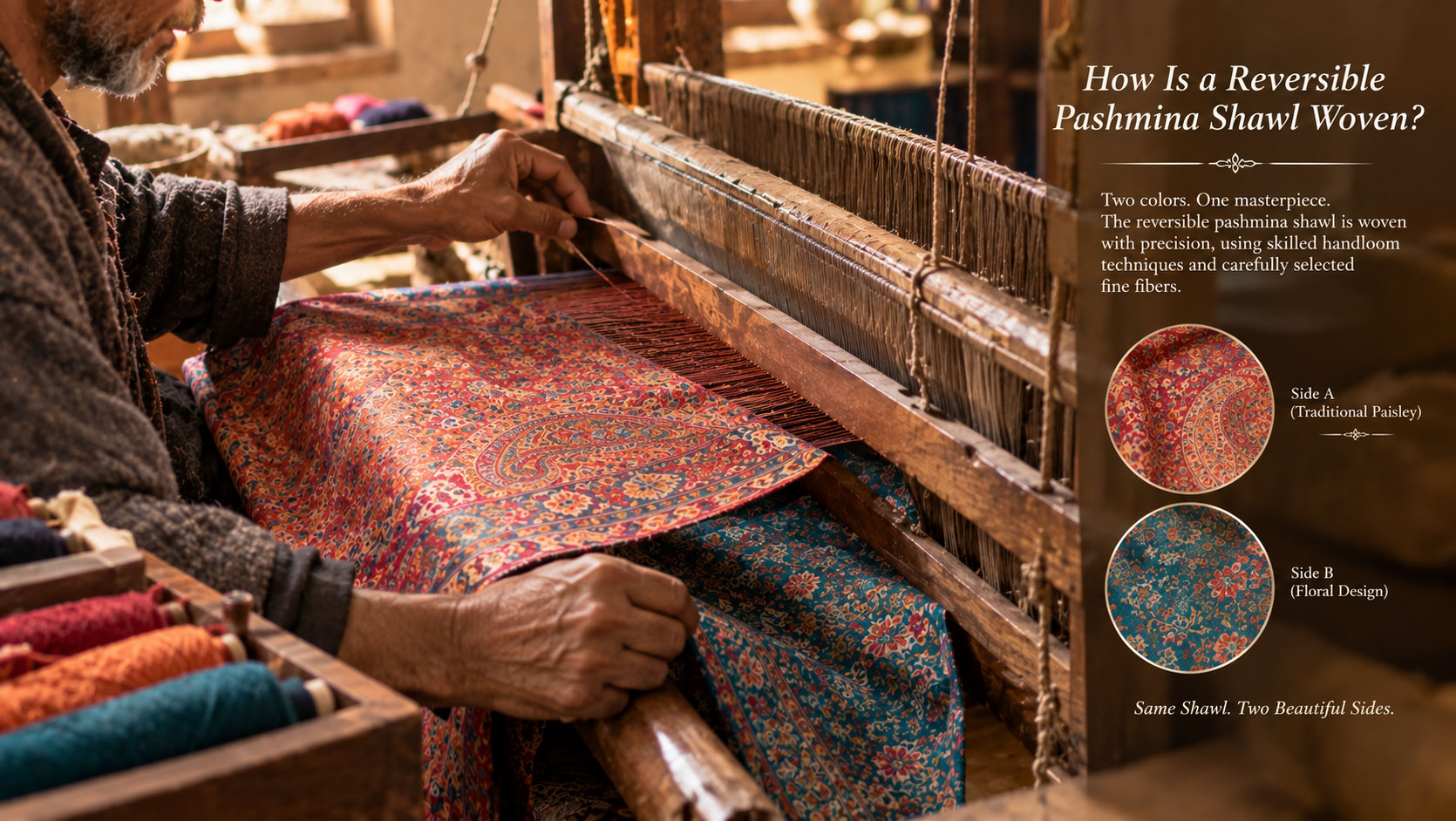
Weaving a Pashmina shawl is not a process measured in hours, but in days and weeks. The loom moves slowly, deliberately, thread by thread. Patterns emerge gradually rather than all at once, and there is time built into the process to think, to correct, and to perfect a section before moving forward. This slowness is not inefficiency — it is respect for the material, and an acknowledgment that rushing a fibre this delicate only produces a weaker, less beautiful final product.
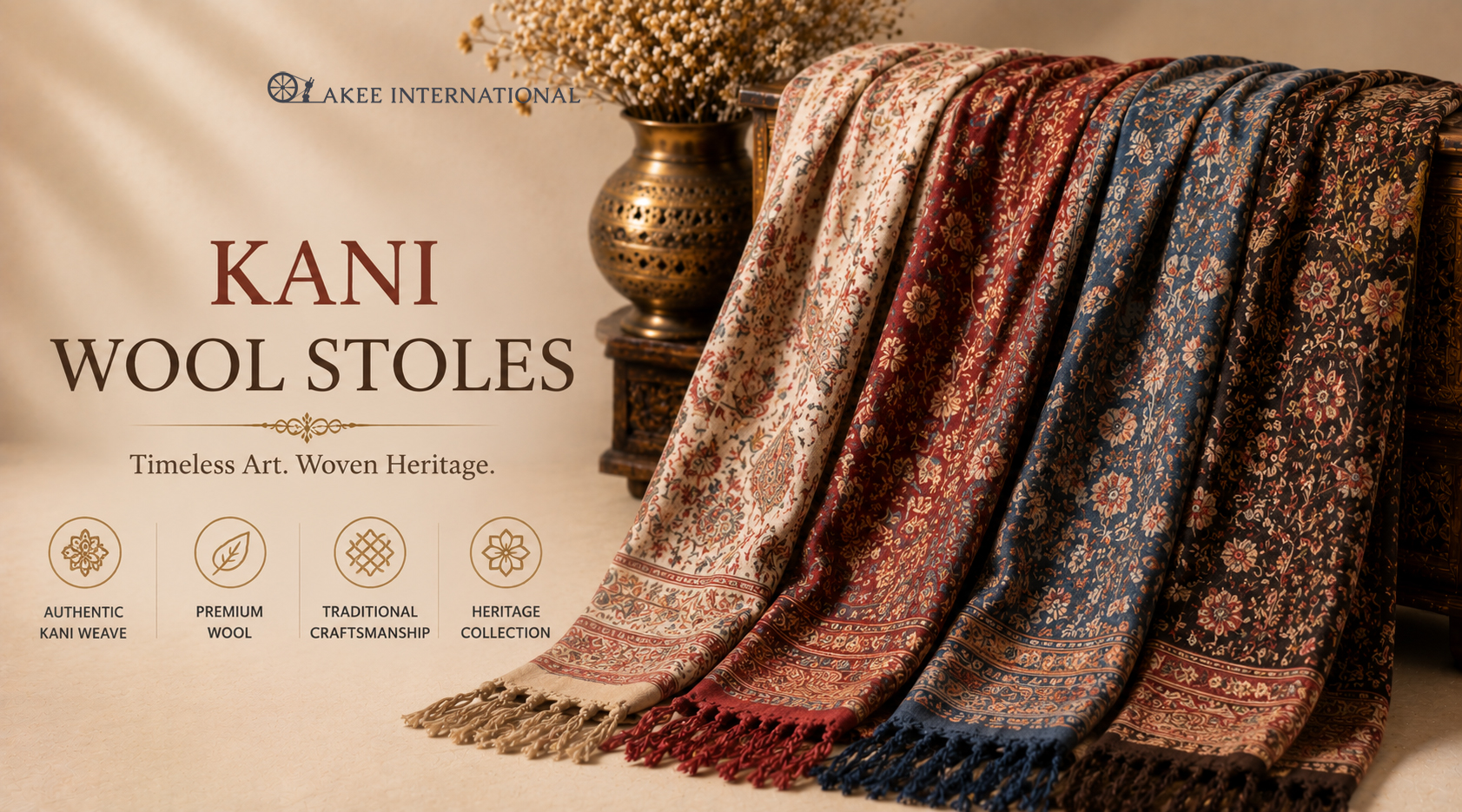
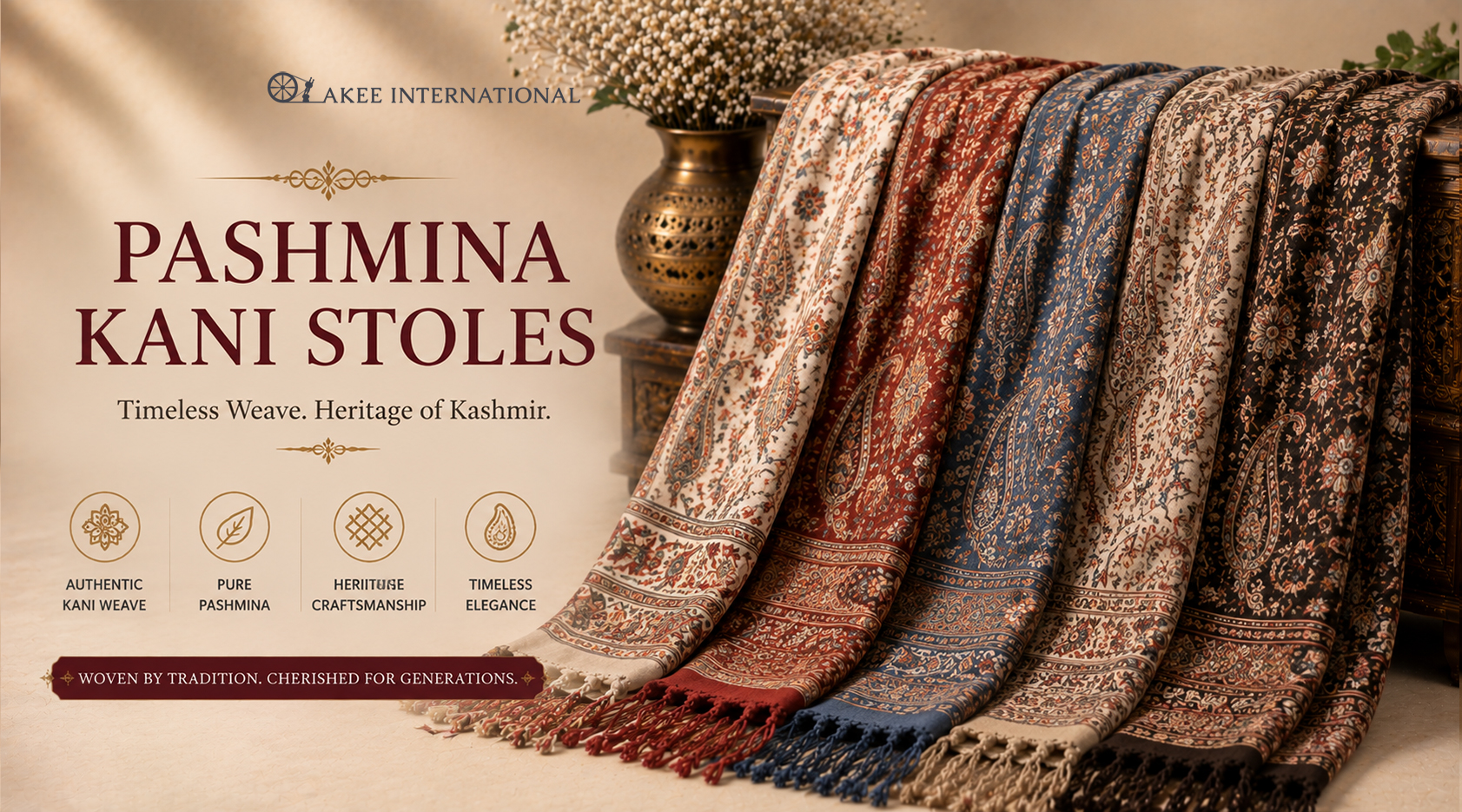
Depending on the complexity of the design — a plain weave versus something like a Jamawar pattern woven directly into the fabric, or a Kani weave using small wooden bobbins — this stage alone can stretch from a few weeks to several months. Our Jamawar Pashmina shawls and Kani wool stoles collections both showcase just how much variation exists within this single stage of the journey, depending on the weaving technique chosen. Our page on the Kashmiri shawl weaving tradition goes further into how these techniques differ on a technical level.
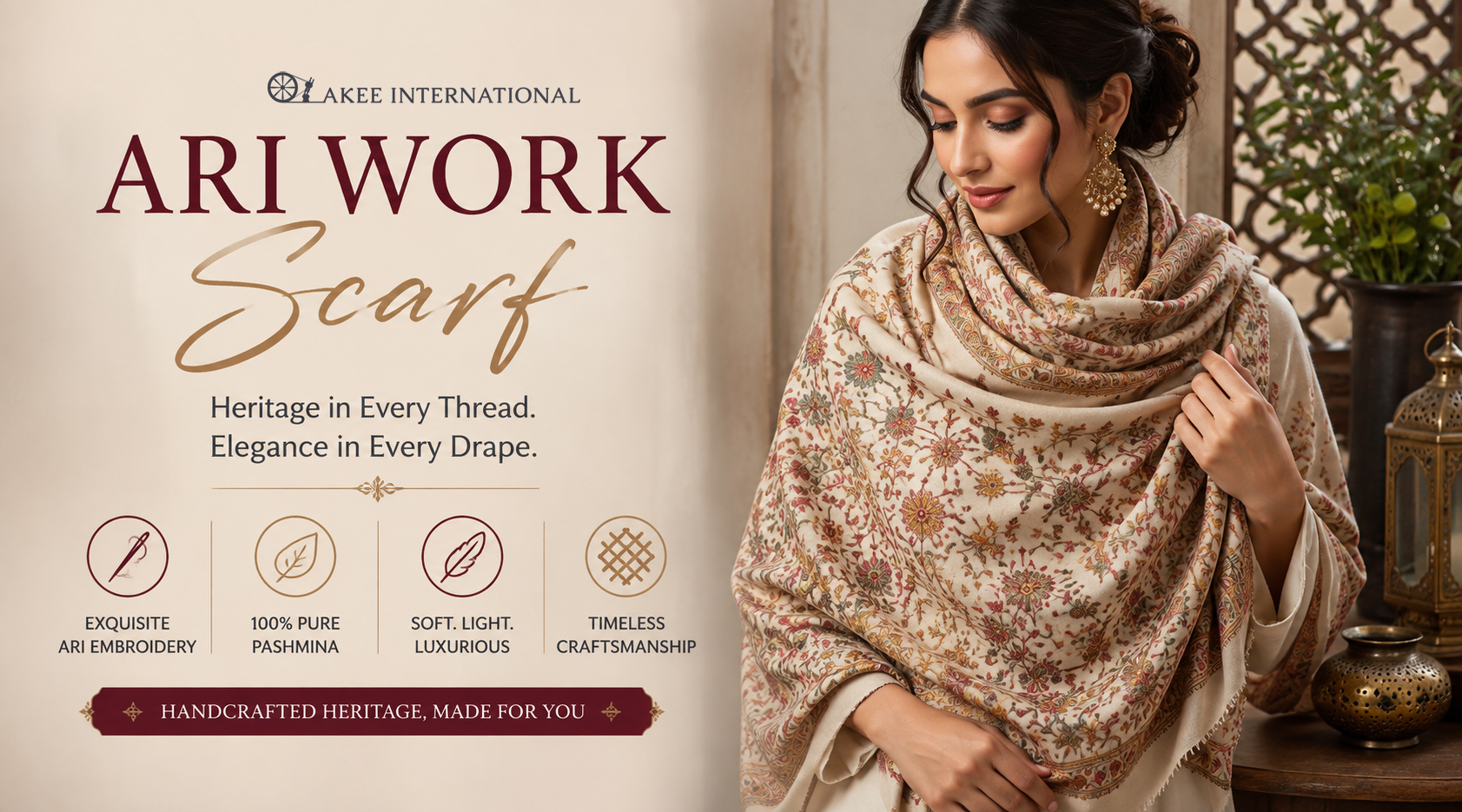
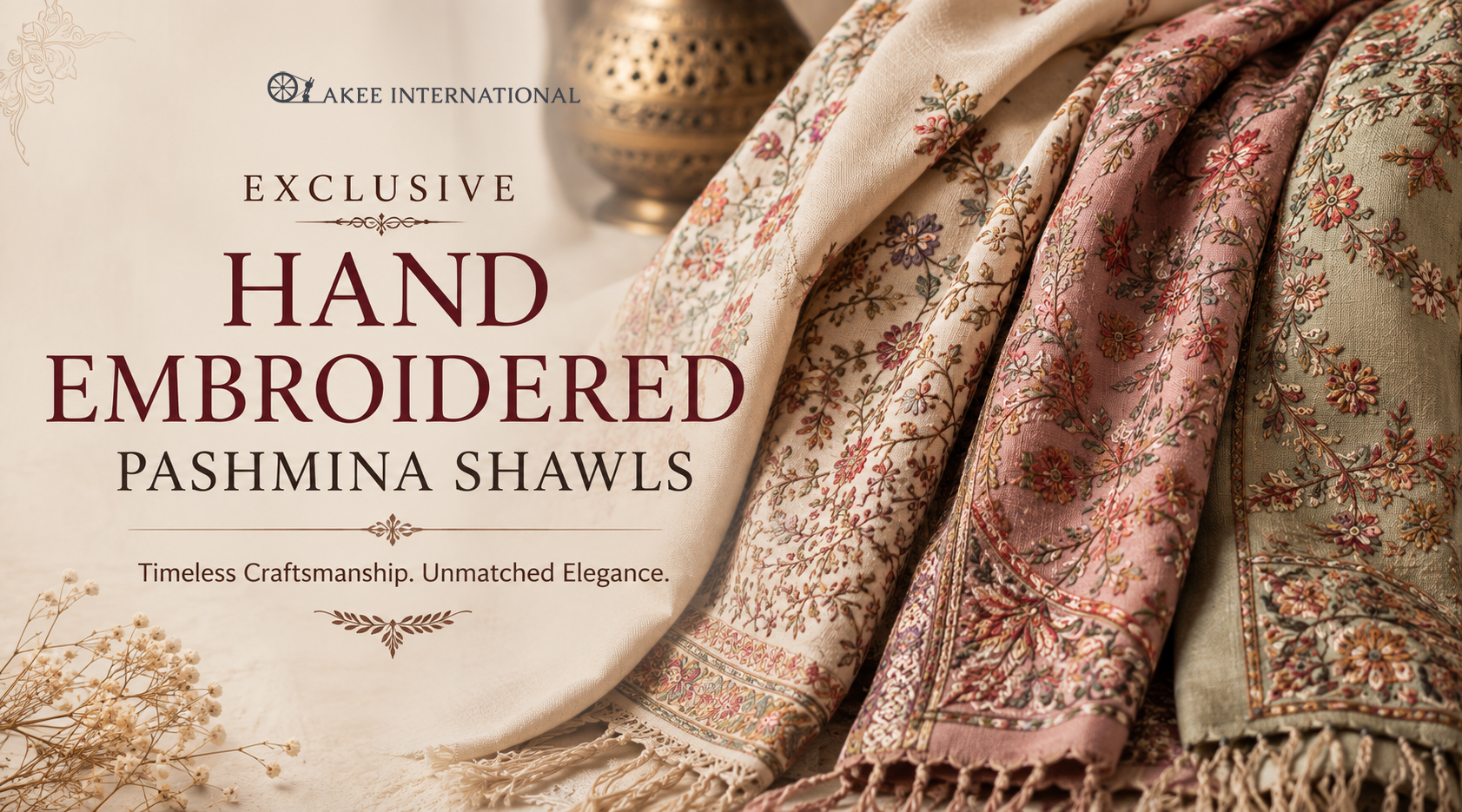
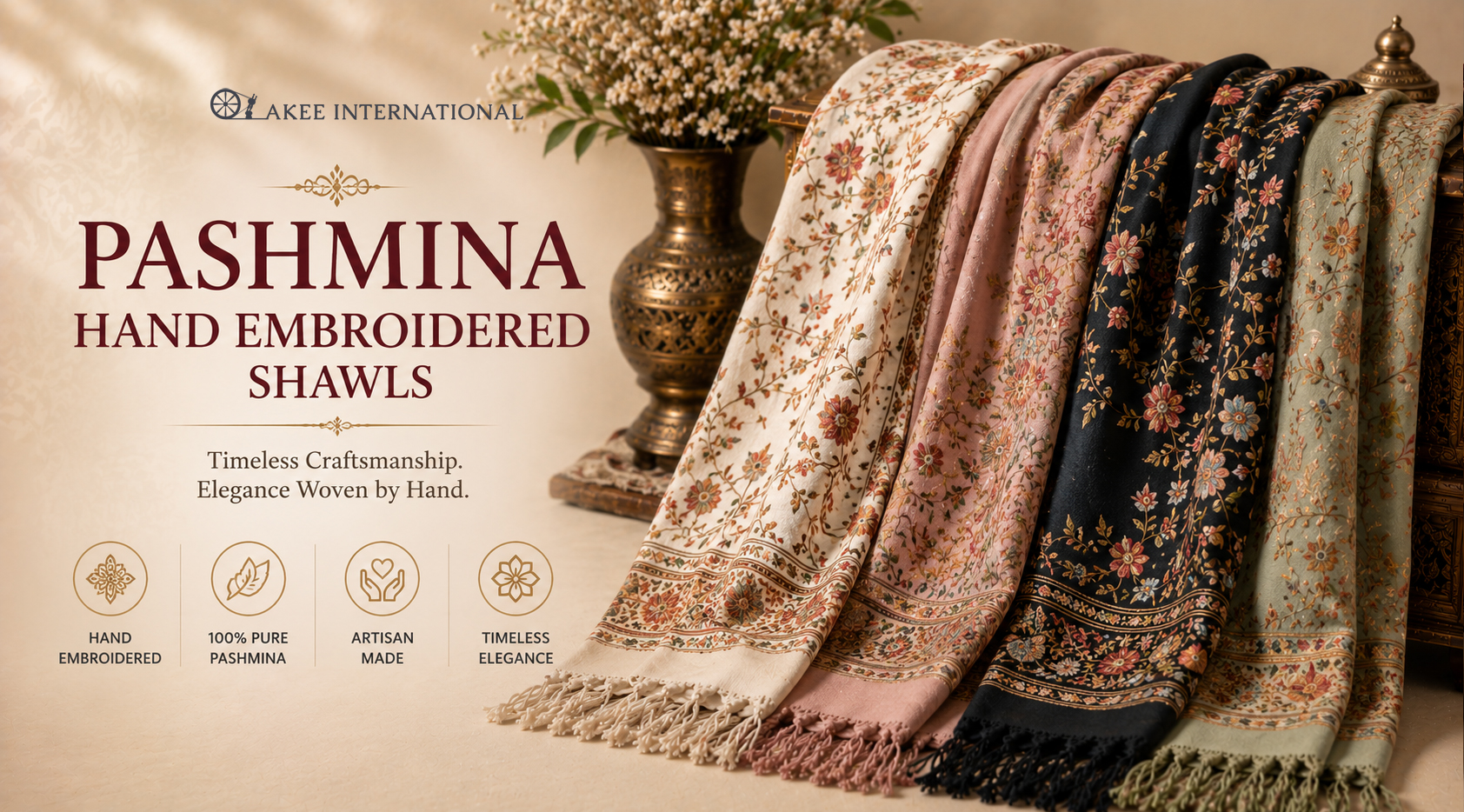
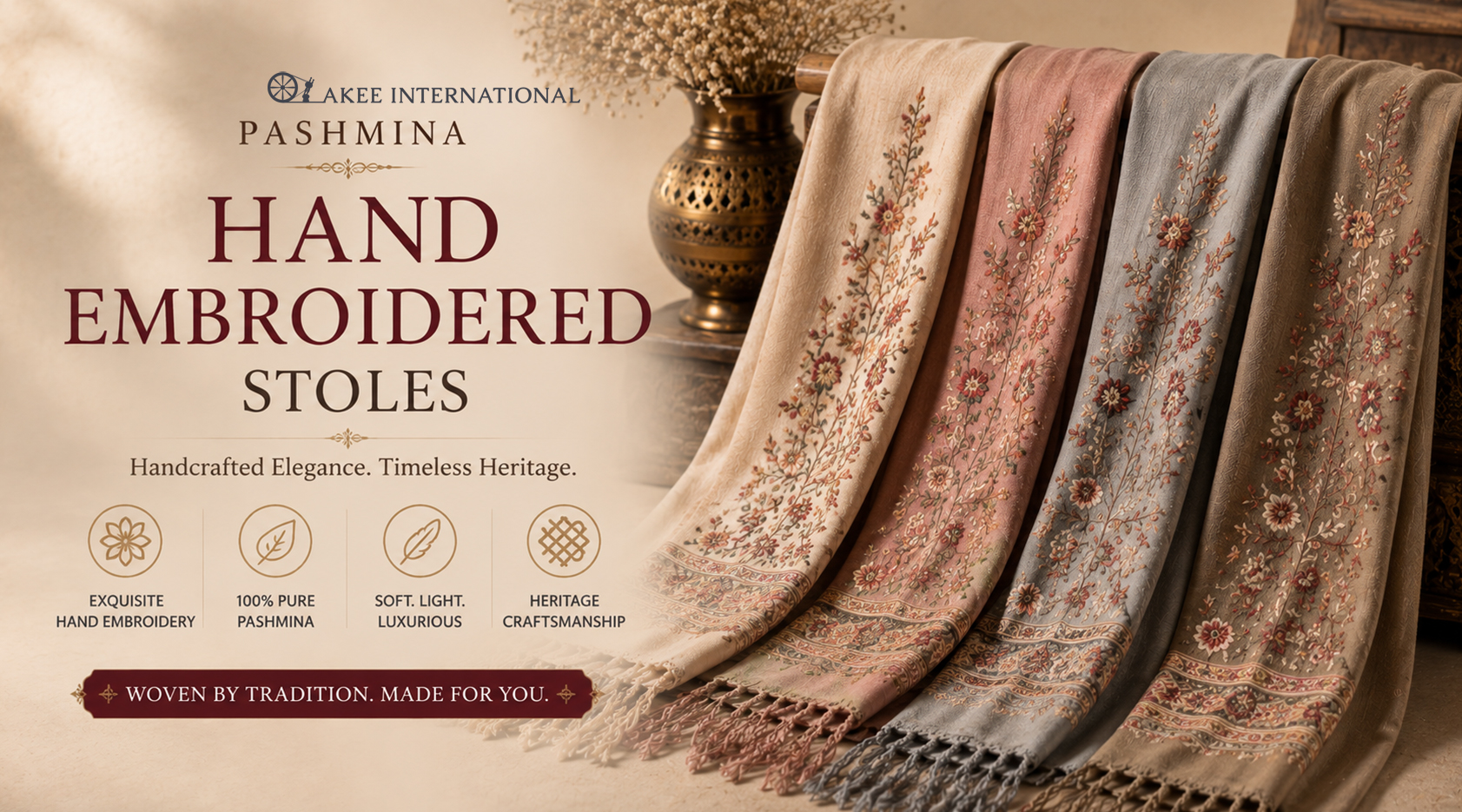
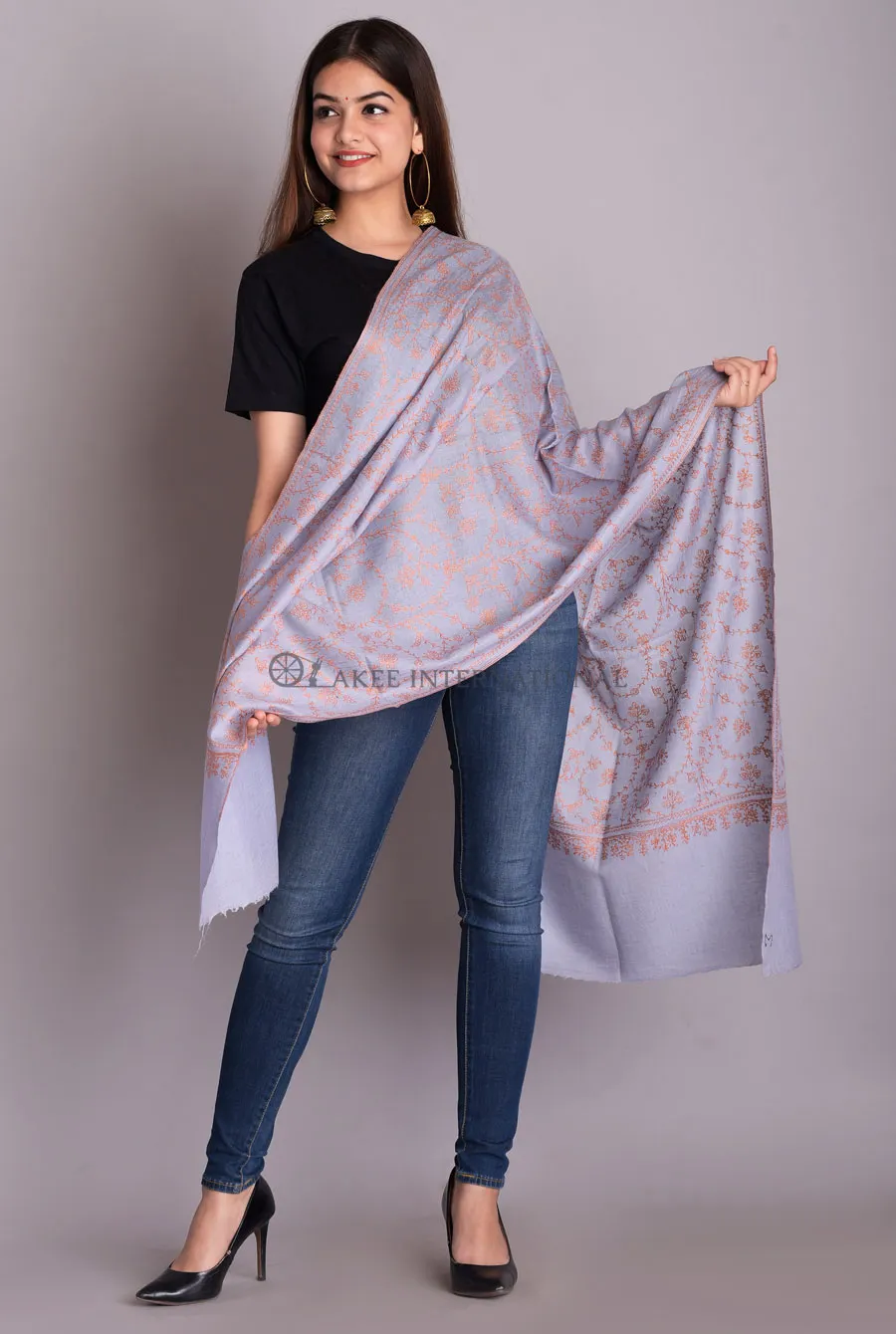
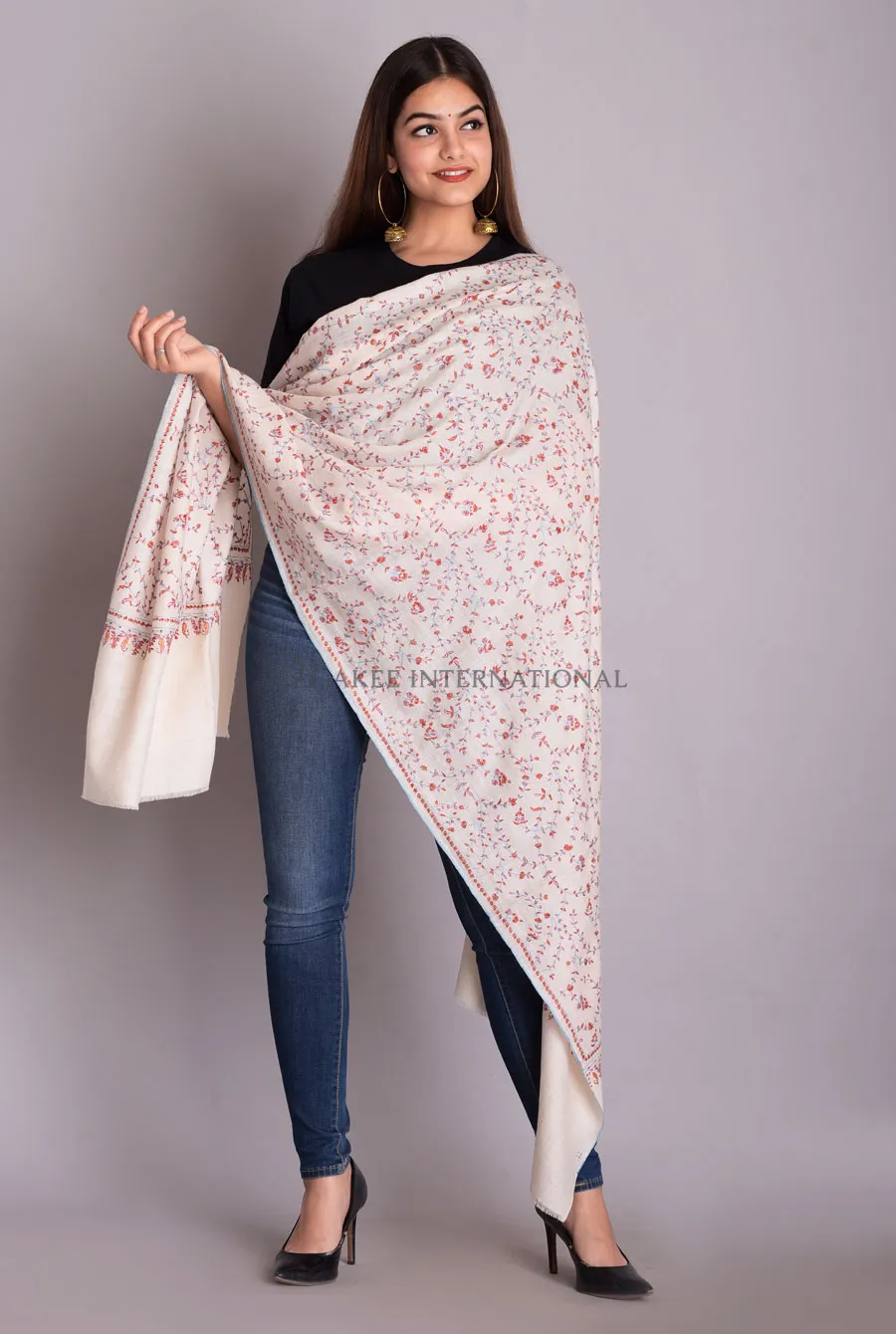
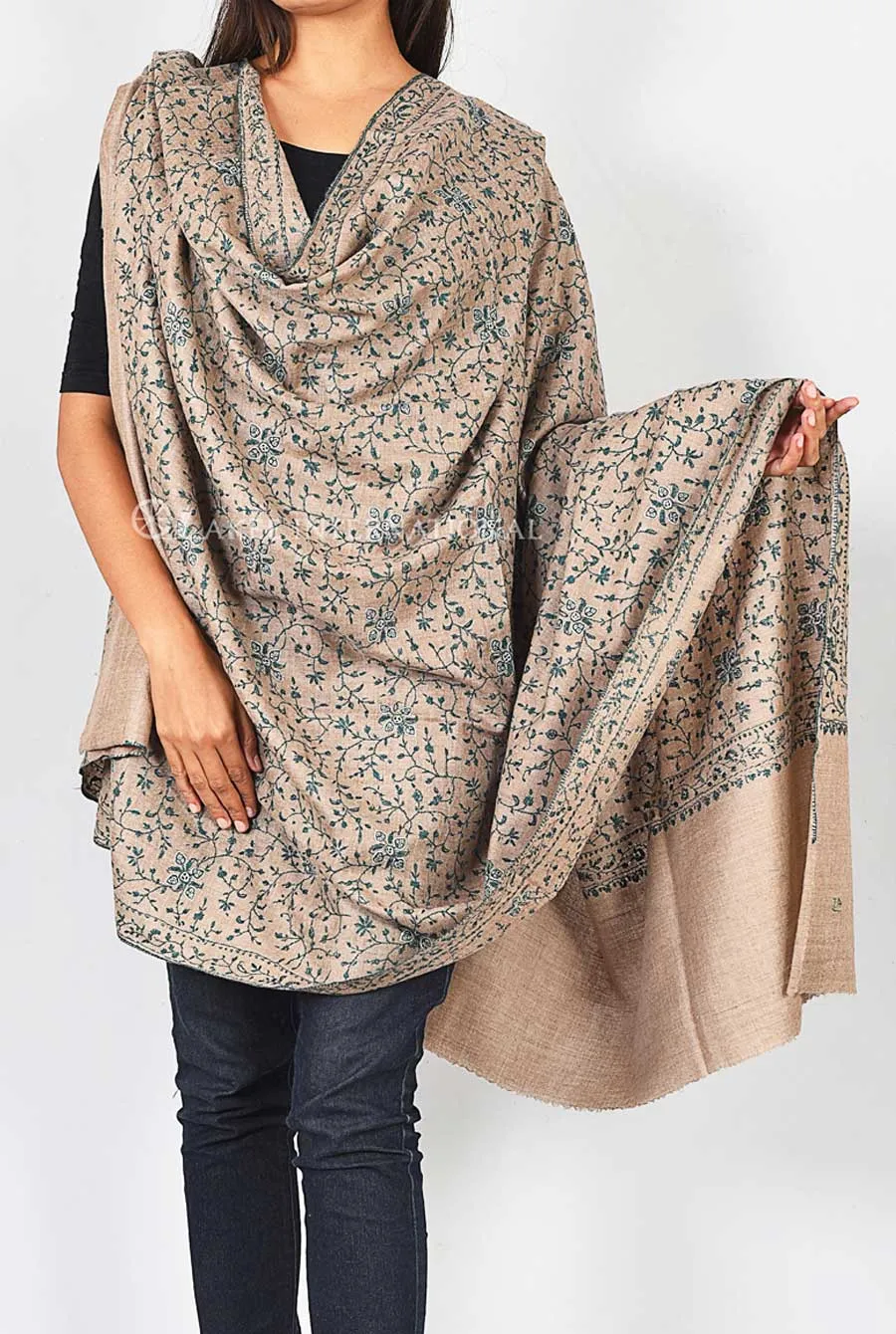
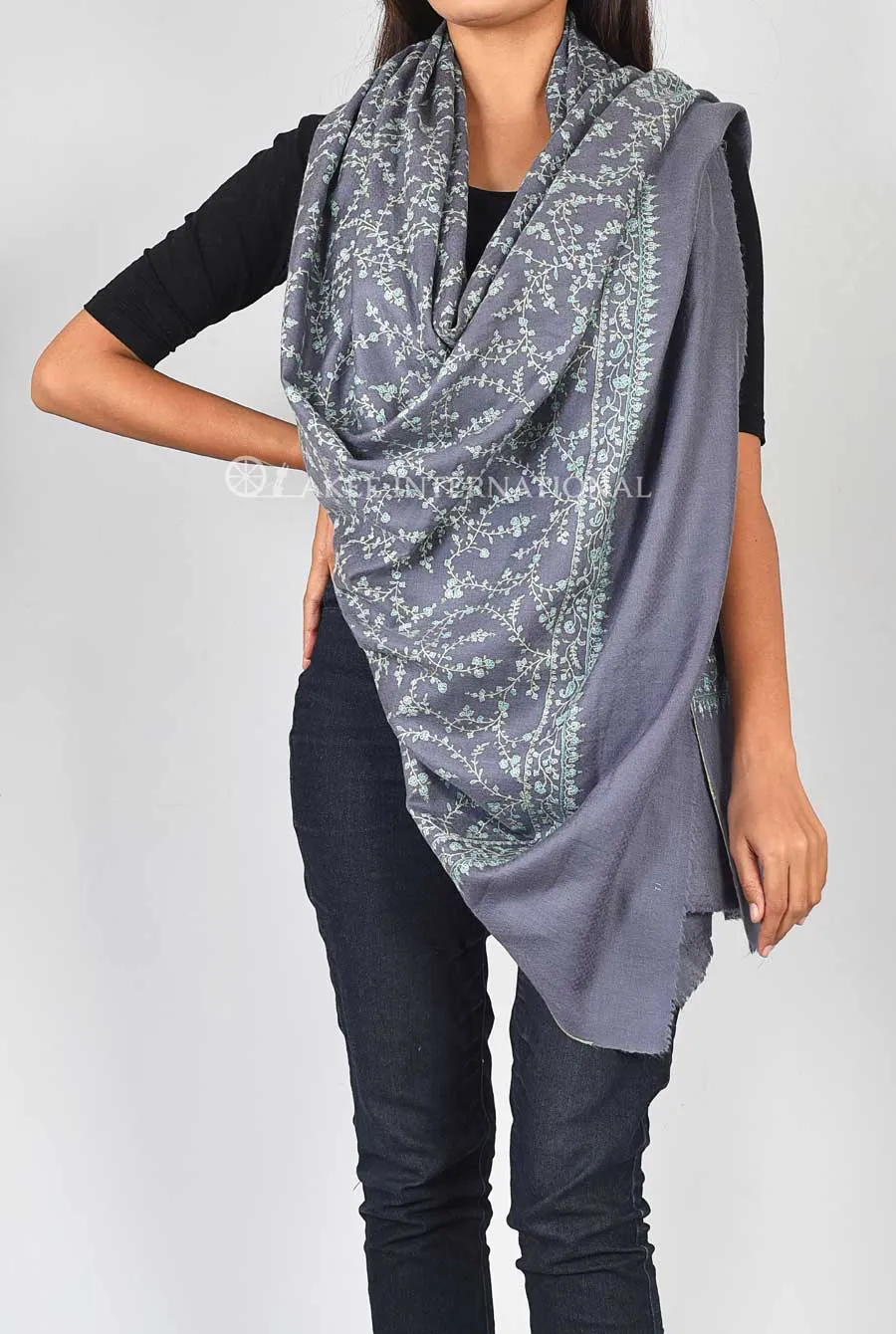
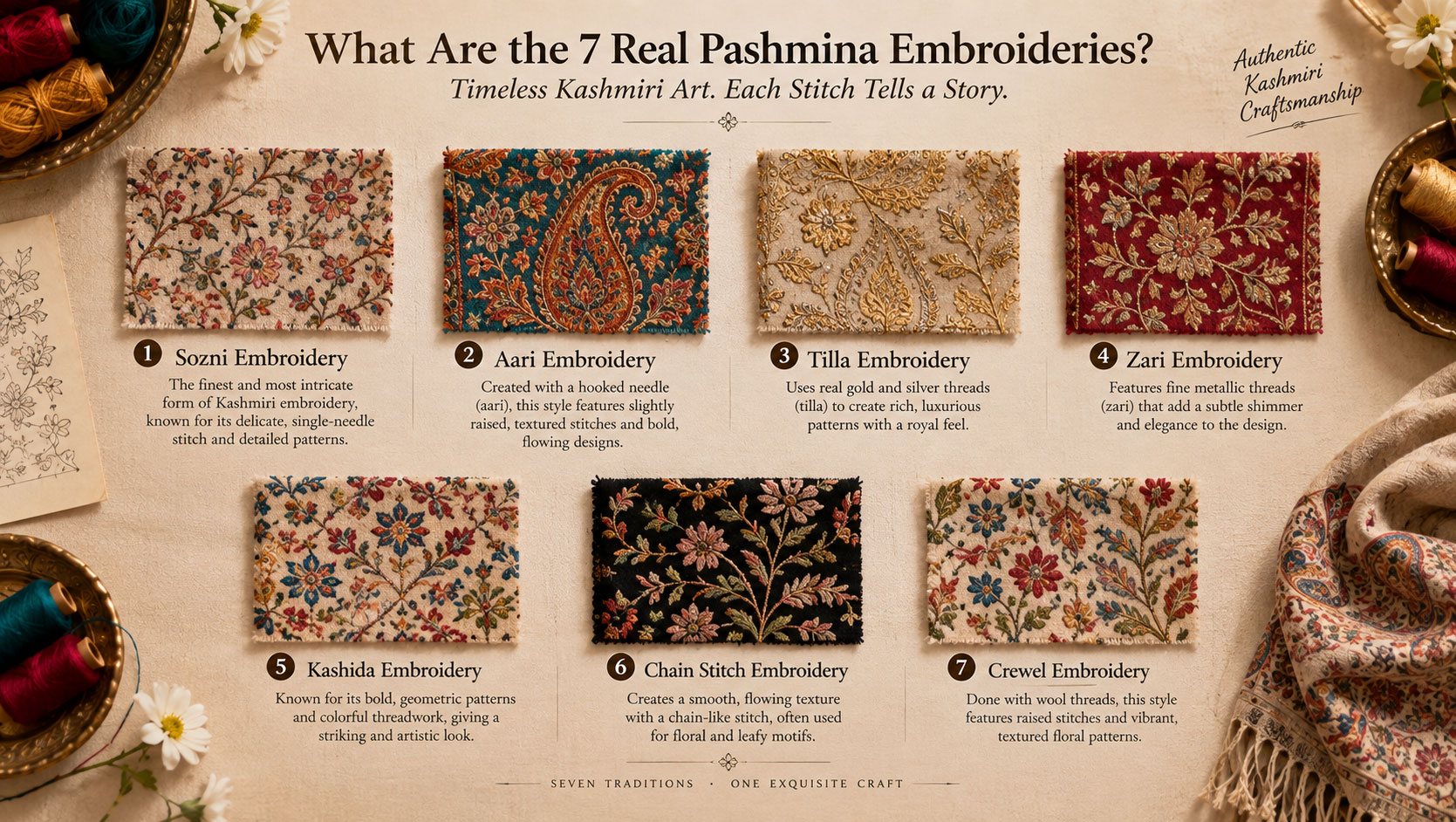
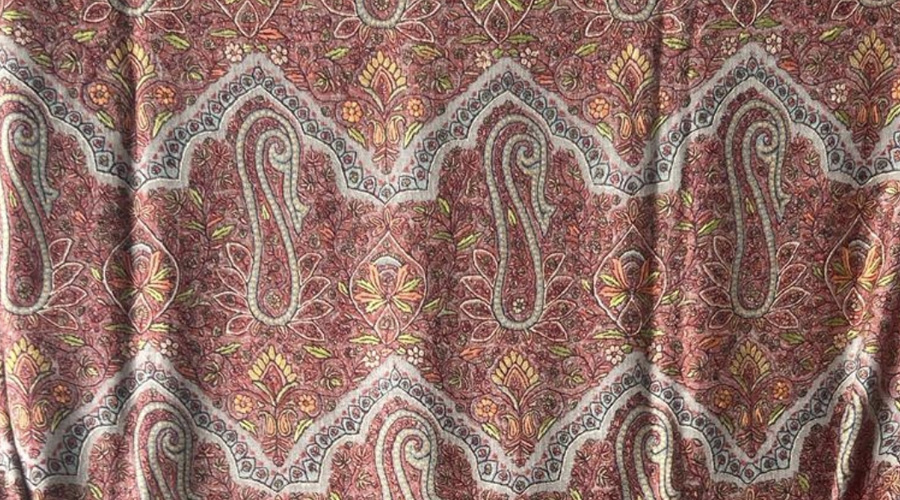
For many shawls, the loom isn't the final creative stage. Once woven, a piece may pass into the hands of embroiderers who add another layer of artistry entirely — fine needlework such as Sozni stitching, worked stitch by stitch over what can be additional weeks of dedicated labour. This embroidery isn't decorative filler; it often carries motifs passed down through generations, drawing on floral and paisley patterns that have carried cultural meaning in the region for centuries. Our exclusive hand-embroidered Pashmina shawls collection showcases this additional layer of craftsmanship at its most detailed, and our page on Kashmiri Sozni Work Shawl and Ari Work Pashmina Shawl explore two distinct embroidery traditions that often enter the journey at this stage.
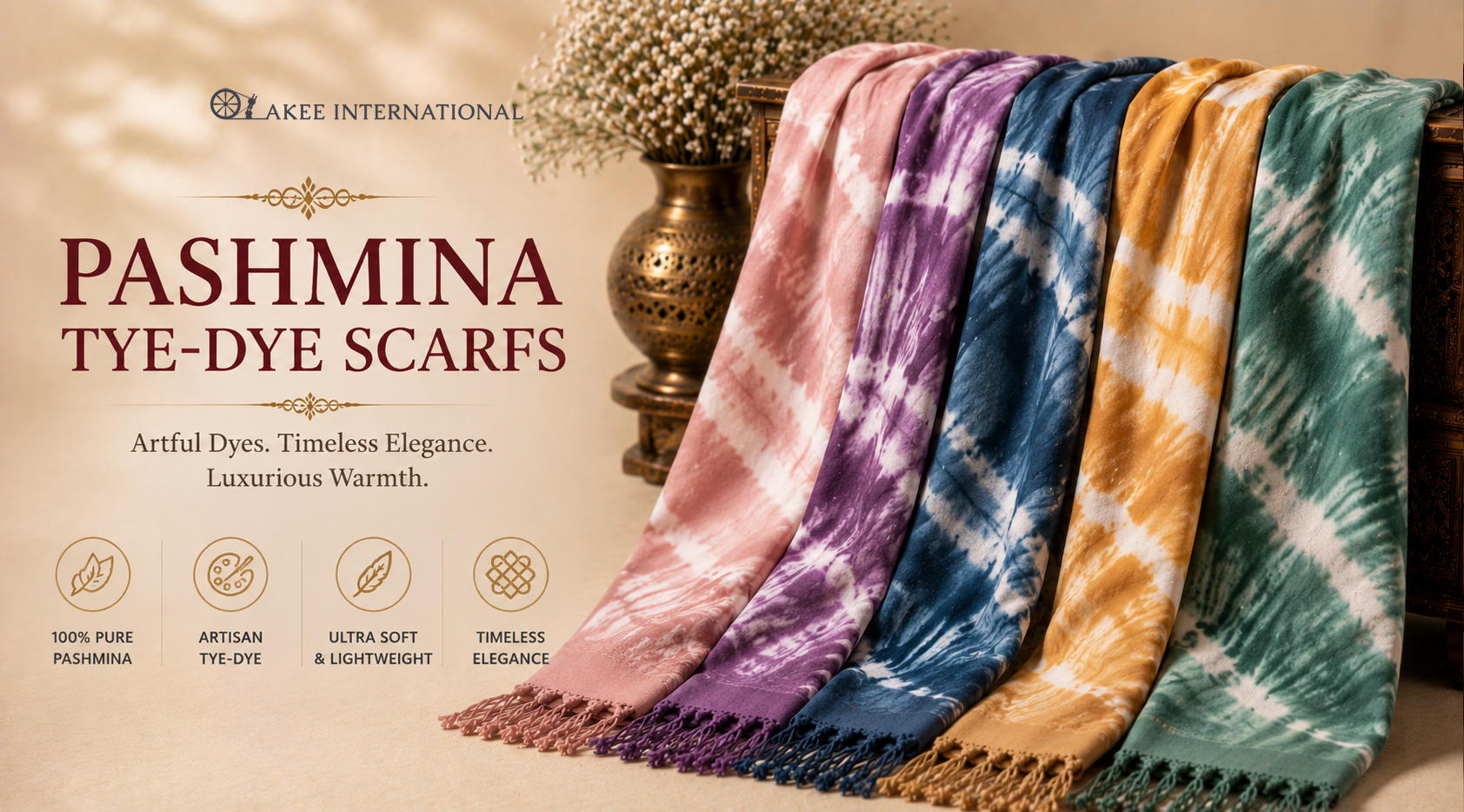
Somewhere between spinning and weaving, or sometimes after the base weave is complete, the yarn or fabric often passes through the hands of a dyer. Traditionally, this stage relied on plant-based and mineral dyes, chosen specifically for their ability to produce rich, long-lasting colour without the harsh chemical processing common in industrial textile dyeing. A skilled dyer working with natural pigments has to account for how the specific batch of fibre will absorb colour, since natural material rarely behaves with perfect, mechanical consistency — another small variable in a process already full of human judgment at every stage.
This is part of why two Pashmina shawls dyed the same "colour" can carry subtly different tones from one another, particularly in more traditional, small-batch production. Rather than a flaw, this variation is simply another signature of the human hands involved, the same way no two handwritten letters look completely identical even when written by the same person. Our blog on eco-friendly Pashmina shawls goes further into this natural dyeing process and why it matters beyond just colour outcome.
Before a shawl reaches a customer, a meaningful part of its journey often runs through Jaipur, where finishing touches, quality checks, and sometimes additional embroidery or block printing are added by local artisans working alongside the Kashmiri craftsmanship already woven into the piece. This isn't a shortcut stage — it's where Rajasthan's own textile heritage meets Kashmir's, producing a piece that carries the imprint of two distinct regional traditions rather than just one. Our blog on block printing in Jaipur covers this local finishing tradition specifically, and our page on the Kashmiri artisan-made Pashmina shawl traces how these two regions' craftsmanship comes together in a single finished piece.
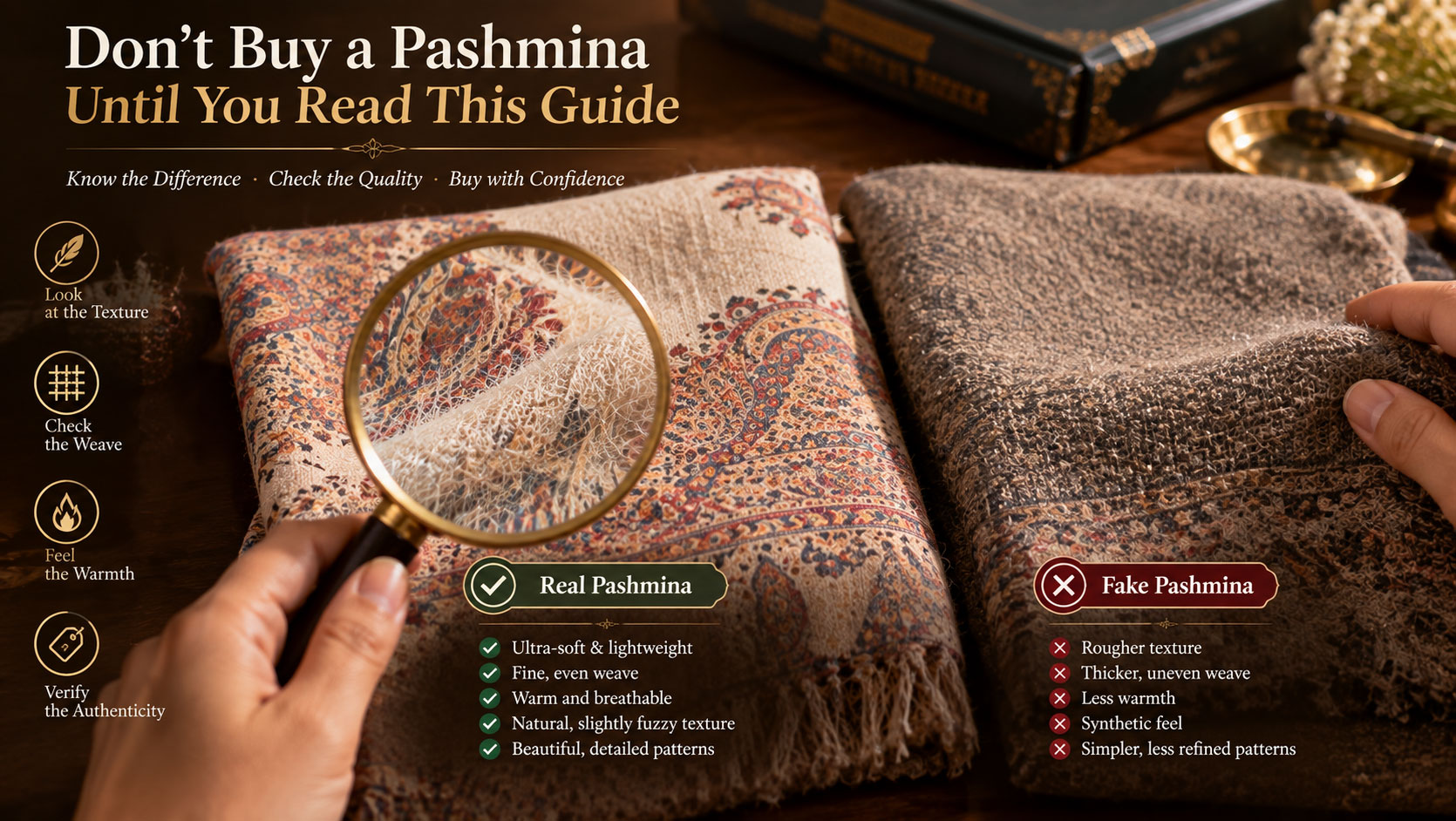
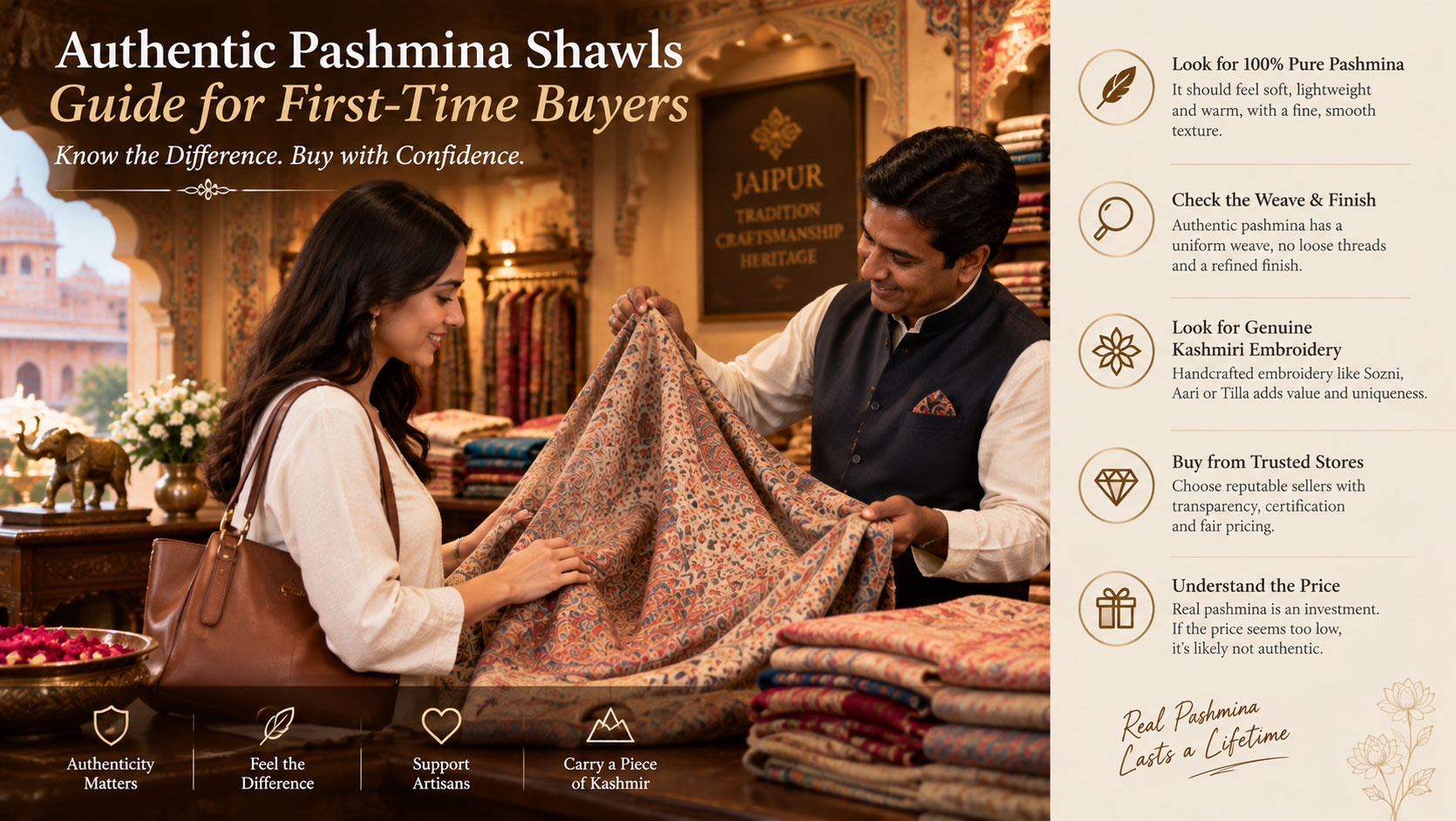
A journey this long, passing through so many different hands, naturally raises a fair question: how does a buyer know the piece they're holding actually made this entire trip, rather than being a shortcut version produced somewhere closer to the point of sale? This is exactly why documentation and verification matter at the end of the journey, not just craftsmanship at the beginning of it. A Geographical Indication (GI) tag, where present, formally certifies that a piece was genuinely hand-spun and handwoven within the protected region, rather than assembled elsewhere and sold under the same name. Our explainer on what the GI tag for Kashmir Pashmina means and our page on GI-certified Kashmir Pashmina cover this specific checkpoint, and our Kashmir Pashmina Certificate of Authenticity explains the documentation we provide alongside genuine pieces. Our detailed guide on how to identify an original Pashmina shawl walks through exactly how to recognize these authentic signs, so that the story behind a piece isn't lost on a buyer simply because they weren't there to witness it being made.
What makes a real Pashmina special is not just its softness, but its honesty. It is lightweight yet warm, subtle rather than shiny, elegant rather than loud. Each finished shawl carries tiny imperfections that silently communicate something important: this was made by a human, not a machine. A slightly uneven stitch, a barely-there variation in the weave's tension — these aren't flaws to be engineered away. They're proof of the journey the piece has taken.
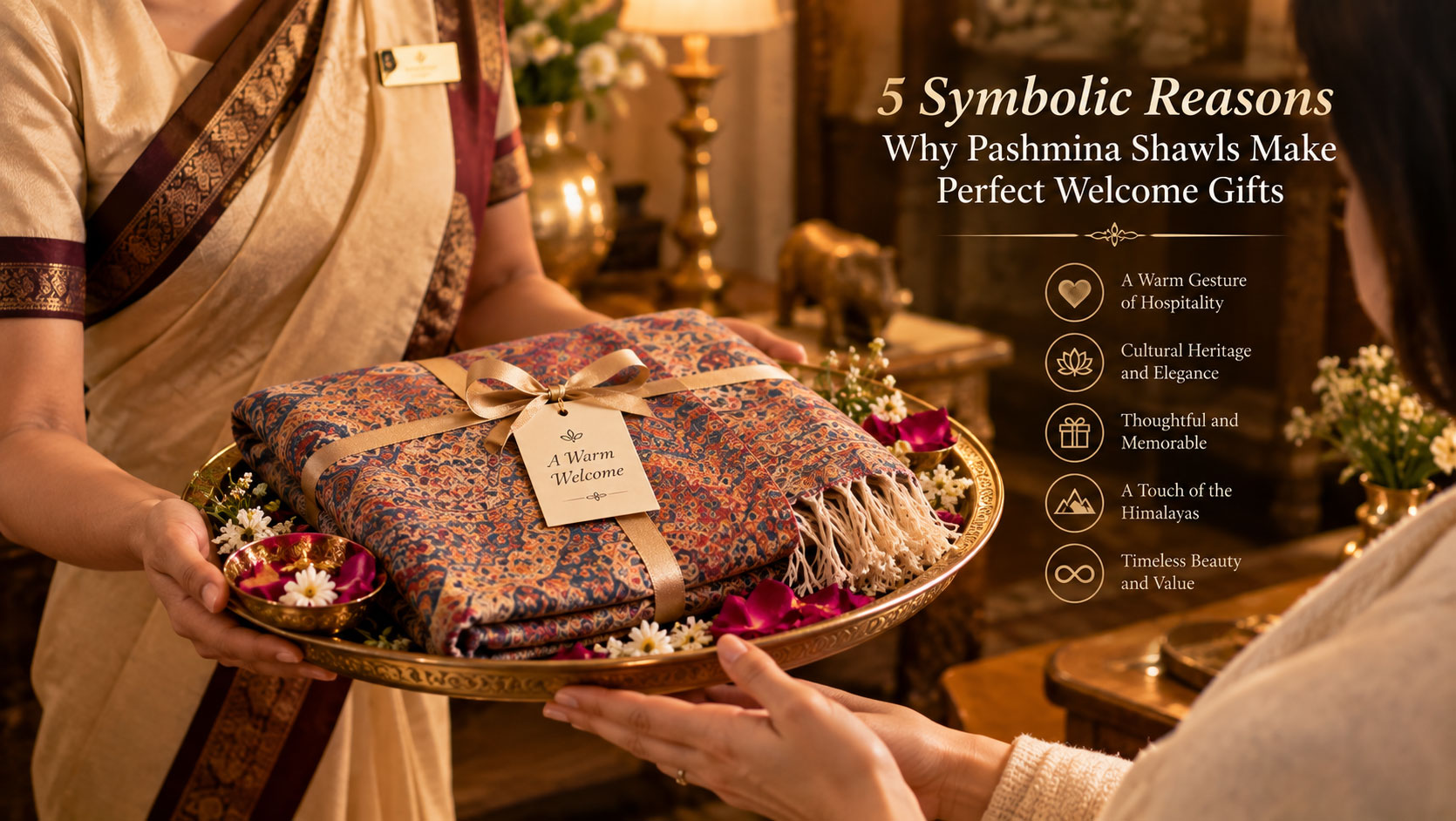
When a Pashmina shawl finally reaches its owner — whether in Europe, America, India, or anywhere else in the world — it carries far more than warmth. It carries a climate, a culture, and a way of life that refuses to disappear in a fast-fashion world built around speed and disposability. Every mile the shawl travels, from a remote Himalayan pasture to a wardrobe thousands of kilometres away, represents a chain of specific human hands: a herder, a spinner, a weaver, sometimes an embroiderer, and finally a seller who understands exactly what they're handing over. For buyers ordering from outside India specifically, our export pages for the USA, UK, and Europe cover this last leg of the journey in practical terms, and our page on buying a Kashmiri shawl for NRIs addresses common questions for buyers reconnecting with this craft from abroad.
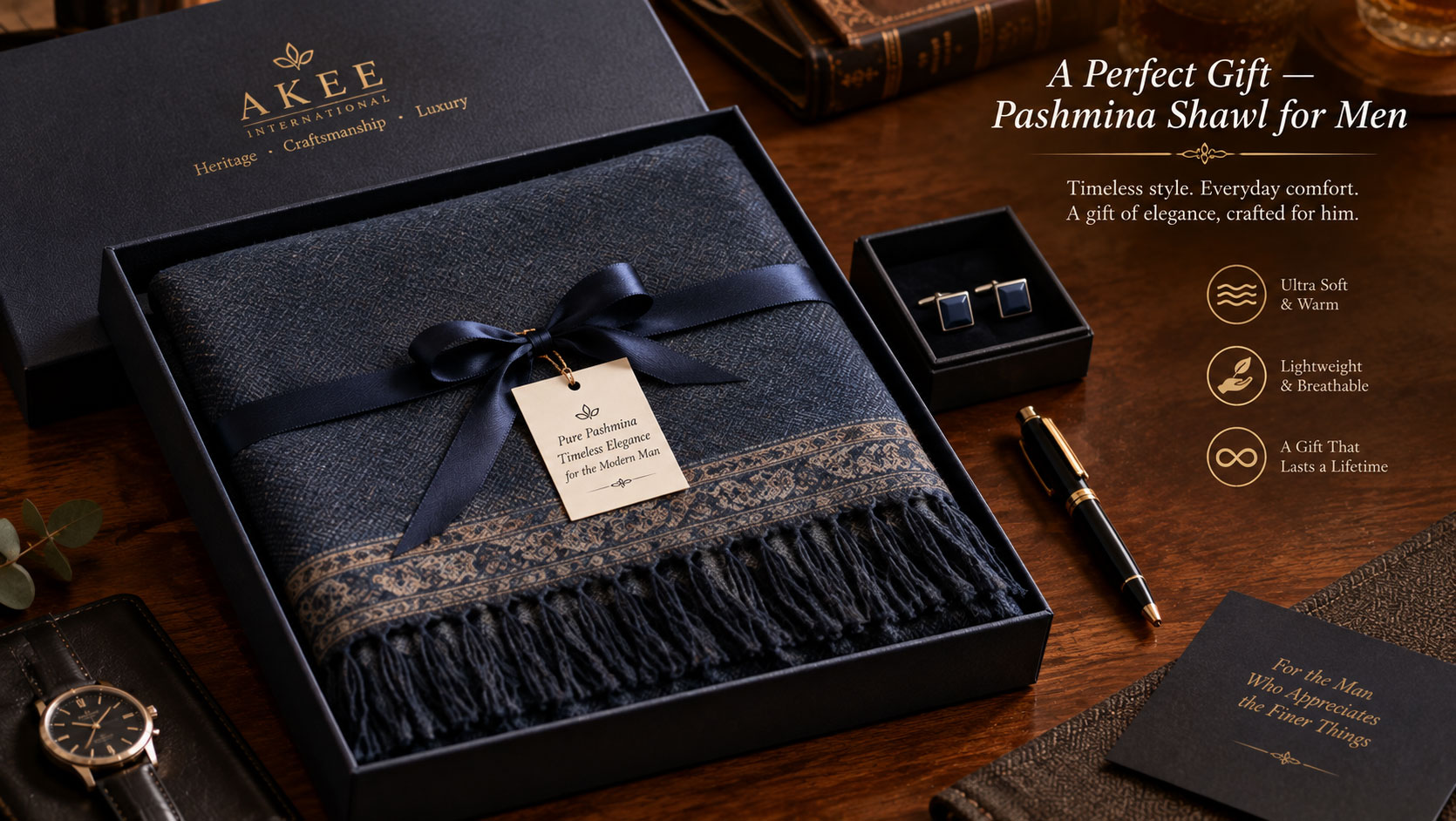
At Akee International in Jaipur, this is the journey we think about with every piece we offer — not an abstract marketing story, but the literal sequence of events that produced the fabric a customer eventually wears. Whether it's one of our women's Pashmina shawls or men's Pashmina shawls, every piece traces back through this same chain, from Himalayan pasture to Jaipur finishing to the customer's hands.
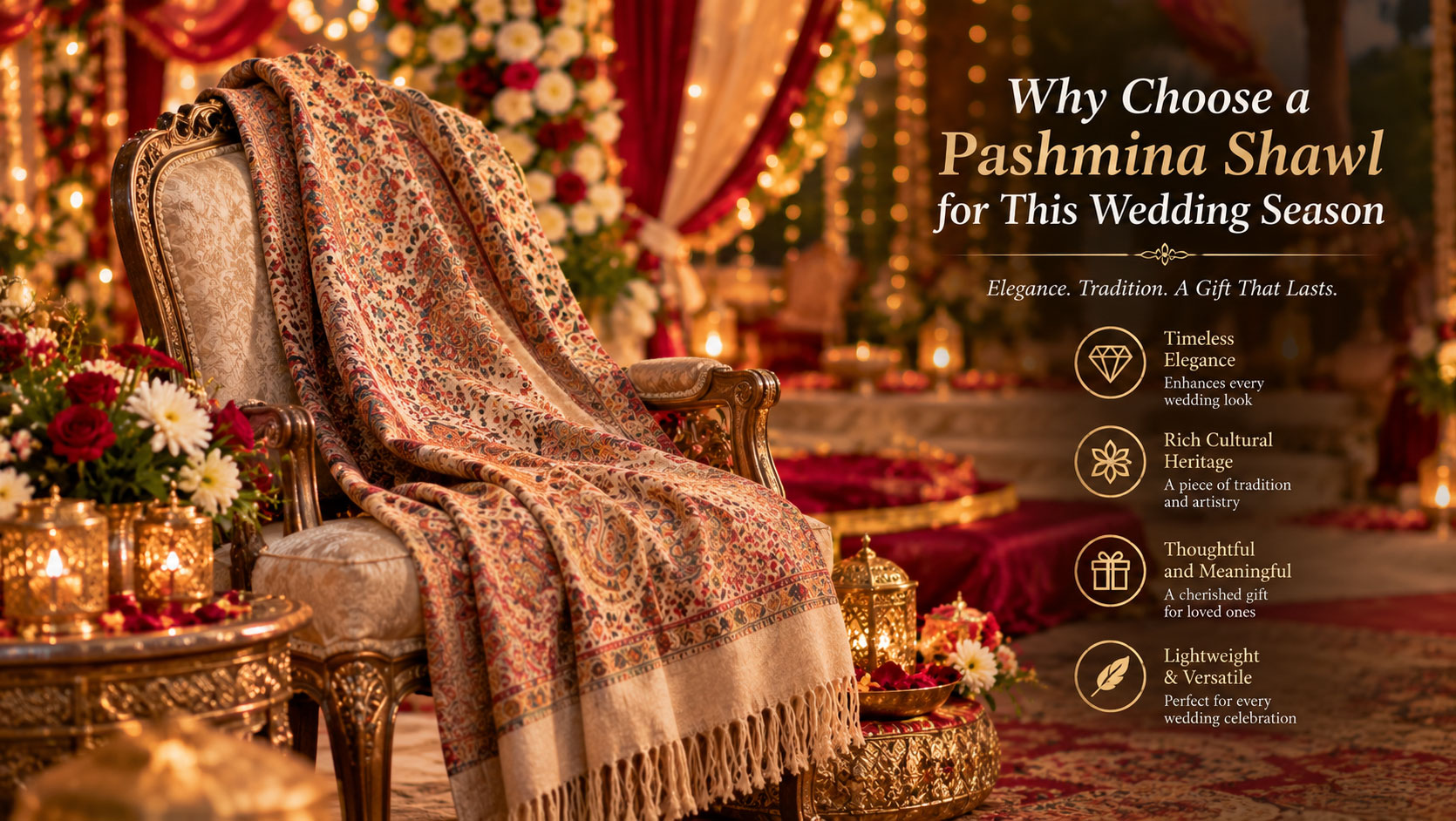
It's worth remembering that a shawl's journey doesn't stop the moment it's bought — it simply changes hands. How a piece is worn, cared for, and eventually passed on becomes the next chapter of the same story that began on a Himalayan plateau. A shawl draped at a wedding, wrapped around shoulders on a cold evening commute, or handed down as part of a daughter's trousseau is still the same journey continuing, just with a new narrator. Our Jaipur wedding Pashmina shawls and wedding trousseau Pashmina shawl collections speak directly to this next chapter, where the piece takes on new meaning tied to the person wearing it rather than just the artisans who made it.
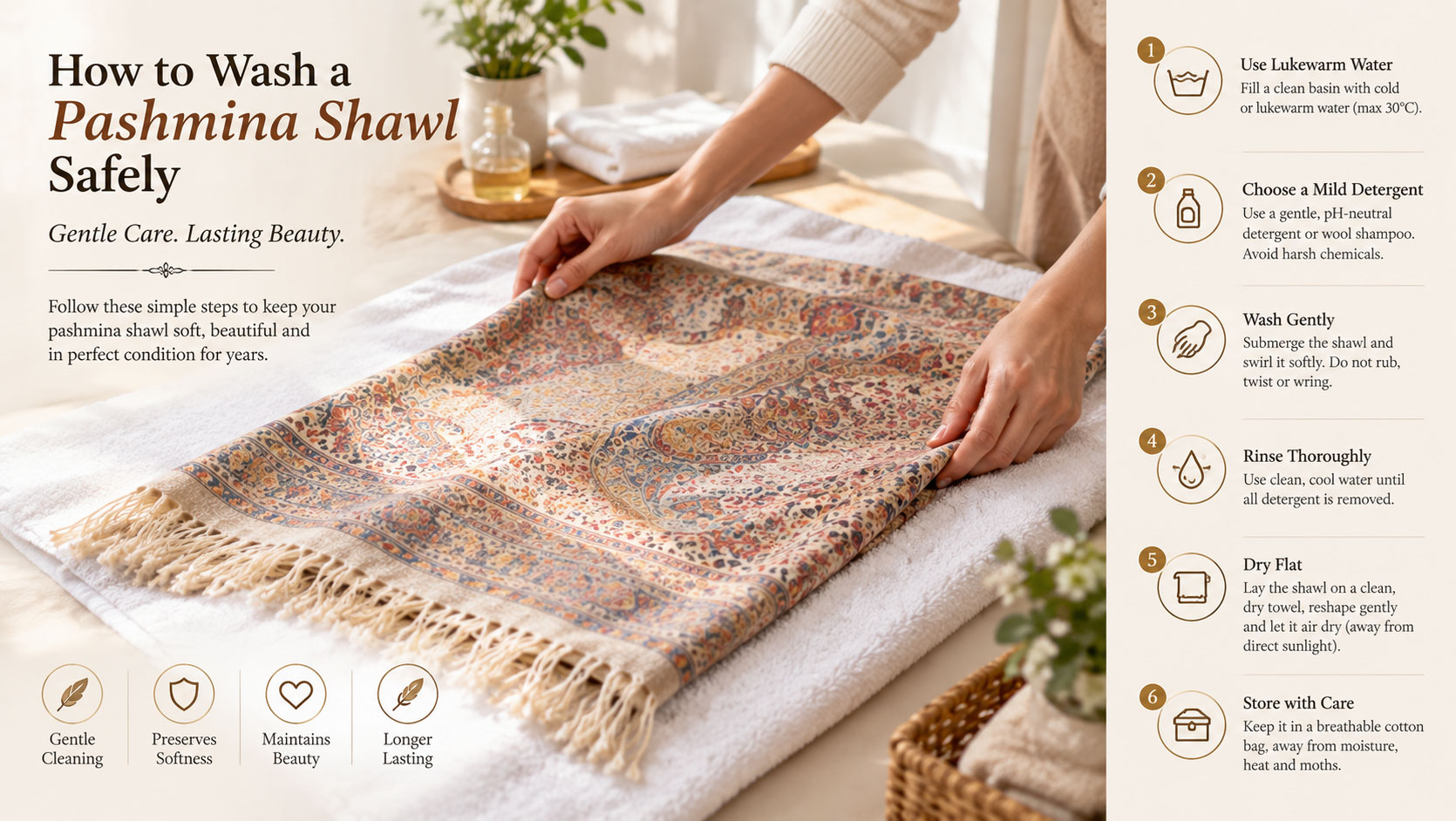
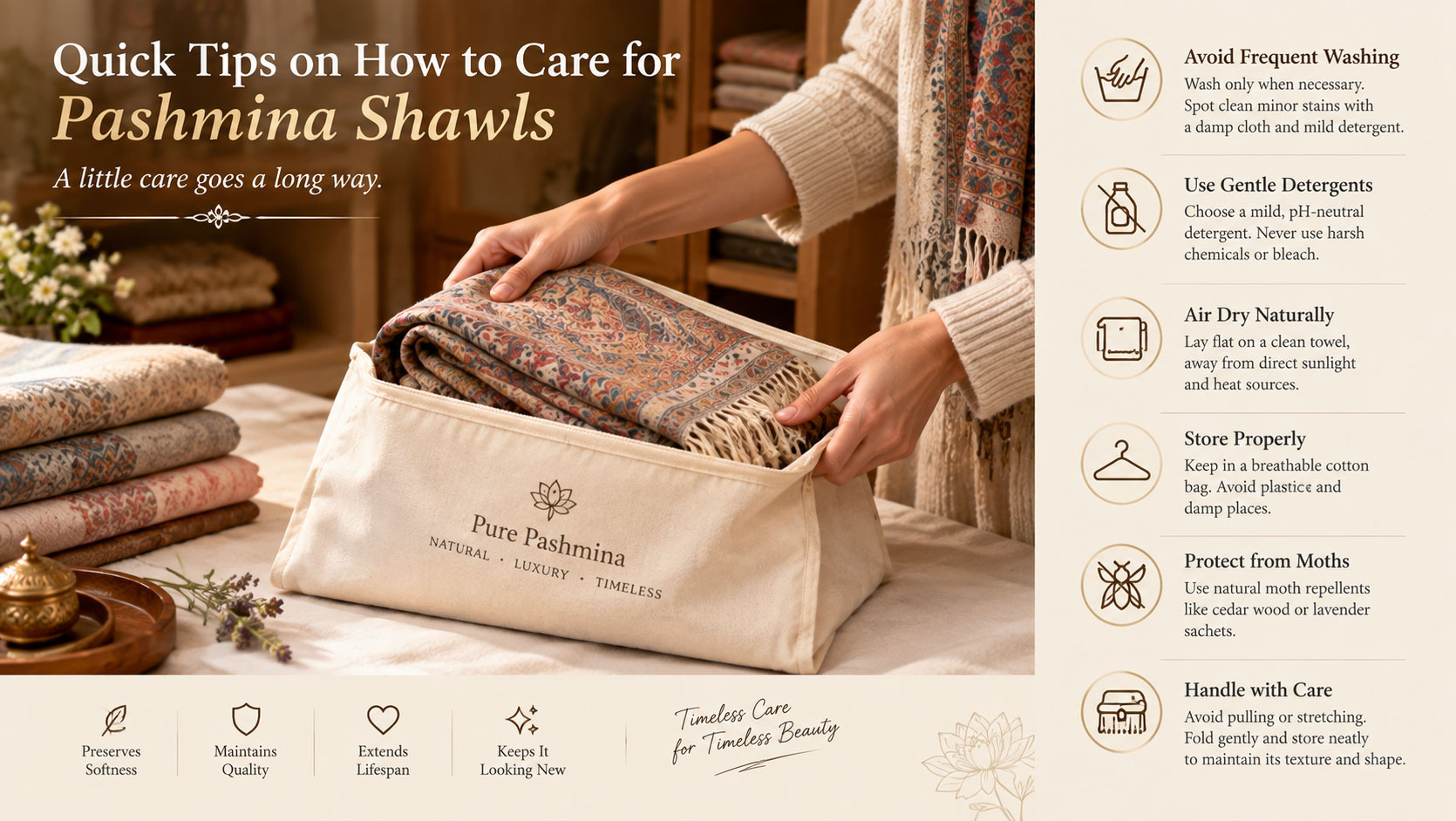
Caring for the piece properly is what allows this next chapter to stretch across decades rather than a few seasons. Our complete Pashmina shawl care guide, along with our specific pages on how to wash and how to store a Pashmina shawl, cover exactly how to keep the journey going well beyond the day of purchase.
In a world that has trained most of us to expect instant everything — instant delivery, instant fashion, instant gratification — the deliberate slowness of a genuine Pashmina shawl's journey stands out precisely because it refuses to be rushed. There is no factory shortcut that produces the same softness, no machine substitute for the specific care a human spinner brings to fibre this delicate. This is exactly why the finished product carries a kind of honesty that mass-produced alternatives simply cannot fake, however convincing they might look in a product photo.
Owning an authentic Pashmina is not about trends. It is about choosing something that will still feel relevant, and beautiful, years from now — a piece that ages by becoming softer and more personal rather than worn out, and that carries within its threads an entire journey most buyers will never see but can genuinely feel every time they wrap it around their shoulders.
If you'd like to learn more about this journey, see specific pieces up close, or have questions about sourcing and craftsmanship, reach out to us directly on WhatsApp or by phone at +91-9772777770, or write to us at akee.international@gmail.com. Our store near Amer Fort in Jaipur also welcomes walk-in visitors who'd like to hold a piece that has travelled this entire journey before deciding to bring it home, and browse our full Products range to see how this same story plays out across shawls, stoles, and scarves alike.
Discover exquisite Pashmina shawls, beautifully crafted with Kashmir’s timeless heritage and artistry.
"Browse our curated collections and shop by category to find the perfect Pashmina shawl or scarf for every occasion."
"Explore our latest collection of exquisite Pashmina shawls and scarves, where luxury meets craftsmanship in every piece."
"Shop our Best Sellers, where luxury meets demand—featuring the most sought-after Pashmina shawls and scarves of the season."
"Read what our clients say about their experience with Akee International's luxurious Pashmina shawls and impeccable service."

Nai Mata Mandir Road, Thathar Road, Delhi By Pass, Amer, Jaipur 302028, Rajasthan India
Get directions Call Now Whatsapp 4.9 based on 269 reviews
Rating: 4.6/5 | 85 Reviews

Rating: 4.9/5 | 269 Reviews

TrustScore: 4.9 | 100 Reviews